*Disclosure: This article contains affiliate links. If you purchase through these links, we may earn a commission at no additional cost to you. We only recommend books we have personally read and genuinely believe in.
Quick Overview
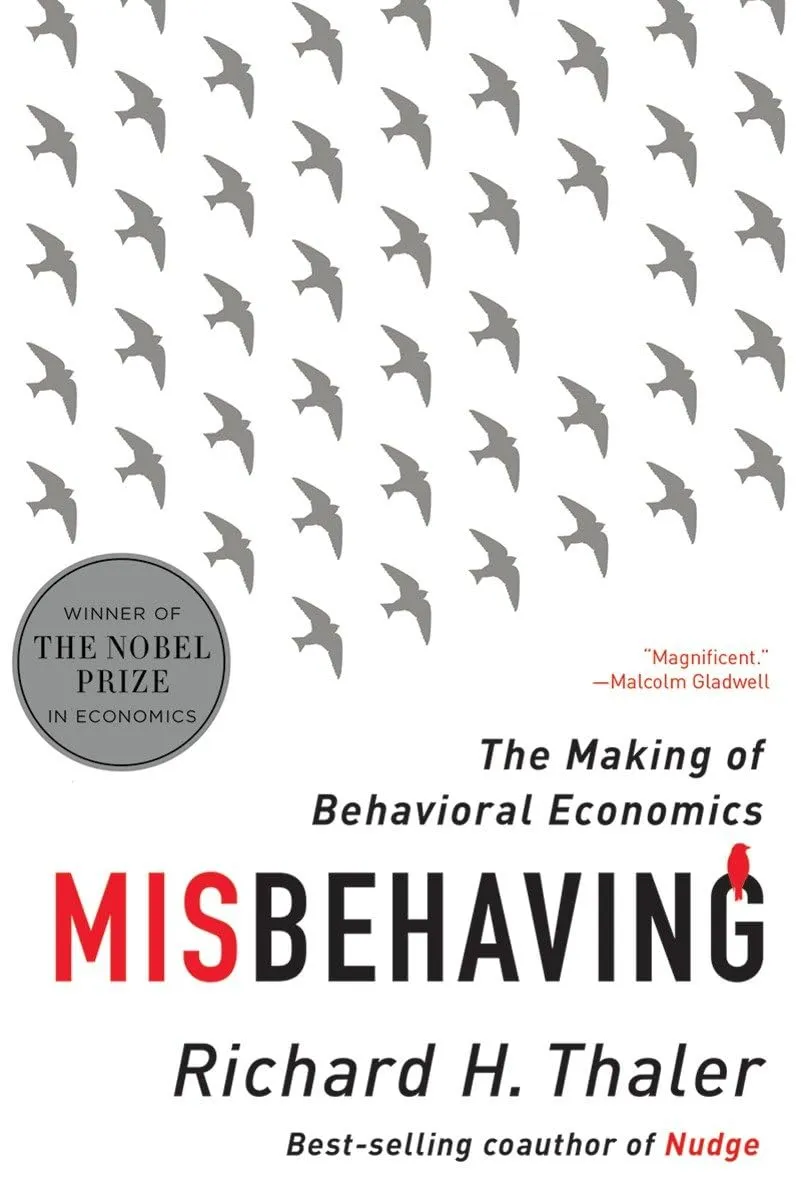
Richard Thaler won the 2017 Nobel Prize in Economics for his work in behavioral economics. Misbehaving is his account of how that field was built: a 40-year intellectual battle against the dominant model of economics that assumed humans are rational, self-interested utility maximizers. It is simultaneously a memoir, a manifesto, and a practical guide to understanding how real people actually make financial decisions.
The book's core concepts (mental accounting, the endowment effect, present bias) remain valuable for investors. But the nudge policy framework that Thaler built from these concepts has taken serious hits in recent years. A 2025 second-order meta-analysis synthesizing 1,638 primary studies with approximately 30 million participants found that nudge effect sizes drop to d = 0.004 after adjusting for publication bias. That is effectively zero. This review covers both the enduring insights from Thaler's research and the uncomfortable findings that have emerged since publication.
Book Details
| Attribute | Details |
|---|---|
| Title | Misbehaving: The Making of Behavioral Economics |
| Author | Richard H. Thaler |
| Publisher | W.W. Norton |
| Published | 2015 |
| Pages | 432 |
| Reading Level | Intermediate |
| Amazon Rating | 4.5/5 stars |
Get Your Copy
Paperback: Buy on Amazon
Kindle: Buy on Amazon
Audiobook: Buy on Amazon
About the Author
Richard Thaler is the Charles R. Walgreen Distinguished Service Professor of Behavioral Science and Economics at the University of Chicago Booth School of Business. He has collaborated extensively with Daniel Kahneman and Amos Tversky and is the co-author (with Cass Sunstein) of Nudge. He won the Nobel Prize in Economics in 2017. He is also a partner in Fuller & Thaler Asset Management, which applies behavioral finance principles to active equity management.
His position at Chicago is worth noting. The University of Chicago has been the intellectual home of the rational-agent model (the Efficient Market Hypothesis, the Chicago School of economics) for decades. Thaler's appointment there represented a quiet revolution: the institution that most defended the rational-agent model hired the person most responsible for dismantling it.
The Central Argument
Standard economics assumes people are rational agents (Thaler calls them "Econs") who:
Real humans ("Humans" in Thaler's terminology):
The gap between Econ behavior and Human behavior is where all the interesting financial decisions happen.
The Most Important Concepts
Mental Accounting
Thaler's most original contribution. Humans do not treat money as fungible the way economics assumes. We divide money into mental "accounts" and apply different spending rules to each.
| Mental Account | Source | How It's Treated |
|---|---|---|
| "House money" | Recent investment gains | Spent more freely than earned income |
| "Found money" | Tax refund, gift | Spent differently than regular income |
| "Vacation fund" | Designated savings | Resisted for other purposes |
| "Bill money" | Earmarked for rent/utilities | Not available for discretionary spending |
| "Investment portfolio" | Long-term savings | Not available for current consumption |
The financial implications:
Investment application: the mental account of "not selling until I break even" is pure sunk cost fallacy. The stock does not know what you paid. The relevant question is always: "Given today's price, does this represent the best use of this capital going forward?" Use our investment return calculator to evaluate whether holding a position is the right choice based on current prices, not your purchase price.
The Endowment Effect
Once you own something, you value it more than the market does. Thaler and Kahneman demonstrated this with mugs:
Same mug, same people, completely different valuations depending on ownership.
| Behavior | Endowment Effect Mechanism |
|---|---|
| Holding inherited stocks | They feel "special" beyond their market value |
| Refusing to sell a family home below purchase price | The home feels worth more than the market says |
| Keeping underperforming positions | Selling feels like confirming a loss |
| Maintaining legacy asset allocations | Existing portfolio feels "right" vs. alternatives |
The test: "If I did not own this asset, would I buy it today at the current market price?" If no, the endowment effect may be trapping you.
The Fairness Constraint
Thaler argues that humans care deeply about fairness, even in purely economic transactions. This affects market behavior in important ways.
After a blizzard, a hardware store raises the price of snow shovels from $15 to $20. Most people find this deeply unfair, even though it is standard supply and demand economics. The reputation damage from price gouging can cost more than the short-term profit gained.
Companies that treat customers, employees, or suppliers unfairly face reputational backlash even when the behavior is economically "rational." Investors should assess whether a company's business practices would be viewed as fair by a reasonable observer, because the market's reaction to perceived unfairness can be severe.
Self-Control and Present Bias
Thaler documents what he calls the "planner-doer" model of human psychology:
Every financial decision is a negotiation between these two selves. The Doer consistently wins in the short term unless the Planner creates commitment devices.
The present bias quantified: people prefer $100 today over $110 tomorrow (essentially infinite discount rate for 24 hours). But they prefer $110 in 31 days over $100 in 30 days (a rational 10% over 24 hours). The time inconsistency is called hyperbolic discounting.
| Present Bias Problem | Solution |
|---|---|
| "I'll save more next month" | Save More Tomorrow program (SMarT) |
| Selling stocks when markets fall | Pre-commit to rules; don't check portfolio during crashes |
| Spending investment windfalls | Auto-transfer gains to separate account immediately |
| Contributing minimally to 401(k) | Auto-escalation of contribution rates |
Thaler's Research Stories
The Origins: The "Value of Life" List
Early in his career, Thaler surveyed economics colleagues about inconsistencies in their own behavior. He asked: "How much would you accept to face a 1/1000 chance of immediate death?" and "How much would you pay to eliminate a 1/1000 chance of immediate death?"
Rational agents should answer both questions with the same number. His colleagues gave wildly different answers, typically willing to pay much less to eliminate risk than they demanded to accept it. The endowment effect was already at work.
The Game Show: Deal or No Deal
Thaler analyzed the Dutch game show Deal or No Deal, where contestants face real decisions with real money under controlled conditions. He found:
These patterns mirror the behavior of investors who double down on losing positions and take profits too quickly on winners.
The NFL Draft: Overvaluing Early Picks
Thaler and Massey analyzed 20 years of NFL draft data and found that teams systematically overvalue early draft picks. The expected surplus value (performance relative to cost) of later picks exceeded early picks because:
The financial parallel: IPOs of exciting, hyped companies (equivalent to top draft picks) consistently underperform the market over the subsequent 5 years. The emotional premium embedded in initial prices is not justified by subsequent performance.
Behavioral Finance in Practice: Fuller & Thaler
Thaler co-founded Fuller & Thaler Asset Management, which attempts to profit from behavioral biases by identifying situations where:
The under-reaction trade: research by De Bondt and Thaler showed that positive earnings surprises are followed by additional positive price moves over the subsequent 6-12 months. Markets do not immediately incorporate all the implications of good news. This "drift" creates a tradeable pattern.
The over-reaction trade: stocks that have fallen dramatically over a 3-year period tend to outperform stocks that have risen dramatically over the same period. Losers become winners and winners become losers, consistent with mean reversion and the over-reaction hypothesis.
The Nudge Replication Crisis: What 2025 Research Reveals
Thaler's most publicly influential work (developed in Nudge with Cass Sunstein) is the concept of libertarian paternalism: designing choice architectures that make beneficial choices easier without eliminating freedom. The United Kingdom's Behavioural Insights Team (the "Nudge Unit") produced measurable improvements in tax compliance, pension enrollment, and charity giving through simple structural changes.
The problem is that the evidence base for nudging has weakened significantly since Misbehaving was published in 2015.
A 2025 second-order meta-analysis published in the Journal of Behavioral Decision Making synthesized 13 articles (14 meta-analyses) covering 1,638 primary studies and approximately 30 million participants. The findings:
A 2025 American Economic Review paper by Allcott, Cohen, Morrison, and Taubinsky found that nudges (like fuel economy labels and sugary drink health labels) may actually decrease welfare because they increase the variance of choice distortions, even when they decrease average purchases of harmful products.
The DellaVigna and Linos study compared academic nudge studies with 126 randomized controlled trials run by two of the largest U.S. Nudge Units. The gap is enormous:
| Source | Average Nudge Effect |
|---|---|
| Academic journal studies | 8.7 percentage points (33.5% increase over control) |
| Nudge Unit trials | 1.4 percentage points (8.1% increase over control) |
The academic studies suffer from publication bias and low statistical power. The Nudge Unit trials, with much larger sample sizes (average 10,006 participants vs. 484), show effects about one-sixth the size.
A 2025 University of Chicago study by DellaVigna and Linos further found that nudge efficacy tends to be smaller among individuals with low baseline motivation and when outcome measures are defined more broadly (accounting for substitution effects).
What does this mean for Misbehaving readers? The core behavioral concepts (mental accounting, endowment effect, present bias, loss aversion) are well-established and have replicated across hundreds of studies. The nudge policy framework built on top of them is much weaker than originally claimed. The book's value for investors lies in the behavioral concepts, not in the policy prescriptions.
Strengths & Weaknesses
What We Loved
Areas for Improvement
Who Should Read This Book
Highly Recommended For
Probably Not For
Comparison to Similar Books
| Book | Focus | Format | Best For |
|---|---|---|---|
| Misbehaving | History of behavioral economics | Memoir | Understanding the field's evolution |
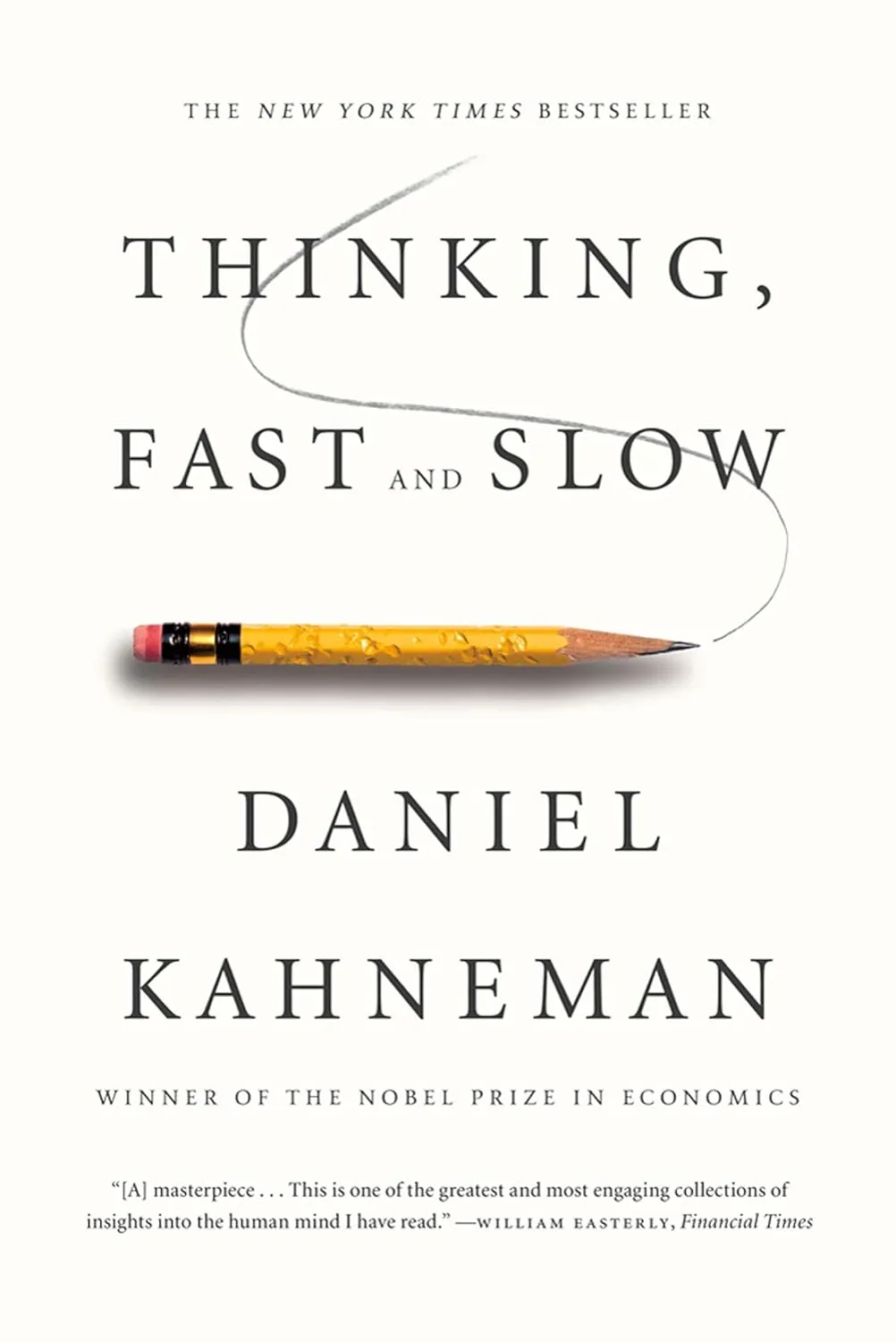
| Thinking, Fast and Slow (Kahneman) | Dual-system psychology | Research summary | Deep understanding of cognitive biases |
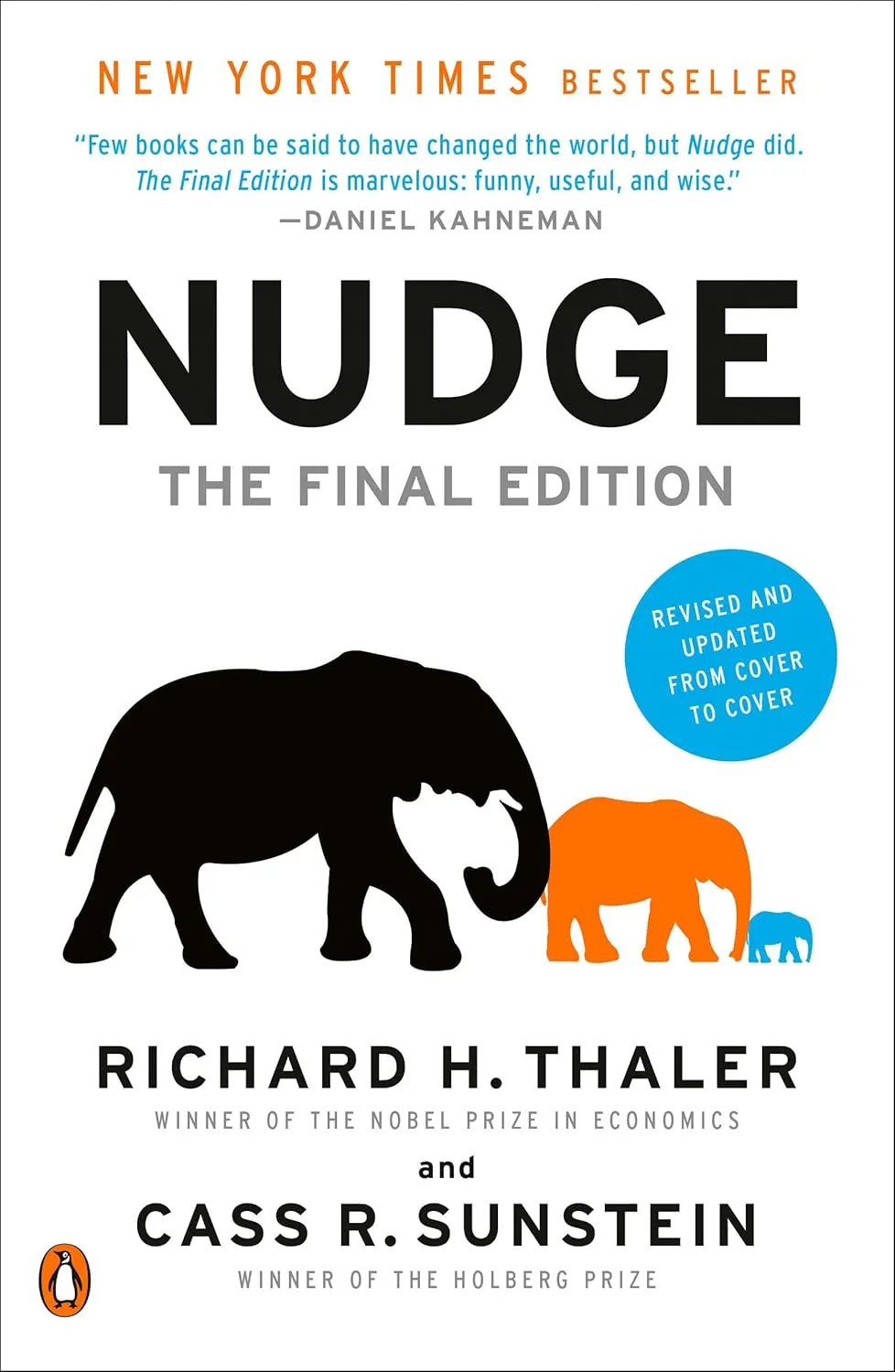
| Nudge (Thaler & Sunstein) | Policy applications | Argument | Choice architecture (but see replication issues) |
| Predictably Irrational (Ariely) | Behavioral anomalies | Experiments | Accessible introduction to biases |
| The Psychology of Money (Housel) | Behavioral finance for individuals | Essays | Practical money behavior |
Read Misbehaving for the intellectual history and mental accounting framework. Read Thinking, Fast and Slow for the cognitive psychology foundation. Read The Psychology of Money for practical behavioral finance applied to personal wealth.
Implementation Guide
Applying Thaler's Concepts to Your Financial Decisions
Step 1: Audit your mental accounts
Step 2: Test for the endowment effect in your portfolio
Step 3: Build commitment devices for present bias
Step 4: Recognize the house money effect
Step 5: Be skeptical of nudges in financial products
Frequently Asked Questions
Q: Should I read Nudge or Misbehaving?
A: Different purposes. Misbehaving is the intellectual history and behavioral finance theory. Nudge is the policy application. Given the 2025 replication findings showing nudge effects are much smaller than claimed, Misbehaving is the more durable read. Read Misbehaving first, then Nudge with appropriate skepticism about effect sizes.
Q: What is the single most actionable financial takeaway?
A: Mental accounting. Recognize that every dollar in every account has identical purchasing power. The house money effect, sunk cost fallacy, and break-even effect all flow from treating money differently based on its source or history. Every investment decision should ask: "Starting from zero today, is this the best use of this capital?"
Q: Has the nudge research been debunked?
A: Not entirely. The core behavioral concepts (mental accounting, endowment effect, loss aversion) are well-established and have replicated. The nudge policy interventions are much weaker than originally claimed. The 2025 meta-analysis found effect sizes near zero after adjusting for publication bias. The Nudge Unit trials show effects of 1.4 percentage points, not the 8.7 points claimed in academic studies.
Q: Does Fuller & Thaler Asset Management still work?
A: The under-reaction and over-reaction patterns Thaler identified have been documented in multiple markets. Whether they persist after widespread publication is an open question. The efficient market response is that any tradeable pattern should disappear once known. The behavioral response is that biases are deep enough to persist even when known.
Final Verdict
Rating: 4.6/5
Misbehaving is the most complete intellectual account of behavioral economics available in a single book. Its mental accounting framework, the endowment effect, and present bias analysis provide essential tools for understanding real financial behavior. The 2025 nudge replication crisis does not invalidate the core concepts. It does undermine the policy prescriptions that Thaler and Sunstein built on top of them. Read this book for the behavioral insights that will help you make better financial decisions. Read the nudge chapters with the awareness that the evidence base has weakened considerably.
Get Your Copy
Paperback: Buy on Amazon
Kindle: Buy on Amazon
Audiobook: Buy on Amazon
Prices current as of publication date. Free shipping available with Prime.