*Disclosure: This article contains affiliate links. If you purchase through these links, we may earn a commission at no additional cost to you. We only recommend books we genuinely believe in.
Quick Overview
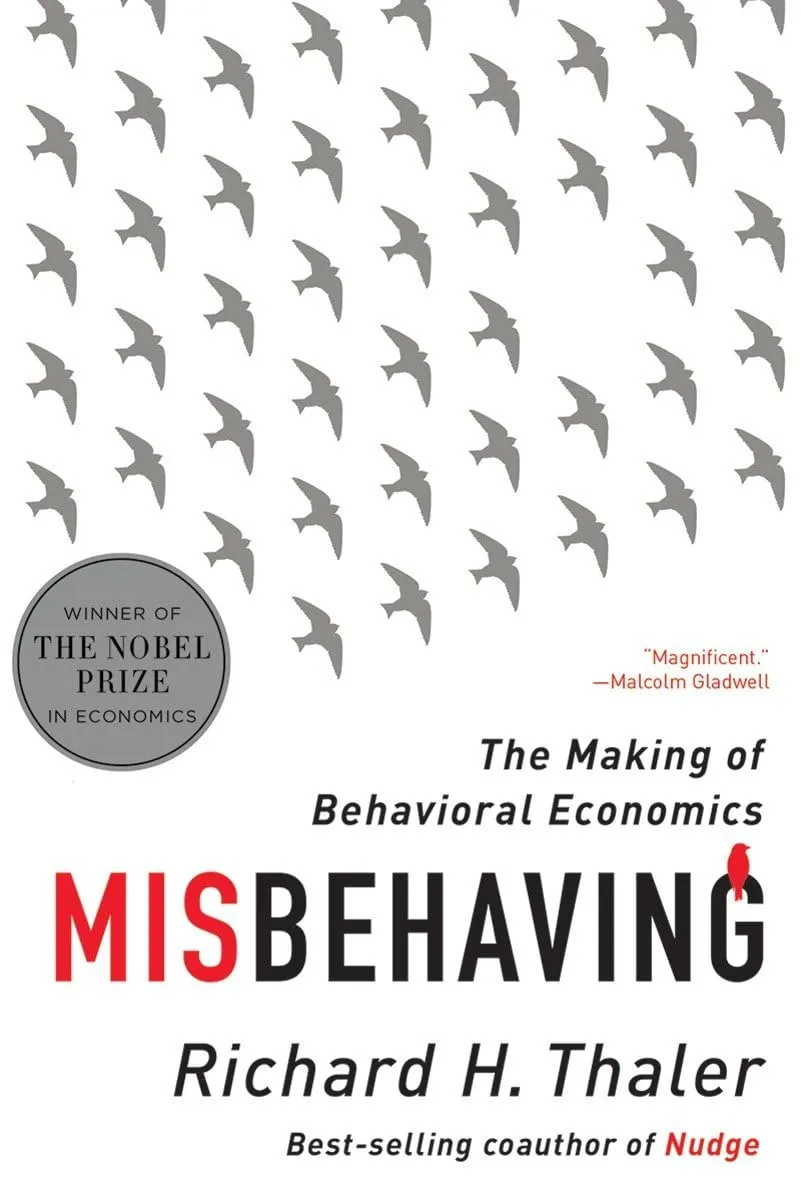
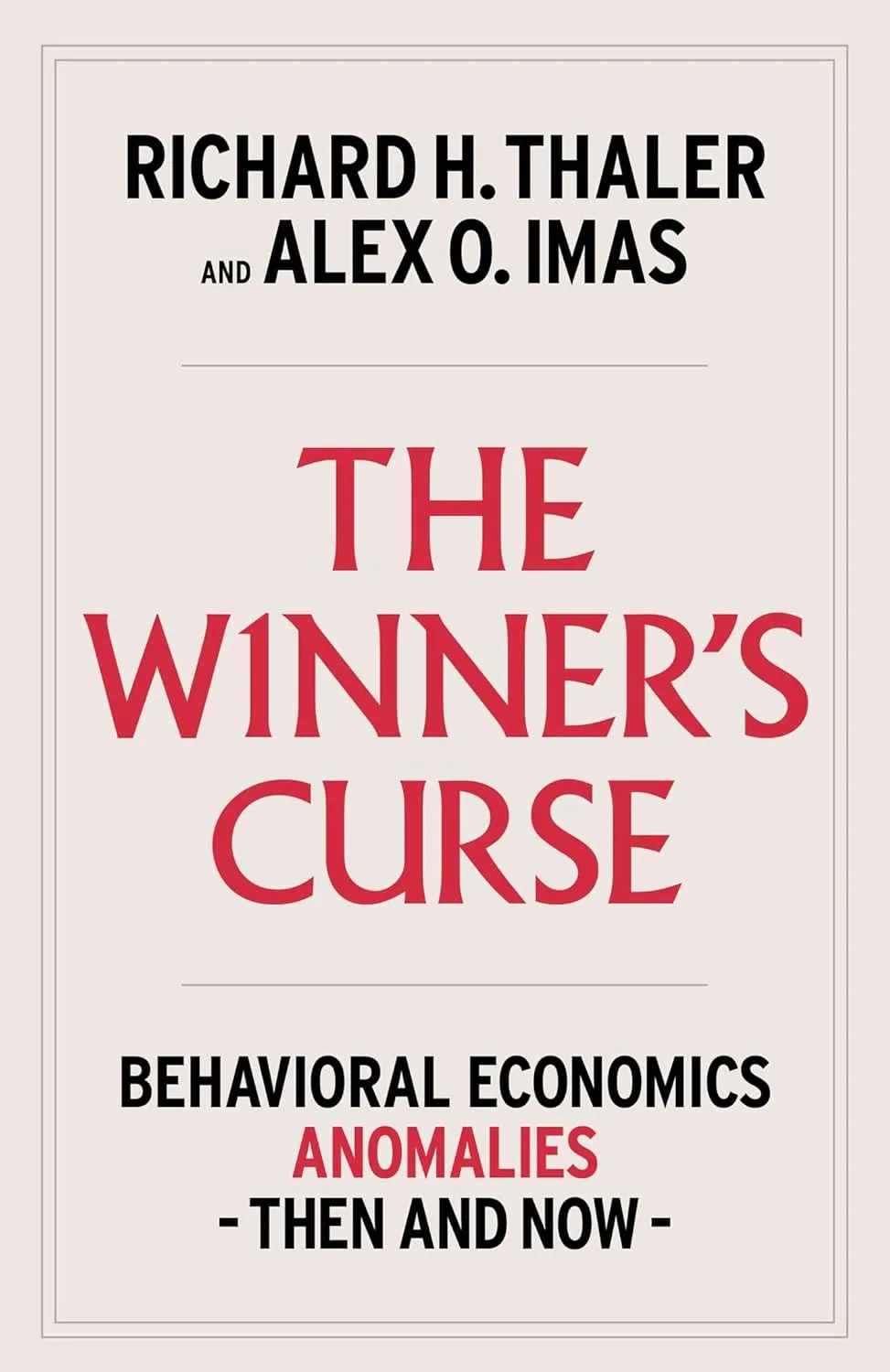
I came to The Winner's Curse backwards. I read Misbehaving first, then Thinking, Fast and Slow, and only then circled back to Thaler's 1992 collection of essays. That turned out to be the right order. The Winner's Curse is denser and more academic than his later work, but it is the original primary source for many of the concepts that have since become mainstream in behavioral finance.
Richard Thaler won the Nobel Prize in Economics in 2017 for his contributions to behavioral economics. This book, published in 1992, documents specific economic anomalies, situations where actual human behavior systematically and predictably departs from what standard economic theory requires. Written before behavioral economics became mainstream, it is the original academic case against the rational agent model of economics, presented accessibly for non-specialists.
The book has not been updated since publication, and it does not need to be. The anomalies Thaler documented are structural features of human psychology, not passing phenomena. The equity premium puzzle persists. The endowment effect persists. Mental accounting persists. What has changed since 1992 is that these concepts have moved from academic curiosity to mainstream acceptance, and have been incorporated into retirement policy, consumer protection regulation, and investment practice worldwide.
Book Details
| Attribute | Details |
|---|---|
| Title | The Winner's Curse |
| Author | Richard H. Thaler |
| Publisher | Princeton University Press |
| Published | 1992 (still in print, 2026) |
| Pages | 240 |
| Reading Level | Intermediate to Advanced |
| Amazon Rating | 4.3/5 stars |
Get Your Copy
Paperback: Buy on Amazon
Kindle: Buy on Amazon
About the Author
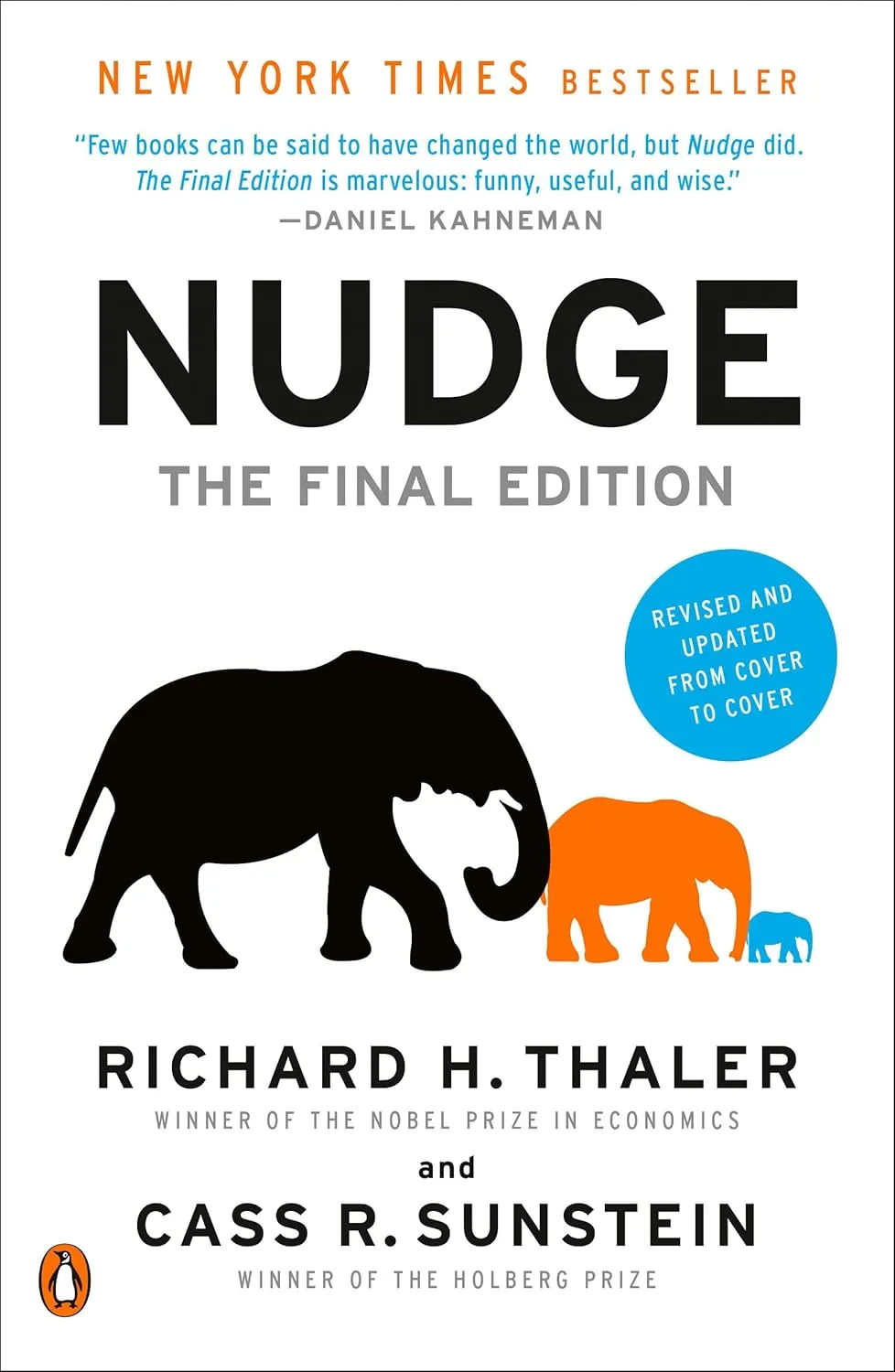
Richard Thaler is the Charles R. Walgreen Distinguished Service Professor of Behavioral Science and Economics at the University of Chicago Booth School of Business. He pioneered behavioral economics alongside Daniel Kahneman and Amos Tversky, developed the concept of mental accounting, and co-authored Nudge with Cass Sunstein. He received the Nobel Memorial Prize in Economic Sciences in 2017.
As of 2026, Thaler remains active at Chicago Booth and continues to write op-eds and columns applying behavioral economics to current policy debates. His 2025 and 2026 commentary has focused on the behavioral dimensions of AI-driven market volatility, the psychology of tariff retaliation, and the persistence of loss aversion in retail investor behavior during market drawdowns. The Nudge framework he co-developed with Cass Sunstein has been adopted by over 200 government agencies worldwide through behavioral insights teams, and the concept of "nudging" has entered everyday vocabulary.
The Winner's Curse: The Core Phenomenon
What Is the Winner's Curse?
In a competitive auction where bidders have imperfect information about the true value of what is being auctioned, the winner systematically overpays. This is the winner's curse.
The mechanism:
Suppose 10 bidders are each estimating the value of an oil field. Each makes an independent estimate. Some estimates are too high; some are too low. The true value sits near the average.
The highest bidder, the one who wins the auction, is almost certainly the one with the most optimistic estimate. Their estimate is an outlier on the high end. They pay more than the true value. They have been cursed by winning.
The mathematical formalization:
If estimates are unbiased (correct on average), the winner's estimate is:
E[highest bid] = True Value + k × (Standard Deviation of estimates)

Where k increases with number of bidders
The more bidders, the larger the winner's curse. With 100 bidders, the winner's estimate may be several standard deviations above the true value.
The correct bidding strategy:
Rational bidders should shade their bids below their private estimate to correct for the winner's curse:
Optimal Bid = Private Estimate - Expected Winner's Curse CorrectionIn practice, most bidders do not make this correction, which is why corporate acquirers systematically overpay for target companies.
The Winner's Curse in Corporate Acquisitions
The most financially important application: mergers and acquisitions.
The Acquisition Overpayment Evidence
Richard Roll's "hubris hypothesis" formalized what practitioners had long suspected: corporate acquirers systematically overpay.
The empirical evidence:
| Study | Finding |
|---|---|
| Target company shareholder returns | +20-30% premium on acquisition |
| Acquiring company shareholder returns | -1 to -5% on announcement |
| Combined value creation | Neutral to negative in most studies |
The winner's curse explains this pattern perfectly: the acquirer that wins the bidding war is the one most optimistic about synergies and value creation. Their optimism is, on average, unjustified.
The long-run evidence:
Studies of post-merger performance consistently show:
The investment implication:
When a company announces a large acquisition at a significant premium, the market's immediate negative reaction to the acquirer's stock is rational. The winner's curse predicts overpayment. Investors should be skeptical of acquirers paying large premiums in competitive bidding situations. For more on identifying problematic acquisitions, read our post on spotting value traps.
What distinguishes good acquisitions:
| Characteristic | Better Outcome | Worse Outcome |
|---|---|---|
| Competition | Few or no competing bidders | Multiple competing bidders |
| Premium paid | Below 20% | Above 30% |
| Integration track record | Management has done this before | First major acquisition |
| Strategic rationale | Clear, specific synergies | Vague "scale" arguments |
| Financing | Cash | Stock (may signal overvalued acquirer) |
Mental Accounting
Thaler developed the theory of mental accounting, how people organize, evaluate, and track their financial activities using psychological accounts rather than economic ones.
The Sunk Cost Effect
People continue investing in failing projects because of past irrecoverable investments. This is irrational: past costs are sunk and should not influence future decisions.
The experiment:
Participants were given two scenarios:
Scenario A: You paid $100 for a ski trip to Michigan. You also paid $50 for a ski trip to Wisconsin. The trips conflict. You cannot get a refund on either. The $50 Wisconsin trip is objectively better. Which do you go on?
Majority choice: The $100 Michigan trip, even though they described the $50 trip as better. The larger sunk cost dominates.
The investment version:
An investor holds two stocks, both currently worth $10,000:
Both stocks have identical forward-looking prospects. The rational investor is indifferent between them. The loss aversion investor holds Stock B hoping to "get back" to the $14,000 purchase price. The sunk cost fallacy in action.
The Psychological Accounts Framework
People maintain separate mental accounts for different categories of money:
| Mental Account | Category | Treatment |
|---|---|---|
| Income | Regular salary | Spent carefully |
| Windfall | Tax refund, bonus | Spent more freely |
| Savings | Emergency fund | Protected, not spent |
| "Mad money" | Gambling/speculation | Treated recklessly |
From an economic perspective, money is fungible. A dollar from any source has identical purchasing power. Mental accounting violates fungibility, causing systematic irrationality:
Portfolio construction implications:
Mental accounting explains why many investors hold simultaneously:
Economically irrational (they should pay off the card with the savings), but psychologically coherent. The savings account is in the "safety" mental account and the credit card is in the "debt" mental account. They cannot be combined. This is the same phenomenon Dave Ramsey exploits with the debt snowball, which we cover in our review of The Total Money Makeover.
The Equity Premium Puzzle
One of the most important and unresolved problems in finance: why do stocks earn so much more than bonds over the long run?
The Historical Premium
| Asset | Historical Annual Return (U.S., 1926-2023) |
|---|---|
| Large-cap stocks | ~10.5% |
| Long-term government bonds | ~5.5% |
| Equity premium | ~5.0% |
A 5% annual premium, compounded over 20 years, produces $10 for every $1 invested in stocks vs. only $3 invested in bonds. This is an enormous difference.
Why This Is Puzzling
Standard financial theory predicts that risk-averse investors demand a premium for holding risky assets (stocks). The question is how large the premium needs to be to compensate for the extra risk.
Mehra and Prescott (1985) showed that the observed 5% premium requires an implausibly high level of risk aversion, far higher than observed in other economic contexts. People behave as if they fear equity losses roughly 30-50x more than standard utility theory predicts.
Thaler's Behavioral Explanation: Myopic Loss Aversion
Thaler and Benartzi (1995) proposed that two behavioral factors together explain the equity premium:
1. Loss aversion: Losses feel approximately twice as painful as equivalent gains feel good.
2. Myopic evaluation: Investors evaluate their portfolios far too frequently (daily, monthly, quarterly) rather than over the long run.
The combination:
Even if stocks earn more than bonds in the long run, frequent evaluation means investors constantly see losses in the short run. Stocks lose value in roughly 1 in 3 calendar years. Investors who check their portfolio monthly will see losses in approximately 3-4 months out of every 12.
Each loss event is psychologically costly. The cumulative psychological cost of frequent losses in stocks is high enough to require a large risk premium to induce investors to hold them.
The evidence:
Thaler and Benartzi tested this by asking how often investors would accept an equity-bond split that historically produced the observed equity premium. The answer was approximately one year. Investors evaluating their portfolios annually were indifferent between stocks and bonds at current premium levels.
The practical implication:
The equity premium puzzle implies that investors who can genuinely hold stocks for long periods and resist frequent evaluation will earn more than they psychologically deserve for the "risk" they bear. The excess premium exists because most investors cannot psychologically tolerate the frequent short-run losses in stocks. This is why index fund investors who set up automatic contributions and never check their portfolio tend to outperform active traders. For a deeper dive, read our post on behavioral biases in investing.
How to benefit:
The Endowment Effect
People value things more highly simply because they own them. This is the endowment effect, a violation of the rational assumption that willingness to accept (WTA) and willingness to pay (WTP) should be equal for the same object.
The Cornell Mug Experiment
Thaler's classic experiment: half the students in a class received a coffee mug and were asked the minimum price they would sell it for. The other half were asked the maximum they would pay for the mug.
Expected result (rational model): Both groups should value the mug at approximately the same amount.
Actual result: Sellers demanded approximately twice what buyers were willing to pay.
Ownership created value that was not economically justified.
The Endowment Effect in Investing
Holding inherited positions:
Investors who inherit stock positions typically hold them far longer than the rational holding period would suggest, even when the position represents concentrated risk or is not the best investment opportunity available. The inheritance creates an "ownership attachment" that makes selling psychologically costly.
"Endowed" stock options:
Employee stock options feel "owned" even before vesting. Employees behave as if the unvested options are already theirs, taking on excessive employer stock concentration in their broader portfolio.
The house money effect reversal:
Interestingly, the endowment effect is weakened for money won in gambling (house money), consistent with mental accounting. Gambling winnings are not fully "endowed" because they were never treated as "real" money.
Portfolio implications:
The endowment effect causes investors to hold positions too long. The antidote: periodically ask for each position, "Would I buy this today at today's price with fresh money?" If the answer is no, the endowment effect may be keeping you invested, not rational analysis.
Intertemporality and Hyperbolic Discounting
Thaler documents that people discount future rewards at inconsistent rates, far more steeply for near-term delays than for far-future delays. This is known as hyperbolic discounting.
The Preference Reversal Problem
A rational individual with consistent time preferences should answer these questions consistently:
Question 1: Would you prefer $100 today or $110 in a week?
Question 2: Would you prefer $100 in 52 weeks or $110 in 53 weeks?
Both involve the same trade-off: $10 more for one week's wait. Rational agents should have the same answer to both. But in practice:
This is hyperbolic discounting, steeply discounting the near future, but nearly indifferent between two far-future dates.
The Investment Implication: Retirement Savings
Hyperbolic discounting explains why people chronically under-save for retirement:
Thaler and Benartzi's Save More Tomorrow (SMarT) program:
Rather than asking workers to save more now (fighting the present bias), commit to automatic increases in future savings rates whenever you receive a raise. This leverages behavioral finance insights to work with human psychology rather than against it.
The mechanism:
Because the increases happen in the future (when people are patient) and coincide with salary increases (so take-home pay does not fall), the present bias is largely avoided. Thaler found adoption rates of 78% vs. 28% for lump-sum savings advice.
This became the foundation for the Pension Protection Act of 2006, which allowed automatic enrollment and automatic escalation in 401(k) plans. It is one of the most impactful behavioral economics policy applications in history. As of 2026, over 70% of large U.S. employers offer automatic enrollment in their 401(k) plans, and average default contribution rates have risen from 3% to 4% or higher. The SMarT framework has been extended in recent years to Roth IRA automatic escalation and to emergency savings auto-enrollment, both of which build on the same behavioral insight.
Comparing Thaler's Books
| Book | Audience | Depth | Tone |
|---|---|---|---|
| The Winner's Curse (1992) | Intermediate-Advanced | Academic rigor | Scholarly essays |
| Misbehaving (2015) | General | Popular narrative | Memoir-like; entertaining |
| Nudge (2008, with Sunstein) | General-Policy | Applied behavioral economics | Policy-focused |
The Winner's Curse is the most intellectually demanding but most rigorous of the three. Misbehaving covers similar ground far more accessibly. Read Misbehaving first; read The Winner's Curse for the academic depth.
Strengths & Weaknesses
What We Loved
Areas for Improvement
Who Should Read This Book
Highly Recommended For
Probably Not For
Frequently Asked Questions
Q: Should I read this before or after Misbehaving?
A: After. Misbehaving tells the story of behavioral economics' development engagingly. The Winner's Curse provides the underlying academic essays in more rigorous form. The combination is complementary.
Q: Is the winner's curse relevant to stock market investing?
A: Yes, especially in IPOs and competitive bidding situations. IPO investors are essentially auction participants. The most optimistic buyers set the price. Initial IPO returns suggest consistent overpricing, and long-run IPO performance is typically below the market.
Q: Has the equity premium changed since the book was published?
A: The equity premium has narrowed somewhat since 1992 but remains substantial. U.S. stocks have returned approximately 10.5% annually vs. about 5.5% for long-term government bonds over the full 1926-2025 period. The behavioral explanation Thaler offers (myopic loss aversion) remains the leading candidate for why the premium persists.
Final Verdict
Rating: 4.4/5
The Winner's Curse is the most academically rigorous collection of behavioral economics anomalies from the field's primary architect. Its winner's curse analysis, mental accounting framework, equity premium puzzle treatment, and SMarT program are each independently valuable for investors. Challenging reading, but extraordinarily rewarding for those who want behavioral economics at its most rigorous. The concepts have only become more relevant as behavioral insights increasingly shape retirement policy, consumer protection, and investment practice in 2026.
Get Your Copy
Paperback: Buy on Amazon
Kindle: Buy on Amazon
Prices current as of publication date. Free shipping available with Prime.