*Disclosure: This article contains affiliate links. If you purchase through these links, we may earn a commission at no additional cost to you. We only recommend books we genuinely believe in.
Quick Overview
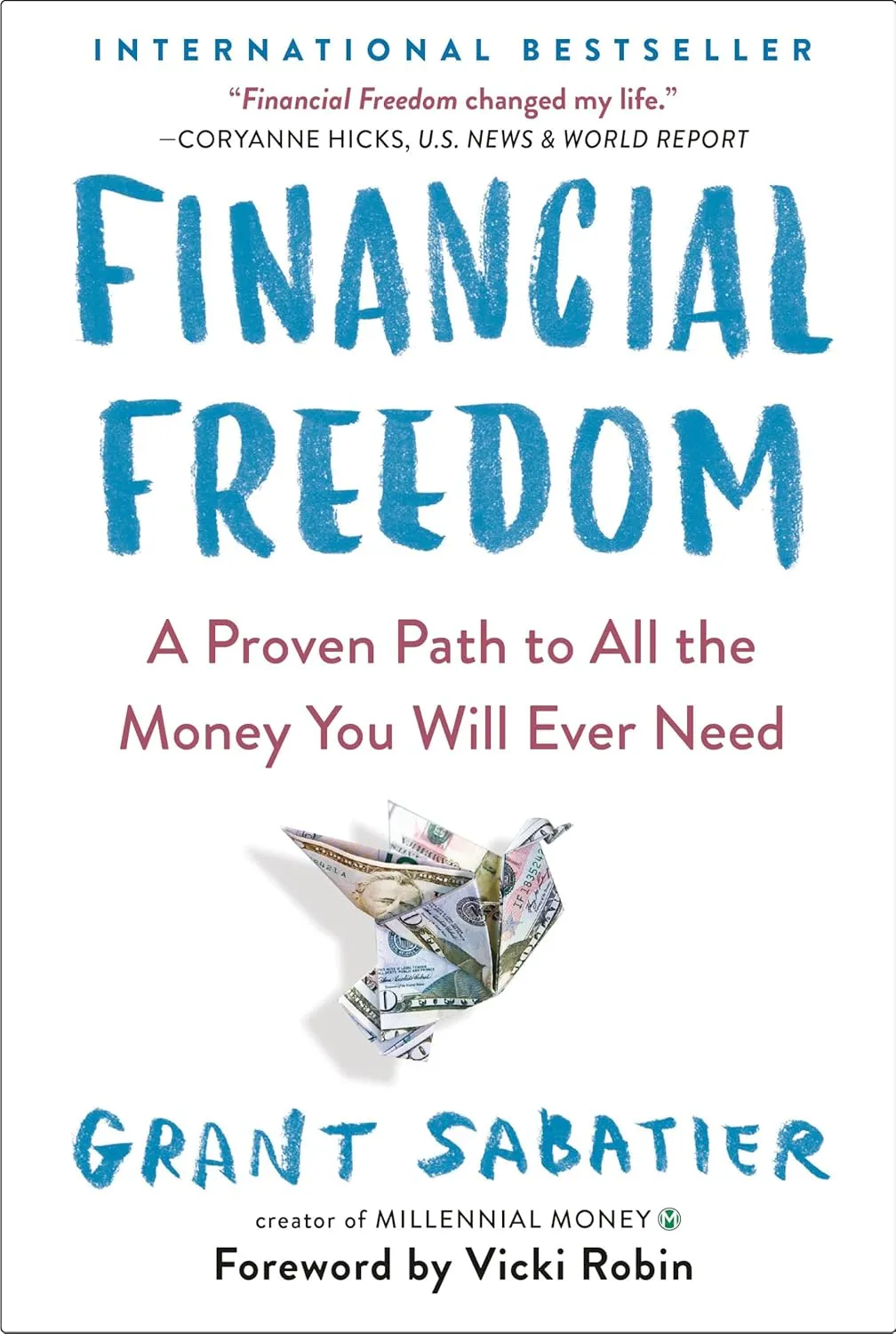
Grant Sabatier had $2.26 in his bank account at age 24. Five years later, he had over $1.25 million. Financial Freedom is the playbook he used to get there: maximize income, slash expenses, invest everything in low-cost index funds, and track your savings rate obsessively until you hit your FI number. The book has become one of the most recommended titles in the FIRE community since its 2019 publication, endorsed by Lifehacker, U.S. News and World Report, and named one of the New York Public Library's Top 10 Think Thrifty Reads of 2023. But the story has a wrinkle that critics have rightly flagged: Sabatier could live with his parents, had a University of Chicago degree, and had the health and time to work a full-time job plus two side businesses. The math works. The question is whether it works for everyone.
Book Details
| Attribute | Details |
|---|---|
| Title | Financial Freedom: A Proven Path to All the Money You Will Ever Need |
| Author | Grant Sabatier |
| Publisher | Penguin Random House (Avery) |
| Published | 2019 |
| Pages | 320 |
| Reading Level | Beginner |
| Amazon Rating | 4.2/5 stars |
Get Your Copy
Paperback: Buy on Amazon
Kindle: Buy on Amazon
Audiobook: Buy on Amazon
About the Author
Grant Sabatier is the founder of Millennial Money, a personal finance site that reached millions of readers. After achieving financial independence in five years, he became one of the most visible voices in the FIRE movement. He has spoken at Google, Harvard, and the World Economic Forum. His story has been featured in The New York Times, Washington Post, and on CNBC. He continues to write and speak about financial independence from his base in the United States.
Key Concepts & Frameworks
The Seven Levels of Financial Freedom
Sabatier structures the journey to financial independence as seven distinct levels:
| Level | Name | Description |
|---|---|---|
| 1 | Clarity | Know exactly where you are financially |
| 2 | Self-Sufficiency | Cover all expenses with your own income |
| 3 | Breathing Room | Have an emergency fund; no longer living paycheck to paycheck |
| 4 | Stability | 6+ months of expenses saved; out of high-interest debt |
| 5 | Flexibility | 2+ years of expenses saved; could take a career risk |
| 6 | Financial Independence | 25x+ expenses invested; work becomes optional |
| 7 | Abundant Wealth | Well beyond your needs; focus shifts to impact and meaning |
Most personal finance books treat financial independence as a binary. Sabatier's contribution is breaking it into stages you can track and celebrate. Reaching Level 4 (Stability) is a massive achievement that most Americans never reach. Level 5 (Flexibility) means you could survive a job loss without catastrophe. Level 6 (Independence) means you never need to work again.
The Savings Rate Math
Your savings rate is the single most important variable in your financial independence timeline. The math is straightforward but the implications are dramatic.
| Savings Rate | Years to FI |
|---|---|
| 5% | 66 |
| 10% | 51 |
| 25% | 32 |
| 50% | 17 |
| 65% | 10 |
| 75% | 7 |
Assumptions: 7% real annual return, 4% safe withdrawal rate, starting from zero.
Use our savings rate calculator to calculate your own number. The relationship is exponential, not linear, because higher savings rates mean both more money invested and lower expenses to fund. Going from 10% to 25% saves 19 years. Going from 50% to 75% saves 10 more years.
Sabatier's key insight: the fastest path to financial independence is not minimizing expenses or maximizing income. It is doing both simultaneously. Each additional dollar earned that gets invested accelerates the timeline, as does each dollar of expenses reduced.
Income Growth: The Other Half of the Equation
Where Sabatier diverges from most personal finance books is his emphasis on income growth. Most books focus on cutting expenses. Sabatier argues that cutting has a floor (you can only cut so far) while income has no ceiling.
His strategies:
The book's strongest sections are the tactical chapters on income growth. Sabatier provides specific scripts for salary negotiation, frameworks for choosing side hustles, and case studies of people who doubled or tripled their income in two years.
The lifetime value of a single salary negotiation is significant. A $5,000 raise negotiated at age 25, invested at 7%, grows to $472,000 over 30 years. A $10,000 raise becomes $944,000. Yet most people never negotiate because they find it uncomfortable.
The Four-Account System
Sabatier recommends four accounts for managing money:
The system is simple but effective. By separating accounts by purpose, you create natural friction against overspending and natural encouragement of investing.
The account priority order for contributions:
| Priority | Account | Why |
|---|---|---|
| 1 | 401(k) to employer match | 100% instant return from match |
| 2 | HSA (if eligible) | Triple tax advantage |
| 3 | Roth IRA | Tax-free growth, flexible for early retirees |
| 4 | 401(k) to maximum | Pre-tax deferral reduces taxable income |
| 5 | Taxable brokerage | Flexible, no contribution limits |
The Time Value of Money
Sabatier hammers the point that time is the most valuable investment asset. $1,000 invested at 25 at a 7% real return becomes $7,612 by 55. The same $1,000 invested at 35 becomes $3,870. Starting 10 years earlier nearly doubles the result.
Every $1 not invested at 25 costs $7.61 of future wealth. This is not an argument for never buying coffee. It is an argument for making spending decisions with full awareness of the future-value cost. Use our compound interest calculator to see the math for your own situation.
Calculating Your FI Number
The standard formula: multiply your annual expenses by 25 (the inverse of the 4% safe withdrawal rate).
| Annual Expenses | FI Number |
|---|---|
| $30,000 | $750,000 |
| $40,000 | $1,000,000 |
| $60,000 | $1,500,000 |
| $80,000 | $2,000,000 |
Use our FIRE calculator to model your own timeline. Your FI number should be based on your planned retirement spending, not your current spending. Many people discover their FI number is lower than expected because work-related expenses (commuting, work clothes, lunches out, stress-spending) disappear in retirement.
Sabatier does address sequence of returns risk briefly. His adjustments for early retirees: use 3.5% if retiring before 40, maintain 1-2 years cash buffer, have flexibility to reduce spending by 10-20% during bad market years, and consider part-time income for the first 5-10 years as a buffer.
Practical Applications
The 90-Day Sprint Plan
Days 1-30: Clarity and Optimization
Days 31-60: Income Acceleration
Days 61-90: Investment Setup
Daily Habits
Sabatier recommends specific daily habits:
The Automation Checklist
| System | Action |
|---|---|
| Emergency fund | Auto-transfer monthly until fully funded |
| 401(k) | Maximum contribution, auto-increase annually |
| Roth IRA | Auto-invest monthly |
| Taxable investing | Auto-invest surplus after tax-advantaged maximized |
| Bills | Auto-pay all regular bills |
Automation removes willpower from financial decisions. Once set up, the optimal behavior happens automatically.
Strengths & Weaknesses
What We Loved
Areas for Improvement
Who Should Read This Book
Highly Recommended For
Probably Not For
Comparison to Similar Books
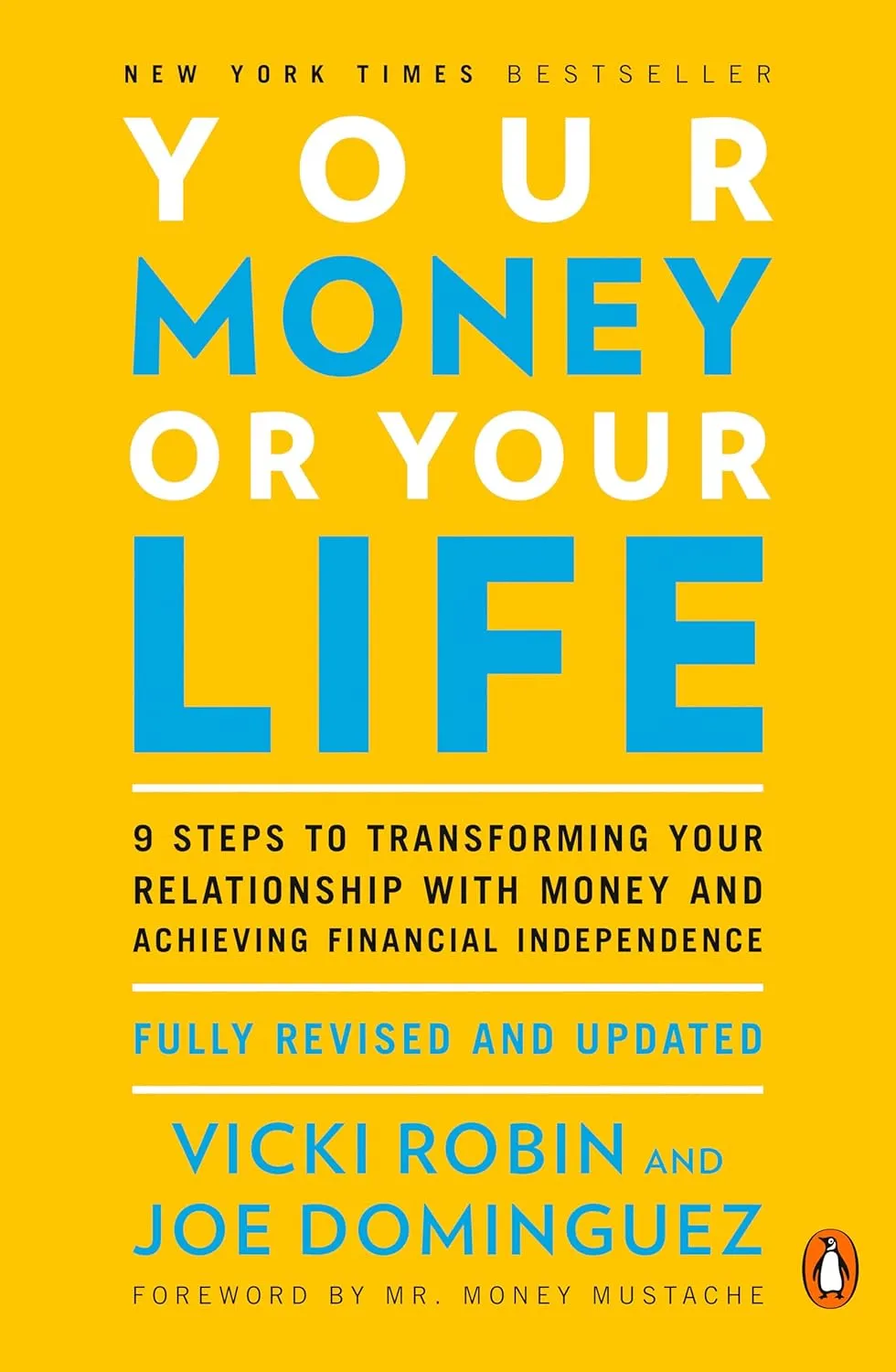
vs. Your Money or Your Life by Vicki Robin
| Aspect | Sabatier | Robin |
|---|---|---|
| Focus | Income growth and investing | Spending awareness and values alignment |
| Core tool | Savings rate | True hourly wage |
| Tone | Motivational, aggressive | Reflective, philosophical |
| Best for | Young earners who want speed | Anyone questioning their relationship with money |
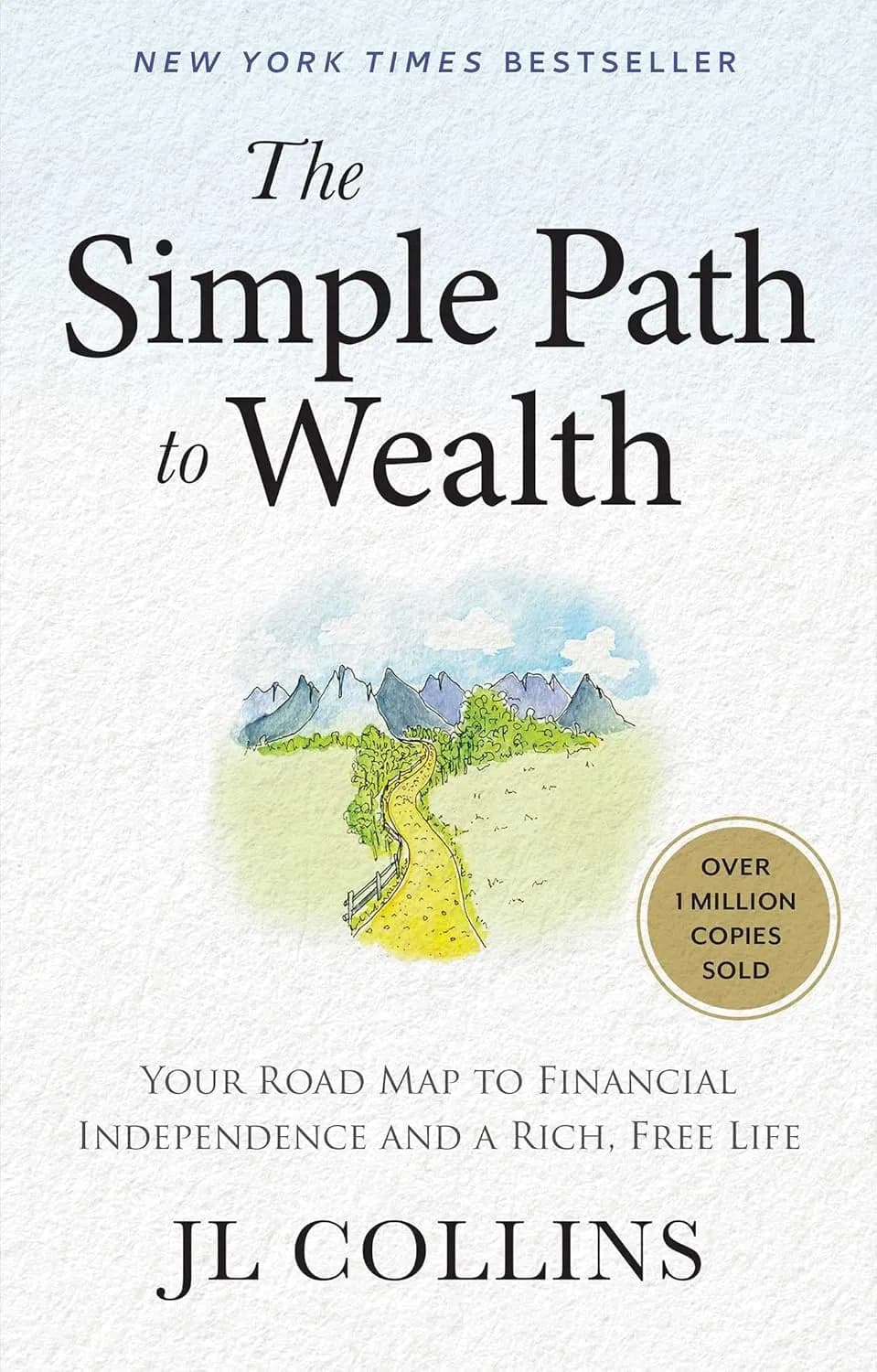
vs. The Simple Path to Wealth by J.L. Collins
| Aspect | Sabatier | Collins |
|---|---|---|
| Focus | Income + savings + investing | Investing only |
| Investing advice | Index funds, four-account system | Index funds, F-you money |
| Depth on investing | Moderate | Deep |
| Best for | Complete beginners | Those who want to understand why index funds work |
Implementation Guide
Month 1: Calculate Your Numbers
Month 2: Optimize Income and Expenses
Month 3: Build the System
Frequently Asked Questions
Q: Is Sabatier's story replicable?
A: The math is replicable. The circumstances are not universal. Living with parents rent-free, having a marketable degree, and having the health and time to work 100+ hour weeks are significant advantages. The savings rate math works for anyone. The income growth strategies work best for people with marketable skills and flexible schedules.
Q: How does this compare to other FIRE books?
A: Financial Freedom is more income-focused than most FIRE books. Your Money or Your Life focuses on spending awareness. The Simple Path to Wealth focuses on investing. Sabatier covers all three but his unique contribution is the income growth emphasis.
Q: Does the book address market crashes?
A: Briefly. Sabatier acknowledges that markets decline but argues that time in the market beats timing the market. If you want deeper treatment of sequence of returns risk and downturn strategies, you will need supplementary reading.
Q: I have kids. Is this book for me?
A: Read it for the frameworks and math, but adjust the timeline. The aggressive 5-year sprint is unrealistic for most parents. A 10 to 15 year timeline is more achievable with children, and that is still far faster than the traditional 40-year career.
Final Verdict
Rating: 4.2/5
Financial Freedom is the best FIRE book for beginners who need a complete roadmap. The seven levels framework, savings rate math, and income growth strategies are genuinely useful and well presented. The book's weakness is its blind spot around privilege, structural barriers, and the realities of parenting. Read it for the math and the income strategies, then read J.L. Collins for the investing depth and adjust the timeline to your own circumstances. The 5-year sprint is inspiring. A 10-year version is more realistic for most people, and still remarkable.
Get Your Copy
Paperback: Buy on Amazon
Kindle: Buy on Amazon
Audiobook: Buy on Amazon
Prices current as of publication date. Free shipping available with Prime.