
What Are Treasury Bonds and Why Do Investors Flee to Them in a Crisis
When stock markets plunge, investors rush into Treasury bonds. In July 2026, the 10-year Treasury yield hit 4.71%. Here is what Treasury bonds are, how they work, and whether they belong in your portfolio.

When the stock market plunges, a predictable sequence unfolds: investors sell stocks, buy Treasury bonds, and Treasury yields fall as bond prices rise. Financial media calls this a "flight to safety." In July 2026, the opposite happened: Treasury yields surged to 4.71% on the 10-year and 5.19% on the 20-year, the highest levels since early 2025, driven not by a stock market crash but by inflation fears and concerns about the ballooning federal deficit.
Treasury bonds are the foundation of the global financial system. They are the benchmark against which all other interest rates are measured. The 10-year Treasury yield determines mortgage rates, corporate bond yields, and the discount rate used to value stocks. Understanding Treasury bonds is essential for understanding how money works.
This post covers what Treasury bonds are, how they work, why investors buy them during crises, the current state of the Treasury market in mid-2026, and whether they belong in your investment portfolio.
What Treasury Bonds Actually Are
A Treasury bond is a loan you make to the US government. You give the government money. The government promises to pay you regular interest (called coupon payments) and return your principal at a specified maturity date.
The US Treasury issues three main types of securities, differentiated by maturity:
| Security | Maturity Range | Interest Paid | Typical Use |
|---|---|---|---|
| Treasury bills (T-bills) | 4 weeks to 52 weeks | Sold at discount, no coupon | Short-term cash management |
| Treasury notes (T-notes) | 2, 3, 5, 7, 10 years | Fixed coupon, paid semiannually | Medium-term investment |
| Treasury bonds (T-bonds) | 20 or 30 years | Fixed coupon, paid semiannually | Long-term investment, pension funds |
People use "Treasury bond" colloquially to refer to all three. The key distinction is maturity: bills are short-term, notes are medium-term, bonds are long-term.
The US government has never defaulted on its debt. Treasury securities are considered the safest investment in the world, backed by the full faith and credit of the US government. This is why they are called "risk-free" in financial theory: the risk of the US government failing to repay is considered effectively zero.
For a basic definition, see our government bond glossary term and our treasury yield glossary term.
How Treasury Bonds Work
When you buy a $1,000 10-year Treasury note with a 4.5% coupon, here is what happens:
- You pay $1,000 (if purchased at par, which is typical at auction).
- Every 6 months, you receive $22.50 in interest (4.5% divided by 2, times $1,000).
- After 10 years, you receive your $1,000 principal back.
- Total interest received over 10 years: $450.
The yield is the effective annual return you earn if you hold the bond to maturity. It is determined at auction by market demand. When demand is high (many buyers), the yield goes down. When demand is low (fewer buyers), the yield goes up.
The inverse relationship between bond prices and yields
This is the most important concept in bond investing. Bond prices and yields move in opposite directions. When yields rise, existing bond prices fall. When yields fall, existing bond prices rise.
Why: if you hold a 10-year bond paying 3% and new bonds are issued at 5%, nobody will buy your 3% bond at full price. They can get 5% from a new bond. Your bond's price must fall until its effective yield matches the market rate.
| Scenario | What Happens to New Bond Buyers | What Happens to Existing Bond Holders |
|---|---|---|
| Yields rise (e.g., 3% to 5%) | Get higher interest payments | Bond prices fall, unrealized loss |
| Yields fall (e.g., 5% to 3%) | Get lower interest payments | Bond prices rise, unrealized gain |
This is why the bond market has been described as a "bloodbath" since mid-2020. The 10-year Treasury yield rose from 0.5% in August 2020 to 4.71% in July 2026. Anyone who bought long-term bonds in 2020 or 2021 at very low yields has seen the market value of those bonds decline dramatically. They will still get their principal back at maturity, but they are locked into below-market rates for years.
Why Investors Flee to Treasuries in a Crisis
During financial crises, investors sell risky assets (stocks, corporate bonds, real estate) and buy safe assets (Treasuries). This "flight to safety" happens because Treasuries are the only asset where both the income and the principal are guaranteed by the US government.
The mechanism: increased demand for Treasuries drives their prices up and their yields down. This is why you often see stock market crashes accompanied by falling Treasury yields. In March 2020, during the COVID crash, the 10-year Treasury yield fell from 1.13% to 0.54% in a matter of weeks as investors fled stocks for bonds.
But 2026 has been different. Treasury yields have been rising, not falling, because the current bond market concerns are about inflation and government debt, not stock market panic. The Wolf Street analysis from July 25, 2026 documents how the 20-year Treasury bond auction sold at a yield of 5.163%, with the 20-year yield subsequently rising to 5.20%, the highest since October 2023.
The bond market is nervous about two things: inflation running above the Fed's 2% target, and the federal deficit requiring massive new debt issuance. The BBVA Research report from July 26, 2026 notes that the 30-year Treasury yield rose nearly 30 basis points in July to 5.16%, its highest level since July 2007.
The Current Treasury Market (Mid-2026)
As of July 24, 2026, the Treasury yield curve looks like this:
| Maturity | Yield | What It Tells Us |
|---|---|---|
| 3-month T-bill | 3.90% | Short-term rates remain elevated |
| 2-year note | 4.35% | Market expects Fed to hold or hike |
| 10-year note | 4.69% | Long-term inflation and debt concerns |
| 20-year bond | 5.19% | Highest since October 2023 |
| 30-year bond | 5.16% | Highest since July 2007 |
| 10-year TIPS | 2.43% | Guaranteed real return above inflation |
Source: Trading Economics and FRED
The yield curve is upward-sloping (long-term yields higher than short-term), which is the normal shape during economic expansions. The 3-month to 10-year spread is positive at approximately 0.79 percentage points, which the NY Fed's recession probability model translates to a 12-month-ahead recession probability of approximately 15.5%, below the 30% caution threshold.
Key observations:
- The Fed is expected to hold rates unchanged at the July 2026 meeting, with markets pricing in a 35% probability of a rate hike.
- The probability of a September hike stands at nearly 80%.
- Inflation at 3.3% CPI is constraining the Fed's ability to cut rates.
- The 10-year TIPS yield of 2.43% means investors demand a 2.43% real return above inflation to hold 10-year government debt.
For more on how interest rates affect the broader economy, see our interest rate glossary term.
Do Treasury Bonds Belong in Your Portfolio
Yes, for most investors
Treasury bonds serve three roles in a portfolio:
Diversification. Treasury prices often move opposite to stock prices. During the 2008 financial crisis, the S&P 500 fell 37% while long-term Treasury bonds rose approximately 20%. This negative correlation reduces portfolio volatility. A 60/40 stock/bond portfolio experienced approximately 30% less drawdown than a 100% stock portfolio during 2008.
Capital preservation. If you need a specific amount of money at a specific future date (retirement income, a college tuition payment, a home down payment), Treasury bonds guarantee you will have that money. A 5-year Treasury note bought at 4.4% will return your principal plus 4.4% annual interest, no matter what the stock market does.
Inflation protection. TIPS (Treasury Inflation-Protected Securities) adjust their principal with CPI. At a 2.43% real yield (July 2026), a 10-year TIPS guarantees your investment outpaces inflation by 2.43% per year. This is the only investment that provides a guaranteed real return.
How much to hold
The traditional rule of thumb: hold your age in bonds (30 years old, 30% bonds). Modern advice is more nuanced:
- Young investors (20s to 30s): 10 to 20% in bonds, primarily as a rebalancing buffer. The rest in stocks for growth.
- Middle-aged investors (40s to 50s): 20 to 40% in bonds, increasing as retirement approaches.
- Near-retirement investors (55+): 40 to 60% in bonds, with 3 to 5 years of expected living expenses in short-term Treasuries or cash.
For a simple portfolio that includes bonds, read our guide on the three-fund portfolio.
When to be cautious
Long-term Treasury bonds (20+ year maturities) are risky in a rising-rate environment. A 30-year Treasury bond bought at 3% loses approximately 25% of its market value if yields rise to 5%. You will still get your principal back at maturity, but you are locked into below-market rates for decades.
In the current environment (July 2026), with inflation above target and the Fed potentially hiking rates, long-term bonds carry significant interest rate risk. Shorter maturities (2 to 5 years) or TIPS may be more appropriate for the bond portion of your portfolio.
Real-World Examples
Example 1: The investor who bought long-term bonds in 2020
In August 2020, an investor bought $100,000 of 30-year Treasury bonds at a yield of 1.25%. They wanted safety. The bonds paid $1,250 per year in interest.
By July 2026, the 30-year Treasury yield had risen to 5.16%. New 30-year bonds pay $5,160 per year on the same $100,000 investment. The investor's existing bonds, paying only $1,250 per year, are worth approximately $45,000 in the secondary market. They have lost $55,000 in market value.
If they hold to maturity (2050), they will still get their $100,000 principal back. But they will have earned only 1.25% per year for 30 years while inflation averaged approximately 3%. Their real return is negative. The $100,000 they get back in 2050 will buy far less than $100,000 buys today.
Example 2: The investor who bought TIPS in 2026
In July 2026, an investor buys $50,000 of 10-year TIPS at a real yield of 2.43%. The principal adjusts with CPI. If inflation averages 3% over the next 10 years, the principal grows from $50,000 to approximately $67,200. They also earn 2.43% real interest on the inflation-adjusted principal each year. Total real value after 10 years: approximately $63,600 in today's dollars, or a guaranteed 2.43% annual real return.
Compare this to a nominal 10-year Treasury at 4.69%. If inflation averages 3%, the real return is 1.69%. The TIPS investor earns 0.74 percentage points more per year in real terms, with inflation risk eliminated. Over 10 years, that difference compounds to approximately $4,800 more in real wealth on a $50,000 investment.
The lesson: when real yields on TIPS are above 2%, they are historically attractive. The guaranteed real return eliminates inflation risk entirely. For more on projecting investment returns, try our investment return calculator.
Common Mistakes
Buying long-term bonds when yields are at historic lows. When yields are low (like 2020 to 2021), the upside is minimal (you are locked into low rates) and the downside is large (if yields rise, bond prices fall sharply). Long-term bonds are most attractive when yields are high, because you lock in high rates and prices have less room to fall.
Assuming Treasury bonds are "risk-free." They are free from default risk, but not from inflation risk or interest rate risk. A 30-year bond at 1.25% is guaranteed to lose purchasing power if inflation averages above 1.25%. The "risk-free" label refers only to default risk.
Ignoring TIPS. Many investors do not know TIPS exist. They are the only investment that guarantees a real return above inflation. At current real yields above 2%, they deserve consideration for the bond portion of any portfolio.
Holding all bonds in one maturity. Concentrating in a single maturity (all 10-year, or all 30-year) maximizes interest rate risk. A bond ladder, spreading investments across multiple maturities, reduces risk and provides regular reinvestment opportunities.
Confusing yield with total return. Yield is the income you earn if you hold to maturity. Total return includes price changes. If you buy a bond fund and yields rise, your total return can be negative even though the yield looks attractive, because the fund's bond prices fall.
Conclusion
Treasury bonds are the safest investment in the world in terms of default risk. They are not safe from inflation or from interest rate changes. In mid-2026, with yields above 4.7% on the 10-year and TIPS offering 2.43% real, Treasury bonds are more attractive than they have been in years.
For most investors, the right approach is to hold a mix of short to intermediate-term Treasuries and TIPS in the bond portion of a diversified portfolio. Long-term bonds carry significant risk in the current rate environment. The bond allocation should be sized based on your time horizon and risk tolerance, not on predictions about where rates are headed.
If you are building a portfolio, start with our three-fund portfolio guide. If you want to understand why the stock market and bond market often move in opposite directions, read our post on what happens when the market crashes.
This post is for informational purposes only and does not constitute financial advice. Investing involves risk, including the potential loss of principal. Past performance does not guarantee future results.
Tags
Savvy Nickel Team
Financial education expert dedicated to making complex money topics simple and accessible for everyone.
Recommended Articles

What Is Quantitative Easing and Should Normal People Care
The Fed created trillions to buy bonds during crises. That is quantitative easing. Here is what it is, why it matters to your mortgage and investments, and whether the Fed is doing it again in 2026.

What Happens to Your Investments When the Market Crashes?
Market crashes feel catastrophic in the moment, but understanding what actually happens to your portfolio, and what investors who came out ahead did differently, changes everything.

How to Rebalance Your Portfolio (And When to Bother)
Rebalancing keeps your portfolio aligned with your target allocation, but doing it wrong or too often costs you money. Here is the right approach, how often to do it, and the tax-smart way to execute it.
Run the Numbers
Free calculators related to this article.
Dividend Calculator
Project your dividend income year by year, track your yield on cost, and see how reinvesting dividends accelerates portfolio growth. Includes tax adjustments and dividend growth.
Open calculator →Investment Calculator
Project how your starting amount and monthly contributions grow over time. See both nominal and inflation-adjusted results so you know what your money will actually be worth.
Open calculator →Portfolio Allocation Calculator
Find the right mix of stocks, bonds, and cash for your age and risk tolerance, with dollar amounts and a glide path projection toward retirement.
Open calculator →Recommended Books
Related Glossary Terms
Bond
A bond is a fixed-income debt instrument where an investor lends money to a borrower in exchange for regular interest payments and return of principal at maturity.
Fixed-Income Security
A fixed-income security pays a predetermined stream of interest payments and returns principal at maturity. Bonds are the most common form, providing predictable income and capital preservation for investors.
Government Bond
Government bonds are debt securities issued by national governments to fund spending, backed by the full faith and credit of the issuing government. U.S. Treasuries are considered the safest investment in the world.
Investment
An investment is an asset you buy with the expectation that it will generate income or appreciate in value over time. In 2026, with the S&P 500 CAPE ratio near 42, choosing the right investments and understanding the risk-return tradeoff matters more than ever.
Duration
Duration measures how sensitive a bond or bond fund's price is to interest rate changes. A duration of 5 means the bond's price will fall roughly 5% for every 1% rise in interest rates, making it the single most important risk metric for fixed income investors.
Interest Rate Risk
Interest rate risk is the danger that changes in interest rates will reduce the value of your fixed-income investments. When rates rise, existing bonds and bond funds lose market value because newer bonds pay higher yields, making older ones less attractive.
Recommended Podcasts
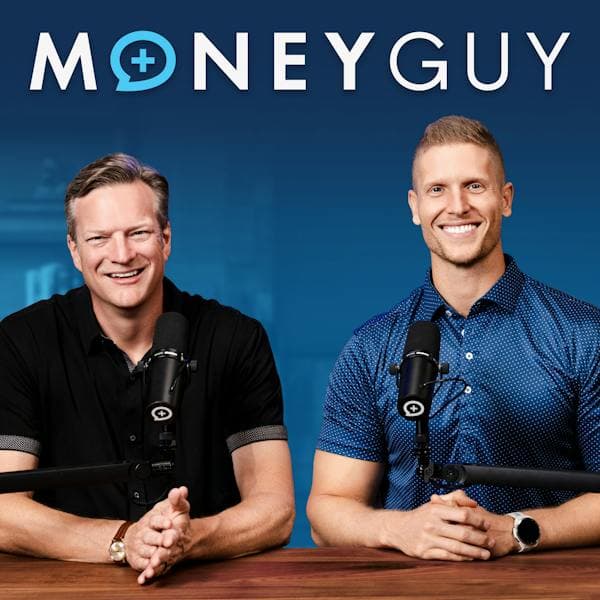
The Money Guy Show
by Brian Preston, CPA/CFP & Bo Hanson, CFA/CFP
Two fee-only financial advisors break down the Financial Order of Operations, a 9-step wealth-building framework. 617K YouTube followers and a 4.8 Apple rating.
The Investing for Beginners Podcast
by Andrew Sather & Stephen Morris (with Evan Raidt)
A value investing show for beginners that explains stock analysis in plain English. Running since 2017 with a focus on fundamentals, financial statements, and avoiding common mistakes.

The Long View
by Christine Benz, Amy Arnott & Ben Johnson
Morningstar's weekly deep-dive interview show on retirement, portfolio strategy, and fund analysis. 387 episodes, hosted by Christine Benz and the Morningstar research team.