
How the Stock Market Actually Works: A Non-Patronizing Explanation
When you click buy on your phone, your order travels through a network of brokers, exchanges, and market makers in milliseconds. Here is what actually happens, explained without dumbing it down.

6.5 billion shares change hands daily on US stock exchanges. When you click "buy" on your phone, your order is matched with a seller in about 50 to 200 milliseconds. Behind that instant transaction is a system most investors never see, and understanding it makes you a better investor.
Most explanations of the stock market either oversimplify ("it is like a supermarket for company shares") or overcomplicate (diving into algorithmic trading strategies). This is the middle ground: accurate enough to be useful, simple enough to be clear. This post covers what happens when you place a trade, how exchanges work, what market makers do, why "commission-free" trading is not actually free, and what this means for your investment strategy.
What the Stock Market Actually Is
A stock market is a network of exchanges where shares of publicly traded companies are bought and sold. It serves two purposes: companies raise capital by selling shares (the primary market), and investors buy and sell those shares among themselves (the secondary market).
Price discovery happens through the constant interaction of buyers and sellers. The market determines what each company is worth at any given moment based on the prices at which people are willing to transact.
The market is not the economy. Stock prices reflect expectations about the future, not current conditions. In 2020, the S&P 500 hit new all-time highs while unemployment was still elevated. In late 2007, GDP was growing when the stock market began its decline into the financial crisis. The market prices what it thinks will happen next, not what is happening now.
The US has about 16 registered stock exchanges, but two dominate: the New York Stock Exchange (NYSE) and Nasdaq. Together they handle the vast majority of US equity trading volume. For a basic definition, see our stock glossary term.
NYSE vs Nasdaq
The NYSE and Nasdaq operate very differently, and those differences affect how your trades execute.
| Feature | NYSE | Nasdaq |
|---|---|---|
| Trading model | Hybrid: electronic matching plus physical floor | Fully electronic, no physical floor |
| Listed companies | ~2,400 (many blue-chips: JPM, WMT, DIS, BA) | ~3,700 (tech-heavy: AAPL, MSFT, AMZN, GOOGL, NVDA) |
| Market maker structure | One Designated Market Maker (DMM) per stock | Multiple competing market makers per stock |
| Typical sectors | Financials, consumer staples, industrials | Technology, biotech, growth companies |
| Physical floor | Yes (11 Wall Street, NYC) | No |
| Best for | Blue-chip stability, tighter spreads during market hours | High-volume tech stocks, after-hours liquidity |
The NYSE uses a hybrid model. Designated Market Makers (DMMs) are assigned to each stock and are obligated to maintain fair and orderly markets. They step in with their own capital when there are imbalances between buyers and sellers, providing liquidity even when nobody else wants to. The NYSE also runs opening and closing auctions, which are among the most important price-setting mechanisms in global markets.
Nasdaq operates entirely electronically. Instead of a single DMM, multiple market maker firms compete to provide liquidity for each stock. This competition tends to produce tighter spreads on high-volume stocks. Nasdaq's fully electronic architecture also means faster order processing, which matters for the technology and growth companies that dominate its listings.
For more on how funds trade on these exchanges, see our guide on ETF vs mutual fund.
What Happens When You Click Buy
The journey of a stock order from your phone to execution involves several steps, most of which happen in fractions of a second.
Step 1: Order validation. Your broker receives your order and checks that you have sufficient buying power, the symbol is valid, and the market is open (or your broker supports extended-hours trading).
Step 2: Order routing. Your broker sends the order to an exchange, a market maker, or an alternative trading venue (sometimes called a "dark pool"). Where your order goes depends on your broker:
- Fidelity uses a smart order router that sends a significant portion of orders directly to exchanges. They report price improvement on approximately 96% of eligible orders.
- Robinhood routes nearly all orders to wholesale market makers, primarily Citadel Securities, through a practice called payment for order flow (PFOF). Citadel Securities handles approximately 47% of US retail equity volume.
Step 3: Matching. The exchange or market maker matches your buy order with a sell order. For liquid stocks like Apple, this happens in milliseconds. The matching follows price-time priority: better prices get filled first, and at the same price, earlier orders get filled first.
Step 4: Execution. You receive a confirmation with the fill price and quantity.
Step 5: Settlement. Since May 2024, the US operates on T+1 settlement. Your shares appear in your account immediately, but the formal transfer of ownership completes one business day after the trade date. This is a change from the previous T+2 standard, mandated by the SEC to reduce settlement risk.
The entire process from click to fill takes approximately 50 to 200 milliseconds for a market order on a liquid stock. For more on the regulatory framework around order routing, see the SEC's Rule 606 disclosure requirements.
Market Makers and the Bid-Ask Spread
Every stock has a bid (the highest price a buyer will pay) and an ask (the lowest price a seller will accept). The difference between them is the spread. For a highly liquid stock like Apple, the spread might be 1 cent. For a small-cap stock with low trading volume, the spread could be 40 cents or more.
Market makers are firms that continuously post both buy and sell orders. They provide liquidity: there is always someone willing to buy when you want to sell, and vice versa. Market makers profit from the spread. They buy at the bid and sell at the ask, pocketing the difference on millions of trades.
Payment for order flow is how "commission-free" trading works. Your broker sells your orders to a wholesale market maker instead of sending them to a public exchange. The market maker pays the broker a small fee per share, typically $0.001 to $0.003. In exchange, the market maker gets to execute your trade and capture the spread.
PFOF is controversial but legal. The market maker is required to match or beat the best public price available (the National Best Bid and Offer, or NBBO). They often provide slight price improvement, meaning your fill price is marginally better than the public quote. The SEC provides guidance on PFOF for investors who want to understand the mechanics.
The hidden cost: on every round trip (buy then sell), you pay the spread. On a liquid stock with a 1-cent spread, this is negligible. On an illiquid stock with a 40-cent spread on a $20 stock, that is 2% of your investment gone to spread costs alone.
Practical rule: use limit orders on less liquid stocks to avoid slippage. On highly liquid index ETFs like VTI or VOO, market orders are fine. For more on market maker mechanics, see our market maker glossary term.
What Drives Stock Prices
Stock prices move based on four main forces:
Company fundamentals. Earnings, revenue growth, and profit margins. When Apple reports higher-than-expected earnings, more investors want to buy, and the price rises. When earnings disappoint, the price falls.
Interest rates. When the Fed raises rates, borrowing costs increase for companies and bonds become more attractive relative to stocks. When rates fall, the opposite happens. Lower rates make future earnings more valuable, boosting stock valuations.
Investor sentiment. Fear, greed, and herd behavior can push prices beyond what fundamentals justify. Bull markets are driven by optimism. Bear markets by pessimism. Sentiment can override fundamentals for extended periods.
The forward-looking mechanism. The market prices in expectations about the future, not current conditions. This is why the market can rise during a recession (pricing in recovery) and fall during economic growth (pricing in an expected slowdown). For more on this dynamic, read our post on what happens when the market crashes.
Real-World Examples
Example 1: The index fund investor who never thinks about execution
An investor buys 100 shares of VTI (Vanguard Total Market ETF) through Fidelity. The spread is 1 cent. Fidelity routes to an exchange. The fill price is $0.01 worse than the midpoint. Cost: $1 on a $28,000 trade. That is 0.004% of the trade value.
This is why index ETF investors do not need to worry about execution quality. The spreads on the most liquid ETFs are so tight that the cost is effectively zero. A market order is fine. The "plumbing" of the market works in your favor when you trade highly liquid instruments.
Example 2: The small-cap investor paying hidden spread costs
An investor buys 500 shares of a small-cap stock trading at $20 through Robinhood. The bid is $19.85 and the ask is $20.15. The spread is 30 cents. Robinhood routes to Citadel Securities via PFOF. Citadel fills the order at the ask: $20.15.
The midpoint price was $20.00. The investor paid $20.15 for 500 shares, or $75 more than the midpoint value. On a $10,000 trade, that is 0.75% in hidden spread costs. If they sell the next day, they pay the spread again. Round-trip cost: $150, or 1.5%.
This is why limit orders matter for less liquid stocks. A limit order at $20.05 would have either been filled at a better price or not filled at all, saving the investor from overpaying. The "commission-free" label masks the reality that spread costs on illiquid stocks can exceed the old $5 to $10 commissions.
Common Misconceptions
"Commission-free means free." You pay the bid-ask spread on every trade. On liquid stocks and ETFs, this cost is negligible. On illiquid stocks, it can exceed what old commissions would have cost. The spread is the hidden price of "free" trading.
"The stock market is the economy." It is not. The market prices future expectations. The economy reflects current conditions. They diverge frequently and sometimes dramatically.
"Someone is on the other side of my trade and one of us is wrong." Not necessarily. A seller may be rebalancing their portfolio, taking profits, or funding a home purchase. A buyer may be dollar-cost averaging into their retirement account. Both can be making rational decisions for their own situations. Markets exist to allow people to transact for different reasons at mutually agreeable prices.
"The market is rigged against retail investors." The system has conflicts (PFOF being the main one), but retail investors today get better execution quality than at any point in history. Spreads have narrowed dramatically over the past two decades. Index fund investors, who make up a large and growing share of the market, are largely unaffected by these plumbing details.
Conclusion
The stock market is a matching engine that connects buyers and sellers through brokers, exchanges, and market makers. It is faster, cheaper, and more accessible than ever before. Understanding how it works helps you make better decisions about order types, broker selection, and which instruments to trade.
For long-term index fund investors, the mechanics do not matter much. Buy VTI, hold for decades, and ignore the plumbing. The spreads on liquid index ETFs are so tight that execution quality is a non-issue. For active traders and those buying individual stocks, understanding spreads and order routing can save real money.
If you are investing in index funds, the market mechanics work in your favor. Read our guide to the three-fund portfolio and start building.
This post is for informational purposes only and does not constitute financial advice. Investing involves risk, including the potential loss of principal. Past performance does not guarantee future results.
Tags
Savvy Nickel Team
Financial education expert dedicated to making complex money topics simple and accessible for everyone.
Recommended Articles

What Is a Safe Withdrawal Rate? The 4% Rule Explained
The 4% rule is the most widely cited retirement guideline, but most people don't know where it came from or when it breaks down. Here's the honest explanation with 2026 research.

Fractional Shares Explained: How to Invest in Amazon With $10
Fractional shares let you buy a slice of any stock or ETF regardless of its price. Here is how they work, which brokerages offer them, and when they actually matter for your portfolio.

How Real Estate Fits Into a Diversified Investment Portfolio
Real estate reduces portfolio volatility and provides income stocks and bonds cannot. With REITs returning 14.9% through mid-2026 and low correlation to the Magnificent 7, here is how to size your allocation and which vehicles to use.
Run the Numbers
Free calculators related to this article.
Dividend Calculator
Project your dividend income year by year, track your yield on cost, and see how reinvesting dividends accelerates portfolio growth. Includes tax adjustments and dividend growth.
Open calculator →Investment Calculator
Project how your starting amount and monthly contributions grow over time. See both nominal and inflation-adjusted results so you know what your money will actually be worth.
Open calculator →Portfolio Allocation Calculator
Find the right mix of stocks, bonds, and cash for your age and risk tolerance, with dollar amounts and a glide path projection toward retirement.
Open calculator →Recommended Books
Related Glossary Terms
Stock
A stock is a share of ownership in a company, entitling holders to a proportional claim on assets, earnings, and voting rights. Stocks are the primary engine of long-term wealth creation.
Broker
A broker is a licensed intermediary who executes buy and sell orders for securities, real estate, or other assets on behalf of clients, earning a commission or fee for the service.
Investment
An investment is an asset you buy with the expectation that it will generate income or appreciate in value over time. In 2026, with the S&P 500 CAPE ratio near 42, choosing the right investments and understanding the risk-return tradeoff matters more than ever.
Restricted Stock
Restricted stock units (RSUs) are company shares granted to employees that vest over time. Warrants give holders the right to buy shares at a fixed price before expiration. In 2026, 57% of companies are changing their equity plans and RSU grants have compressed 15-20% from 2021 peaks.
Accredited Investor
An accredited investor is an individual or entity that meets SEC wealth, income, or credential thresholds, allowing them to buy private securities most retail investors cannot access. In 2026 the thresholds remain $1 million net worth or $200,000 single income, and roughly 12.6% of US households qualify.
Fundamental Analysis
Fundamental analysis evaluates a stock by examining the company's financial statements, business model, competitive position, and industry context to determine its intrinsic value. It is the foundation of value investing and the primary alternative to technical analysis.
Recommended Podcasts
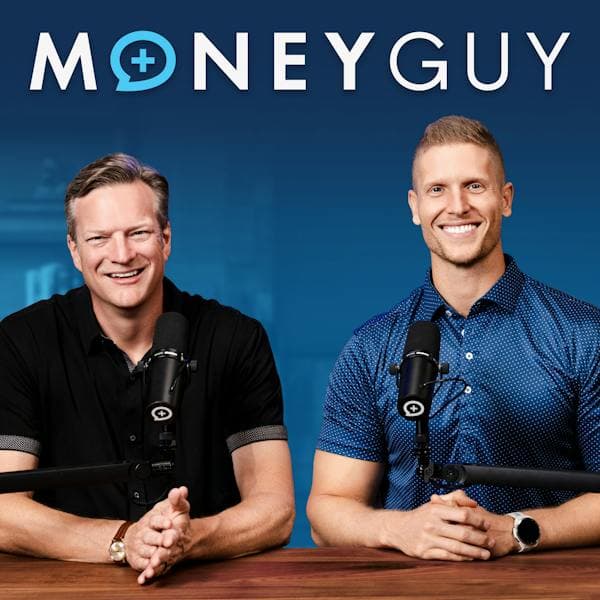
The Money Guy Show
by Brian Preston, CPA/CFP & Bo Hanson, CFA/CFP
Two fee-only financial advisors break down the Financial Order of Operations, a 9-step wealth-building framework. 617K YouTube followers and a 4.8 Apple rating.

Financial Feminist
by Tori Dunlap
Tori Dunlap hosts the number one money podcast for women, covering debt payoff, investing, and salary negotiation. New episodes every Tuesday from Her First 100K.
The Personal Finance Podcast
by Andrew Giancola
Andrew Giancola's Master Money show covers budgeting, investing, and side income with a systems-first approach. 350K monthly downloads and a 4.7 Apple rating.