
How to Reach Financial Independence as a Freelancer With No Employer Benefits
Freelancers have no employer match, no group health insurance, and no automatic 401(k) enrollment. But they have access to retirement accounts W-2 employees cannot use. Here is the freelancer FIRE playbook for 2026.

More than one-third of U.S. workers now participate in freelance or gig work in some form. For many, it is a primary income source. The freedom is real: you choose your clients, your hours, your rates. But the financial infrastructure that W-2 employees take for granted is entirely absent. No employer-sponsored retirement plan. No matching contributions. No group health insurance. No paid time off. No disability coverage. You are your own HR department, benefits administrator, and financial planner.
The freelancer retirement crisis is real. Most gig workers are not saving enough, or are not saving at all. But the tools available to self-employed people are actually more powerful than what employees have access to. A Solo 401(k) allows contributions of up to $72,000 in 2026, compared to $23,500 for a typical employee 401(k). The problem is not a lack of tools. It is a lack of awareness and systems. This post covers the specific challenges freelancers face, the retirement accounts that are actually better for self-employed people, how to handle health insurance and taxes, and how to build a system that works with irregular income.
The Freelancer Financial Challenges
No employer match
W-2 employees often get a 50-100% match on 401(k) contributions. That is free money. Freelancers get no match. You must be your own employer match.
The fix: treat 15-20% of net income as a mandatory "employer contribution" to your Solo 401(k) or SEP IRA, automatically. According to SoloWealthLab's gig worker retirement guide, a percentage-based automation strategy is the only savings method that works for irregular 1099 income.
Self-employment tax
Freelancers pay both halves of Social Security and Medicare: 15.3% on the first $176,100 of net earnings (2026). A W-2 employee pays 7.65%. The employer pays the other 7.65%. This is an additional 7.65% tax burden that employees do not face.
The deduction: you can deduct the employer half (7.65%) from your taxable income, which softens the blow. But the cash flow impact is real. You need to set aside more for taxes than an employee at the same income level.
Income volatility
Freelance income can swing 50%+ month to month. Fixed-dollar savings plans fail during low-income months. You commit to saving $1,000/month in January, then March brings $2,800 in revenue and you cannot make the contribution. The habit breaks.
The fix: percentage-based savings. Save 15-20% of whatever comes in, whether it is $3,000 or $12,000. During high months you save more. During low months you save less. The habit persists regardless of the dollar amount.
No benefits safety net
No paid time off: if you do not work, you do not earn. No health insurance: you must buy it yourself. No disability insurance: if you get sick or injured, your income stops completely. No life insurance unless you buy it yourself. Every benefit an employer provides is something you must source and fund on your own.
The Freelancer Retirement Account Arsenal
Solo 401(k): the most powerful retirement account for freelancers
Also called Individual 401(k) or Self-Employed 401(k). Available to business owners with no full-time W-2 employees (other than a spouse). The dual contribution structure is what makes it special: you contribute as both "employee" and "employer."
According to Fidelity's Solo 401(k) guide, the 2026 limits are:
- Employee elective deferral: $24,500 (can be traditional or Roth)
- Employer profit-sharing: up to 25% of net self-employment income
- Total combined limit: $72,000
- Age 50-59 catch-up: +$7,500
- Age 60-63 super catch-up: +$11,250 (SECURE 2.0)
Compare that to an employee 401(k) limit of $23,500. The Solo 401(k) allows roughly 3x the contribution. You do not need an LLC. A sole proprietor with a Social Security Number qualifies.
One SECURE 2.0 change to know for 2026: if you earned more than $150,000 in W-2 wages in the prior year and are age 50+, your catch-up contributions must be made on a Roth (after-tax) basis. Sole proprietors with no W-2 wages are exempt from this rule.
SEP IRA: the simplest option
Easiest to open and maintain: minimal IRS paperwork (Form 5305-SEP). Contributions: up to 25% of net self-employment income, capped at $69,000 (2026). The limitation: if you have W-2 employees, you must make proportional contributions for them too. Best for solo operators who want simplicity and a large tax deduction.
Roth IRA: the tax-free growth layer
$7,500/year contribution limit (2026). Tax-free growth and tax-free qualified withdrawals. Income phase-out for single filers begins at approximately $138,000-$153,000 (2026). Pairs with Solo 401(k) or SEP IRA: pre-tax deductions now, tax-free growth in Roth. Read our Roth IRA guide for the full breakdown.
HSA: the triple tax advantage
If you have a high-deductible health plan (HDHP): $4,400/year individual (2026), $8,750 family. Triple tax-advantaged: tax-deductible contributions, tax-free growth, tax-free withdrawals for medical expenses. After age 65, HSA funds can be used for non-medical expenses without penalty (though income taxes apply).
This is the only account in the US tax code with triple tax advantages. Use it.
Taxable brokerage account: the flexibility layer
No contribution limits, no withdrawal restrictions, no age penalties. No tax advantages, but capital gains rates are lower than income rates for holdings over 1 year. Best for savings beyond retirement account limits, or money you may need before age 59.5. Read our three-fund portfolio guide for investment strategy.
Health Insurance for Freelancers
ACA marketplace
Available to anyone not covered by an employer plan. Premium subsidies are available if MAGI is between 100-400% of the Federal Poverty Level. In 2026, 400% FPL is approximately $60,240 (single) or $124,800 (family of 4). Enhanced ACA subsidies expired at the end of 2025, so premiums are higher for many freelancers.
A freelancer earning $50,000 may still qualify for subsidies that reduce premiums significantly. The key is keeping your MAGI low through pre-tax retirement contributions, which lower your taxable income.
HDHP + HSA
High-deductible health plans have lower premiums and qualify you for an HSA. The HSA is a retirement account disguised as a health account. Strategy: pay current medical expenses out of pocket, let the HSA grow tax-free for decades. The 2026 HSA-qualified HDHP out-of-pocket maximums are $8,500 for self-only and $17,000 for family coverage.
Spouse's employer plan
If your spouse has W-2 employment with health benefits, joining their plan is often the cheapest option. This is one of the most effective ways freelancers solve the health insurance problem.
Self-employed health insurance deduction
You can deduct health insurance premiums from your taxable income (above-the-line deduction). This reduces the effective cost of health insurance for freelancers. The deduction is taken on Schedule 1 of Form 1040.
The Freelancer Financial System
The percentage-based allocation
Every time you receive payment, allocate percentages (not fixed dollar amounts):
- 25-30% to a tax savings account (for quarterly estimated taxes)
- 15-20% to retirement accounts (Solo 401(k), SEP IRA, or Roth IRA)
- 5-10% to an emergency fund (until you reach 6-12 months of expenses)
- Remainder to living expenses
This system works regardless of income amount. $5,000 month? $1,250 to taxes, $750 to retirement, $500 to emergency fund, $2,500 to live on. $10,000 month? $2,500 to taxes, $1,500 to retirement, $1,000 to emergency fund, $5,000 to live on.
Quarterly estimated taxes
Freelancers must pay estimated taxes quarterly (April 15, June 15, September 15, January 15). Underpaying leads to IRS penalties. Set aside 25-30% of gross income in a separate tax savings account. Do not commingle tax money with living expenses.
The 12-month buffer
Freelance income is irregular. Build a 6-12 month emergency fund before aggressively investing. This is larger than the standard 3-6 month recommendation because freelance income is less stable than W-2 income. Read our guide on how to build an emergency fund for the full strategy.
Disability insurance (critical for freelancers)
If you cannot work, your income stops entirely. No sick leave, no short-term disability from an employer. Individual disability insurance should target 60-70% of income replacement. This is the most important insurance a freelancer can buy. Get it before a health condition makes it expensive or unavailable.
Freelancer vs Employee: Financial Infrastructure
| Factor | W-2 Employee | Freelancer | Advantage |
|---|---|---|---|
| Retirement account limit | $23,500 (401k) | $72,000 (Solo 401k) | Freelancer |
| Employer match | Often 50-100% | None | Employee |
| Health insurance | Employer-subsidized | Self-purchased (ACA) | Employee |
| Tax burden | 7.65% FICA | 15.3% SE tax | Employee |
| Income stability | Consistent | Variable | Employee |
| Disability insurance | Often employer-provided | Self-purchased | Employee |
| Paid time off | Yes | No | Employee |
| Tax deductions | Limited | Extensive (business expenses) | Freelancer |
| Flexibility | Limited | Complete | Freelancer |
Real-World Examples
Example 1: The freelance graphic designer
A 28-year-old freelance graphic designer earning $65,000/year (net after business expenses). She opens a Solo 401(k) and contributes $24,500 as the employee deferral plus $8,000 as employer profit-sharing (approximately 25% of net SE income after deduction). Total: $32,500/year in retirement contributions. She also contributes $7,500 to a Roth IRA. Total retirement savings: $40,000/year (62% of net income).
She has an HDHP with an HSA ($4,400/year). She sets aside 28% of gross for taxes. Her effective tax rate after deductions is approximately 18%.
At 7% real returns, her $40,000/year in retirement contributions grows to approximately $780,000 in 15 years (age 43). The fear of a $0 income month in March 2024 made her set up the percentage-based system. The relief of the SEP IRA tax deduction in April made her stick with it.
Example 2: The rideshare driver
A 32-year-old rideshare driver earning $48,000/year net. He opens a SEP IRA and contributes 20% of net SE income, approximately $8,800/year. He also contributes $7,500 to a Roth IRA. Total: $16,300/year (34% of net income).
He uses the ACA marketplace with subsidies (MAGI approximately $39,000 after SEP deduction) and pays $120/month for a silver plan. He sets aside 25% of gross for taxes in a separate account. At 7% real returns, his $16,300/year grows to approximately $315,000 in 15 years (age 47). Not full FIRE, but significant wealth for a gig worker with no employer help.
The discipline of transferring taxes to a separate account before spending anything took three months to build. The first time he owed $4,200 at tax time without having saved for it, the lesson stuck.
Common Mistakes
Not saving for taxes throughout the year. Set aside 25-30% of every payment into a separate tax account immediately. Do not wait until April.
Using a Solo 401(k) or SEP IRA but not actually contributing. Open the account, then automate contributions. An account with a zero balance helps no one.
Skipping disability insurance. If you are a freelancer, your ability to work is your only income source. Protect it. The average long-term disability claim lasts nearly three years.
Underpricing services. Many freelancers charge less than they would need to earn as an employee because they ignore the "hidden employer costs" (taxes, benefits, overhead, profit). Price for the full cost of being self-employed.
Not taking advantage of the Solo 401(k). It allows 3x the contribution of an employee 401(k). If you are self-employed and not using one, you are leaving tax savings on the table.
Mixing business and personal finances. Separate accounts for business income, taxes, and personal spending. Always. For more on building systems, read our guide on automating your finances and building a business as a path to FI.
Conclusion
Financial independence as a freelancer is harder in some ways (no employer match, higher taxes, income volatility, no benefits) and easier in others (Solo 401(k) with $72,000 limit, tax deductions, flexibility). The keys are: use percentage-based savings, max out self-employed retirement accounts, buy disability insurance, solve health insurance through the ACA or a spouse's plan, and build a larger emergency fund.
The tools exist. The system is buildable. The biggest risk is not using the tools because you do not know about them. Open a Solo 401(k) this week. Set up an automatic transfer of 15% of every client payment to it. Treat your freelance income like a business, because it is one.
This post is for informational purposes only and does not constitute financial or tax advice. Contribution limits and tax rules are based on 2026 IRS figures. Consult a tax professional for your specific situation.
Tags
Savvy Nickel Team
Financial education expert dedicated to making complex money topics simple and accessible for everyone.
Recommended Articles

How a Backdoor Roth IRA Works and Whether You Need One
If your income is too high for a direct Roth IRA contribution, the backdoor Roth IRA is a legal workaround. Here is exactly how to execute it in 2026 without triggering unexpected taxes.

What Is a SIMPLE IRA and Does Your Small Business Job Offer a Good One?
A SIMPLE IRA is the most common retirement plan at small businesses with fewer than 100 employees. Here is how it works, what the limits are in 2026, and how to tell if your employer's plan is generous or stingy.

Solo 401(k): The Best Retirement Account Most Self-Employed People Miss
A Solo 401(k) lets self-employed individuals contribute far more to retirement than a SEP IRA at most income levels, with a Roth option and loan provisions too. Here is exactly how it works in 2026.
Run the Numbers
Free calculators related to this article.
Retirement Number Calculator
Your retirement number is the amount you need invested to stop working and live on your terms. Calculate your target based on your spending, not a generic multiple of your salary.
Open calculator →FIRE Calculator
Calculate your Financial Independence number and find out how many years until you can retire early. Enter your income, expenses, savings, and expected returns to see your personalized FIRE timeline with Lean, Regular, and Fat FIRE targets.
Open calculator →Coast FI Calculator
Find out how much you need invested right now so that compound growth alone reaches your retirement number by 65, without saving another dollar. The number is smaller than you think.
Open calculator →Recommended Books

The Four Pillars of Investing: Lessons for Building a Winning Portfolio
by William J. Bernstein

The Simple Path to Wealth
by JL Collins
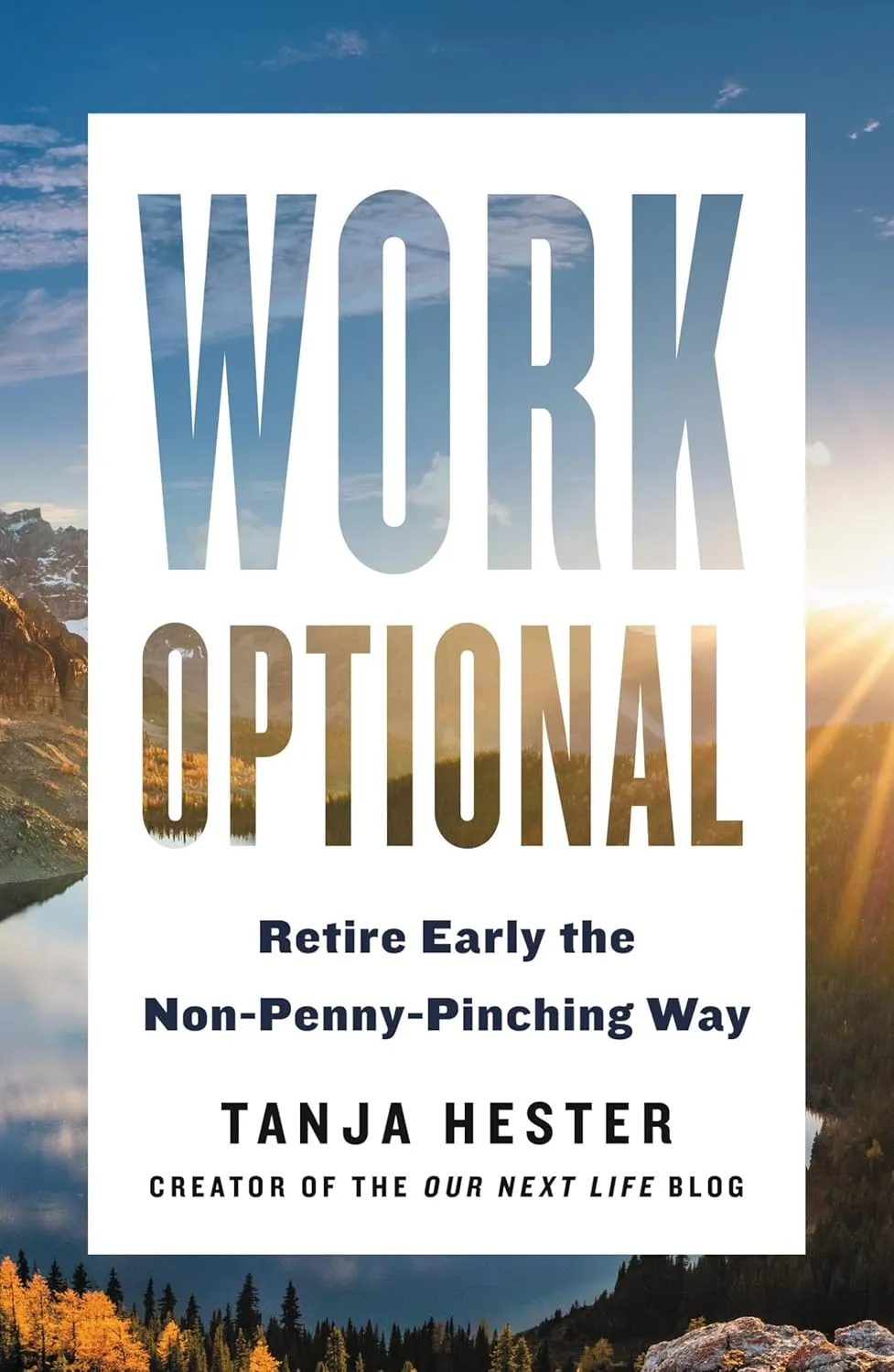
Work Optional: Retire Early the Non-Penny-Pinching Way
by Tanja Hester
Related Glossary Terms
Retirement Planning
Retirement planning is the process of calculating how much money you need to stop working and building a strategy to get there. It covers saving rates, investment allocation, tax optimization, and withdrawal planning.
Retirement
Retirement is the phase of life when you stop working for income and live off savings, pensions, and Social Security. Most Americans retire around age 62, but planning should start decades earlier.
Financial Independence
Financial independence means having enough invested assets to cover living expenses without needing employment income. The standard target is 25x annual expenses, based on the 4% withdrawal rule.
Required Minimum Distribution
A Required Minimum Distribution (RMD) is the minimum amount you must withdraw from tax-deferred retirement accounts each year starting at age 73, as mandated by the IRS under SECURE 2.0 Act rules.
RMD
An RMD (Required Minimum Distribution) is the mandatory annual withdrawal the IRS requires from tax-deferred retirement accounts starting at age 73, with a 25% penalty for missed withdrawals.
FIRE
FIRE is a movement built on saving and investing 50 to 70 percent of your income so you can reach financial independence decades before the traditional retirement age of 65. The math relies on the 25x rule and a 4 percent safe withdrawal rate.
Recommended Podcasts

The Money Guy Show
by Brian Preston, CPA/CFP & Bo Hanson, CFA/CFP
Two fee-only financial advisors break down the Financial Order of Operations, a 9-step wealth-building framework. 617K YouTube followers and a 4.8 Apple rating.
The Long View
by Christine Benz, Amy Arnott & Ben Johnson
Morningstar's weekly deep-dive interview show on retirement, portfolio strategy, and fund analysis. 387 episodes, hosted by Christine Benz and the Morningstar research team.

Stacking Benjamins
by Joe Saul-Sehy & Josh 'OG' Bannerman, CFP
A former financial advisor and a CFP host a lighthearted show from Joe's mom's basement. Three episodes a week on investing, retirement, and behavioral finance.