*Disclosure: This article contains affiliate links. If you purchase through these links, we may earn a commission at no additional cost to you. We only recommend books we have personally read and genuinely believe in.
Quick Overview
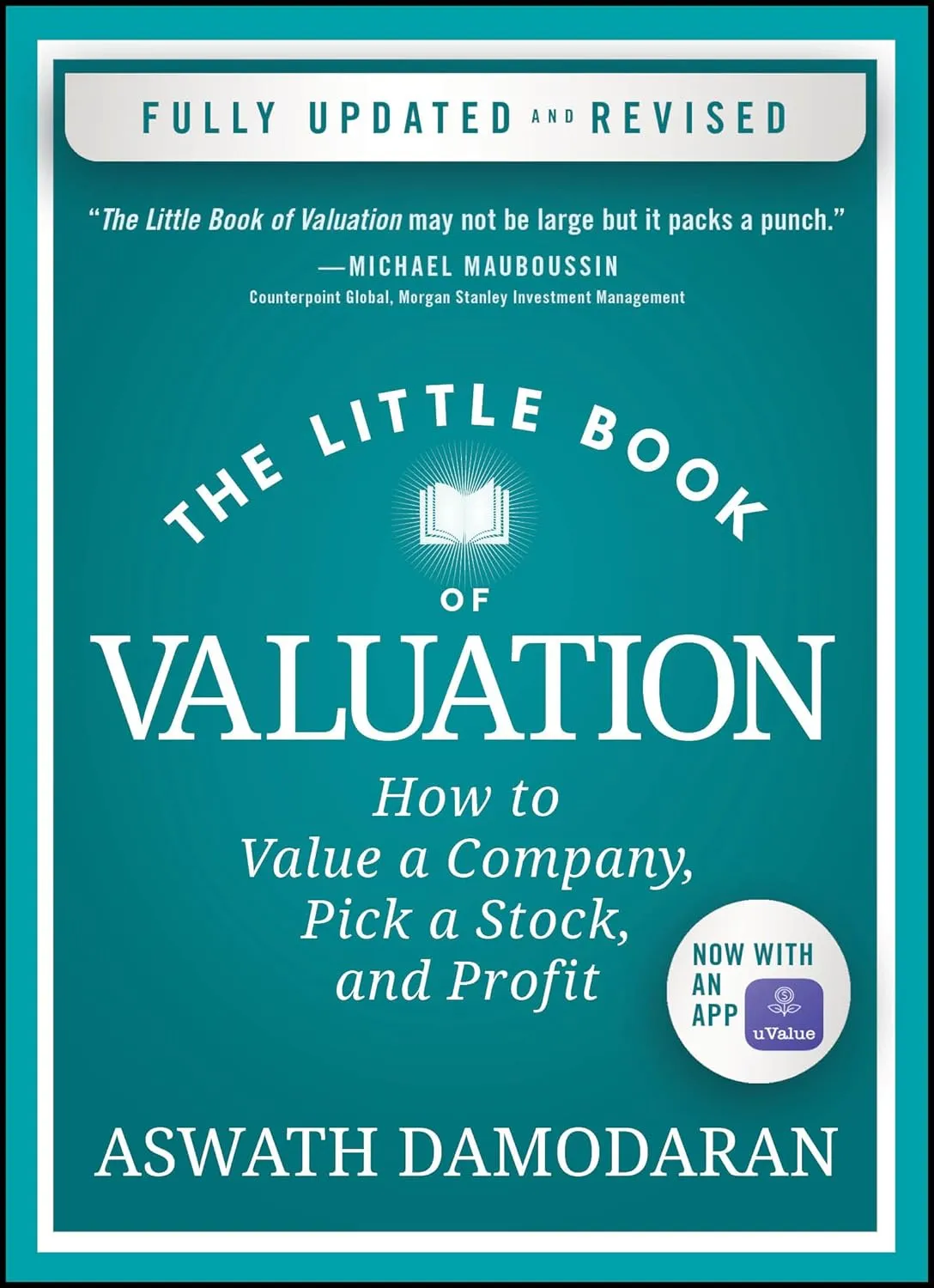
Aswath Damodaran teaches valuation at NYU Stern and has been called the Dean of Valuation. His textbooks run 800 to 1,000 pages and are used in MBA programs worldwide. The Little Book of Valuation is his condensed version for the intelligent non-specialist: 256 pages covering the full valuation toolkit, from DCF analysis to relative valuation multiples. I have used Damodaran's free spreadsheet templates for years, and this book is the clearest introduction to the thinking behind those models. The 2025 and 2026 equity risk premium data from his annual updates gives us a rare opportunity to test the book's frameworks against current market conditions.
Book Details
| Attribute | Details |
|---|---|
| Title | The Little Book of Valuation |
| Author | Aswath Damodaran |
| Publisher | Wiley |
| Published | 2011 |
| Pages | 256 |
| Reading Level | Intermediate |
| Amazon Rating | 4.5/5 stars |
Get Your Copy
Hardcover: Buy on Amazon
Kindle: Buy on Amazon
About the Author
Aswath Damodaran has taught valuation at NYU Stern School of Business for over 30 years. He maintains a publicly accessible website (damodaran.com) that provides free valuation data, templates, and lecture notes for every industry and country. He values companies publicly and explains his assumptions transparently. His annual equity risk premium paper, updated each January, is the most widely cited practitioner estimate of the ERP.
Damodaran is not an academic who hides behind models. He posts his valuations online, engages with critics, and revises his assumptions when the data changes. This intellectual honesty is the book's foundation: valuation is not precise, and anyone who pretends otherwise is selling something.
The Valuation Philosophy
Damodaran opens with a point that took me years to internalize: valuation is not precise. Any valuation produces a range of outcomes, not a single right answer. Models require assumptions about the future that are inherently uncertain.
The three types of valuation:
| Type | Approach | When Used |
|---|---|---|
| Intrinsic (DCF) | Present value of future cash flows | When you want to know what a company is worth independent of market opinion |
| Relative | Compare to peers using multiples (P/E, EV/EBITDA) | When you want to know if a company is cheap or expensive vs. the market |
| Option-based | Value flexibility using option pricing | For companies with significant optionality (distressed firms, natural resources) |
Most investors should focus on DCF and relative valuation. Option-based valuation requires more technical machinery.
Intrinsic Valuation: The DCF Framework
The Foundation
The value of any asset equals the present value of all future cash flows it will generate, discounted at an appropriate rate:
Value = CF1/(1+r) + CF2/(1+r)^2 + CF3/(1+r)^3 + ... + CFn/(1+r)^nStep 1: Estimate Cash Flows
Damodaran uses Free Cash Flow to Firm (FCFF) as the primary cash flow measure:
FCFF = EBIT x (1 - tax rate)
     + Depreciation & Amortization
     - Capital Expenditures
     - Change in Working Capital
The reinvestment rate determines how much of earnings returns to investors versus funds growth. A company that must reinvest 70% of after-tax earnings to grow at 10% has less intrinsic value than one that can grow at 10% while reinvesting only 30%.
Step 2: Estimate the Discount Rate (WACC)
The Weighted Average Cost of Capital represents the blended required return for debt and equity investors:
WACC = (E/V) x Ke + (D/V) x Kd x (1 - tax rate)The cost of equity uses CAPM:
Ke = Risk-Free Rate + Beta x Equity Risk PremiumThe 2025 and 2026 ERP Update
This is where Damodaran's annual updates make the book come alive. The book was published in 2011 with different rate and ERP assumptions. Here are the current numbers from his 2025 data update and 2026 data update:
| Component | January 2025 | January 2026 | Book (2011) |
|---|---|---|---|
| 10-Year Treasury (risk-free rate) | 4.58% | 4.18% | ~3.5% |
| Implied ERP (S&P 500) | 4.33% | 4.23% | ~5-6% |
| Expected return on stocks | 8.91% | 8.41% | ~8.5-9.5% |
Source: Damodaran's annual ERP papers (2025 edition, 2026 data update)
The implied ERP has declined from the post-2008 average of roughly 5-6% to around 4.2-4.3%. This means the market is pricing in less risk compensation than historical averages would suggest. Damodaran's own valuation of the S&P 500 at the start of 2025 produced a value of approximately 5,260, about 12% below the index level at that time, suggesting overvaluation.
At the start of 2026, with the index at 6,845 and an implied ERP of 4.23%, Damodaran noted that the market was pricing in an 80% chance of overvaluation. His base case value was below the index level, but he acknowledged that bullish scenarios (higher earnings, lower rates, continued ERP compression) could justify current prices.
Updated Cost of Equity Example
Using January 2026 numbers for a stable consumer brand with beta of 0.65:
Ke = 4.18% + 0.65 x 4.23% = 6.93%
WACC (with 20% debt at 5% pre-tax, 25% tax) =
    0.80 x 6.93% + 0.20 x 5.0% x (1-0.25) = 6.29%
Compare this to the book's original example, which used a 4.5% risk-free rate and 5.0% ERP to get 7.75% cost of equity. The lower ERP has partially offset the change in risk-free rates, but the overall cost of capital is lower, which supports higher valuations.
Step 3: Estimate Terminal Value
Most of a company's value comes from cash flows beyond the explicit forecast period:
Terminal Value = FCFFn x (1 + g) / (WACC - g)Where g = perpetual growth rate (typically 2-3%, close to long-run GDP growth)
Terminal value typically accounts for 60-80% of total DCF value. A small change in the terminal growth rate or discount rate produces large changes in estimated value:
| Terminal Growth Rate | WACC 7% | WACC 8% | WACC 9% |
|---|---|---|---|
| 2% | 20.0x | 16.7x | 14.3x |
| 3% | 25.0x | 20.0x | 16.7x |
| 4% | 33.3x | 25.0x | 20.0x |
(Multiples of normalized free cash flow)
Damodaran's guidance: use conservative terminal assumptions (g = 2-3% maximum; no company grows faster than the economy forever). This creates a margin of safety built into the terminal value assumption.
Relative Valuation: The Multiples Framework
Price-to-Earnings (P/E) Ratio
P/E = Price / Earnings per ShareA high P/E means investors are paying more for each dollar of current earnings, typically because of high expected growth, high quality of earnings, or low interest rates.
The PEG ratio adjusts for growth:
PEG = P/E / Expected Earnings Growth RateA company trading at 20x earnings with 20% expected growth has a PEG of 1.0. A company at 20x with 10% growth has a PEG of 2.0, more expensive on a growth-adjusted basis.
Enterprise Value / EBITDA
EV/EBITDA is preferred over P/E for many analyses because it is capital structure neutral, less affected by one-time items, and works for companies with zero or negative earnings.
Enterprise Value = Market Cap + Total Debt - Cash
EV/EBITDA = Enterprise Value / EBITDA
Price-to-Book (P/B) and Price-to-Sales (P/S)
P/B is most useful for financial companies where balance sheet assets approximate replacement value. P/S is used for companies with no current earnings, particularly high-growth technology and biotech.
Valuation by Company Type
Damodaran dedicates chapters to the unique challenges of valuing different types of companies:
Young and High-Growth Companies
Most value is in the terminal value, which depends on assumptions about an uncertain future. Damodaran's approach: estimate the total addressable market, assume a target market share in year 10, assume a target operating margin consistent with comparable mature businesses, build a revenue and margin pathway, apply a high discount rate, and add a probability weight for failure.
The enormous range of outcomes illustrates why growth stock valuation is more art than science:
| Assumption | Low Case | Base Case | High Case |
|---|---|---|---|
| Year 10 revenue | $5B | $15B | $50B |
| Year 10 operating margin | 10% | 20% | 30% |
| Discount rate | 12% | 10% | 8% |
| Resulting value | $20/share | $85/share | $350/share |
Mature Companies
Mature companies are easier to value but require attention to deteriorating competitive position, capex discipline, and capital return potential. Mature cash flows should increasingly be returned to shareholders rather than reinvested at low returns.
Declining and Distressed Companies
For companies with negative earnings or declining revenues, Damodaran's approach: estimate normalized cash flows if the company survives, apply a probability of survival, estimate recovery value in liquidation, and compute a weighted value.
The Margin of Safety in Valuation
Every DCF contains estimation error. The discount rate might be wrong by 1%. The terminal growth rate might be wrong by 0.5%. Near-term cash flows might be wrong by 20%.
If your DCF suggests intrinsic value of $100/share, do not pay $100. Pay $70-80 (a 20-30% discount) to account for model error.
The required margin of safety should be larger for less predictable businesses and smaller for highly predictable, utility-like cash flows.
Practical Tools
Damodaran makes all his valuation templates available free on damodaran.com:
| Tool | Description |
|---|---|
| DCF model templates | Excel models for different company types |
| Data sets | Historical industry data for discount rates, growth rates, margins |
| Company-specific valuations | Damodaran's own valuations with full assumptions disclosed |
| Risk premium data | Historical and implied equity risk premiums by country |
These free resources make the book uniquely actionable. You can immediately implement the frameworks using professionally designed tools.
Strengths & Weaknesses
What We Loved
Areas for Improvement
Who Should Read This Book
Highly Recommended For
Probably Not For
Comparison to Similar Books
| Book | Focus | Depth | Best For |
|---|---|---|---|
| The Little Book of Valuation | Full valuation toolkit | Medium | Learning to value any company |
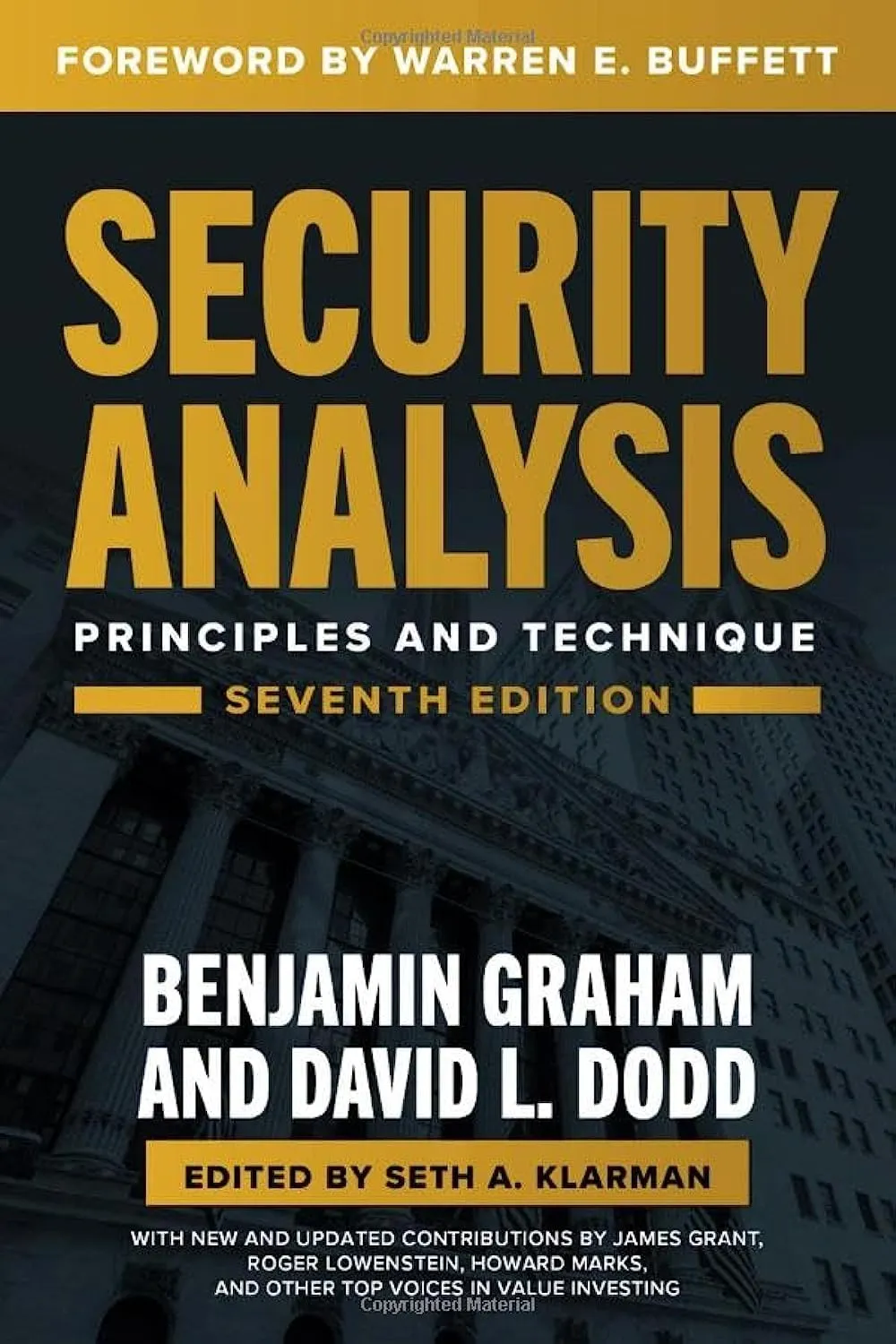
| Security Analysis (Graham/Dodd) | Classic value analysis | Very High | Deep fundamental analysis |
| The Warren Buffett Way (Hagstrom) | Buffett's approach | Medium | Quality investing philosophy |
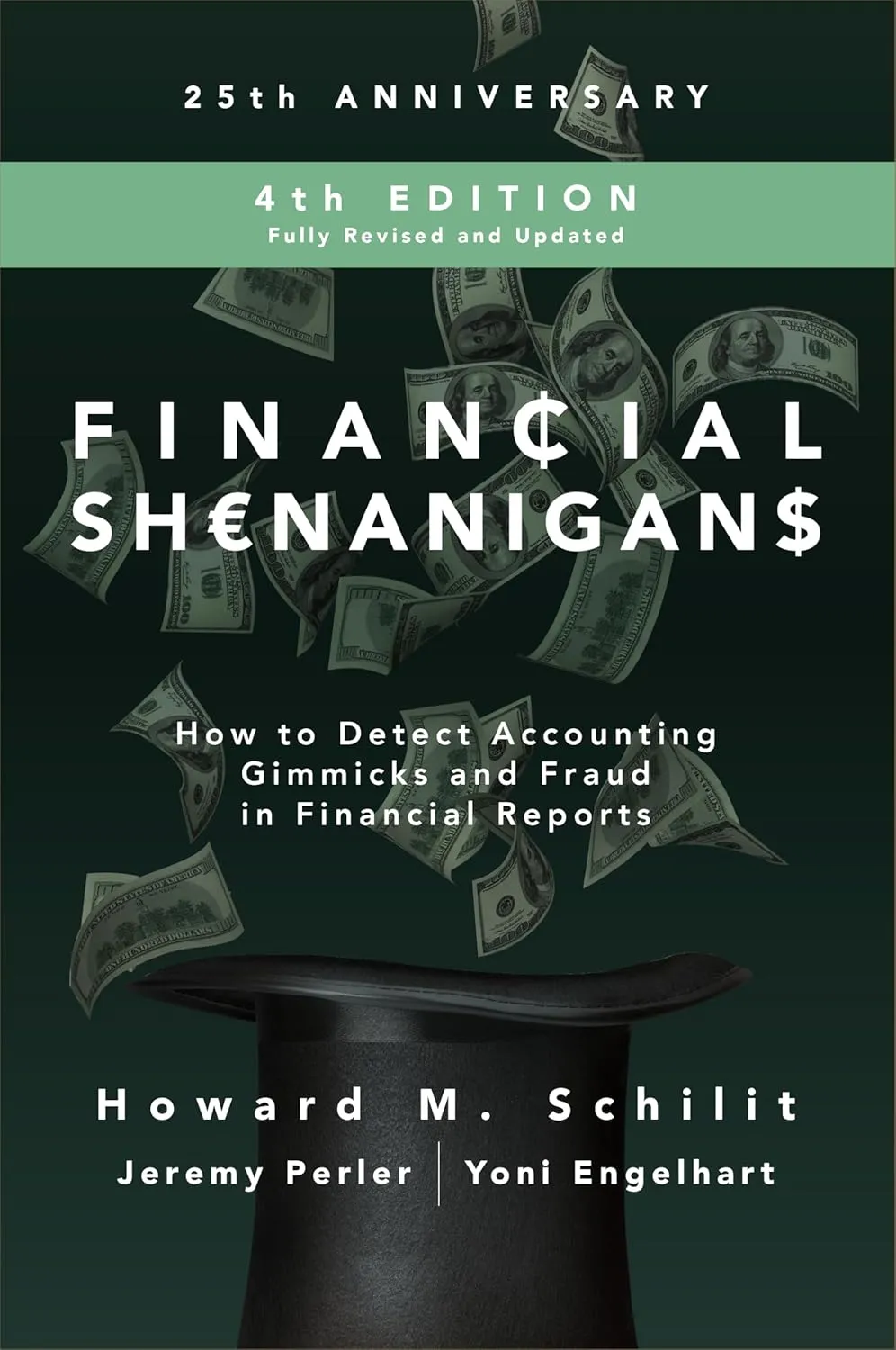
| Financial Shenanigans (Schilit) | Detecting accounting fraud | High | Avoiding value traps |
Read The Little Book of Valuation for the toolkit. Read Security Analysis for the philosophical foundation. Read Financial Shenanigans to avoid companies that look cheap but are not.
Implementation Guide
Valuing a Company Step by Step
Step 1: Get the current inputs
Step 2: Calculate the cost of equity and WACC
Step 3: Estimate free cash flows for 5-10 years
Step 4: Calculate terminal value
Step 5: Apply a margin of safety
Step 6: Compare to market price
Frequently Asked Questions
Q: Do I need to know accounting to use this book?
A: Yes, basic accounting knowledge is assumed. Understanding income statements and cash flow statements is necessary. Read Financial Statements by Ittelson first if you need the foundation.
Q: Is this enough to value companies or do I need Damodaran's longer books?
A: Sufficient for most investment decisions. His longer books (Investment Valuation) add nuance for complex situations like M&A, cross-border valuation, and option pricing, but 80% of investors will never need that depth.
Q: What ERP should I use in 2026?
A: Damodaran's January 2026 implied ERP is 4.23%, with a risk-free rate of 4.18%. This gives an expected return on equities of about 8.41%. The implied ERP is below the post-2008 average of roughly 5-6%, suggesting the market is pricing in relatively low risk compensation. Some practitioners prefer to use a higher ERP (4.5-5.0%) for a more conservative valuation.
Q: How do I handle AI and intangible-heavy companies?
A: The book does not cover this well. Damodaran has addressed it in his blog and annual updates. The key challenge is that traditional FCFF models may understate the value of R&D investment, customer acquisition costs, and platform network effects. Capitalize R&D and customer acquisition costs rather than expensing them, and adjust operating margins to reflect the economics of the business once mature.
Final Verdict
Rating: 4.5/5
The Little Book of Valuation is the best single-volume valuation guide for investors. Its DCF framework, relative valuation multiples, and company-type-specific guidance provide a complete toolkit. Combined with the free resources at damodaran.com and his annual ERP updates, it is the most actionable valuation education available outside of business school. The 2025 and 2026 ERP data (4.33% and 4.23% respectively) show how the framework adapts to changing market conditions. The book needs supplementing for AI-era intangible valuation and digital assets, but the core methodology remains sound.
Get Your Copy
Hardcover: Buy on Amazon
Kindle: Buy on Amazon
Prices current as of publication date. Free shipping available with Prime.