*Disclosure: This article contains affiliate links. If you purchase through these links, we may earn a commission at no additional cost to you. We only recommend books we genuinely believe in.
Quick Overview
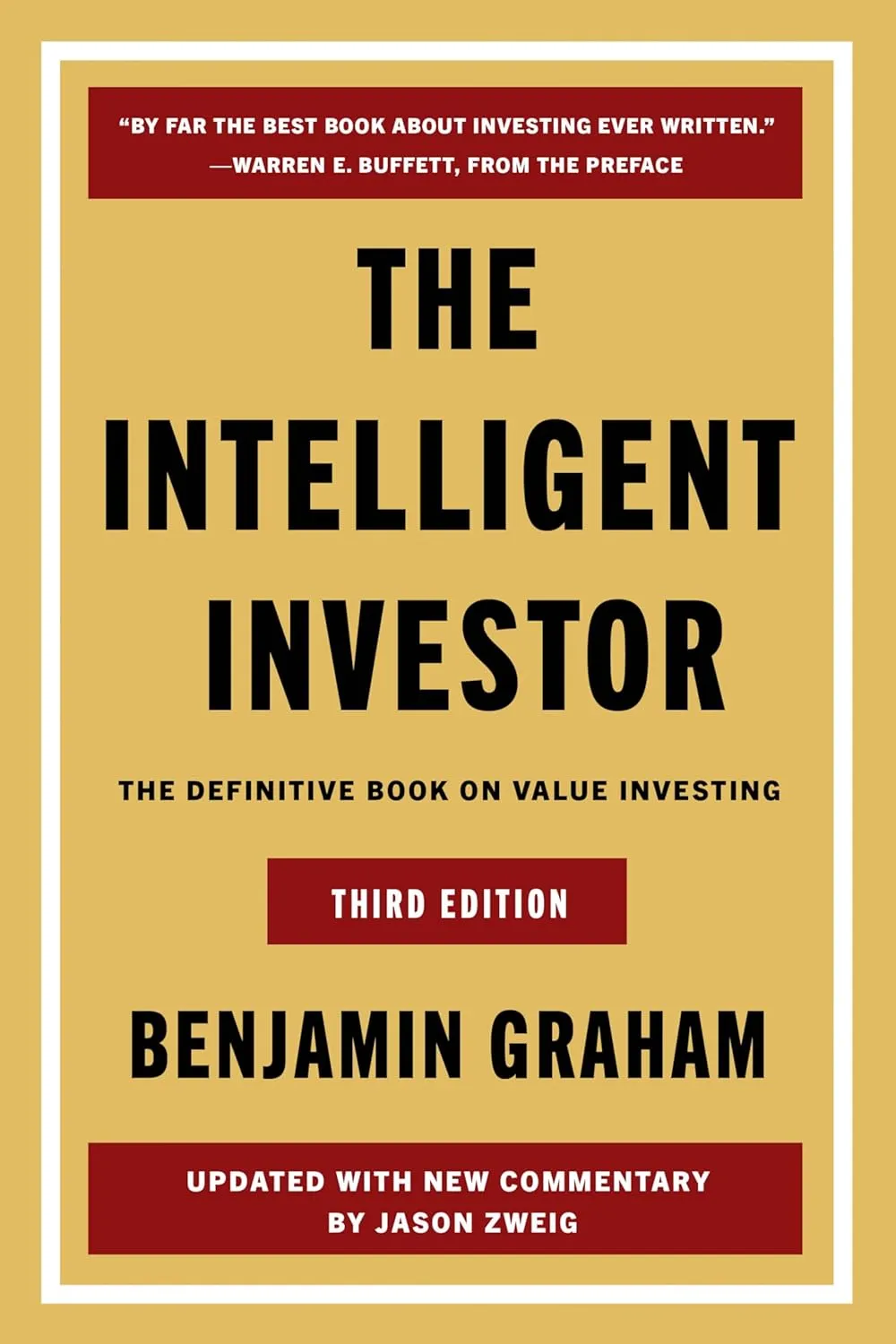
Warren Buffett calls this "the best book on investing ever written," and after 77 years in print, it still earns that title. Benjamin Graham wrote the original in 1949 and revised it in 1973. Jason Zweig added commentary in the 2003 edition that bridges Graham's examples to modern markets. The book does not teach you how to get rich quickly. It teaches you how to think about investing in a way that protects your capital while building real wealth over decades. In 2026, with AI stocks at extreme valuations and social media influencers pushing speculative bets, Graham's framework is more relevant than ever.
Book Details
| Attribute | Details |
|---|---|
| Title | The Intelligent Investor |
| Author | Benjamin Graham (commentary by Jason Zweig) |
| Publisher | Harper Business |
| First Published | 1949 |
| Revised Edition | 1973 (with 2003 Zweig commentary) |
| Pages | 640 |
| ISBN-13 | 978-0060555665 |
| Reading Level | Intermediate to Advanced |
| Amazon Rating | 4.7/5 stars |
Get Your Copy
Paperback: Buy on Amazon
Hardcover: Buy on Amazon
Kindle: Buy on Amazon
Audiobook: Buy on Amazon
About the Author
Benjamin Graham (1894-1976) survived poverty, the 1929 crash, and the Great Depression to become the intellectual architect of modern security analysis. He taught at Columbia Business School for 28 years, co-founded the investment firm Graham-Newman Corporation, and advised the Securities and Exchange Commission on early securities regulations.
His most famous student was Warren Buffett, who took Graham's course twice and later worked for Graham-Newman. Buffett still carries the framework Graham gave him: buy businesses for less than they are worth and wait for the market to recognize that value.
Graham was not a theorist disconnected from markets. He ran real money, survived real losses, and refined his thinking through decades of market cycles. That experience shows on every page.
The Central Framework
Graham's entire philosophy rests on three interlocking ideas. Understand these and you understand the book.
1. Mr. Market
Graham asks you to imagine that you own a stake in a private business. Your business partner, Mr. Market, appears every day and offers to buy your share or sell you his at a quoted price. The catch: Mr. Market is emotionally unstable.
The intelligent investor uses Mr. Market's mood swings to their advantage. When he is terrified, you buy. When he is greedy, you sell or hold. The stock price is not the business value. Confusing the two is the source of most investment losses.
In 2026, Mr. Market sends push notifications through financial news apps, yells through social media influencers, and induces panic through algorithmic flash crashes. The psychological pressure to follow the herd is higher now than at any point in history. Understanding Mr. Market is more critical today than it was 77 years ago.
2. Margin of Safety
This is the single most important concept in the book. Do not pay full price for any investment. Calculate what an asset is intrinsically worth, then demand a discount before buying.
Graham's Formula (simplified):
Intrinsic Value = EPS x (8.5 + 2g)Where EPS is earnings per share and g is the expected annual growth rate over 7-10 years.
Practical example:
| Input | Value |
|---|---|
| EPS | $5.00 |
| Expected growth rate | 6% |
| Calculated intrinsic value | $102.50 |
| Margin of safety (33% discount) | $68.68 maximum buy price |
If the stock trades at $60, you have your margin. If it trades at $110, you wait. The margin of safety is not pessimism. It is intellectual honesty about the limits of your forecasting ability.
What margin of safety means in 2026:
Modern analysis has extended Graham's concept beyond individual stock valuation. Margin of safety now includes:
3. Defensive vs. Enterprising Investor
Graham separates investors into two types based on how much time and effort they can realistically dedicate.
| Characteristic | Defensive Investor | Enterprising Investor |
|---|---|---|
| Time commitment | Minimal | Substantial |
| Goal | Adequate return with low risk | Superior return through research |
| Stock selection | Diversified index fund or quality blue chips | Individual security analysis |
| Bond allocation | 25-75% | Lower |
| Rebalancing | Annually | Quarterly or opportunistically |
| Suitable for | Most individual investors | Dedicated, analytical investors |
Graham's honest assessment: most people are better suited to the defensive approach. The enterprising path is genuinely hard and requires real skill, time, and temperament.
Key Chapters Explained
The Investor and Market Fluctuations (Chapter 8)
This is the most important chapter in the book. Graham explains that short-term price movements are noise. The investor's job is to estimate business value and act only when price diverges significantly from that value. Reacting to daily price moves is speculation, not investment.
If you read only one chapter, read this one.
Portfolio Policy for the Defensive Investor (Chapters 4-5)
Graham's asset allocation for the defensive investor:
| Market Condition | Stocks | Bonds |
|---|---|---|
| Stocks at fair value | 50% | 50% |
| Stocks severely overvalued | 25% | 75% |
| Stocks severely undervalued | 75% | 25% |
The simplicity is deliberate. Graham believed elaborate systems create overconfidence. A simple rule followed consistently beats a sophisticated system abandoned during panic.
Stock Selection for the Defensive Investor (Chapter 14)
Graham's seven criteria for defensive stock selection:
Combined P/E and P/B test:
P/E x P/B should not exceed 22.5A stock at 15 P/E and 1.5 P/B passes (22.5). A stock at 20 P/E and 2 P/B fails (40).
What Graham Gets Right
The psychology chapter alone is worth the price. Graham's insight that investor emotion is the primary source of underperformance predated behavioral finance by 30 years. Daniel Kahneman's Nobel Prize work essentially validated what Graham wrote in 1949.
Margin of safety is the most durable risk management principle ever articulated. Every professional risk manager, whether in credit, insurance, or engineering, uses the same idea under different names. Graham put it into investing language and showed how to calculate it.
The defensive/enterprising split is honest in a way most investing books are not. Most books tell you that with the right system, anyone can beat the market. Graham says: most people should not try. That honesty is rare and valuable.
What Graham Gets Wrong (or Where the Book Shows Its Age)
The examples use 1940s-1950s market data. Railroad bonds and utilities dominate the illustrations. Zweig's commentary updates them, but you must constantly mentally translate.
Graham's formula has been gamed. Professional analysts know his criteria. Markets are more efficient today than in 1949. Finding net-net stocks (trading below liquidation value) requires institutional resources and access that individuals rarely have. As Picture Perfect Portfolios documented, Graham's net-current-asset-value method still works conceptually, but the investable opportunities have migrated to microcaps, distressed companies, and illiquid listings where a beautiful backtest can become an ugly lived experience.
Technology companies break the framework. Asset-light businesses with high margins and network effects do not fit Graham's balance sheet-focused analysis. Apple trading at 30x earnings might still be cheap if its economic moat is durable. Graham's tools struggle to value intangibles. Modern corporate strength lives in hidden places like R&D and workforce capabilities, which current accounting rules drop from the balance sheet entirely.
Bond allocation advice needs translation. In 1973, you could earn 7% in Treasury bonds. In a zero-interest-rate environment, Graham's 50/50 stock-bond rule produces very different outcomes than he intended. With rates normalizing in 2024-2026, the advice is more applicable again, but the bond market has fundamentally changed.
The income statement and 10-K analysis methods need modernization. Graham wrote before stock-based compensation was a major factor, before adjusted EBITDA became a standard (and often misleading) metric, and before GAAP vs. non-GAAP reporting became a battleground. Modern investors need to adjust Graham's methods for these realities.
Practical Applications for Today's Investor
Applying Graham in an Index Fund World
Graham's defensive investor criteria perfectly describe a low-cost total market index fund. You get diversification, quality filtering through market cap weighting, automatic rebalancing, and a long-term hold discipline. John Bogle built Vanguard on this insight.
Implementation for defensive investors today:
| Step | Action |
|---|---|
| 1 | Open a brokerage account (Fidelity, Vanguard, or Schwab) |
| 2 | Determine stock/bond split based on age and risk tolerance |
| 3 | Buy total market index fund (VTI or FSKAX) |
| 4 | Buy total bond market fund (BND or FXNAX) |
| 5 | Rebalance annually back to target allocation |
| 6 | Do not react to market news |
Applying Graham as an Enterprising Investor
If you choose the enterprising path, run every stock through Graham's seven criteria before buying. Use a free screener like Finviz or Gurufocus to pre-filter. Track your margin of safety calculations in a spreadsheet. Compare your annual returns to a simple index fund every year. If you consistently underperform over five years, switch to the defensive approach.
Modern translation of Graham's criteria:
| Graham Criterion | Modern Equivalent |
|---|---|
| Adequate size | Market cap above $5 billion |
| Strong financial condition | Current ratio above 2:1, low debt-to-equity |
| Earnings stability | Positive earnings for 10 consecutive years |
| Dividend record | 20+ years of uninterrupted dividends |
| Earnings growth | 33%+ increase in EPS over 10 years |
| Moderate P/E | Below 15 (or below 20 for quality companies with strong moats) |
| Moderate P/B | Below 1.5 (less relevant for asset-light businesses; use P/FCF instead) |
Strengths & Weaknesses
What We Loved
Areas for Improvement
Who Should Read This Book
Highly Recommended For
Probably Not For
Comparison to Similar Books
| Book | Approach | Complexity | Best For |
|---|---|---|---|
| The Intelligent Investor (Graham) | Value investing foundation | High | Serious long-term investors |
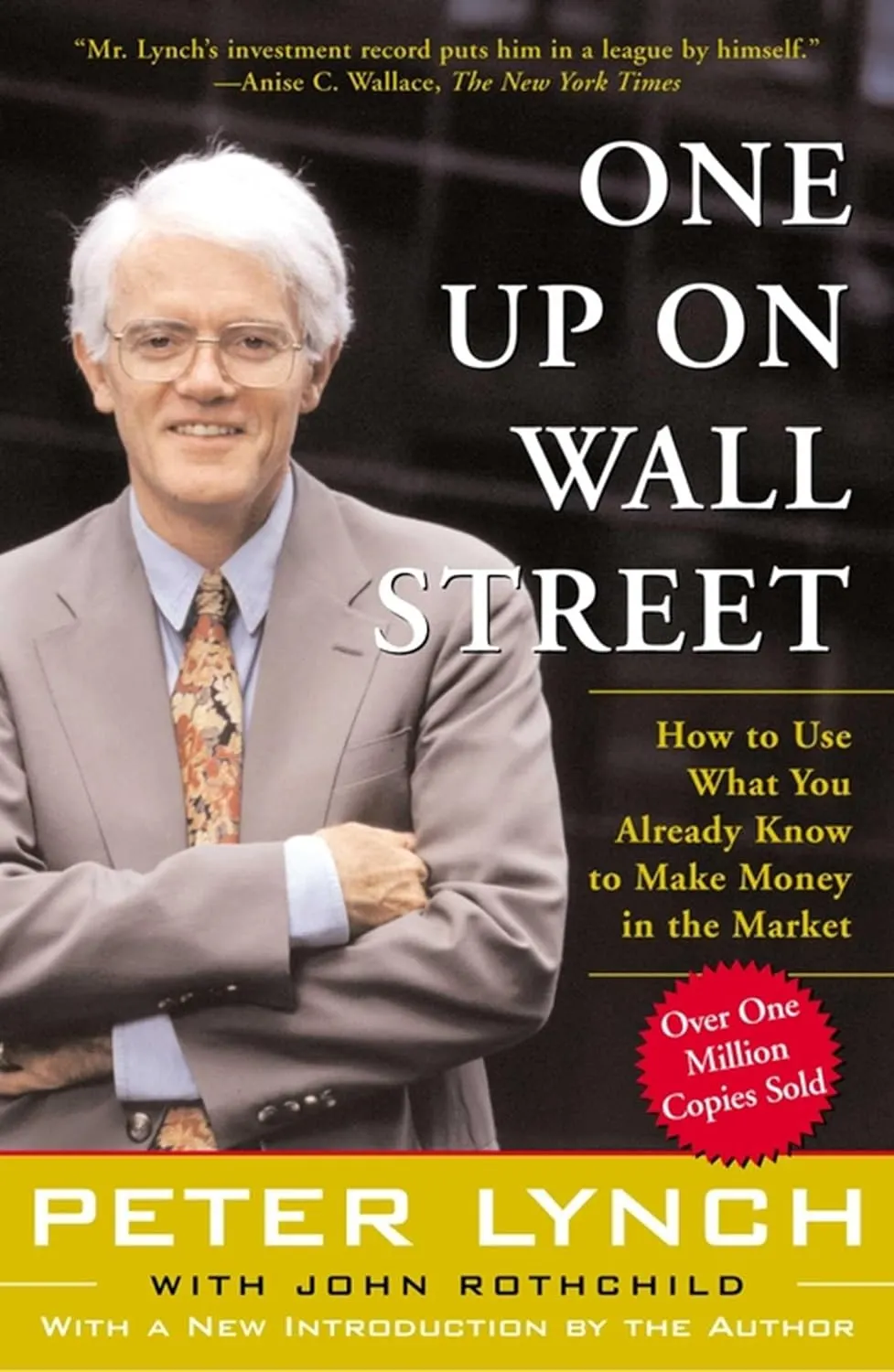
| One Up On Wall Street (Lynch) | Growth at reasonable price | Medium | Individual stock pickers |
| The Little Book of Common Sense Investing (Bogle) | Index fund passive | Low | Most individual investors |
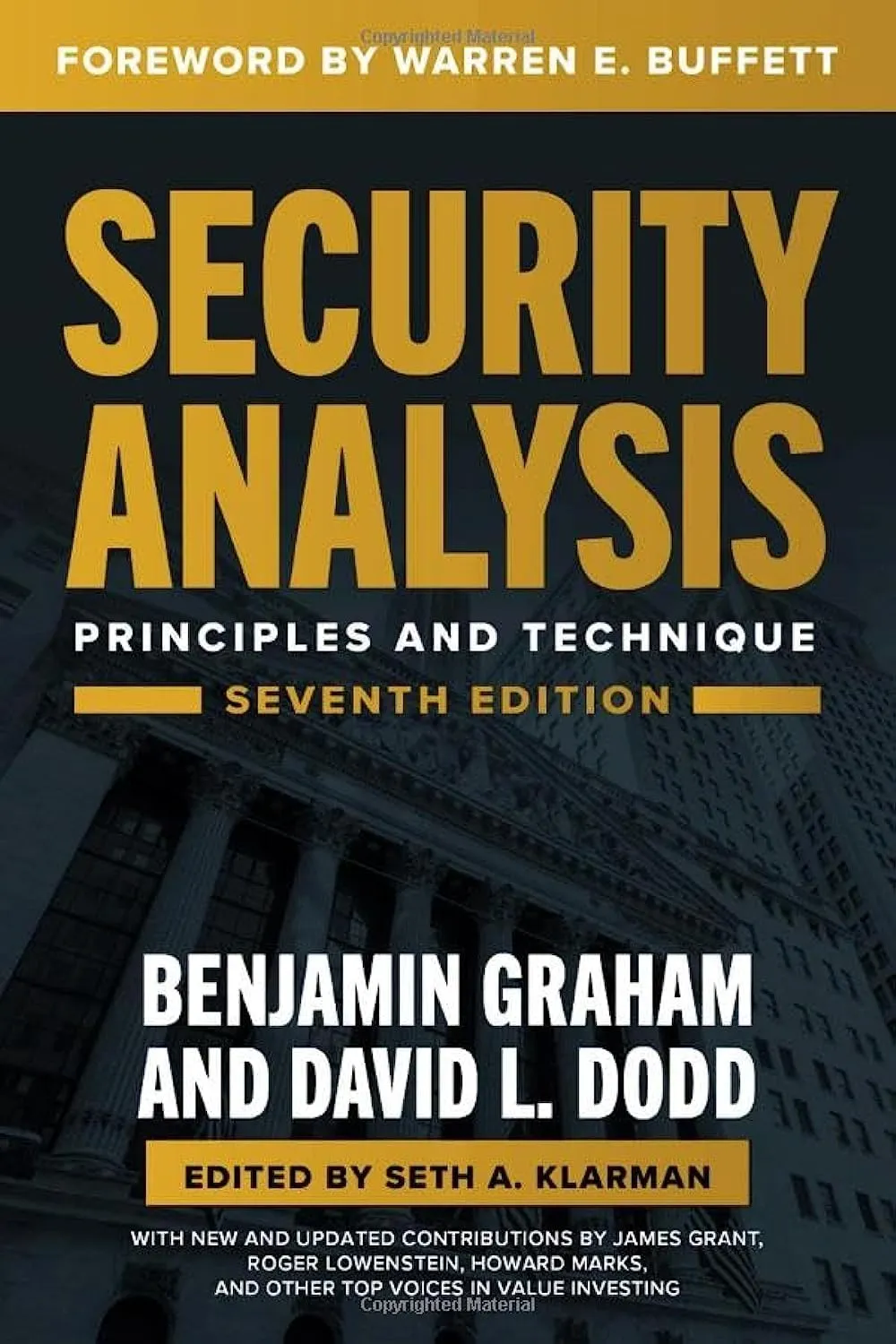
| Security Analysis (Graham/Dodd) | Deep fundamental analysis | Very High | Professionals and analysts |
| The Psychology of Money (Housel) | Behavioral/mindset | Low-Medium | Anyone starting their journey |
| The Four Pillars of Investing (Bernstein) | Comprehensive framework | Medium | Serious self-directed investors |
Read The Little Book of Common Sense Investing first for the simplest path. Then The Intelligent Investor for the intellectual foundation. Then The Four Pillars of Investing for the complete framework.
90-Day Reading and Implementation Plan
Month 1: Foundation
Month 2: Application
Month 3: Integration
Frequently Asked Questions
Q: Is a book from 1949 still relevant in 2026?
A: The examples are dated. The psychology and framework are timeless. Human greed and fear have not changed. Markets still overprice glamour and underprice boredom. The margin of safety concept is more relevant than ever in a world where retail investors chase meme stocks and AI hype. As one 2026 analysis put it: "Markets evolve. Human nature doesn't."
Q: Do I need accounting knowledge to read this?
A: Basic familiarity with an income statement and balance sheet helps. You should know what earnings per share, book value, and current ratio mean before starting. A free hour on Investopedia covering financial statement basics is good preparation.
Q: Should I read the original or the Zweig-annotated 2003 edition?
A: Always the 2003 edition. Zweig's chapter-by-chapter commentary translates Graham's examples into modern terms and adds valuable perspective on what has and has not changed since 1973. The Zweig commentary alone is worth the price of the book.
Q: Can I apply Graham's ideas to ETFs and index funds?
A: Yes. Use his asset allocation framework (stock/bond split based on valuation), his temperament lessons (do not sell in panics), and his margin of safety mindset (invest at fair or low prices, not at euphoric peaks). Skip the individual stock screening if you prefer passive investing. Graham himself recommended index funds for most investors in a 1976 interview.
Q: What is the most important chapter?
A: Chapter 8 on market fluctuations and Chapter 20 on margin of safety. If you read only two chapters, read those.
Q: Can Graham's net-net strategy still work today?
A: Conceptually yes, but practically it is extremely difficult. As detailed analysis shows, net-nets still appear but tend to inhabit microcaps, distressed companies, illiquid listings, and firms with serious governance concerns. The math behind the strategy has not broken, but the investable opportunity supply has migrated to neighborhoods where execution is painful. Most individual investors should focus on Graham's broader principles rather than trying to implement his specific screening formulas.
Q: How does Graham apply to AI stocks?
A: Graham would be skeptical. Companies trading at 100x revenue with no profits fail every one of his defensive criteria. The "this time is different" narrative around AI echoes the New Era narratives Graham witnessed in the 1920s. The technology may be genuinely transformative, but that does not mean every AI stock is worth buying at any price. Graham's margin of safety principle demands that you demand a discount to intrinsic value, and for most AI stocks today, calculating intrinsic value with any confidence is nearly impossible.
Final Verdict
Rating: 4.9/5
No other investing book covers the same intellectual ground at the same depth. The Intelligent Investor earns its reputation not because it is easy or modern, but because it is right about things that matter most: that price and value are different, that psychology determines outcomes more than skill, and that protecting against loss is more important than chasing gain.
The specific formulas and screening criteria have aged. The philosophy has not. Every speculative mania from the dot-com bubble to the AI stock boom of 2023-2025 has followed the pattern Graham described. Every investor who panicked and sold at the bottom violated the principles Graham articulated. Every investor who held through crashes and bought at discounts followed them.
Every serious investor should read this book at least once.
Bottom line: Start with Zweig's introduction to understand the context. Read Chapter 8 first if you are impatient. Then read the full book. Then reread Chapter 20. The ideas compound like interest.
Get Your Copy
Paperback: Buy on Amazon
Hardcover: Buy on Amazon
Kindle: Buy on Amazon
Audiobook: Buy on Amazon
Prices current as of publication date. Free shipping available with Prime.