Economic Moat
Quick Definition
An economic moat is a durable competitive advantage that allows a company to defend its market share, pricing power, and above-average returns on invested capital against competitors. The term, popularized by Warren Buffett, likens a company's competitive position to a medieval castle's moat. The wider and deeper it is, the harder it is for competitors to breach.
What It Means
In a perfectly competitive market, competition drives prices down to the point where no company earns returns above its cost of capital. Economic moats are the reason many companies sustainably earn far above their cost of capital for decades.
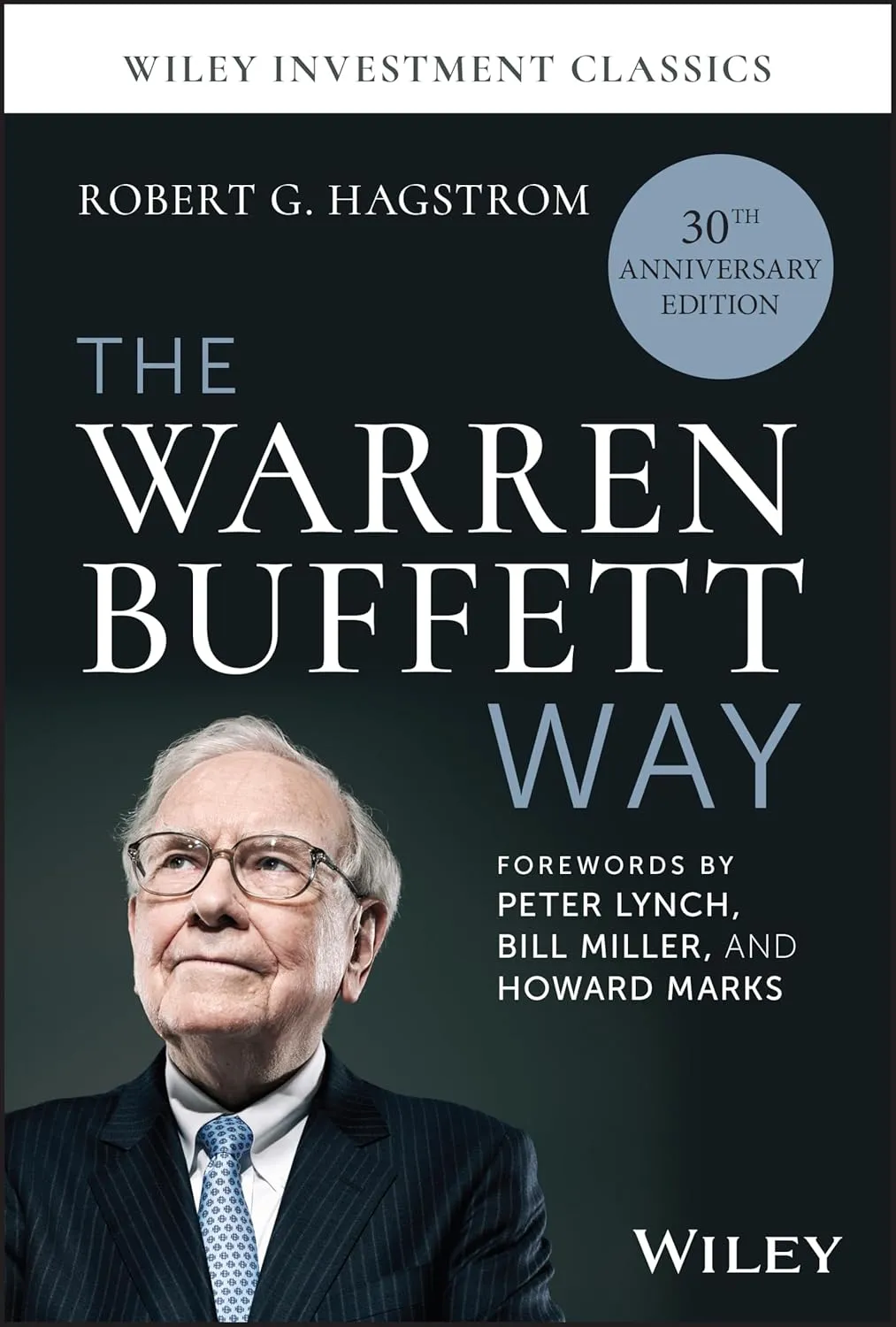
When Buffett says he only buys "wonderful companies at fair prices," he is looking for companies with wide, durable moats. These are businesses that can reinvest capital at high rates of return for long periods without competition destroying those returns. The moat is what converts a good business into a compounding machine.
Morningstar explicitly rates companies as having wide, narrow, or no economic moats. A wide moat rating means Morningstar analysts expect excess returns to persist for 20 years or more. A narrow moat means at least 10 years of expected competitive advantage.
The Five Types of Economic Moats
1. Network Effects
Each additional user makes the product more valuable for all users. The value is in the network itself, not the underlying technology.
| Company | Network Effect | Why Competitors Struggle |
|---|---|---|
| Visa/Mastercard | Every additional merchant and cardholder makes the network more valuable | Merchants need cards customers carry; customers need cards merchants accept |
| Microsoft Office | Documents must be compatible; everyone uses Office | Switching requires everyone to switch simultaneously |
| Meta/Facebook | Friends and family are already there | Your social graph cannot be migrated to a competitor |
| Airbnb | More hosts attract more guests; more guests attract more hosts | Two-sided network; the largest marketplace wins |
Network effects create self-reinforcing competitive advantages that grow more valuable as the network scales.
2. Switching Costs
When customers incur significant costs (time, money, risk, learning) to switch to a competitor, companies can raise prices without losing customers.
| Company | Switching Cost | Nature |
|---|---|---|
| Salesforce | Customer data, workflows, and integrations all locked in | Financial and operational |
| Epic Systems (healthcare IT) | Hospital switching EHR systems takes years and millions | Financial and time |
| Bloomberg Terminal | Traders learn Bloomberg's systems; workflow dependent | Learning and career |
| Oracle database | Migrating enterprise databases is enormously complex | Technical and financial |
| Adobe Creative Suite | Professional skills built around specific tools | Learning and file formats |
3. Cost Advantages
Some companies can produce at a structural cost advantage that competitors cannot replicate, enabling either higher margins or lower prices that drive market share.
| Source | Example | Advantage |
|---|---|---|
| Economies of scale | Walmart, Amazon | Fixed costs spread over vastly more units |
| Proprietary process | Southwest Airlines' turnaround processes | Operational efficiency |
| Unique asset | Specific ore deposits, geographic location | Cannot be replicated |
| Geographic advantage | Local utility (no competing wires) | Natural monopoly |
4. Intangible Assets
Brands, patents, and regulatory licenses that competitors cannot easily replicate:
| Asset | Example | Protection |
|---|---|---|
| Brand | Coca-Cola, Apple | Decades of marketing investment; emotional attachment |
| Patents | Pharmaceutical drugs | 20-year legal monopoly on novel compounds |
| Regulatory licenses | Banks, utilities, TV stations | Government permission required; hard to get |
| Proprietary data | Google, credit bureaus | Data network effects; cannot be replicated |
5. Efficient Scale
When a market is only large enough to support one or a few competitors profitably, incumbents benefit from efficient scale. A new entrant would destroy profitability for all, so they stay out.
Examples: Local utilities, regional airports, niche industrial distributors, specialty chemical producers.
Moat Width: Narrow vs. Wide
| Moat Classification | Characteristics | Expected Duration |
|---|---|---|
| No moat | Average or below-average returns; rapid competitive erosion | Returns normalize within 5 to 7 years |
| Narrow moat | Some competitive advantage; modest premium above cost of capital | Sustainable for 10 to 20 years |
| Wide moat | Significant structural advantage; substantial premium above cost of capital | Sustainable for 20+ years |
Moat and Returns on Invested Capital
The moat's financial expression is Return on Invested Capital (ROIC) sustainably above the cost of capital:
| Company | 10-Year Average ROIC | Cost of Capital (approx.) | Moat Assessment |
|---|---|---|---|
| Visa | ~35 to 45% | ~8% | Wide moat (network effects) |
| Microsoft | ~25 to 35% | ~8% | Wide moat (switching costs and network effects) |
| Coca-Cola | ~20 to 25% | ~7% | Wide moat (brand and distribution) |
| Average S&P 500 company | ~11 to 13% | ~8% | Narrow or no moat |
| Commodity business | ~6 to 10% | ~8% | No moat |
High ROIC sustained over long periods is the empirical signature of a durable economic moat.
AI and Economic Moats: The 2026 Reassessment
The rapid emergence of artificial intelligence has forced a reevaluation of which moats will endure. Morningstar's equity research team conducted a comprehensive review of 132 companies in tech and tech-adjacent sectors, developing a proprietary seven-dimension AI disruption scoring framework.
The results, rolled out in 2026, produced 37 moat downgrades and 2 upgrades:
| Change | Count | Examples |
|---|---|---|
| Wide to narrow | 20 | Salesforce (CRM), Oracle (ORCL), Adobe (ADBE) |
| Wide to no moat | 2 | Thomson Reuters (TRI), FactSet (FDS) |
| Narrow to no moat | 18 | Various IT services and payroll companies |
| Narrow to wide | 2 | Cloudflare (NET), CrowdStrike (CRWD) |
The pattern is clear. AI disruption hits hardest when companies monetize human labor, simple workflow automation, and seat-based software licenses. Payroll services, IT services, and enterprise application software felt the most pressure.
Companies whose moats survived AI scrutiny shared specific characteristics:
| Resilient Moat Source | Why It Survives AI | Examples |
|---|---|---|
| Network effects | Not based on the product's technology but on the user base | Visa, exchanges, Booking Holdings |
| Infrastructure layer | AI needs infrastructure to run on; these companies provide it | Cloudflare, semiconductor design firms |
| Proprietary data | AI models need data; companies with unique datasets become more valuable | Google, credit bureaus |
| Regulatory barriers | AI does not change government licensing requirements | Banks, utilities |
| Complex domain workflows | Deep engineering, cybersecurity, and financial infrastructure | Synopsys, CrowdStrike |
Half the companies with wide moat ratings after the review exhibit network effects. Network effects saw the fewest relative downgrades of any moat type.
Morningstar identified 27 companies with wide moats that they expect to withstand AI disruption. The two upgrades, Cloudflare and CrowdStrike, were both in cybersecurity. Cloudflare routes over 20% of global internet traffic through its network, and its position as AI infrastructure (running inference at the edge) actually strengthens its moat. CrowdStrike's endpoint security benefits from data network effects: more endpoints mean better threat detection.
How Moats Erode
Even wide moats are not permanent:
| Erosion Mechanism | Example |
|---|---|
| Technology disruption | Kodak's brand moat eliminated by digital photography |
| Business model innovation | Netflix destroyed Blockbuster's geographic moat |
| Regulatory change | Drug patent expirations open markets to generics |
| Customer preference shifts | Print media's moat destroyed by internet |
| AI disruption | Salesforce and Oracle downgraded from wide to narrow moats in 2026 |
| Competitor with deeper pockets | Amazon entering a market with willingness to lose money |
Moat Assessment Framework
Questions to identify a company's moat:
- Can competitors easily replicate what this company does?
- Do customers face significant costs when switching to a competitor?
- Does the product or service become more valuable as more people use it (network effects)?
- Does the company have structural cost advantages that cannot be replicated?
- Are there regulatory, patent, or licensing barriers protecting profitability?
- Has the company maintained high ROIC consistently over 10+ years?
- Could AI reduce the barriers to entry in this company's industry?
Key Points to Remember
- An economic moat is a durable competitive advantage protecting profits from competitive erosion
- The five moat types: network effects, switching costs, cost advantages, intangible assets, efficient scale
- Network effects are the strongest moat type. The network becomes more valuable with each additional user, and they proved most resilient to AI disruption.
- Moats are revealed by sustained high ROIC over long periods, the financial fingerprint of competitive advantage
- Even wide moats erode. Technology, regulation changes, AI disruption, and innovation constantly threaten competitive positions.
- Morningstar downgraded 37 companies' moat ratings in 2026 due to AI disruption, while upgrading 2 (Cloudflare and CrowdStrike)
- Warren Buffett's investment philosophy centers on buying wide-moat businesses at fair prices and holding indefinitely
Common Mistakes to Avoid
- Assuming a strong brand always equals a wide moat: Not all brands create moats. A brand only creates a moat if it commands a genuine price premium and customer loyalty. Most retail brand names are not strong moats because customers will switch for a 10% price discount. Apple's brand is a genuine moat. A mid-tier clothing brand is not.
- Ignoring AI's impact on moat durability: Companies that profit from workflow inefficiencies, human labor, or seat-based software licenses face real threats. Salesforce, Oracle, and Adobe all lost their wide moat ratings in 2026. If you invested based on pre-AI moat analysis, your thesis may need updating.
- Confusing market share with a moat: Being the largest company in an industry does not automatically mean having a moat. A company can have dominant market share but no pricing power if competitors can enter easily. Market share plus barriers to entry equals a moat. Market share alone does not.
- Expecting moats to last forever: Even the widest moats erode eventually. Kodak had one of the strongest brand moats in America. Blockbuster had geographic moats everywhere. Both were destroyed by technology shifts. Monitor your portfolio companies for signs of moat erosion rather than assuming the advantage is permanent.
Related Concepts
Economic moats connect to several investing and business concepts. ROIC is the financial metric that reveals whether a moat exists. CAGR measures the growth rate that a moat-enabled company can sustain over time. Alpha represents excess returns, which wide-moat companies are more likely to generate. Gross margin stability is a key indicator of pricing power and moat durability. Book value matters less for moat analysis because moat value is often intangible. EBITDA margins that are high and stable signal a company with pricing power. The quality of a company's stock as a long-term holding depends heavily on moat durability.
Frequently Asked Questions
Q: How does an investor identify a company with a wide moat? A: Look for consistently high and stable ROIC (above 15 to 20%) over 10+ years, gross margins that are high and stable (not fluctuating with competition), pricing power (ability to raise prices without losing customers), and qualitative evidence of the moat type (customer loyalty surveys, churn data, switching cost evidence). Morningstar's moat ratings are a useful starting point, but do your own analysis.
Q: Can small companies have economic moats? A: Yes. Some of the best moats are in niche markets too small for large competitors to bother entering. A small specialty chemical company serving a critical manufacturing application may have a near-monopoly in its niche. That is a very durable narrow moat.
Q: Is brand always a moat? A: Not all brands create moats. A brand only creates a moat if it commands a genuine price premium and customer loyalty. Many brands are simply names without meaningful pricing power. Apple's brand is a genuine moat because customers pay premium prices and rarely switch. Most retail brand names are not strong moats because customers will switch for a 10% discount.
Q: How is AI changing which companies have moats? A: Morningstar's 2026 review of 132 companies found that AI is a sorting mechanism, not a universal disruptor. Companies whose moats depend on workflow friction, labor intensity, and application stickiness are most at risk. Companies with network effects, proprietary data, infrastructure positioning, or regulatory barriers are most resilient. Salesforce, Oracle, and Adobe lost wide moat ratings. Cloudflare and CrowdStrike were upgraded to wide moats because AI actually increases demand for their services.
Q: What is Morningstar's economic moat rating system? A: Morningstar rates companies as having wide, narrow, or no economic moats. A wide moat means analysts expect the company to generate excess returns (above cost of capital) for 20+ years. A narrow moat means at least 10 years. No moat means competitive advantages are unlikely to persist. Morningstar tracks whether these ratings predict superior long-term stock performance, and they do: wide-moat companies have historically outperformed the broader market over long holding periods.