*Disclosure: This article contains affiliate links. If you purchase through these links, we may earn a commission at no additional cost to you. We only recommend books we have personally read and genuinely believe in.
Quick Overview
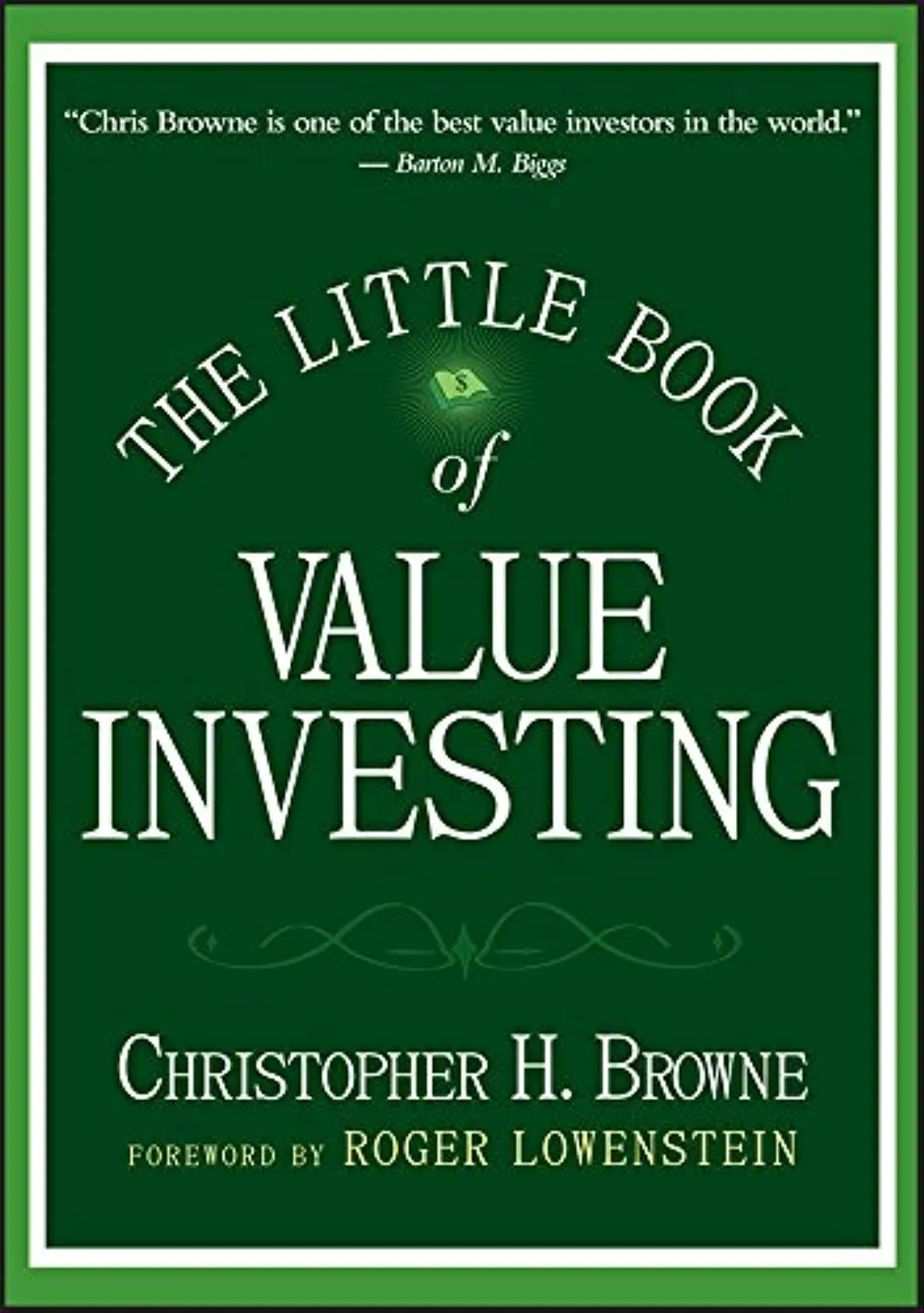
Christopher Browne was a managing partner at Tweedy, Browne Company, the brokerage firm that executed Benjamin Graham's trades and later became one of the most respected value investing firms in the world. This book distills decades of institutional value investing experience into 208 pages. I picked it up after reading The Intelligent Investor, looking for something shorter and more practical. Browne delivers exactly that: specific ratios, a defined research process, and an international value perspective that most introductory books skip. The 2025 value premium data makes this review particularly timely. After a decade of growth dominance (2010-2019), value stocks have roared back, with the HML factor delivering 4.2% annualized returns from 2020 through 2025.
Book Details
| Attribute | Details |
|---|---|
| Title | The Little Book of Value Investing |
| Author | Christopher H. Browne |
| Publisher | Wiley |
| Published | 2006 |
| Pages | 208 |
| Reading Level | Beginner to Intermediate |
| Amazon Rating | 4.6/5 stars |
Get Your Copy
Hardcover: Buy on Amazon
Kindle: Buy on Amazon
About the Author
Christopher Browne (1946-2009) joined Tweedy, Browne Company in 1969 and became managing partner. The firm was founded in 1920, served as Benjamin Graham's broker throughout his investing career, and later managed money directly using Graham's principles. Browne grew up in a world where Graham was not a historical figure but a living practitioner whose methods were used daily.
Tweedy, Browne is best known for their research papers on value investing, including "What Has Worked in Investing" (1992), which compiled academic evidence for value outperformance across global markets and time periods. The firm's Tweedy, Browne Value Fund (TWEBX) has consistently applied these principles for decades.
The Core Argument
Browne makes the same fundamental argument as Graham, Klarman, and Buffett, but with unusual conciseness: stocks are pieces of real businesses. Businesses have intrinsic value. The stock market periodically prices those businesses well below their intrinsic values. Disciplined investors who buy at these discounts earn superior returns.
The book's contribution is translating this abstract principle into specific, actionable screening criteria and research processes that individual investors can apply.
The Value Investor's Toolkit
Key Ratios and Screens
Price-to-Earnings (P/E):
| P/E Range | Interpretation |
|---|---|
| Below 10 | Potentially cheap (verify earnings quality) |
| 10-15 | Reasonable value range |
| 15-20 | Fair value for average business |
| 20-30 | Premium required; verify growth supports it |
| Above 30 | Expensive; exceptional growth needed to justify |
Browne's rule: focus on stocks trading below the market's P/E multiple unless the business has materially above-average growth or quality characteristics.
Price-to-Book Value (P/B):
| P/B Value | Interpretation |
|---|---|
| Below 0.5 | Deep value; investigate why (often distress or asset quality concerns) |
| 0.5-1.0 | Cheap on asset basis |
| 1.0-2.0 | Fair value range for most businesses |
| 2.0-5.0 | Premium for franchise value or intangibles |
| Above 5.0 | Asset-light business or significant overvaluation |
Price-to-Cash Flow:
Earnings can be manipulated through accounting choices. Cash flow is harder to fake. Browne prefers businesses trading at 10-15x free cash flow or below for mature, stable businesses.
Dividend Yield:
| Yield Range | Interpretation |
|---|---|
| Below 1% | Low; may indicate overvaluation or growth stock |
| 1-2% | Average; common for large cap stocks |
| 2-4% | Attractive; investigate sustainability |
| 4-6% | High; verify dividend is covered by earnings and cash flow |
| Above 6% | Very high; often indicates market distrust of dividend sustainability |
What to Look for in a Business
Beyond ratios, Browne identifies qualitative characteristics that define genuinely cheap businesses (not value traps):
International Value Investing
One of Browne's most valuable contributions is his extensive treatment of international value investing, an area most U.S.-focused books ignore.
Tweedy, Browne's research found that value investing works in every market they studied. The premium for buying cheap stocks relative to expensive ones is not a U.S. anomaly:
| Market | Study Period | Value Premium (annual) |
|---|---|---|
| United States | 1968-1990 | +4.7% |
| United Kingdom | 1968-1990 | +4.4% |
| Germany | 1968-1990 | +3.1% |
| Japan | 1968-1990 | +3.5% |
| Combined international | 1975-1995 | +5.3% |
The 2025 Value Resurgence
The 2025 data validates Browne's international value thesis emphatically. According to the Morningstar Quarterly Style Monitor Q4 2025, value stocks staged a global comeback in 2025:
| Region | Value Outperformance vs Growth (2025) |
|---|---|
| United States | +5.16% (Q4), double digits for full year |
| Developed Markets ex-US | +5.35% (Q4), +15.3% for full year |
| Emerging Markets | +1.83% (Q4), +21.6% for full year |
A 50-year factor study shows the long-term picture:
| Decade | Annualized HML Return | Value Beat Growth? |
|---|---|---|
| 1975-1979 | 5.8% | Yes |
| 1980-1989 | 5.4% | Yes |
| 1990-1999 | 2.1% | Marginally |
| 2000-2009 | 5.9% | Yes |
| 2010-2019 | -2.1% | No |
| 2020-2025 | 4.2% | Yes |
The 2010-2019 decade was the deepest and most sustained drawdown for the HML factor since data began. Value underperformed growth by roughly 40 percentage points cumulatively. Many investors declared the value premium dead. The 2020-2025 recovery, driven by rising rates, valuation mean-reversion, and a shift away from mega-cap tech concentration, has restored the long-term premium to 3.6% annualized over the full 1975-2025 sample.
Browne's practical advice from the book: use total international index funds with a value tilt (international value ETFs like IVLU or EFV) rather than attempting to pick individual foreign stocks without language and local knowledge advantages. This advice remains sound. In 2025, international value outperformed U.S. value, confirming the diversification benefit.
The Research Process
Browne describes the research workflow at Tweedy, Browne:
Step 1: Quantitative Screen
Run these screens monthly:
Step 2: Financial Statement Analysis
For each candidate:
Step 3: Business Quality Assessment
Step 4: Valuation Cross-Check
Estimate intrinsic value using two or three methods:
Step 5: Position Sizing and Portfolio Construction
What to Avoid: Value Traps
Browne dedicates significant space to companies that look cheap but are not:
The declining business: A company with falling revenues and margins may trade at 5x earnings, cheap until you realize earnings will be half as large in three years.
The debt-laden balance sheet: A company trading below book value because it is drowning in debt is not cheap; it may be insolvent.
The commodity trap: Companies in perfectly competitive industries (steel, airlines, basic chemicals) cannot sustain high returns on capital regardless of management quality.
| Characteristic | Value Trap | Genuine Value |
|---|---|---|
| Revenue trend | Declining | Stable or growing |
| Competitive position | None or eroding | Defensible |
| Debt level | High and growing | Manageable |
| Return on equity | Below cost of capital | Above cost of capital |
| Reason for cheapness | Permanent impairment | Temporary problem |
Patience: The Missing Ingredient
Browne's final and most important message: value investing requires patience that most investors do not have.
The Tweedy, Browne Value fund underperformed the S&P 500 during the tech bubble (1996-1999) by 20-30 percentage points per year. During those years, clients asked whether the value approach was broken. The answer became clear in 2000-2002 when growth stocks collapsed and value stocks held their ground.
The 2010-2019 period tested patience again. Value underperformed for an entire decade. Investors who abandoned value in 2018 or 2019 missed the 2020-2025 recovery. A Journal of Financial and Quantitative Analysis study found that the implied value premium (IVP) is the strongest predictor of the ex post value premium, and that recent value underperformance reflects cyclical variation rather than a permanent shift.
Browne's answer: conviction comes from understanding the logic. When you genuinely understand why buying businesses at discounts to intrinsic value produces superior long-run returns, temporary underperformance does not shake you.
Strengths & Weaknesses
What We Loved
Areas for Improvement
Who Should Read This Book
Highly Recommended For
Probably Not For
Comparison to Similar Books
| Book | Length | Depth | Practicality |
|---|---|---|---|
| The Little Book of Value Investing | Short | Medium | Very High |
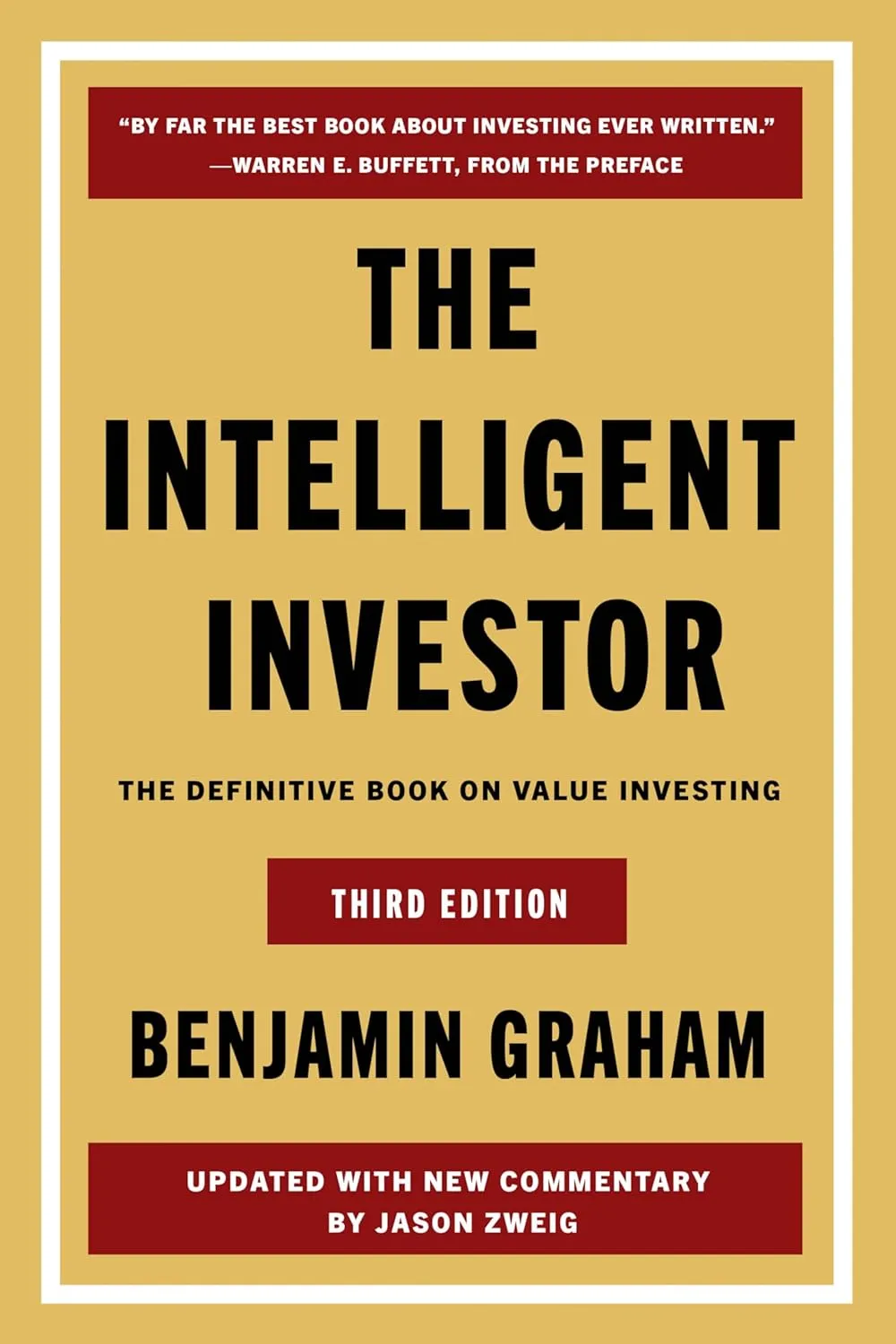
| The Intelligent Investor | Long | Very High | Medium |
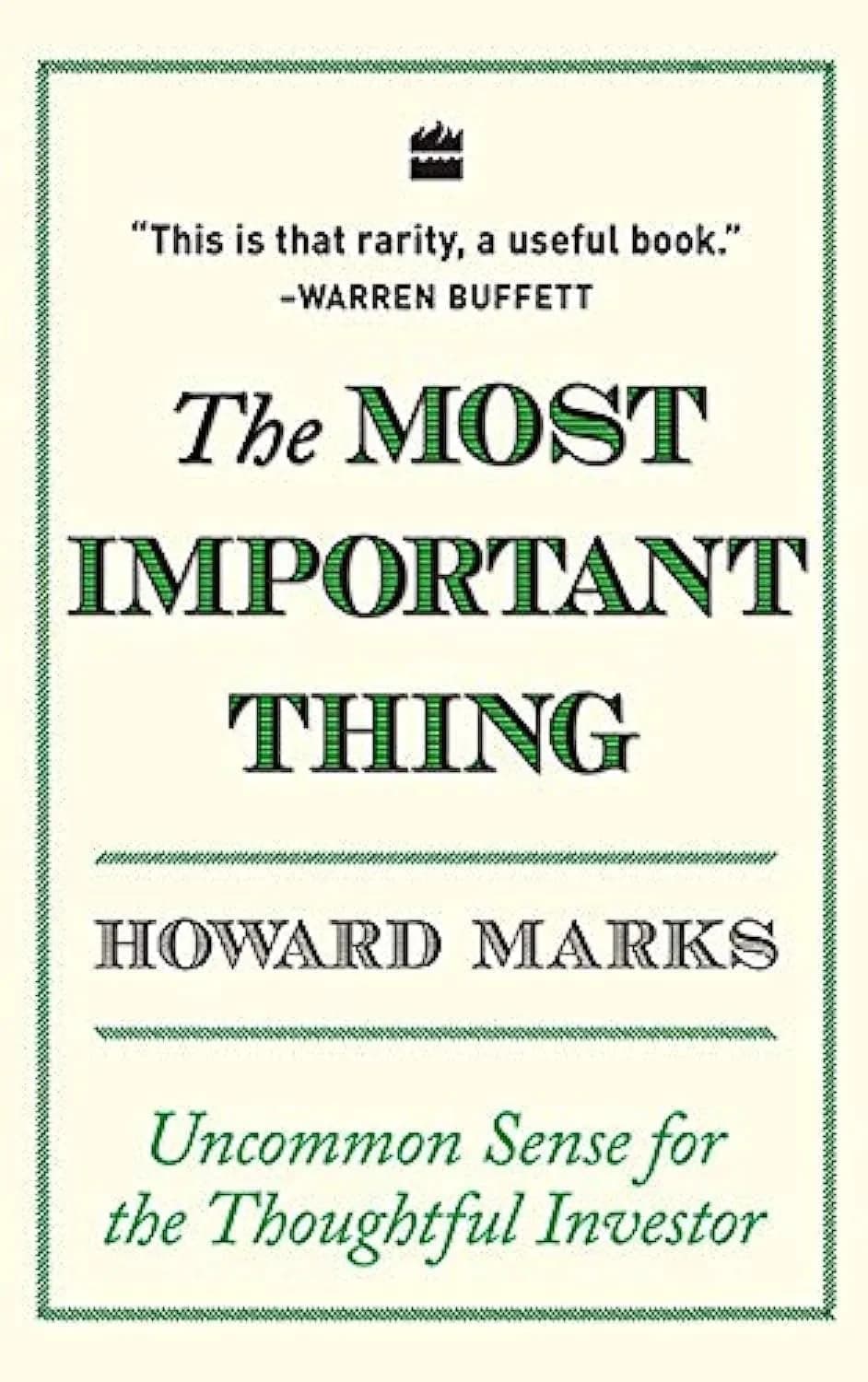
| The Most Important Thing | Medium | Very High | Medium |
| Value Investing: From Graham to Buffett | Long | Very High | High |
Read The Little Book of Value Investing for the practical toolkit. Read The Intelligent Investor for the philosophical foundation. Read The Most Important Thing for the nuanced thinking of a master investor.
Implementation Guide
Applying Browne's Framework in 2026
Step 1: Screen for candidates
Step 2: Eliminate value traps
Step 3: Value the survivors
Step 4: Build a diversified portfolio
Step 5: Add international value exposure
Step 6: Be patient
Frequently Asked Questions
Q: Is this better than The Intelligent Investor for beginners?
A: More accessible, less comprehensive. The Intelligent Investor is the foundational text; this book is the best short practical supplement. Read both.
Q: Does the value premium still exist?
A: Yes. The HML factor delivered 4.2% annualized returns from 2020-2025 after a -2.1% annualized return in 2010-2019. The full 1975-2025 sample shows a 3.6% annualized premium. A 2025 Journal of Financial and Quantitative Analysis study found that recent value underperformance reflects cyclical variation rather than a permanent shift. The most balanced interpretation is that the unconditional premium has compressed from 4-5% to roughly 2-3%, but the conditional premium (buying value when spreads are wide) remains substantial.
Q: Can I implement Browne's approach with ETFs?
A: Yes. Use international and domestic value ETFs (VTV for U.S. large cap value, VIOV for U.S. small cap value, EFV or IVLU for international value) for a factor-tilted passive portfolio that captures the value premium without stock selection.
Q: Is P/B still a useful screen in 2026?
A: For asset-heavy businesses (banks, insurance, manufacturing), yes. For technology and asset-light businesses, P/B is less meaningful because tangible assets are a small fraction of enterprise value. Use EV/EBITDA and price-to-free-cash-flow instead for those companies.
Final Verdict
Rating: 4.4/5
The Little Book of Value Investing is the best short introduction to practical value investing written by a genuine practitioner. Its combination of specific ratios, research process, value trap analysis, and international perspective makes it genuinely useful. The 2025 value resurgence, with the HML factor delivering 4.2% annualized returns from 2020-2025 and international value outperforming globally, validates Browne's framework. Read it alongside The Intelligent Investor for the most complete foundational education in value investing available.
Get Your Copy
Hardcover: Buy on Amazon
Kindle: Buy on Amazon
Prices current as of publication date. Free shipping available with Prime.