*Disclosure: This article contains affiliate links. If you purchase through these links, we may earn a commission at no additional cost to you. We only recommend books we genuinely believe in.
Quick Overview
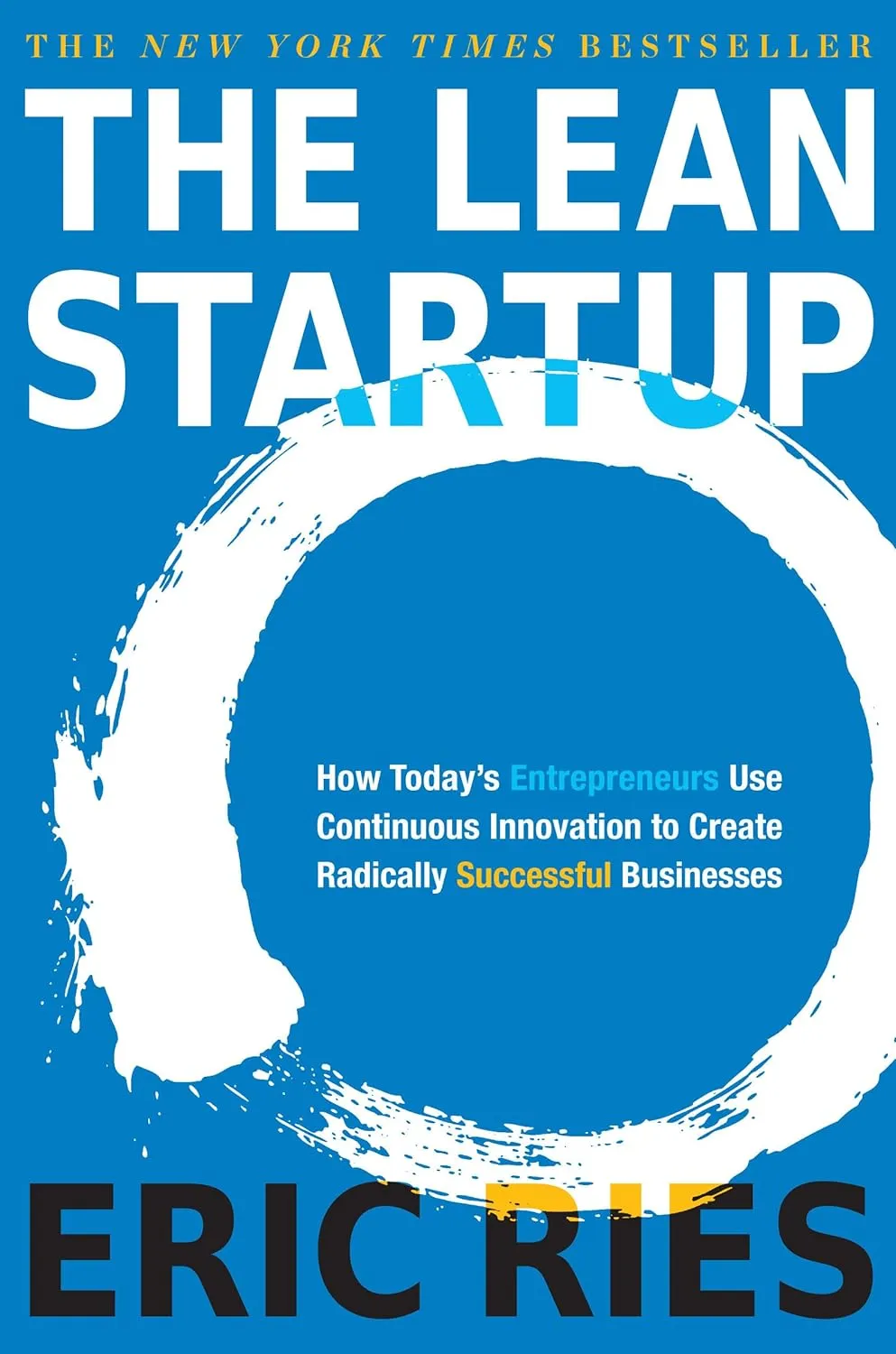
Here is a book that changed how Silicon Valley builds companies, and then changed how everyone else does too. Eric Ries published The Lean Startup in 2011, and within five years its vocabulary had infiltrated every pitch deck, every corporate innovation lab, and every MBA curriculum. The core idea is simple: stop building products nobody wants. Test your riskiest assumption with the smallest possible experiment, measure what happens, and decide whether to pivot or persevere.
Fifteen years later, the methodology has aged in interesting ways. The Startup Genome Project's 2025 report found that 74% of startups fail due to premature scaling, exactly the failure mode Ries warned against. Yet critics have also pointed out that Lean Startup's emphasis on rapid iteration may have contributed to the "move fast and break things" culture that produced some of the tech sector's most spectacular flameouts. WeWork's Adam Neumann reportedly used Lean Startup language while burning through billions. FTX's Sam Bankman-Fried talked about rapid iteration while running an unregulated casino. The methodology, it turns out, is only as good as the honesty of the person applying it.
I first read this book in 2014 when I was advising a small fintech startup. The team had spent six months building a budgeting app without showing it to a single potential customer. Within a week of adopting the Build-Measure-Learn loop, we discovered that the feature users actually wanted was automatic expense ratio tracking, not the elaborate goal-setting system we had built. That single pivot saved the company months of wasted development.
Book Details
| Attribute | Details |
|---|---|
| Title | The Lean Startup |
| Author | Eric Ries |
| Publisher | Crown Business |
| Published | 2011 |
| Pages | 336 |
| Reading Level | Beginner to Intermediate |
| Amazon Rating | 4.4/5 stars |
Get Your Copy
Hardcover: Buy on Amazon
Kindle: Buy on Amazon
Audiobook: Buy on Amazon
About the Author
Eric Ries is an entrepreneur and author who co-founded IMVU in 2004, which grew to 50 million registered users. He coined the term "Minimum Viable Product" (MVP) and developed the Lean Startup methodology drawing on his own startup failures. He subsequently founded the Long-Term Stock Exchange (LTSE) as a platform for public companies to make longer-term commitments to stakeholders. The LTSE went public in 2020 but has struggled to attract listings, with only a handful of companies trading on it by 2025. Ries also founded the Lean Startup Company, which provides training and certification in the methodology. His follow-up book, The Startup Way (2017), extended Lean Startup principles to large organizations.
The Core Problem: Building the Wrong Thing
The traditional product development approach:
This waterfall approach fails because it treats a startup as a smaller version of a known business. But a startup is not executing a known business model, it is searching for one. The assumptions in the business plan are guesses, not facts. Building the entire product before testing those guesses wastes enormous time and money.
The cost of building the wrong thing:
| Stage | Activity | Cost |
|---|---|---|
| Ideation | Planning what to build | Low |
| Development | Building it | Very high |
| Launch | Releasing it | High |
| Customer feedback | Discovering problems | Very high (everything must change) |
In the traditional model, the most expensive feedback comes last. Lean Startup inverts this by making customer feedback the first step, not the last.
The Build-Measure-Learn Loop
The core framework: treat every business assumption as a hypothesis, test it with real customers as cheaply as possible, and use what you learn to update your model.
                    ┌─────────┐
                    │  IDEAS  │
                    └────┬────┘
                         │ Build
                         ▼
                    ┌─────────┐
                    │ PRODUCT │
                    └────┬────┘
                         │ Measure
                         ▼
                    ┌─────────┐
                    │  DATA   │
                    └────┬────┘
                         │ Learn
                         ▼
                    ┌─────────┐
                    │ INSIGHTS│
                    └────┬────┘
                         │ (back to Ideas)
                         └───────────┐
                                     ▼
                              Pivot or Persevere
The goal is to minimize the time for each loop cycle. Faster loops = more learning = faster product-market fit discovery.
What Goes Into Each Step
Build: Create the Minimum Viable Product (MVP), the smallest version of the product that allows you to test your most important hypothesis.
Measure: Collect data on how customers actually use the product (not what they say, what they do).
Learn: Analyze the data against your hypothesis. Did customers behave as predicted? What does this tell you about your core assumptions?
The Minimum Viable Product (MVP)
The MVP is not the smallest possible product. It is the smallest product that generates validated learning about the most critical assumption.
The MVP thought process:
Famous MVP examples:
| Company | What They Did | What They Learned |
|---|---|---|
| Dropbox | Made a video demo of the product before building it | 75,000 sign-ups overnight confirmed massive demand |
| Airbnb | Listed their own apartment with photos to test demand | People would actually rent strangers' homes online |
| Zappos | Posted shoe photos online; bought from stores when orders arrived | People would buy shoes online without trying them |
| Buffer (social scheduling) | Landing page with pricing before product was built | People would pay for the product before it existed |
The concierge MVP:
Instead of building automated software, do the service manually. This lets you test whether the service is wanted (and refine exactly what the service should be) before investing in automation.
Example: Before building recommendation algorithm software, manually email recommendations to 20 users. If they love it, automate it. If they don't engage, you saved months of development time.
The Wizard of Oz MVP:
Show customers an interface that looks automated but has a human doing the work behind the scenes. Test the customer experience before building the technology.
Validated Learning
Ries distinguishes between "learning" (opinions, anecdotes, rationalizations) and validated learning, learning from real customer behavior with real products.
The Problem with Vanity Metrics
Vanity metrics are measurements that look impressive but do not indicate actual business health:
| Vanity Metric | Why It's Misleading |
|---|---|
| Total registered users | Doesn't measure active users or engagement |
| Total page views | Doesn't measure whether users found value |
| Press mentions | Doesn't measure whether customers buy |
| App downloads | Doesn't measure whether users return |
| Social media followers | Doesn't measure purchasing behavior |
A startup with 100,000 downloads of an app that nobody uses after the first day has zero validated learning about product-market fit. The vanity metric (downloads) obscures the actionable insight (nobody comes back). This pattern is remarkably common in the AI startup wave of 2024-2026, where companies report millions of API calls but cannot retain users past the novelty phase.
Actionable Metrics
Actionable metrics connect specific user actions to business outcomes:
| Actionable Metric | What It Measures |
|---|---|
| Retention rate (Day 1, Day 7, Day 30) | Do users find value and return? |
| Customer acquisition cost (CAC) | How much does it cost to acquire one customer? |
| Lifetime value (LTV) | How much revenue does one customer generate? |
| LTV/CAC ratio | Is the business model economically viable? |
| Net Promoter Score (NPS) | Do customers recommend the product? |
| Activation rate | What % of sign-ups take the core action? |
| Conversion rate | What % of visitors/trials convert to paid? |
The cohort analysis:
Rather than looking at aggregate metrics, break users into cohorts (groups who started at the same time) and track their behavior over time. Aggregate metrics hide trends. A declining retention rate is obscured by continued new user acquisition. Cohort analysis reveals it.
| Cohort | Month 1 Retention | Month 3 Retention | Month 6 Retention |
|---|---|---|---|
| Jan 2023 cohort | 65% | 42% | 28% |
| Apr 2023 cohort | 70% | 48% | 33% |
| Jul 2023 cohort | 75% | 55% | 40% |
Improving cohort retention over time is a strong signal of product-market fit improvement.
The Pivot
When validated learning reveals that a core assumption is wrong, the startup must pivot, making a structured course correction while keeping what was learned.
The pivot is not failure. It is the appropriate response to invalidated assumptions. The entrepreneurs Ries admires most are those who identify invalidated assumptions quickly and pivot efficiently, rather than those who spend years executing a failing plan before admitting it is not working.
Types of pivots:
| Pivot Type | Description | Example |
|---|---|---|
| Zoom-in | One feature becomes the whole product | Instagram started as Burbn (check-in app); photos became the product |
| Zoom-out | The product becomes one feature of a larger product | - |
| Customer segment | Same product, different customer | PayPal started targeting Palm Pilot users; pivoted to eBay sellers |
| Customer need | Same customer, different problem to solve | - |
| Platform | Application becomes a platform | Amazon started selling books; became a platform for all retail |
| Business architecture | High-margin/low-volume vs. low-margin/high-volume | - |
| Value capture | How you monetize changes | YouTube started with paid subscriptions; shifted to ad-supported |
| Engine of growth | Viral vs. sticky vs. paid growth model | - |
| Channel | How product reaches customers | - |
| Technology | Different technology for same problem | - |
Persevere or Pivot?
The hardest decision in startups: when to keep going vs. when to change. Ries's framework:
Persevere when:
Pivot when:
The Three Engines of Growth
Ries identifies three sustainable growth models. Understanding which engine a business uses is essential for choosing the right metrics:
1. The Sticky Engine
Customers sign up, use the product repeatedly, and stay. Growth comes from retention more than acquisition.
Key metric: Retention rate (customer churn rate)
Formula:
Growth = New customers enrolled - Customers lost
If retention rate > churn rate, the product grows
Examples: SaaS subscriptions, media platforms, any product with recurring usage
The key rule: Improve retention before worrying about acquisition. Pouring new customers into a leaky bucket accelerates the need to pour more.
2. The Viral Engine
Customers bring in other customers as a natural byproduct of using the product.
Key metric: Viral coefficient (k)
Viral coefficient (k) = Number of new users each user generates
If k > 1, viral growth (each user generates more than one new user)
If k < 1, growth eventually stops without external acquisition
Examples: Social networks (more users → invite friends → more users), email (every email sent promotes the email client), messaging apps
The implication: For viral products, the priority is maximizing the viral coefficient at every step of the referral funnel.
3. The Paid Engine
Acquire customers through advertising, sales, or other paid channels, as long as the lifetime value of a customer exceeds the cost to acquire them.
Key metric: LTV/CAC ratio
If LTV > CAC: Business model works; reinvest in acquisition
If LTV < CAC: Business model doesn't work; fix unit economics before scaling
Examples: Most e-commerce, B2B SaaS with sales teams, marketplaces
The implication: The paid engine requires constant monitoring of both CAC (which tends to rise as you exhaust cheap channels) and LTV (which can be improved through retention and expansion revenue). In 2026's AI-driven advertising landscape, CAC has risen sharply as market capitalization of ad platforms has grown, making unit economics harder to sustain for early-stage companies.
Five Whys: Finding Root Causes
Ries adapts Toyota's "Five Whys" technique for startup problem-solving:
When something goes wrong (or right), ask "why" five times to find the root cause:
Example:
Root cause: Missing process for feature-onboarding integration
The fix: Address the root cause (process), not the symptom (add a feature announcement). This prevents the same class of problem from recurring.
The same technique applied to successes: "Why did this campaign work so well?" traced back five levels often reveals insights about customer psychology or marketing channel effectiveness that can be deliberately replicated.
Application to Investing
While Lean Startup is written for entrepreneurs, several principles directly apply to investment analysis:
The Pivot Indicator
When analyzing a company's strategic changes, ask: is this a data-driven pivot (they learned something and adjusted) or a failure to execute the original plan?
Pivots driven by validated learning (Slack pivoting from a game company to enterprise messaging, Groupon pivoting from activism platform to deal site) often create extraordinary value. Pivots driven by failure to find product-market fit often represent value destruction. The key question for investors: does the pivot come with new customer data, or is it just a new story for the same lack of traction?
The Metrics Analysis
Apply the vanity vs. actionable metrics framework to public company analysis:
| Company Metric to Scrutinize | What To Look For |
|---|---|
| "Registered users" | Active users, DAU/MAU ratio |
| "Total revenue" | Revenue per customer, LTV trend |
| "Customer growth" | Retention rate, cohort analysis |
| "Gross bookings" | Take rate, net revenue |
Companies that report vanity metrics in investor communications may be hiding declining unit economics or engagement metrics. This is particularly relevant in the 2024-2026 AI boom, where many public companies report "AI engagement" metrics that sound impressive but do not translate to revenue or profit.
The Build-Measure-Learn Culture
Companies that operate with short feedback loops, test hypotheses with real data, and adjust quickly tend to outperform those with long product cycles and slow iteration. Amazon's two-pizza team structure, Alphabet's X division, and Netflix's culture of experimentation all reflect Lean Startup principles applied at scale. However, a 2024 Harvard Business Review study found that 70% of corporate innovation labs fail, often because they adopt Lean Startup vocabulary without genuinely empowering teams to pivot or kill projects.
Strengths & Weaknesses
What We Loved
Areas for Improvement
Who Should Read This Book
Highly Recommended For
Probably Not For
Frequently Asked Questions
Q: Is Lean Startup or Zero to One better for startup strategy?
A: They address different questions. Lean Startup answers "how do you efficiently discover what customers want?" Zero to One answers "what kind of business should you build?" Read Zero to One to determine strategy, Lean Startup to execute it. Peter Thiel has been openly critical of Lean Startup, arguing that iteration produces incremental products, while true innovation requires bold bets on contrarian visions. Both have a point.
Q: Does Lean Startup apply to large companies?
A: Yes, explicitly. Ries addresses corporate innovation. Companies like GE, Intuit, and Toyota have adopted Lean Startup frameworks for internal innovation programs. However, a 2024 Harvard Business Review study found that most corporate innovation labs fail because they adopt the vocabulary without empowering teams to actually kill or pivot projects. The principles work when leadership genuinely delegates decision authority.
Q: Has the Lean Startup methodology aged well since 2011?
A: The core principles remain sound. The Startup Genome Project's 2025 report confirmed that premature scaling still kills 74% of startups, validating Ries's central thesis. The critique is that the methodology became a buzzword that some founders used as cover for having no strategy. Lean Startup is a tool for disciplined experimentation, not a substitute for having a vision.
Final Verdict
Rating: 4.5/5
The Lean Startup is one of the most influential business books of the past 20 years. Its MVP concept, Build-Measure-Learn framework, and vanity vs. actionable metrics distinction have become standard vocabulary in entrepreneurship and product development. The book is essential reading for anyone building, investing in, or analyzing companies that create new products.
The criticism that Lean Startup enabled a generation of founders who iterated without a plan has some merit. But that is a misuse of the methodology, not a flaw in the book. Ries never said "have no strategy." He said "test your strategy before betting the company on it." Fifteen years later, with research showing premature scaling still killing most startups, that message is more relevant than ever.
For investors, the vanity vs. actionable metrics framework alone justifies reading this book. It will change how you read earnings reports and investor presentations, making you skeptical of companies that boast about registered users instead of retention rates.
Get Your Copy
Hardcover: Buy on Amazon
Kindle: Buy on Amazon
Audiobook: Buy on Amazon
Prices current as of publication date. Free shipping available with Prime.