*Disclosure: This article contains affiliate links. If you purchase through these links, we may earn a commission at no additional cost to you. We only recommend books we genuinely believe in.
Quick Overview
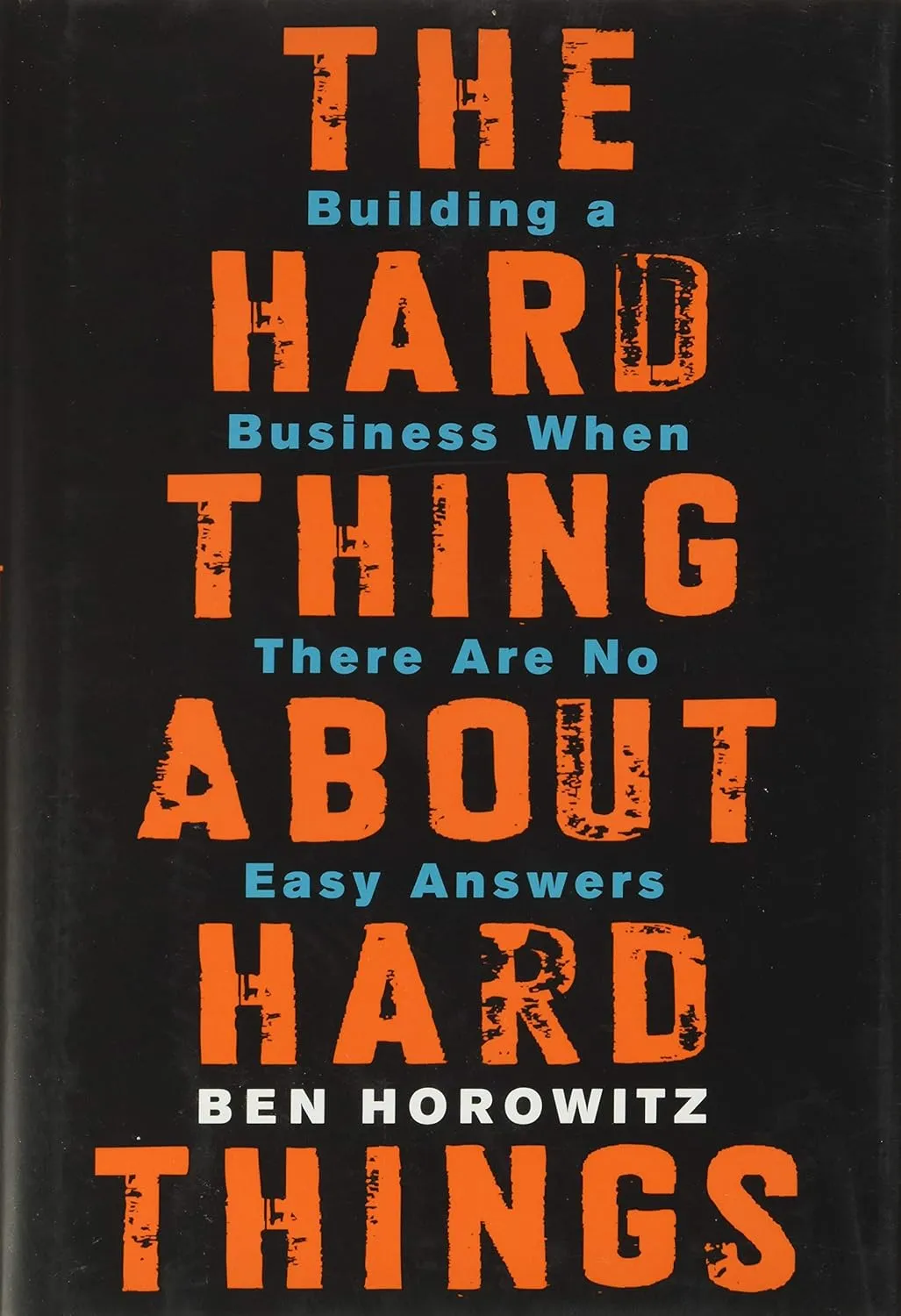
Ben Horowitz co-founded Loudcloud in 1999 and spent the following years navigating the dot-com crash, nearly failing, pivoting to Opsware, surviving multiple near-death experiences, and ultimately selling to Hewlett-Packard for $1.65 billion in 2007. He then co-founded Andreessen Horowitz (a16z), which has since become one of the most powerful venture capital firms in the world, raising over $15 billion in January 2026 and accounting for over 18% of all venture capital dollars allocated in the United States in 2025. The Hard Thing About Hard Things is his account of what he learned running a company through genuine crises. Not the polished lessons of a post-success memoir, but the raw truth about what it actually feels like and what actually helps.
Book Details
| Attribute | Details |
|---|---|
| Title | The Hard Thing About Hard Things: Building a Business When There Are No Easy Answers |
| Author | Ben Horowitz |
| Publisher | HarperBusiness |
| Published | March 2014 |
| Pages | 304 |
| ISBN-13 | 978-0062273208 |
| Reading Level | Intermediate |
| Amazon Rating | 4.7/5 stars |
Get Your Copy
Hardcover: Buy on Amazon
Paperback: Buy on Amazon
Kindle: Buy on Amazon
Audiobook: Buy on Amazon
About the Author
Ben Horowitz is a co-founder and general partner at Andreessen Horowitz (a16z), a venture capital firm that has invested in Facebook, Twitter, Airbnb, GitHub, Lyft, and hundreds of other companies. Before founding a16z in 2009, he was CEO of Opsware (formerly Loudcloud) for eight years, navigating the company through the dot-com crash and ultimately selling it to HP for $1.65 billion.
In January 2026, a16z raised over $15 billion across multiple funds, including American Dynamism ($1.176B), Apps ($1.7B), Bio + Health ($700M), Infrastructure ($1.7B), and Growth ($6.75B). The firm now manages over $42 billion in total assets and has become a major voice in technology policy, particularly around AI and crypto. Horowitz has spoken publicly about the firm's evolution from a small startup to a multi-practice platform, and discussed how AI is reshaping both venture capital and the kinds of companies that can be built.
The Core Premise: No Easy Answers
Horowitz opens with the thesis that makes this book different from every other business book:
"There's no secret formula. There's no recipe. Most of what I know about management I learned as the company's CEO, and most of what I learned, I learned the hard way."
Every other management book covers the easy cases: how to run a normal business in normal times. Horowitz covers the hard cases. What do you do when:
These are the decisions that actually make or break companies. No framework handles them cleanly.
Wartime CEO vs. Peacetime CEO
Horowitz's most important strategic distinction:
The Peacetime CEO
A peacetime CEO runs a company that has product-market fit, is growing, and faces no existential threats. The skills required:
The Wartime CEO
A wartime CEO runs a company in existential crisis, fighting for survival against a market shift, competitive threat, financial crisis, or technology disruption. The skills required:
Why most management advice fails in wartime:
Management books are written about peacetime. Their advice (communicate openly, build consensus, involve the team in decisions, maintain culture) is correct in peacetime. In wartime, some of it will kill you.
The wartime communication paradox:
In peacetime: share information broadly, involve the team in major decisions, build buy-in.
In wartime: the CEO must communicate clearly about the crisis without triggering a panic that accelerates the crisis. Employees who know the company is six weeks from failure start interviewing immediately. If the best employees leave, the company definitely fails. Managing this communication is genuinely one of the hardest things a CEO does.
Horowitz's rule: Match your management style to the company's situation. The same person can and must shift between peacetime and wartime CEO modes depending on conditions.
The Layoff: How to Do It Right
Horowitz conducted multiple large-scale layoffs during Loudcloud/Opsware's crises. His account of how to execute a layoff properly is the most honest and practically useful guidance on the subject available.
The Common Mistakes
Mistake 1: Delaying. CEOs delay layoffs hoping conditions will improve. Every week of delay extends uncertainty for employees who sense something is wrong, burns cash the company needs to survive, and makes the eventual layoff larger.
Mistake 2: Multiple waves. "We had to do it twice" is one of the worst things a CEO can say. A second layoff after the first destroys trust in management's judgment and signals that leadership does not understand the business well enough to size the problem correctly.
Mistake 3: Not preparing managers. Managers who are blindsided by the layoff on the day it is announced are furious, and their fury spreads to their teams.
The Correct Process
| Step | Timing | Action |
|---|---|---|
| 1 | D-2 | CEO makes decision on scope |
| 2 | D-2 | Prepare separation packages, legal review |
| 3 | D-1 | Brief managers who will deliver news |
| 4 | D-1 evening | Prepare all materials |
| 5 | Day of | Brief all remaining employees before anyone outside hears |
| 6 | Day of | Each affected employee hears from their direct manager, not HR |
| 7 | Day of | CEO addresses the whole company with honest explanation |
Horowitz is emphatic: the CEO must take personal responsibility. "The economy deteriorated" is not acceptable. "I made mistakes in predicting the market, and the company is paying for them" is what the remaining employees need to hear.
I have been through two layoffs at different companies. The first followed Horowitz's process closely: managers were prepared, the CEO took responsibility, and the remaining team understood why. The second did the opposite: HR delivered the news, the CEO blamed "market headwinds," and a second wave followed three months later. The first company recovered. The second did not.
Giving Hard Feedback
One of the most practically valuable chapters: how to give feedback to executives and employees about serious performance problems.
The Horowitz model: Be precise and specific.
People who receive this feedback can actually act on it. "Your style sometimes isn't collaborative enough" gives the employee nothing actionable. "You interrupted three engineers in the last all-hands meeting; here's the impact; here's what I need to change" gives them a specific, addressable behavior.
Hiring: The One Test That Matters
Horowitz distills hiring to one question per role:
"What would this person do in the first 30 days that would make you think, 'We made the right hire'?"
This forces hiring managers to articulate exactly what they need rather than screening for general impressiveness.
Hiring for Strength vs. Hiring Against Weakness
Most hiring processes focus on eliminating candidates with disqualifying weaknesses. Horowitz argues this produces mediocre hires. Better approach: define the specific strengths required for the role, then find candidates who have those strengths, accepting weaknesses that do not matter for this role.
| Role | Critical Strength | Acceptable Weakness |
|---|---|---|
| Head of Sales | Can close large enterprise deals | Disorganized on process |
| Head of Engineering | Can architect complex systems | Poor public speaker |
| CFO | Exceptional financial modeling and investor communication | Limited operational experience |
The Executive Hiring Mistake
The highest-status candidate, the person from the best-known company with the most impressive title, is often the wrong hire for a startup. Big-company executives are accustomed to resources a startup cannot provide, rely on staff rather than personal execution, and optimize for internal politics rather than external results.
The right question: "Have you ever done anything from scratch?" Not "managed a large organization" or "run a major program." Done something from nothing with limited resources.
Investment Analysis Through the Horowitz Lens
For investors evaluating companies, Horowitz's frameworks translate directly into management quality assessment:
What to Look for in CEOs
| Quality | Positive Signal | Warning Sign |
|---|---|---|
| Wartime capability | Has navigated genuine crisis | Only led in growth periods |
| Feedback culture | Direct, accountable | Uses language that obscures accountability |
| Team building | Promoted from within, long tenures | Frequent executive turnover |
| Crisis communication | Takes personal responsibility | Blames external factors |
| Self-awareness | Discusses failures honestly | Only discusses successes |
Red Flags in Company Leadership
| Red Flag | What It Indicates |
|---|---|
| Layoffs with vague messaging ("restructuring for growth") | Management not communicating honestly about problems |
| Executive exodus | Cultural or strategic problems below the surface |
| Guidance misses repeatedly | Management does not understand their own business |
| No accountability language in earnings calls | Culture that does not accept responsibility |
| CEO who cannot articulate clear failures | No feedback culture; problems will compound |
When I evaluate a company's 10-K filing, I read the MD&A section looking for Horowitz-style accountability language. Does management say "we missed our targets because we executed poorly" or do they blame "macroeconomic headwinds"? The former is a Horowitz-positive signal. The latter is a red flag.
Strengths & Weaknesses
What We Loved
Areas for Improvement
Who Should Read This Book
Highly Recommended For
Probably Not For
Comparison to Similar Books
| Book | Focus | Best For |
|---|---|---|
| The Hard Thing About Hard Things (Horowitz) | Crisis management, raw honesty | CEOs and investors evaluating management |
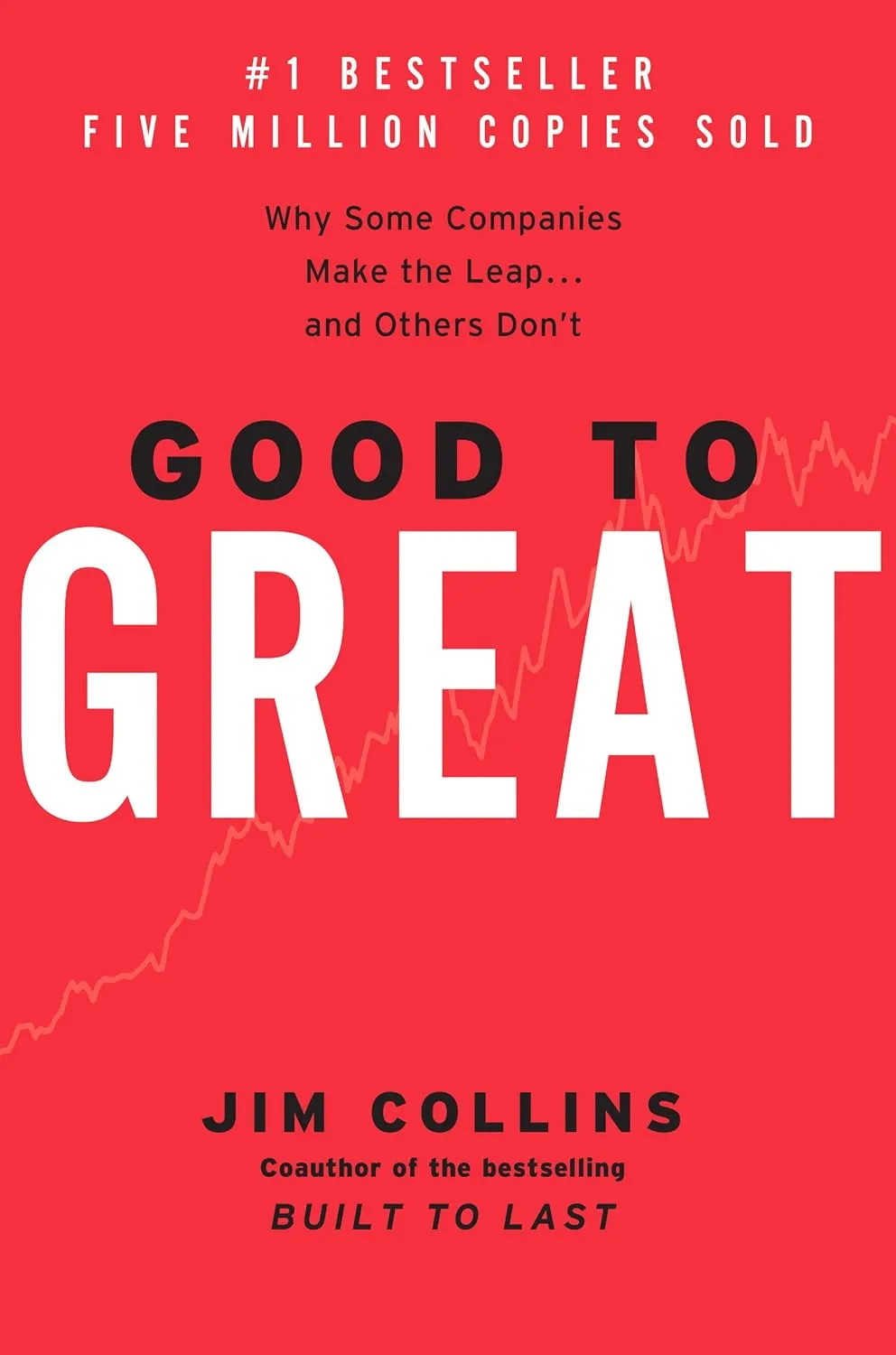
| Good to Great (Collins) | What makes companies great | Evaluating business quality and leadership |
| Zero to One (Thiel) | How to build a monopoly | Startup strategy |
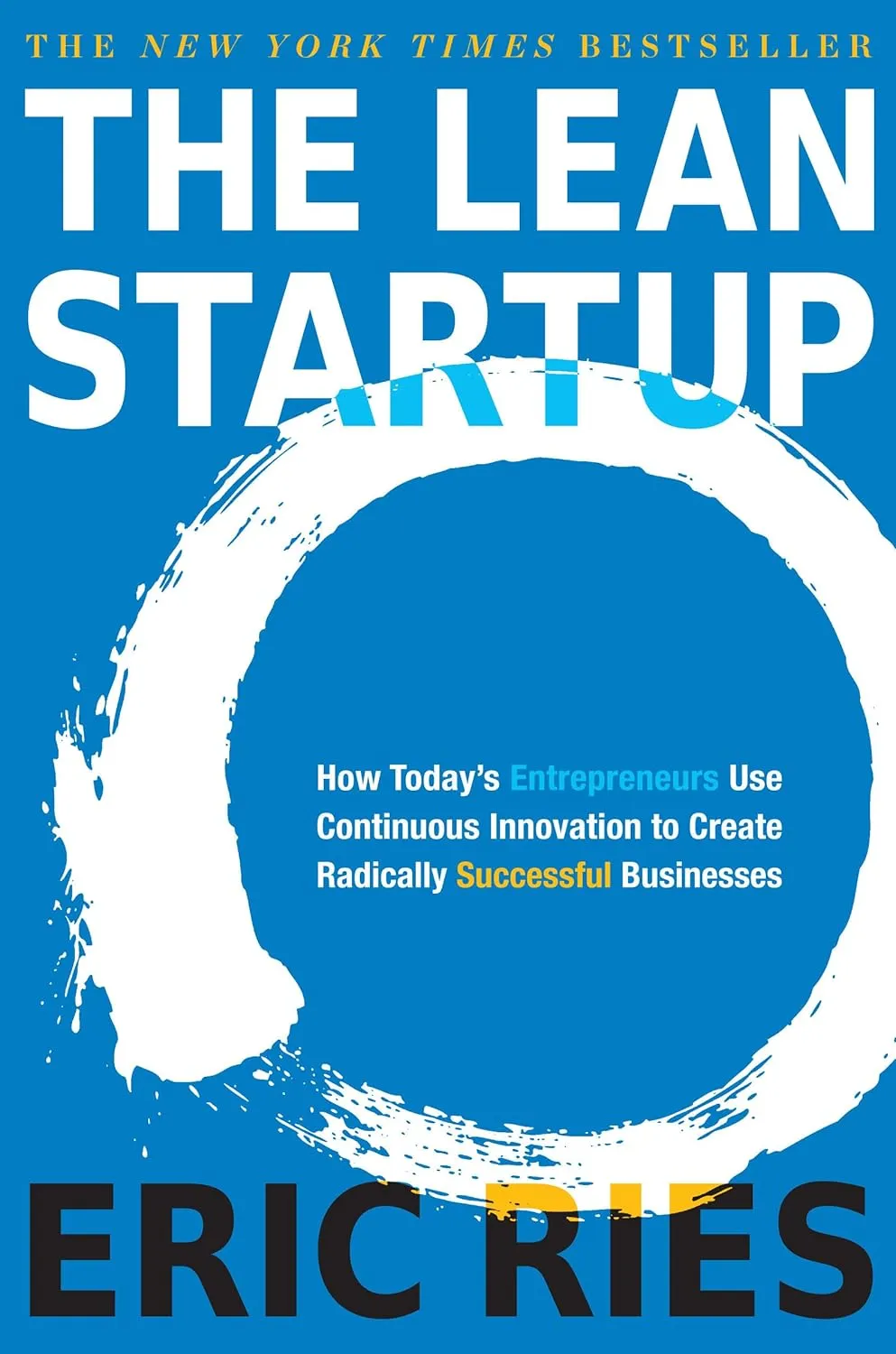
| The Lean Startup (Ries) | How to build startups efficiently | Product development methodology |
| No Rules Rules (Hastings/Meyer) | Netflix's culture of freedom | Culture design at scale |
Read The Hard Thing About Hard Things for crisis management, then Good to Great for sustained excellence, then Zero to One for startup strategy.
Implementation Guide
For Investors: Evaluating Management Quality
Step 1: Read the last 3 earnings call transcripts.
Look for Horowitz-positive language: specific failures discussed, personal responsibility taken, clear plans articulated. Compare to Horowitz-negative language: vague blame on external factors, "macroeconomic headwinds," "temporary headwinds."
Step 2: Check executive tenure.
Use the 10-K filing to see how long key executives have been in their roles. High turnover in the C-suite is a Horowitz red flag. Stable, long-tenured leadership teams are a positive signal.
Step 3: Evaluate capital allocation discipline.
Does the CEO make disciplined decisions about asset turnover and gross margins? Or do they pursue growth at any cost? Horowitz's "first who, then what" principle applies: companies that invest in the right people before pursuing new strategies tend to outperform.
Step 4: Look at the economic moat.
Horowitz's wartime/peacetime distinction maps to competitive positioning. Companies with strong moats operate in peacetime. Companies with weak moats are perpetually at war. Use our investment return calculator to model how different competitive scenarios affect long-term returns.
Step 5: Assess culture through actions, not words.
Horowitz says culture is defined by who gets promoted, who gets fired, and how decisions are made under pressure. Look at the company's actual actions, not their culture deck or values statement.
Frequently Asked Questions
Q: Has Horowitz updated the book since 2014?
A: No new edition has been published, but Horowitz continues to share updated thinking through a16z podcasts and essays. His recent discussions about AI's impact on company building, the evolution of a16z from a startup firm to a multi-practice platform, and the intersection of technology and national strategy extend the book's themes to current markets.
Q: Is this book relevant outside of Silicon Valley?
A: Yes. The wartime/peacetime distinction, the feedback framework, and the layoff process apply to any organization facing crisis. The specific examples are Silicon Valley startups, but the principles are universal. Any CEO who has had to fire people, deal with a board, or navigate an existential threat will recognize the situations Horowitz describes.
Q: How does this compare to Good to Great?
A: Good to Great studies what makes companies sustainably great. The Hard Thing About Hard Things studies what it takes to survive when things go wrong. They are complementary. Read Good to Great for the positive framework. Read Horowitz for the crisis playbook.
Q: Should I read this if I am an investor, not a CEO?
A: Yes. The frameworks for evaluating management quality are directly applicable to investment analysis. If you invest in individual stocks, understanding what good and bad CEO behavior looks like in crisis is one of the most valuable skills you can develop.
Q: What is Horowitz doing now?
A: He continues to co-lead a16z, which in January 2026 raised over $15 billion across multiple funds. The firm is now one of the most influential venture capital firms globally, with investments spanning AI, crypto, biotech, infrastructure, and American Dynamism. Horowitz has become a prominent voice on technology policy and the intersection of venture capital and national strategy.
Final Verdict
Rating: 4.7/5
The Hard Thing About Hard Things is the most honest and practically useful leadership book written. Its wartime/peacetime CEO distinction, layoff execution guidance, and feedback framework are uniquely valuable. For anyone running, managing, or investing in companies navigating real adversity, this is required reading.
The book has not been updated since 2014, but its lessons are timeless because human nature under pressure does not change. Horowitz's subsequent career, building a16z into a $42 billion firm, validates the management principles he describes. The companies that survive crises are the ones whose leaders can be honest about the problem, make fast imperfect decisions, and take personal responsibility for the outcome.
Get Your Copy
Hardcover: Buy on Amazon
Paperback: Buy on Amazon
Kindle: Buy on Amazon
Audiobook: Buy on Amazon
Prices current as of publication date. Free shipping available with Prime.