*Disclosure: This article contains affiliate links. If you purchase through these links, we may earn a commission at no additional cost to you. We only recommend books we genuinely believe in.
Quick Overview
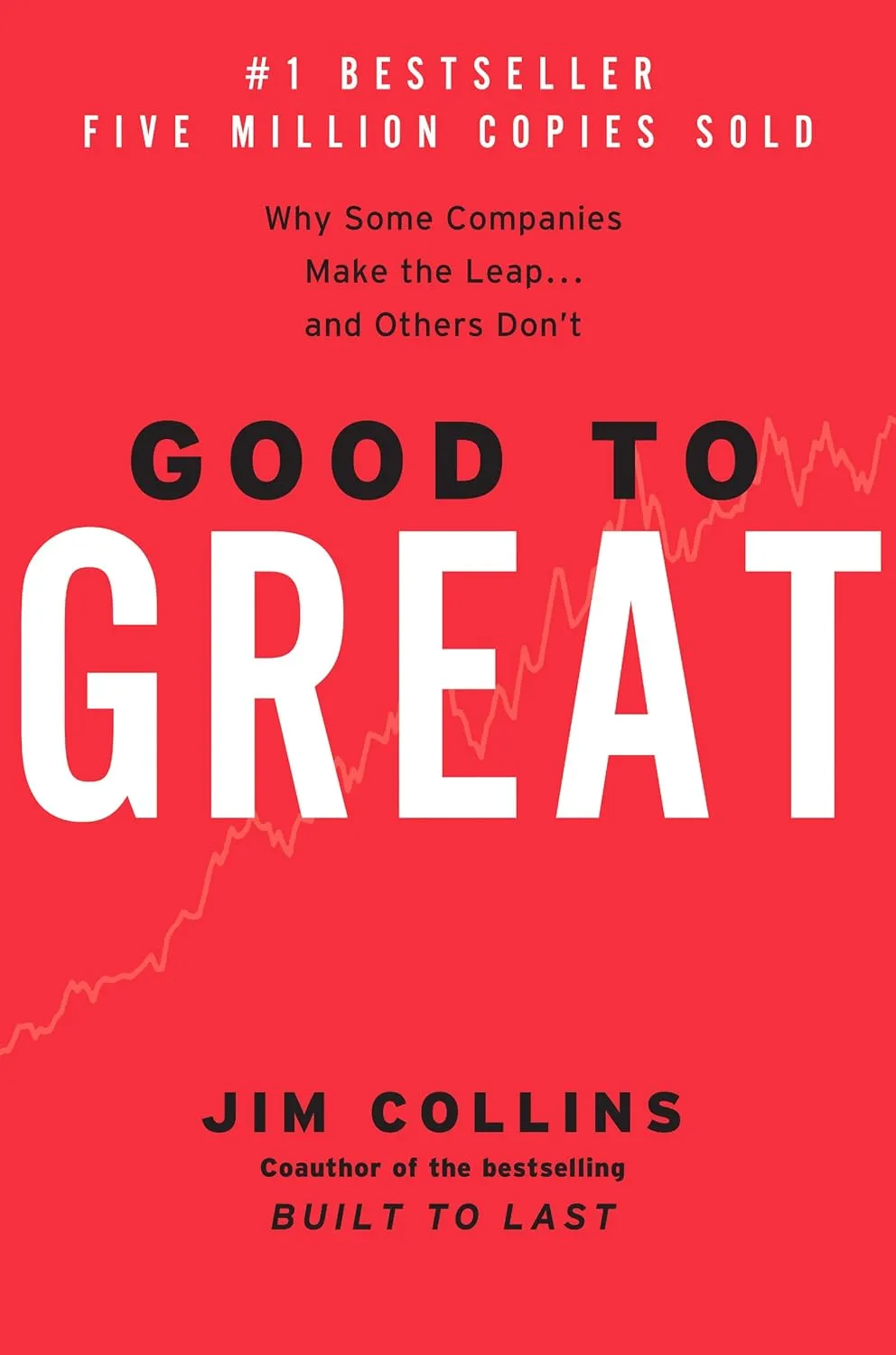
Jim Collins and his research team spent five years analyzing 1,435 companies that appeared on the Fortune 500 between 1965 and 1995. They identified 11 companies that went from "good" (average or below-average performance) to "great" (sustained outperformance of at least 3x the general market over 15 years) and tried to find what those 11 had in common. The result was Good to Great, which sold over 4 million copies and became the most influential business book of the 2000s. The problem? Several of those 11 "great" companies later collapsed. Circuit City went bankrupt. Fannie Mae required a government bailout. Wells Fargo became a scandal machine. This raises a question that Collins himself has addressed: was the research identifying durable principles, or was it drawing conclusions from a small sample that happened to perform well during the study period?
Book Details
| Attribute | Details |
|---|---|
| Title | Good to Great: Why Some Companies Make the Leap and Others Don't |
| Author | Jim Collins |
| Publisher | HarperBusiness |
| Published | October 2001 |
| Pages | 320 |
| ISBN-13 | 978-0066620992 |
| Reading Level | Intermediate |
| Amazon Rating | 4.6/5 stars |
Get Your Copy
Hardcover: Buy on Amazon
Paperback: Buy on Amazon
Kindle: Buy on Amazon
Audiobook: Buy on Amazon
About the Author
Jim Collins is a researcher, author, and teacher focused on company sustainability and growth. He studied business at Stanford Graduate School of Business, where he later taught entrepreneurship. He founded a management research laboratory in Boulder, Colorado, and has authored or co-authored six books based on his research methodology, including Built to Last, Great by Choice, and How the Mighty Fall.
Collins is unusual among business authors because he insists on rigorous data collection before drawing conclusions. His research teams analyze thousands of companies over decades of financial data. Whether or not you agree with his conclusions, the methodology is more systematic than most business books, which tend to rely on anecdotes and the author's personal consulting experience.
Key Concepts
1. Level 5 Leadership
Collins found that every "good to great" company was led by what he calls a Level 5 leader. Level 5 leaders share two traits: extreme personal humility and fierce professional will.
The Level 5 hierarchy:
| Level | Description |
|---|---|
| Level 5 | Executive: builds enduring greatness through humility + will |
| Level 4 | Effective Leader: catalyzes commitment to clear vision |
| Level 3 | Competent Manager: organizes people and resources efficiently |
| Level 2 | Contributing Team Member: contributes to team goals |
| Level 1 | Highly Capable Individual: productive through talent and skills |
The paradox of Level 5:
Level 5 leaders attribute success to factors outside themselves (luck, great teams, good timing) and take personal responsibility for failures. When things go well, they look out the window. When things go wrong, they look in the mirror.
Collins contrasts this with Level 4 leaders, who are often charismatic and effective but whose companies tend to decline after they leave. The charismatic leader becomes the center of gravity, and the organization cannot function without them.
Darwin Smith of Kimberly-Clark:
Collins's primary example is Darwin Smith, CEO of Kimberly-Clark from 1971 to 1991. Smith was a shy, unassuming lawyer who surprised everyone by becoming CEO. He made the controversial decision to sell the company's paper mills (the core business for decades) and compete directly against Procter & Gamble in consumer paper products. Wall Street thought he was crazy. The strategy worked. Kimberly-Clarks stock outperformed the general market by 4.1x over the next 15 years.
Smith never sought the spotlight. When asked about his success, he credited his team and said he was just trying to be worthy of the job. He never wrote a memoir or appeared on magazine covers.
2. First Who, Then What
Collins found that great companies did not start with a vision or strategy. They started with getting the right people on the bus.
The "bus" metaphor:
Why "who" before "what":
If you have the right people, they can adapt to changing circumstances. If you have the wrong people, the best strategy in the world will fail. Collins found that good-to-great companies spent more time on people decisions than on strategic decisions.
Practical implication for investors:
When evaluating a company, look at the management team's track record and tenure. High executive turnover, especially in the C-suite, is a red flag. Companies with stable, long-tenured leadership teams tend to make better long-term decisions. Check the 10-K filing for executive compensation structure and whether it aligns with long-term shareholder value.
3. The Hedgehog Concept
The Hedgehog Concept comes from Isaiah Berlin's essay "The Hedgehog and the Fox." Foxes know many things. Hedgehogs know one big thing. Collins found that great companies are hedgehogs: they focus relentlessly on what they do best.
The three circles of the Hedgehog Concept:
| Circle | Question | Example (Walgreens) |
|---|---|---|
| What you are deeply passionate about | What drives the organization? | Convenient drugstore retail |
| What you can be best in the world at | What is your unique competitive advantage? | Conveniently located stores with high traffic |
| What drives your economic engine | How do you make money? | Profit per customer visit |
The Hedgehog Concept is the intersection of all three circles. Great companies find their intersection and pursue it with relentless focus.
For investors, the Hedgehog Concept maps to economic moats:
A company with a clear Hedgehog Concept typically has a durable economic moat. If a company knows what it can be best in the world at, it has a defensible competitive position. If it knows what drives its economic engine, it has a sustainable profit model. Look for companies that can articulate their Hedgehog Concept clearly and resist the temptation to pursue opportunities outside it.
Companies that lost their Hedgehog:
| Company | Original Hedgehog | What Went Wrong |
|---|---|---|
| Circuit City | Electronics retail with expert staff | Shifted focus to diversification; fired highest-paid (most experienced) sales staff |
| Fannie Mae | Automated mortgage underwriting | Pursued growth over underwriting quality; bought subprime loans |
| Wells Fargo | Cross-selling to existing customers | Cross-selling became predatory; fake accounts scandal |
4. The Flywheel and the Doom Loop
Collins found that great companies build momentum gradually, like turning a massive flywheel. Each turn adds energy. There is no single defining action or lucky break. The momentum builds through consistent effort in one direction.
The Flywheel:
Disciplined people (Level 5 leadership, right people on the bus)
    -> Disciplined thought (Hedgehog Concept, confront brutal facts)
        -> Disciplined action (culture of discipline, technology accelerators)
            -> Build momentum gradually
                -> Flywheel accelerates
                    -> Sustained great results
The Doom Loop:
New leadership / new vision
    -> Reaction without understanding
        -> New direction / new program
            -> No accumulated momentum
                -> Disappointing results
                    -> New leadership / new vision (cycle repeats)
The Doom Loop is what happens when companies chase quick fixes, change direction frequently, and fail to build accumulated momentum. It is the organizational equivalent of a day trader who constantly switches strategies.
For investors:
Companies in the Flywheel stage show consistent improvement in key metrics over multiple years. Companies in the Doom Loop show erratic results, frequent strategy changes, and high executive turnover. Look at the income statement for revenue and margin trends over 5-10 years. Smooth, consistent improvement suggests a flywheel. Erratic results suggest a doom loop.
5. Confront the Brutal Facts (The Stockdale Paradox)
Named after Admiral James Stockdale, the highest-ranking U.S. military officer imprisoned in Vietnam. Stockdale observed that the optimists did not survive. They kept expecting to be released by Christmas, then by Easter, then by the next holiday. When each deadline passed, they lost hope.
The Stockdale Paradox:
You must retain faith that you will prevail in the end, regardless of the difficulties. At the same time, you must confront the most brutal facts of your current reality, whatever they might be.
Application to investing:
| Optimist (Does Not Survive) | Stockdale Paradox (Survives) |
|---|---|
| "This stock will recover soon" | "This stock may never recover. What are the facts?" |
| Ignores deteriorating fundamentals | Reads the 10-K carefully, even the bad parts |
| Holds losers hoping for a bounce | Sells when the thesis is broken, regardless of loss |
| Believes management guidance blindly | Questions management claims, checks against data |
I applied the Stockdale Paradox to my portfolio in 2022. I was holding a tech stock down 60% and kept telling myself it would recover. After reading this chapter, I re-read the company's 10-K and realized their gross margin was declining, customer acquisition costs were rising, and the addressable market was smaller than I had assumed. I sold at a loss. The stock dropped another 40% over the next year. Confronting the brutal facts saved me additional losses.
The Uncomfortable Question: Have the "Great" Companies Stayed Great?
This is where the book requires honest reassessment. Collins identified 11 companies as "great" based on their stock performance from the point of transition through the study period. Several of those companies have since collapsed or underperformed dramatically.
The 11 "great" companies and their subsequent performance:
| Company | Status as of 2025 | What Happened |
|---|---|---|
| Abbott Laboratories | Still performing well | Diversified healthcare; sustained profitability |
| Circuit City | Bankrupt (2009) | Lost focus on Hedgehog; fired experienced staff; competed with Best Buy on price |
| Fannie Mae | Government conservatorship (2008) | Underwriting standards deteriorated; bought subprime loans |
| Gillette | Acquired by P&G (2005) | Good outcome for shareholders; brand still strong |
| Kimberly-Clark | Still performing | Steady performer; Darwin Smith's legacy endured |
| Kroger | Still performing | Competed successfully against Walmart; digital transformation |
| Nucor | Still performing | Steel industry leader; maintained cost advantage |
| Philip Morris (Altria) | Still performing | Legal and regulatory challenges, but financially strong |
| Pitney Bowes | Underperforming | Declined as postal mail declined; strategic missteps |
| Walgreens | Underperforming | Struggled with Amazon competition; pharmacy reimbursement pressure |
| Wells Fargo | Scandal-plagued | Fake accounts scandal; regulatory penalties; lost trust |
A 2009 study by economist Ray Fisman in Slate noted that a portfolio of the 11 "great" companies underperformed the S&P 500 in the years following the book's publication. A 2014 analysis by The Economist found that only 5 of the 11 companies had outperformed the market since 2001.
What this means for the book's conclusions:
Collins's research methodology has been criticized for survivorship bias (a concept explored in Fooled by Randomness). He selected companies that had already achieved great results and then looked backward for commonalities. This is like studying lottery winners to find the secrets of winning the lottery. The commonalities may be real, but they may also exist in companies that did not achieve greatness.
Collins acknowledged this criticism in his follow-up book, How the Mighty Fall (2009), which studied why once-great companies decline. He argued that the principles in Good to Great are necessary but not sufficient. Companies can have all the right disciplines and still fail if they lose them, or if external conditions change dramatically.
Practical Applications for Investors
Using Good to Great Principles to Evaluate Stocks
| Principle | What to Look For in a Company |
|---|---|
| Level 5 leadership | CEO with low ego, long tenure, aligns interests with shareholders |
| First who, then what | Low executive turnover; strong internal promotion culture |
| Hedgehog Concept | Clear, focused business model; resists unrelated diversification |
| Flywheel | Consistent improvement in revenue, margins, and returns over 5+ years |
| Confront brutal facts | Management honestly discusses challenges in shareholder letters and MD&A |
| Culture of discipline | Low debt, disciplined capital allocation, no value-destroying acquisitions |
Red Flags from the Doom Loop
| Red Flag | What It Signals |
|---|---|
| Frequent strategy changes | No accumulated momentum; no Hedgehog |
| High CEO turnover | Wrong people on the bus; board dysfunction |
| Large goodwill balance on balance sheet | Acquisition-driven growth rather than organic |
| Declining asset turnover | Becoming less efficient at generating revenue from assets |
| Rising debt with declining margins | Funding operations with leverage rather than profitability |
Building Your Own Flywheel
The flywheel concept applies to personal finance as well as business:
Use our investment return calculator to visualize how your personal flywheel compounds over 20-30 years. The first few years feel slow. After 10 years, the flywheel starts to accelerate. After 20 years, it is difficult to stop.
Strengths & Weaknesses
What We Loved
Areas for Improvement
Who Should Read This Book
Highly Recommended For
Probably Not For
Comparison to Similar Books
| Book | Focus | Difficulty | Key Insight |
|---|---|---|---|
| Good to Great (Collins) | How good companies become great | Intermediate | Level 5 leadership; Hedgehog Concept |
| Built to Last (Collins/Porras) | How great companies endure | Intermediate | Visionary companies preserve core while stimulating progress |
| The Innovator's Dilemma (Christensen) | Why great companies fail | Advanced | Disruptive innovation destroys incumbents |
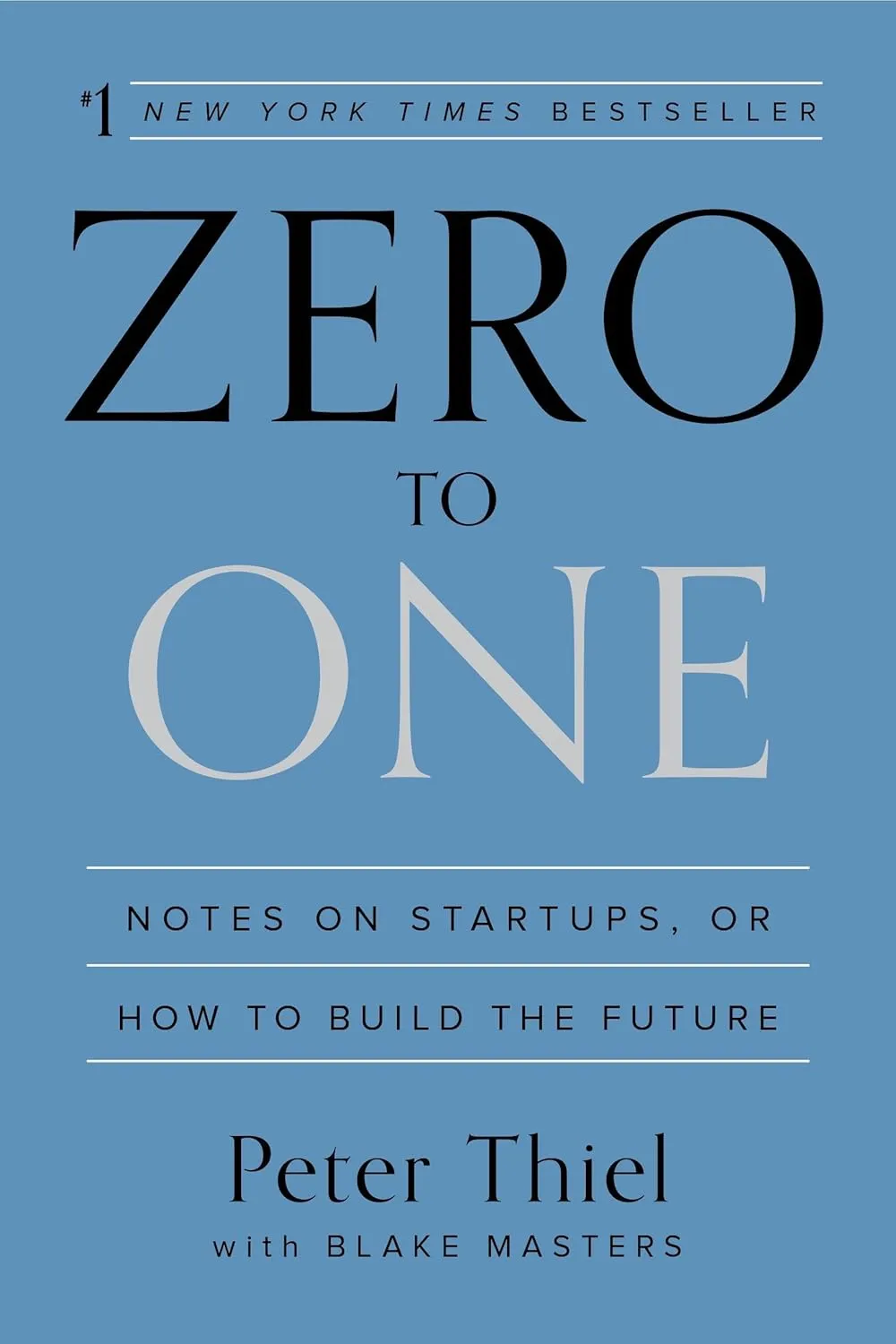
| Zero to One (Thiel) | How to build a monopoly | Intermediate | Competition is for losers; build unique value |
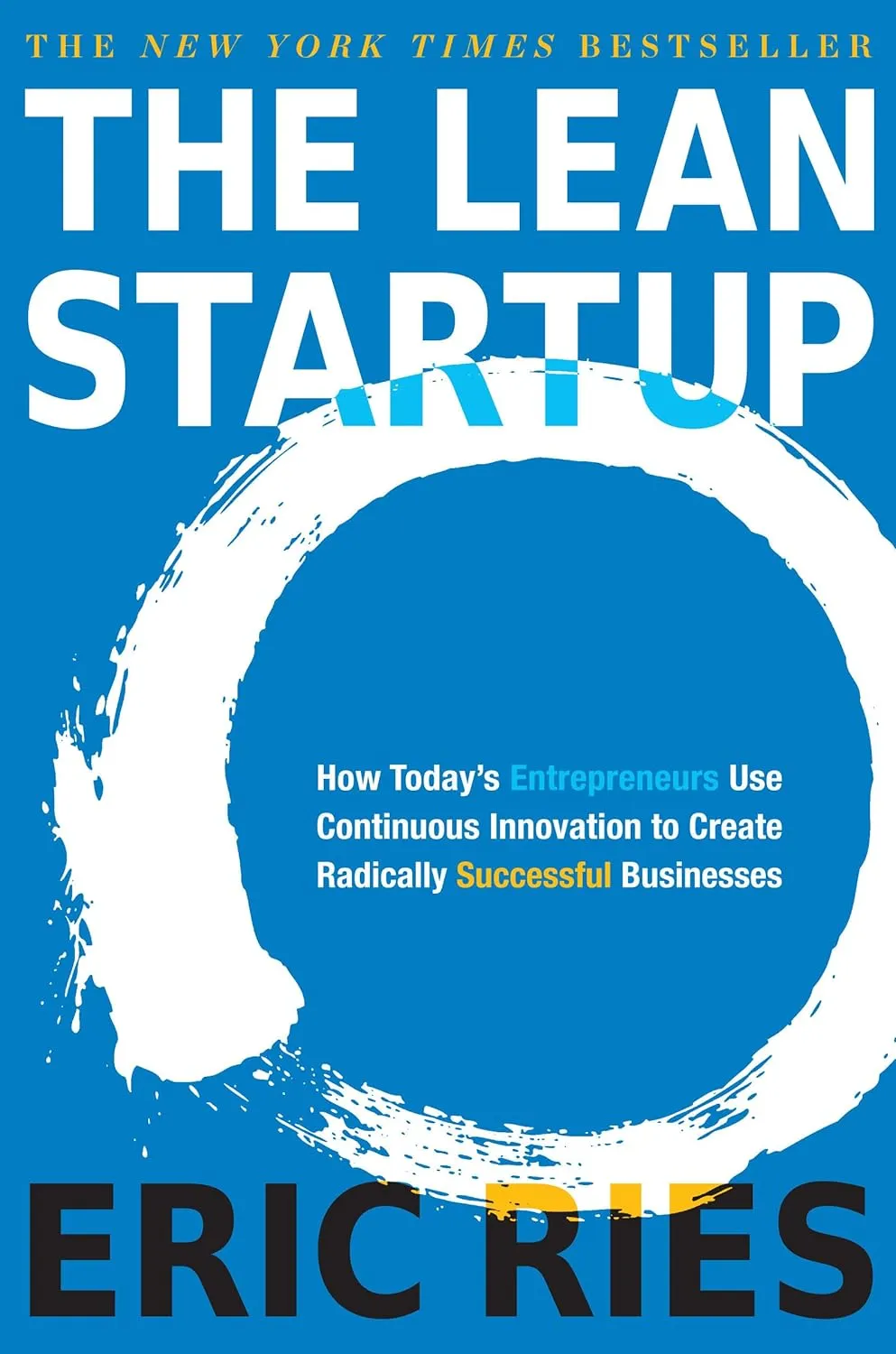
| The Lean Startup (Ries) | How to build startups efficiently | Beginner | Build-measure-learn cycle |
Read Good to Great for the management frameworks, then The Innovator's Dilemma to understand why even great companies fail, then How the Mighty Fall for Collins's own analysis of decline.
Implementation Guide
30-Day Study and Application Plan
Week 1: Read and absorb
Week 2: Evaluate your portfolio
Week 3: Apply the Stockdale Paradox
Week 4: Build your personal flywheel
Frequently Asked Questions
Q: Is Good to Great still worth reading given that several companies failed?
A: Yes. The frameworks (Level 5 leadership, Hedgehog Concept, Stockdale Paradox, Flywheel) are useful analytical tools regardless of whether the specific companies remained great. The book's value is in the mental models, not in the stock picks.
Q: Did Collins respond to the criticism?
A: Yes. In How the Mighty Fall (2009), Collins studied why once-great companies decline and identified five stages of decline. He acknowledged that the Good to Great principles are necessary but not sufficient. A company can have all the right disciplines and still fail if it loses them or if the industry undergoes disruptive change.
Q: Can I use Good to Great principles to pick stocks?
A: Partially. The frameworks help you evaluate management quality and business focus, which are important inputs. But the book's track record shows that even companies with all the right characteristics can fail. Use the frameworks as one input among many, not as a complete investment strategy.
Q: What is the difference between Good to Great and Built to Last?
A: Built to Last (1994) studies companies that were already great and had endured for decades. Good to Great (2001) studies companies that transitioned from average to great. Built to Last is about sustaining greatness. Good to Great is about achieving it. Collins recommends reading Good to Great first, then Built to Last.
Q: Does the Hedgehog Concept apply to personal career decisions?
A: Yes. The three circles (passion, what you can be best at, what drives your economic engine) work for individuals as well as companies. Finding the intersection of what you love, what you are uniquely good at, and what pays well is a powerful framework for career planning.
Final Verdict
Rating: 4.6/5
Good to Great is flawed. The sample is small, the methodology has survivorship bias, and several "great" companies later collapsed. But the frameworks are genuinely useful. Level 5 leadership, the Hedgehog Concept, the Stockdale Paradox, and the Flywheel are mental models that improve your thinking about business quality and management evaluation.
Read it for the frameworks, not for the stock picks. Apply the principles to evaluate companies you invest in, but maintain the skepticism that the book's own track record demands. The best lesson from Good to Great may be one Collins did not intend: even rigorous research can produce conclusions that do not hold up over time. Approach all investment frameworks, including this one, with appropriate humility.
Get Your Copy
Hardcover: Buy on Amazon
Paperback: Buy on Amazon
Kindle: Buy on Amazon
Audiobook: Buy on Amazon
Prices current as of publication date. Free shipping available with Prime.