
How to Rebuild Your Finances After Bankruptcy
Chapter 7 stays on your credit report for 10 years. Chapter 13 stays for 7 years. Most people see credit score improvement within 12-18 months of discharge. FHA mortgages available 2 years after Chapter 7. Here is the rebuild plan.

Bankruptcy is one of the most difficult financial experiences a person can go through. But it is not the end. It is a reset. Chapter 7 bankruptcy discharges most unsecured debt within 3 to 6 months of filing. Chapter 13 restructures debt over a 3 to 5 year repayment plan. The bankruptcy stays on your credit report for 10 years (Chapter 7) or 7 years (Chapter 13) from the filing date. But your credit score can start improving within 12 to 18 months of discharge if you take the right steps.
After discharge, your credit score will typically be in the 450 to 550 range. But you now have a significant advantage: most or all of your unsecured debt has been eliminated, meaning your debt-to-income ratio has dramatically improved. Most people move from poor to fair credit (580 to 669) within 1 to 2 years of discharge. With consistent habits, it is possible to climb back above 700 in as few as 4 years. FHA mortgages may be available 2 years after Chapter 7 discharge. Conventional mortgages after 4 years.
US bankruptcy filings totaled approximately 591,850 for the 12 months ending March 2026, up 11.9% from the prior year, according to the US Courts bankruptcy statistics. Chapter 7 accounted for the majority of filings. You are not alone in this process.
The key: payment history is 35% of your FICO score. Every on-time payment on a new account chips away at the damage. This guide covers the timeline, the tools, the loan waiting periods, and the common mistakes that slow recovery.
Chapter 7 vs Chapter 13: What Happens
Chapter 7 (liquidation)
Discharge typically comes 4 to 6 months after filing. Most unsecured debt eliminated: credit cards, medical bills, personal loans. Stays on credit report for 10 years from filing date. Non-exempt assets may be sold to pay creditors (most filers have no non-exempt assets). Rebuilding can start immediately after discharge.
Chapter 13 (reorganization)
Repayment plan lasts 3 to 5 years. Discharge comes after completing the repayment plan. Stays on credit report for 7 years from filing date. During active Chapter 13, you need court permission to take on new credit. Once discharged, you start from a cleaner position because you demonstrated repayment discipline.
The Credit Recovery Timeline
Months 1 to 3: Discharge and cleanup
Discharge is reported. Accounts should show $0 balance and "included in bankruptcy" or "discharged in bankruptcy." Pull all 3 credit reports at AnnualCreditReport.com. Check that every discharged account shows $0 balance and correct status. Dispute any errors: balances still showing as owed, accounts marked "open" or "past due," duplicate entries, incorrect filing or discharge dates. File disputes directly with each bureau (Equifax, Experian, TransUnion) in writing.
Months 4 to 6: First positive payment history
Open a secured credit card ($200 to $500 deposit). Use for 1 to 2 small recurring purchases (gas, streaming subscription). Keep utilization below 30% (ideally below 10%). Pay full statement balance by due date every month. Set up autopay as safety net. Consider a credit builder loan ($300 to $1,000, 12 to 24 month term).
Months 6 to 12: Score improvement becomes visible
Keep utilization low. Consider a small auto loan to diversify credit mix. Do not apply for several accounts at once (hard inquiries).
Years 1 to 2: Fair to good range
Score may reach 580 to 669 (fair) to 670 to 739 (good). Continue on-time payments, keep utilization low.
Years 2 to 4 and beyond: Good to excellent
With consistent habits, possible to climb above 700. FHA mortgages available 2 years after Chapter 7. Conventional mortgages available 4 years after Chapter 7.
Rebuilding Tools
Secured credit card
Refundable security deposit ($200 to $500) becomes your credit limit. Use for 1 to 2 small recurring purchases per month. Pay full balance every month before due date. Card issuer reports to all 3 bureaus. Look for: $0 to $49 annual fee, path to upgrade to unsecured after 6 to 12 months, reports to all 3 bureaus. Avoid: annual fees over $50, cards from unfamiliar issuers with poor reputations. Discover, Capital One, and many credit unions offer secured cards for credit rebuilding.
Credit builder loan
Lender holds loan amount in savings account while you make monthly payments. After completing all payments, you receive the funds plus any interest earned. $300 to $1,000 with 12 to 24 month terms. Available through credit unions and online lenders like Self. Adds an installment loan to your credit mix (10% of FICO score).
Authorized user strategy
Ask a trusted family member or friend to add you as an authorized user on a card with long history, high limit, and low balance. You do not need to use or possess the physical card. Their positive payment history appears on your credit report. Verify the card issuer reports authorized user activity.
Loan Waiting Periods After Bankruptcy
Mortgages
FHA loan: 2 years after Chapter 7 discharge, 1 year during Chapter 13 (with court approval). Conventional loan: 4 years after Chapter 7 discharge, 2 years after Chapter 13 discharge. VA loan: 2 years after Chapter 7, 1 year during Chapter 13 (with court approval). USDA loan: 3 years after Chapter 7 discharge, 12 months of on-time plan payments during Chapter 13.
Auto loans
Available within 6 to 12 months after discharge. Expect higher interest rates (15 to 25% APR). Refinance after 12 to 18 months of on-time payments.
Credit cards
Secured cards: immediately after discharge. Unsecured cards: 12 to 24 months after discharge, with on-time secured card history.
Chapter 7 vs Chapter 13: Rebuild Comparison
| Feature | Chapter 7 | Chapter 13 |
|---|---|---|
| Time to discharge | 3 to 6 months | 3 to 5 years |
| Stays on credit report | 10 years from filing | 7 years from filing |
| When rebuilding starts | Immediately after discharge | After completing repayment plan |
| New credit during plan | Available after discharge | Court permission required |
| Mortgage waiting (FHA) | 2 years after discharge | 1 year with court approval |
| Mortgage waiting (conventional) | 4 years after discharge | 2 years after discharge |
| Auto loan availability | 6 to 12 months after discharge | After discharge |
| Best for | Those with no income to repay | Those with income to repay |
Three Real Bankruptcy Recovery Scenarios
Example 1: $45,000 debt to 670 score in 2 years
A 38-year-old filed Chapter 7 after accumulating $45,000 in credit card debt and medical bills. Credit score before filing: 620. Credit score after discharge: 480. The bankruptcy eliminated $45,000 in unsecured debt. Debt-to-income ratio went from 55% to 8%.
Rebuild plan: (1) Month 1: pulls all 3 credit reports, disputes 3 errors (2 accounts still showing balances, 1 duplicate entry). (2) Month 2: opens a secured card with $300 deposit. Uses it for a $15 per month streaming subscription. Pays in full every month. (3) Month 4: opens a credit builder loan for $500 over 12 months ($42 per month). (4) Month 6: asks sister to add him as authorized user on her 8-year-old credit card with $15,000 limit and $0 balance. (5) Month 12: credit score reaches 610. (6) Month 18: credit score reaches 645. (7) Year 2: scores 670. Applies for an unsecured credit card. Approved with $1,500 limit. (8) Year 2.5: applies for FHA mortgage. Approved. Buys a $180,000 home with 3.5% down ($6,300). Interest rate: 6.8% (higher due to bankruptcy, but refinances in year 4 at 5.5% after score reaches 710).
The lesson: the rebuild takes 2 to 4 years of consistent on-time payments. The bankruptcy stays on the report for 10 years, but the score recovers well before that. For debt payoff strategies to stay debt-free after bankruptcy, read our guide on how to pay off debt fast. For emergency fund building, read our guide on how to build an emergency fund.
Example 2: $60,000 Chapter 13 with $800 per month for 5 years to 735 at year 7
A 45-year-old filed Chapter 13 with $60,000 in debt (credit cards, medical, personal loans). Repayment plan: $800 per month for 5 years ($48,000 total). During the plan, she cannot open new credit without court approval.
She focuses on: (1) Paying the trustee $800 per month on time for 60 months. (2) Building an emergency fund ($200 per month, reaches $12,000 by end of plan). (3) Keeping her job stable and increasing income from $50,000 to $62,000 over 5 years.
At discharge (year 5): credit score is 620 (higher than Chapter 7 filers because she demonstrated 5 years of repayment discipline). The bankruptcy stays on her report for 7 years from filing (2 years remaining). She immediately opens a secured card, and within 6 months her score reaches 680. At year 7, the bankruptcy falls off her report. Score jumps to 735. She applies for a conventional mortgage. Approved at 5.8%.
The lesson: Chapter 13 takes longer but produces a stronger credit profile at discharge because of the demonstrated repayment history. For financial catastrophe recovery, read our guide on what to do if you lose everything financially. For values-based planning, read our guide on how to set financial goals that align with what you actually care about.
Example 3: $150,000 business failure to 705 in 4 years
A 52-year-old filed Chapter 7 after a business failure left her with $120,000 in business debt and $30,000 in personal credit card debt. Credit score after discharge: 460. She lost the business but kept her house (homestead exemption) and car.
Rebuild plan: (1) Month 1: pulls credit reports, disputes 5 errors. (2) Month 2: opens secured card $500 deposit. (3) Month 3: opens credit builder loan $1,000 over 24 months ($42 per month). (4) Months 6 to 12: score reaches 580. (5) Year 2: score reaches 640. Gets an auto loan at 14% APR for a used car ($12,000). Refinances at 7% after 18 months of on-time payments. (6) Year 3: score reaches 680. Opens an unsecured credit card. (7) Year 4: score reaches 705. Applies for conventional mortgage to refinance her house. Approved at 6.2%.
The bankruptcy saved her from $150,000 in debt. The rebuild took 4 years. She went from 460 to 705. For budgeting without traditional tracking, read our guide on how to manage money when you have ADHD.
Common Mistakes
Not checking credit reports after discharge. Discharged accounts may still show balances or incorrect statuses. Pull all 3 reports 60 to 90 days after discharge and dispute every error.
Waiting too long to start rebuilding. You can open a secured card immediately after discharge. Every month you wait is a month without positive payment history.
Using the secured card too much. Keep utilization below 30%, ideally below 10%. A $300 limit means spending no more than $30 to $90 per month.
Missing payments on the secured card or credit builder loan. One late payment can undo months of progress. Set up autopay for the minimum payment at minimum.
Applying for multiple credit accounts at once. Each application adds a hard inquiry. Add new credit gradually: secured card at month 2, credit builder loan at month 4, auto loan at month 12.
Taking on new debt. The point of bankruptcy is a fresh start. Do not rebuild your debt load. Use credit cards for small recurring purchases, pay them in full, and avoid carrying balances.
Not building an emergency fund. Without savings, the next unexpected expense goes on a credit card. Start with $500, then build to 3 to 6 months of expenses.
Ignoring non-dischargeable debts. Student loans and recent tax debts are not discharged in bankruptcy. Continue paying these on time. They still affect your credit.
Filing for bankruptcy again. You can file Chapter 7 every 8 years and Chapter 13 every 2 years (or 6 years after Chapter 7). But repeat filings damage credit more severely and may not discharge new debts.
Not keeping bankruptcy documents. Lenders will ask for your discharge paperwork when you apply for loans. Keep all bankruptcy documents in one secure folder.
Pay Every Bill on Time, Every Month
Bankruptcy is a reset, not a life sentence. Chapter 7 discharges debt in 3 to 6 months, stays on credit for 10 years. Chapter 13 restructures debt over 3 to 5 years, stays on credit for 7 years. Credit score after discharge: typically 450 to 550. Recovery timeline: months 1 to 3 check reports and dispute errors, months 4 to 6 open secured card and credit builder loan, months 6 to 12 score improvement visible, years 1 to 2 fair to good range (580 to 670), years 2 to 4 and beyond good to excellent (670 to 710+). Tools: secured credit card ($200 to $500 deposit, use for small purchases, pay in full), credit builder loan ($300 to $1,000, 12 to 24 months), authorized user on a trusted family member's card. Loan waiting periods: FHA mortgage 2 years after Chapter 7, conventional 4 years, auto loans 6 to 12 months, unsecured credit cards 12 to 24 months. Build an emergency fund starting with $500, then 3 to 6 months of expenses. Payment history is 35% of your FICO score. Every on-time payment chips away at the damage.
The single most important thing you can do after bankruptcy is pay every bill on time. Not sometimes. Not mostly. Every single bill, every single month. Payment history is 35% of your FICO score. One late payment can undo months of progress. Set up autopay on every account. Keep a $200 to $300 buffer in checking to prevent overdrafts. Use a secured credit card for 1 to 2 small recurring purchases. Pay the full balance every month. Keep utilization below 10%. Open a credit builder loan to diversify your credit mix. Do not apply for multiple accounts at once. Do not take on new debt. Build an emergency fund so the next unexpected expense does not go on a credit card. The bankruptcy stays on your report for 7 to 10 years, but your score can recover in 2 to 4 years. Most people reach fair credit (580+) within 12 to 18 months. Many reach good credit (670+) within 2 to 4 years. The bankruptcy did not destroy your financial life. It gave you a reset. What you do with that reset is up to you.
Do three things in the first 90 days after discharge. Pull all 3 credit reports at AnnualCreditReport.com. Check that every discharged account shows $0 balance and "included in bankruptcy." Dispute every error in writing with each bureau. Open a secured credit card with a $200 to $500 deposit. Use it for one small recurring purchase (like a streaming subscription). Pay the full balance every month. Set up autopay. Start an emergency fund with automatic transfers of $50 to $100 per month to a savings account. The goal is $500 first, then 3 months of expenses. Then read our guide on how to pay off debt fast for strategies to stay debt-free after bankruptcy.
This post is for informational purposes only and does not constitute financial or legal advice. Bankruptcy laws vary by jurisdiction. Consult a qualified bankruptcy attorney and financial advisor before making decisions about bankruptcy or credit rebuilding.
Tags
Savvy Nickel Team
Financial education expert dedicated to making complex money topics simple and accessible for everyone.
Recommended Articles

How to Handle a Financial Windfall Without Ruining Your Life
A Florida Lottery study found large cash transfers only postpone bankruptcy for those in financial trouble. Sudden wealth syndrome causes stress, anxiety, and guilt. The 5-step plan: pause, pay taxes, build a team, pay off debt, invest the rest. Here is how.

What Expats Need to Know About US Taxes and Retirement Accounts
The US is one of two countries that taxes citizens worldwide. The 2026 FEIE excludes $132,900 on Form 2555. FBAR required for foreign accounts over $10,000. PFIC rules tax foreign mutual funds at 37% plus interest. Here is the expat tax guide.

How to Protect Your Finances During a Divorce
Dividing a 401(k) without a QDRO can cost $80,000 to $140,000 in taxes and penalties. 9 states split assets 50/50. 41 states use equitable distribution. Alimony is not deductible post-2018. Here is the financial checklist for divorce.
Run the Numbers
Free calculators related to this article.
Rent vs Buy Calculator
Buying is not always cheaper than renting, and renting is not always throwing money away. Compare the true total cost of owning versus renting over your time horizon, including closing costs, maintenance, opportunity cost, and home appreciation.
Open calculator →House Affordability Calculator
Find out how much house you can actually afford based on your income, down payment, debts, and interest rate. See your estimated monthly payment and total cost over the life of the loan.
Open calculator →Dividend Calculator
Project your dividend income year by year, track your yield on cost, and see how reinvesting dividends accelerates portfolio growth. Includes tax adjustments and dividend growth.
Open calculator →Recommended Books



Related Glossary Terms
Bankruptcy
Bankruptcy is a federal legal process that lets individuals or businesses unable to repay debts seek relief through liquidation or reorganization, with 574,314 filings in 2025 and 310,550 in H1 2026.
Distressed Debt
Distressed debt refers to bonds or loans of companies near default or bankruptcy, trading at steep discounts to face value. In 2026, 'quiet defaults' and liability management exercises are creating opportunities for specialized investors as higher-for-longer rates strain borrowers.
Distressed Securities
Distressed securities are stocks or bonds of companies in financial trouble, trading at deep discounts. Specialist investors buy them betting on recovery, restructuring, or liquidation value.
Financial Institution
A financial institution channels money between savers and borrowers. US commercial banks held $25.5 trillion in assets as of May 2026. FDIC-insured institutions reported $80.5 billion in Q1 2026 net income across 4,278 institutions.
Collateral
Collateral is an asset pledged to a lender as security for a loan. If the borrower defaults, the lender can seize the collateral to recover the unpaid debt, which is why secured loans carry lower interest rates.
Commercial Real Estate
Commercial real estate is property used exclusively for business purposes, including office, retail, industrial, and multifamily. Investors value CRE using net operating income and cap rates, with returns driven by rental income and property appreciation.
Recommended Podcasts

The Debt Pay Off Podcast for Women
by Katy Almstrom
Katy Almstrom, a former teacher turned money coach, helps professional women pay off debt without shame or restriction. A biweekly show on money mindset, credit cards, and financial confidence.

Rational Reminder Podcast
by Ben Felix, CIO & Dan Bortolotti, Portfolio Manager (with Cameron Passmore & Ben Wilson)
An evidence-based investing show from practicing portfolio managers at PWL Capital. 4.9 Apple rating, 385K monthly downloads, and a rigorous academic approach.
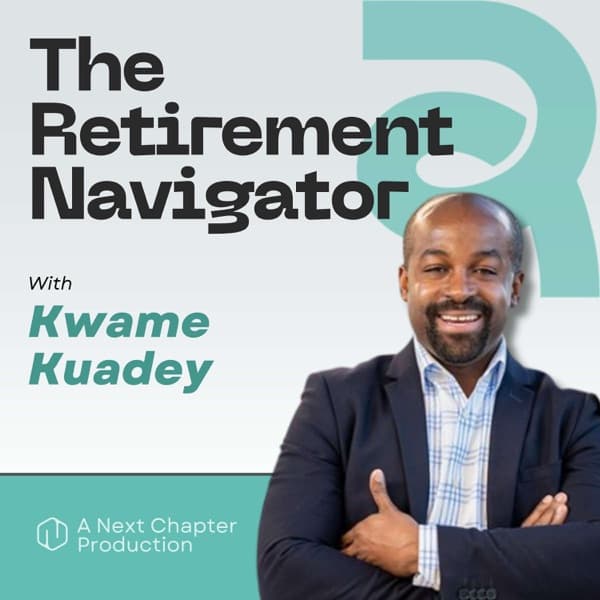
The Retirement Navigator
by Kwame Kuadey
Kwame Kuadey hosts The Retirement Navigator for adults 55 and up, covering Social Security, Medicare, and the non-financial side of retirement. Weekly episodes with research-backed interviews from Boston College's Center for Retirement Research.