*Disclosure: This article contains affiliate links. If you purchase through these links, we may earn a commission at no additional cost to you. We only recommend books we genuinely believe in.
Quick Overview
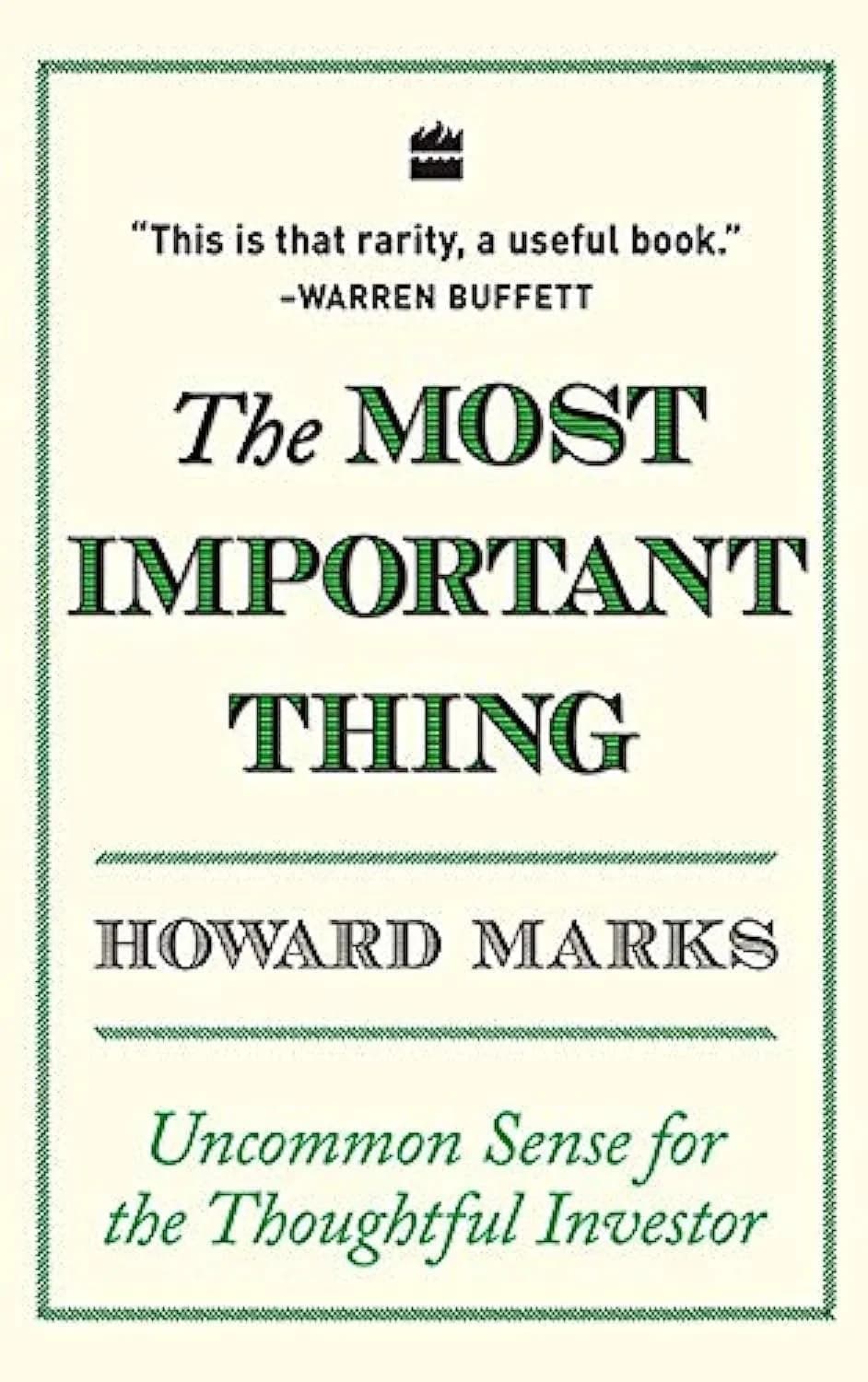
Warren Buffett said: "When I see memos from Howard Marks in my mail, they're the first thing I open and read. I always learn something." That endorsement alone would make this book worth reading. But the content delivers on the promise.
Howard Marks co-founded Oaktree Capital Management and has managed money through every major market cycle since the 1970s. His investor memos, sent to clients since 1990, became legendary in the investment community. The Most Important Thing distills the core ideas from those memos into a concentrated framework for intelligent investing.
Marks's 2025-2026 memos on the AI investment boom apply his framework directly to the current market. In "Is It a Bubble?" (December 2025) and "AI Hurtles Ahead" (March 2026), he examined whether hyperscaler capex exceeding $2.5 trillion from 2026 to 2028 represents prudent investment or bubble behavior. His analysis applies the exact principles from this book: second-level thinking about what the consensus assumes, risk management when others are complacent, and cycle awareness when psychology swings toward euphoria.
Book Details
| Attribute | Details |
|---|---|
| Title | The Most Important Thing Illuminated |
| Author | Howard Marks |
| Publisher | Columbia University Press |
| Published | 2011 (Illuminated edition 2013) |
| Pages | 196 |
| Reading Level | Intermediate to Advanced |
| Amazon Rating | 4.7/5 stars |
Get Your Copy
Paperback: Buy on Amazon
Kindle: Buy on Amazon
Audiobook: Buy on Amazon
About the Author
Howard Marks founded Oaktree Capital Management in 1995 after building TCW's fixed income division into one of the largest high-yield bond managers in the world. Oaktree manages approximately $170 billion, specializing in distressed debt, high-yield bonds, and other credit markets. Marks is widely considered one of the best risk thinkers in the investment industry.
His investor memos are available free at oaktreecapital.com and represent some of the best investment writing published anywhere. His 2025-2026 memos on AI infrastructure investment and market concentration risk continue this tradition. This book is the organized synthesis of ideas that span those memos.
The Most Important Thing: There Is No Single One
The book's title is deliberately ironic. Marks identifies 18 "most important things," each one necessary and none sufficient on its own. His point: great investing is not a single insight but a complex of mutually reinforcing disciplines applied consistently.
The most crucial chapters:
Chapter 1: Second-Level Thinking
This is the book's central contribution and the most important concept for any serious investor.
First-level thinking: "This is a good company. I'll buy the stock."
Second-level thinking: "This is a good company, but everyone knows it's a good company, so the stock is priced as if it's a good company. What do I know that the consensus does not? Is there a scenario where the stock is still cheap despite widespread knowledge of its quality?"
Second-level thinking requires asking not just "what will happen?" but "what does the consensus expect to happen, and how does my view differ from that consensus?"
The asymmetry of second-level thinking:
| Scenario | First-Level Response | Second-Level Question |
|---|---|---|
| Good company | Buy | Is it already priced for perfection? |
| Bad news | Sell | Is the bad news already priced in and the stock now cheap? |
| Market up | Complacency | Is optimism excessive? |
| Market down | Panic | Is pessimism excessive? |
To beat the market, you must think differently from the market. Being right in the same direction as the consensus produces average returns at best. The goal is to identify situations where the consensus is wrong, and to be right when you differ.
2026 application: The Magnificent Seven stocks (Apple, Microsoft, Alphabet, Amazon, Nvidia, Meta, Tesla) represented 32-33% of the S&P 500's total market capitalization at the end of 2025, roughly double their share five years ago. First-level thinking says "AI is transformative, buy these stocks." Second-level thinking asks whether the market has already priced in decades of growth, whether 30x forward earnings for Nvidia assumes persistence that few tech companies have historically achieved, and what happens if AI infrastructure investment does not produce adequate returns. Marks's December 2025 memo noted that only about half the Nifty Fifty from 1969 remain in the S&P 500 today.
Chapter 2: Understanding Market Efficiency (and Its Limits)
Marks occupies a nuanced middle ground between the efficient market hypothesis and active management overconfidence.
His view: Markets are largely efficient most of the time in easily analyzed segments. They are substantially less efficient in:
The implication: Most attempts to beat the S&P 500 by picking large-cap U.S. stocks are futile because competition is fierce. Beating markets in less efficient segments is genuinely possible for skilled practitioners with informational or analytical advantages.
Chapter 3: Value
Marks is a value investor in the broadest sense: he buys assets for less than they are worth. But his framework goes beyond Graham's balance-sheet focus to include:
The components of value:
| Value Component | Description | Measurable? |
|---|---|---|
| Current assets | Book value, liquidation value | Yes |
| Current earnings | P/E-based valuation | Yes |
| Future earnings growth | DCF-based intrinsic value | Partly |
| Competitive position (moat) | Franchise value, pricing power | Qualitatively |
Marks is explicit: the relationship between price and value is the only thing that determines whether an investment is good or bad. A wonderful business at a terrible price is a bad investment. A mediocre business at a wonderful price can be an excellent investment.
Chapter 4: The Relationship Between Price and Value
Marks's most practical observation:
Investment performance comes from two sources:
Most investors focus entirely on source 1 (business quality). Marks argues that source 2 (valuation change) is equally important and more controllable through discipline.
Example:
| Scenario | Business Performance | Valuation Change | Investment Return |
|---|---|---|---|
| A | +10% earnings growth | P/E expands 20x to 30x | +65% |
| B | +10% earnings growth | P/E contracts 20x to 15x | -17% |
| C | -5% earnings decline | P/E expands 10x to 20x | +90% |
Scenario C (declining business, expanding multiple) can produce the best returns. Scenario B (growing business, contracting multiple) can produce losses. The valuation entry point matters as much as business quality.
Chapter 5: Understanding Risk
Marks's treatment of risk is the most sophisticated in any mainstream investing book. His key insight: risk is not volatility (the standard academic definition). Risk is the probability of permanent capital loss.
The conventional risk framework (academic):
Risk = Volatility (standard deviation of returns)Marks's risk framework:
Risk = Probability of permanent loss × Magnitude of potential lossThe difference matters enormously:
| Asset | Volatility | Risk of Permanent Loss |
|---|---|---|
| 10-year Treasury | Low | Very low (if held to maturity) |
| S&P 500 index | Medium | Low (historically zero over 20-year periods) |
| Individual growth stock | High | Medium to High |
| Leveraged buyout debt | Low reported | High (principal loss if company fails) |
| Distressed bonds (diversified) | High | Low per position (diversification) |
A portfolio of Treasury bonds can have low volatility and high risk (inflation risk, reinvestment risk, interest rate risk over long periods). A diversified portfolio of distressed bonds can have high volatility and manageable risk. Conflating the two concepts leads to dangerously wrong decisions.
Risk and Return: Not Always Correlated
Marks challenges the standard model that higher risk always produces higher expected return:
The standard model: Higher risk securities must offer higher expected returns to attract buyers.
Marks's critique: This is true in equilibrium. But markets go out of equilibrium regularly. When investors become euphoric, they accept insufficient compensation for risk (expected return falls). When investors become terrified, they demand excessive compensation (expected return rises). The best risk-adjusted returns come from buying when others are fearful.
Chapter 6: Recognizing Risk
The greatest risks are usually invisible during formation and obvious only after they materialize. Marks identifies the conditions that create the most dangerous investment environments:
The risk environment checklist:
| Signal | Low Risk | High Risk |
|---|---|---|
| Investor psychology | Fear, caution | Euphoria, complacency |
| New issue quality | Conservative | Increasingly weak covenants |
| Capital availability | Tight | Abundant |
| Narrative | "This time may be different" is rejected | "This time is different" is accepted |
| Valuations | Below historical averages | Above historical averages |
| Leverage | Low in the system | High and growing |
When most of the "high risk" signals are present simultaneously, Marks moves toward defense. When most of the "low risk" signals are present, he moves toward offense. This is cycle awareness applied practically.
2026 checklist application: Marks's December 2025 memo explicitly applied this framework to the AI boom. He noted that hyperscalers like Oracle, Meta, and Alphabet have issued 30-year bonds to finance AI investments, with yields exceeding Treasuries by less than 100 basis points. He asked whether it is prudent to accept 30 years of technological uncertainty for a fixed-income investment yielding little more than riskless debt. The risk environment checklist signals were flashing: capital abundant, narratives accepting "this time is different," valuations above historical averages, and leverage growing. Semiconductor stocks, at 19% of the S&P 500 (nearly four times their 2022 weighting), showed the kind of concentration that historically precedes boom-to-bust cycles.
Chapter 7: Controlling Risk
Marks's key insight: you cannot control return, but you can control risk. This is the basis of all professional risk management.
Risk control operates asymmetrically:
The mathematics of loss avoidance:
| Scenario | Year 1 | Year 2 | 2-Year Total | vs. Break Even |
|---|---|---|---|---|
| Up 50%, down 50% | +50% | -50% | -25% | Need +33% to recover |
| Up 25%, down 25% | +25% | -25% | -6.25% | Need +6.7% to recover |
| Up 10%, down 10% | +10% | -10% | -1% | Need +1% to recover |
| Up 8%, down 0% | +8% | 0% | +8% | Already ahead |
The asymmetry of percentage losses explains why avoiding a 50% drawdown is worth more than generating a 50% gain. A 50% loss requires a 100% gain to break even.
Chapter 8: Being Attentive to Cycles
Marks views market cycles not as random fluctuations but as predictable swings driven by human psychology. Understanding where you are in the cycle is the most actionable form of market awareness.
The credit cycle (Marks's specialty):
Economy strengthens
→ Lenders become confident
→ Credit standards loosen
→ Weaker borrowers get credit
→ Asset prices rise
→ Defaults remain low
→ Confidence becomes complacency
→ Standards collapse
→ Weak borrowers cannot repay
→ Defaults rise
→ Lenders panic
→ Credit contracts
→ Economy weakens
→ Cycle begins again
This cycle has repeated in roughly 7-10 year intervals throughout financial history. Marks uses awareness of where the credit cycle stands to calibrate Oaktree's aggressiveness in deploying capital.
Chapter 9: Awareness of the Pendulum
Perhaps Marks's most memorable metaphor: investor psychology swings like a pendulum between greed and fear, but it almost never rests at the midpoint of rationality.
The pendulum positions:
| Extreme Fear | Rational Midpoint | Extreme Greed |
|---|---|---|
| Stocks are dangerous | Stocks have risk-adjusted value | Stocks are sure things |
| Nobody wants to lend | Credit is available at fair prices | Everyone is lending to anyone |
| Best time to buy | Fair time to buy | Worst time to buy |
| Lowest prices | Fair prices | Highest prices |
The pendulum's predictability provides opportunity. You cannot know when it will swing back, but you can know which direction it will eventually move. Buying at extreme fear and reducing exposure at extreme greed has been Marks's operating philosophy for 40 years.
The Illuminated Edition
The 2013 illuminated edition adds commentary from four distinguished investors:
These commentaries add depth without disrupting the flow of Marks's text.
Strengths & Weaknesses
What We Loved
Areas for Improvement
Who Should Read This Book
Highly Recommended For
Probably Not For
Comparison to Similar Books
| Book | Risk Depth | Cycle Awareness | Accessibility |
|---|---|---|---|
| The Most Important Thing | Very High | Very High | Medium |
| The Intelligent Investor | High | Medium | Medium |
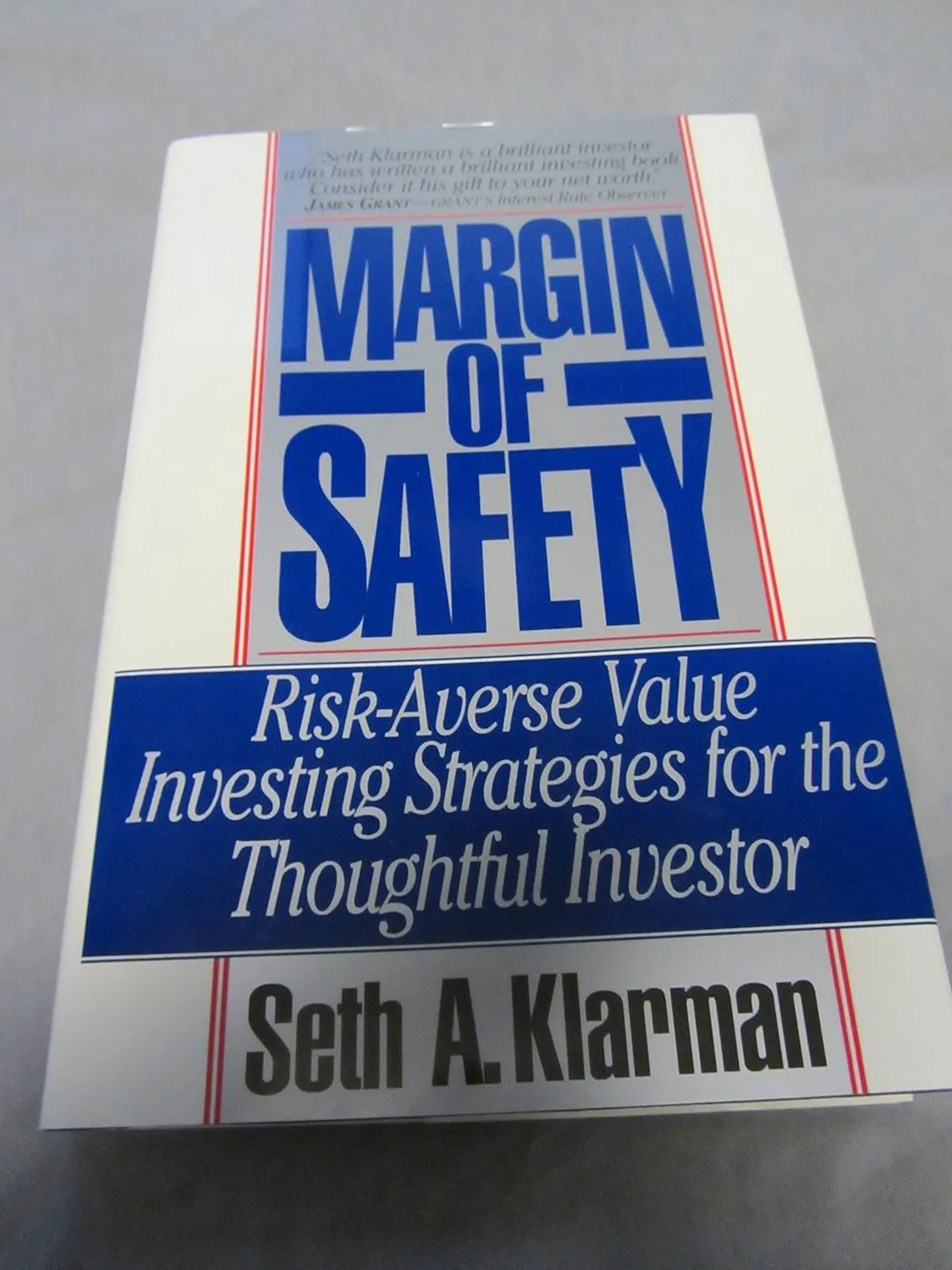
| Margin of Safety | High | Medium | Low-Medium |
| The Psychology of Money | Medium | Low | Very High |
Frequently Asked Questions
Q: Should I read the regular edition or the Illuminated edition?
A: Illuminated edition without question. The commentary from Klarman and Greenblatt alone justifies the price difference.
Q: Are Marks's memos worth reading in addition to this book?
A: Yes. They are free at oaktreecapital.com and represent his thinking evolving in real time through actual market events. Particularly recommended: "You Can't Predict. You Can Prepare." (2001), "The Tide Goes Out" (2007), "Nobody Knows" (2008), "Is It a Bubble?" (December 2025), and "AI Hurtles Ahead" (March 2026). The AI memos apply the book's framework directly to the current market environment.
Q: Is this book relevant for index fund investors?
A: Partially. The chapters on market cycles, risk psychology, and the pendulum provide valuable context for understanding market conditions even if you never pick individual securities. The second-level thinking framework helps you resist the crowd behavior that destroys returns.
Final Verdict
Rating: 4.8/5
The Most Important Thing is the best book on investment philosophy written by an active practitioner. It will not give you stock picks or portfolio templates. It will give you a framework for thinking about risk, value, and cycles that distinguishes intelligent investors from the majority.
Marks's 2025-2026 memos prove the framework's staying power. The same principles he applied to the dot-com bubble in 2000 and the housing bubble in 2007 now apply to the AI infrastructure boom. Semiconductor stocks at 19% of the S&P 500, hyperscalers issuing 30-year bonds for AI capex, and IPOs at 70x price-to-sales all fit his risk environment checklist. The book gives you the tools to recognize these patterns yourself.
Every serious investor should read it after mastering the basics. Pair it with our bear market guide and investment return calculator to put the framework into practice.
Get Your Copy
Paperback: Buy on Amazon
Kindle: Buy on Amazon
Audiobook: Buy on Amazon
Prices current as of publication date. Free shipping available with Prime.