*Disclosure: This article contains affiliate links. If you purchase through these links, we may earn a commission at no additional cost to you. We only recommend books we genuinely believe in.
Quick Overview
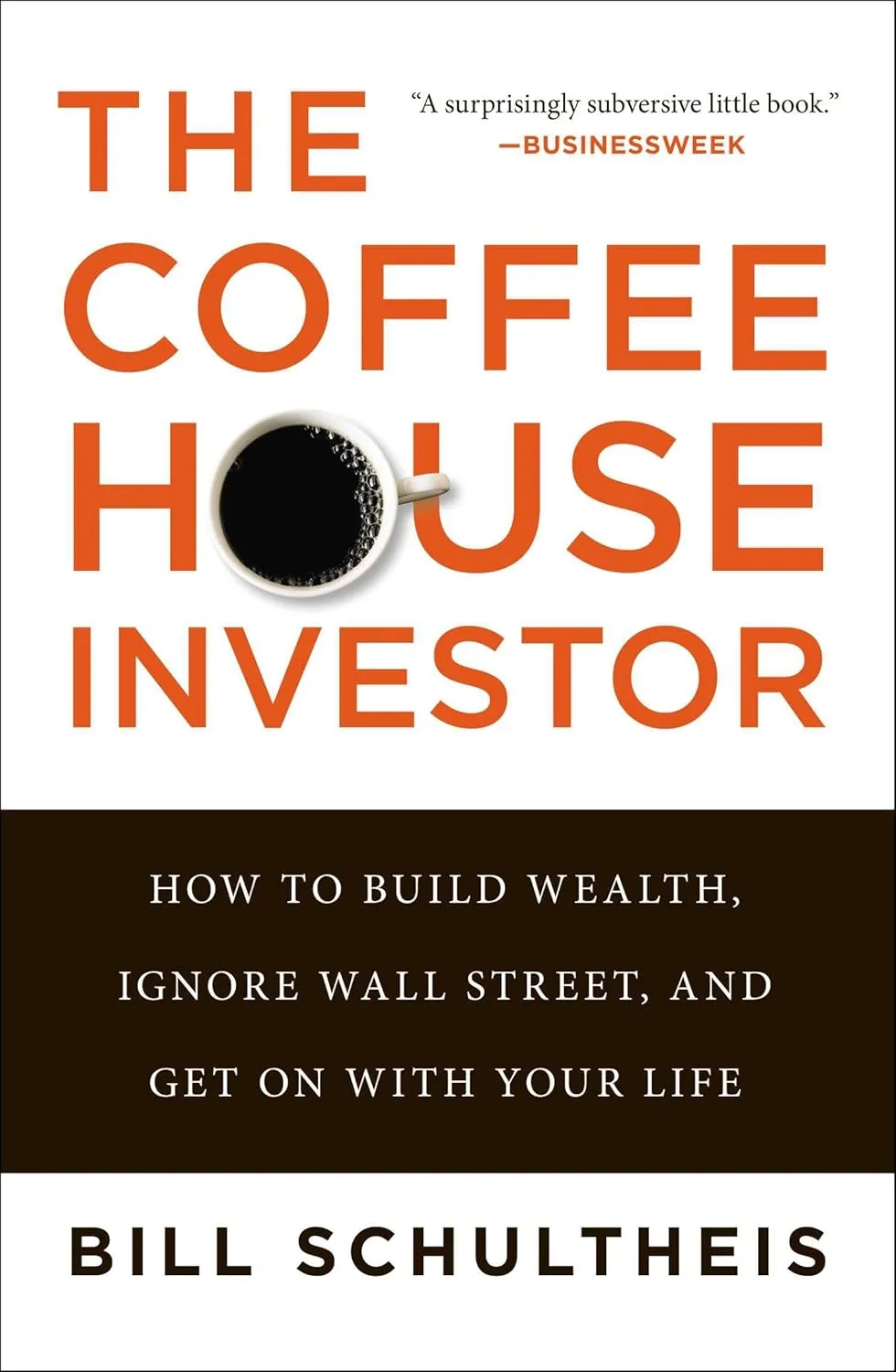
A friend handed me The Coffeehouse Investor in 2020 when I was deep in the weeds of stock picking, convinced I could find the next Amazon. That book probably saved me from years of underperformance. Bill Schultheis was a stockbroker at Smith Barney who quit after realizing the industry he worked in was systematically harming his clients. He moved to the Pacific Northwest, simplified his life, and wrote this book to explain what he had learned: building wealth requires only three principles, and everything else the financial industry sells you is noise designed to generate fees. At 192 pages it is one of the most efficient personal finance books ever written.
Book Details
| Attribute | Details |
|---|---|
| Title | The Coffeehouse Investor |
| Author | Bill Schultheis |
| Publisher | Portfolio/Penguin |
| First Published | 1998 (Updated 2009) |
| Pages | 192 |
| Reading Level | Beginner |
| Amazon Rating | 4.5/5 stars |
Get Your Copy
Paperback: Buy on Amazon
Kindle: Buy on Amazon
About the Author
Bill Schultheis worked as a broker at Smith Barney for eight years. The dissonance between what he was selling (active management and complex products) and what the evidence showed actually worked drove him to leave the industry. He co-founded Soundmark Wealth Management, a fee-only registered investment advisor in Kirkland, Washington, and wrote The Coffeehouse Investor to share what he had learned with people who could not afford professional advice. He later wrote a follow-up book, The Coffeehouse Investor's Ground Rules (2020), expanding on the philosophy.
His credibility is unusual: he is a reformed insider, not an academic or journalist. His critique of Wall Street comes from direct experience of how the industry profits from client confusion. John Bogle, founder of Vanguard, selected The Coffeehouse Investor as his top book for investors. That endorsement alone should tell you something.
The Three Principles
Principle 1: Save a Portion of Your Income
Schultheis starts where every sound financial plan must start: spend less than you earn. The amount saved matters more than the return earned, especially in early years. If you want to run your own numbers, try our savings rate calculator.
The savings rate dominates early returns:
| Savings Rate | Years to First $100K (8% return, $60K income) |
|---|---|
| 5% ($3,000/yr) | 22 years |
| 10% ($6,000/yr) | 14 years |
| 15% ($9,000/yr) | 10 years |
| 20% ($12,000/yr) | 8 years |
| 30% ($18,000/yr) | 6 years |
Getting to the first $100,000 is the hardest part. After that, compound interest begins doing more work than additional savings contributions.
Schultheis's practical savings suggestions:
Principle 2: Do Not Put All Your Eggs in One Basket
Schultheis explains diversification through a simple framework that most investors understand immediately.
The coffee shop analogy: If you owned one coffee shop, a new competitor opening across the street could devastate your income. If you owned 100 coffee shops across 50 cities, one competitor could not hurt you. Owning the entire stock market through an index fund means no individual company failure can significantly harm your portfolio.
Historical single-stock risk:
| Holding Period | % of Individual Stocks Underperforming Market |
|---|---|
| 1 year | 40% |
| 5 years | 52% |
| 10 years | 57% |
| 20 years | 64% |
Over long periods, the majority of individual stocks underperform the market index. A small number of spectacular winners pull the average up. Without diversification, you are as likely to pick losers as winners.
The Coffeehouse Portfolio:
Schultheis recommends a simple seven-fund portfolio with equal 10% allocations to six stock index funds and 40% bonds:
| Fund | Allocation |
|---|---|
| S&P 500 index | 10% |
| Large-cap value index | 10% |
| Small-cap blend index | 10% |
| Small-cap value index | 10% |
| International index | 10% |
| REIT index | 10% |
| Short-term bond index | 40% |
This portfolio is more complex than a three-fund portfolio but still fully passive and low-cost. The factor tilts (value and small cap) reflect the academic evidence Schultheis cites for expected return premiums.
2026 performance check: The Coffeehouse Portfolio has a documented track record that validates Schultheis's approach. As of June 2026, the portfolio delivered a 7.68% compound annual return over the past 30 years, with a maximum drawdown of about -34% during the 2008 financial crisis. The 1-year return through June 2026 was 17.65%, and the 10-year annualized return was 7.35%. These are not spectacular numbers, but they are exactly the point: a simple, low-cost, diversified portfolio captured the market's return over decades without any stock picking. For comparison, the S&P 500 returned about 10.4% annualized over the same 30-year period, but the Coffeehouse Portfolio's 40% bond allocation intentionally trades some return for lower volatility.
Principle 3: Embrace the Stock Market Returns
This is Schultheis's version of the argument for passive indexing. His approach: accept the market's return minus minimal costs, and stop trying to beat it.
The active management performance record:
Schultheis presents data consistent with all the major indexing advocates: 70-80% of active mutual funds underperform their index benchmarks over 10-year periods. The figure increases with time horizon. Our index fund glossary entry covers the SPIVA data in detail.
Why this happens:
Active fund gross return = Market return (before costs)
Active fund net return = Market return - Expense ratio - Transaction costs - Tax drag
Active fund net return = Market return - 1.5% to 3.0%
The math is unavoidable. In aggregate, active managers cannot outperform the market before costs because they collectively are the market. After costs, they must underperform by exactly the amount of those costs.
Beyond the Three Principles
On Financial Advisors
Schultheis's most valuable chapter for most readers is his honest assessment of when to hire an advisor and what to look for.
Fee structures compared:
| Structure | How Advisor Is Paid | Conflicts |
|---|---|---|
| Commission-based | Percentage of product sold | High (incentive to sell high-commission products) |
| Fee-based (hybrid) | Fees + some commissions | Medium |
| Fee-only | Flat fee or % of AUM, no commissions | Low |
Schultheis recommends fee-only advisors with fiduciary obligation exclusively. A fee-only advisor is legally required to act in your interest. A commission-based advisor is a salesperson.
When you need an advisor:
When you do not need an advisor:
On Staying the Course
Schultheis is direct about the biggest threat to investment success: abandoning your strategy during market downturns. For more on this topic, read our blog post on what happens when the market crashes.
The 2000-2002 bear market:
The 2007-2009 financial crisis:
The coffeehouse investor's job during a crash: do nothing. Rebalance if the allocation has drifted significantly, but do not sell. This is harder than it sounds. I watched friends panic-sell in March 2020 and again in 2022. Both times, the market recovered within months.
The Quality of Life Argument
What distinguishes Schultheis from most finance authors is his emphasis on building wealth as a means to a good life, not as an end in itself. The book's philosophy:
This philosophy directly connects to the FIRE movement's insight that the path to freedom is the gap between income and spending, not the size of the income alone. If this resonates, check our FIRE calculator to see where you stand.
Where I Disagree With Schultheis
The Seven-Fund Portfolio Is Unnecessary Complexity
Schultheis's seven-fund portfolio includes factor tilts toward small-cap value and REITs. The academic evidence for these tilts was stronger in 1998 than it is in 2026. Small-cap value has underperformed large-cap growth for most of the past 15 years, driven by the dominance of mega-cap technology stocks. REITs have had long periods of underperformance relative to broad equities. A simple three-fund portfolio (total U.S. stock, total international stock, total bond) captures nearly all the diversification benefit with fewer moving parts. Schultheis himself acknowledged in a 2021 Rational Reminder podcast interview that the specific portfolio allocation matters less than the discipline to stick with it.
The 40% Bond Allocation Is Too Conservative for Younger Investors
For investors in their 20s and 30s with decades until retirement, a 40% bond allocation is overly conservative. Bonds have struggled in the 2022-2026 rate environment, with the Bloomberg U.S. Aggregate Bond Index posting negative or flat returns for several years. A younger investor following the Coffeehouse Portfolio would have left significant returns on the table. A more age-appropriate allocation might be 80-90% equities for those with 30+ year horizons. The 40% bond allocation makes more sense for someone within 10 years of retirement.
Limited Tax Strategy
The book barely addresses tax-efficient investing. For investors in taxable accounts, tax-loss harvesting, asset location (bonds in tax-advantaged accounts, equities in taxable), and dollar-cost averaging strategies can add 0.5-1.0% annually to after-tax returns. This is a meaningful gap.
Strengths & Weaknesses
What I Found Valuable
Where the Book Falls Short
Who Should Read This Book
Highly Recommended For
Probably Not For
Frequently Asked Questions
Q: Is the Coffeehouse Portfolio still a good choice in 2026?
A: The principles are sound, but the specific allocation may need adjustment. The 40% bond allocation makes sense for near-retirement investors but is too conservative for younger ones. The factor tilts (small-cap value, REITs) have underperformed in recent years. Consider a simpler three-fund portfolio (total U.S., total international, total bond) with an age-appropriate stock/bond split. Read our guide on the three-fund portfolio for details.
Q: How does this compare to The Little Book of Common Sense Investing by Jack Bogle?
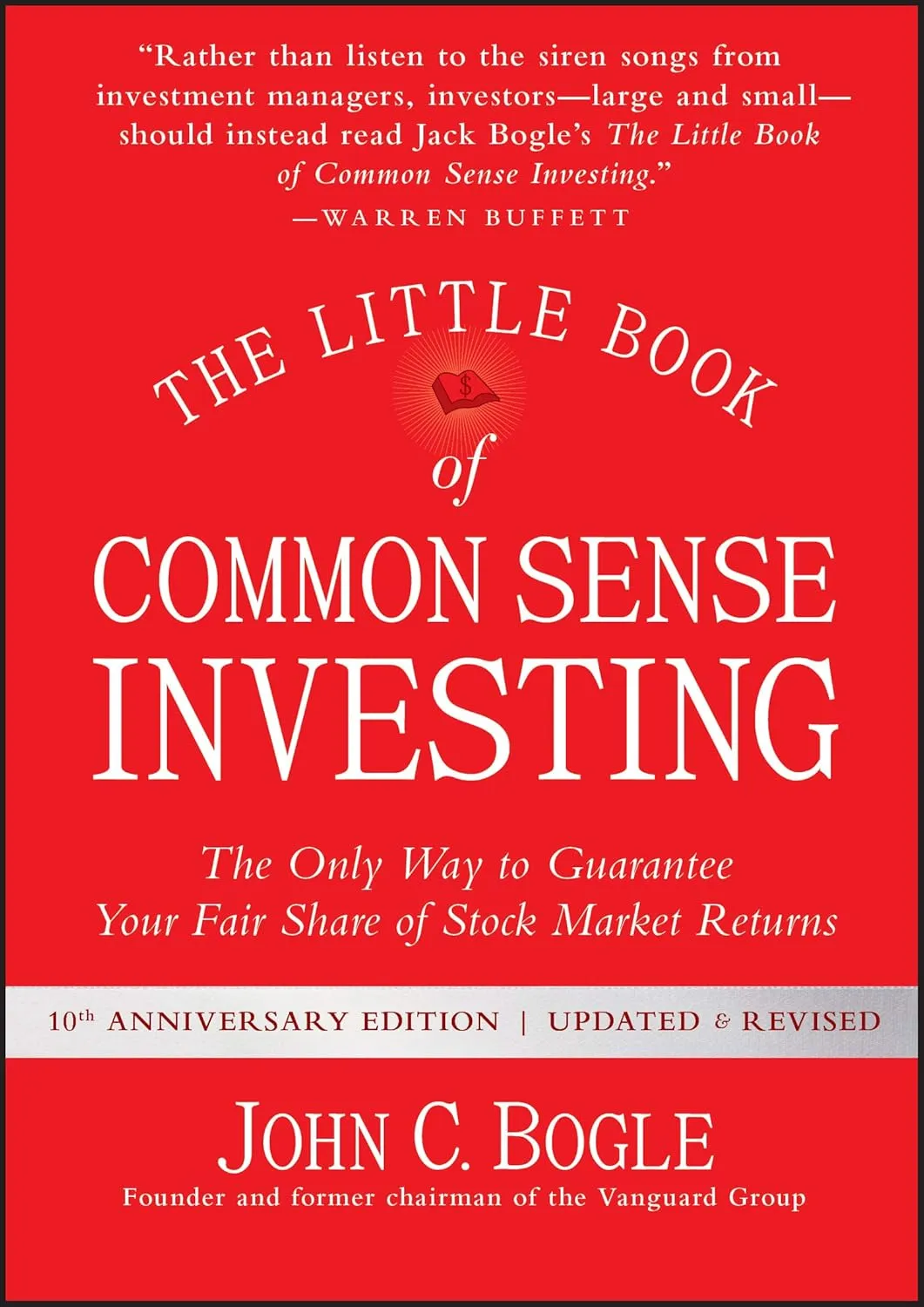
A: Bogle's book goes deeper into the math and evidence behind index investing. Schultheis covers the same ground more briefly and adds the quality-of-life philosophy that Bogle does not emphasize. Read both if you can. If you only have time for one, Schultheis is faster; Bogle is more thorough.
Final Verdict
Rating: 4.5/5
The Coffeehouse Investor is a quiet classic that deserves more recognition than it receives. Its three principles are sound, its insider critique of the financial industry is credible, and its emphasis on financial simplicity as a path to a better life is refreshing. The seven-fund portfolio and 40% bond allocation need updating for 2026 conditions, but the core message, save, diversify, accept market returns, and get on with your life, is timeless. At 192 pages it is the most efficient entry point into the passive investing tradition.
Get Your Copy
Paperback: Buy on Amazon
Kindle: Buy on Amazon
Prices current as of publication date. Free shipping available with Prime.