*Disclosure: This article contains affiliate links. If you purchase through these links, we may earn a commission at no additional cost to you. We only recommend books we genuinely believe in.
Quick Overview
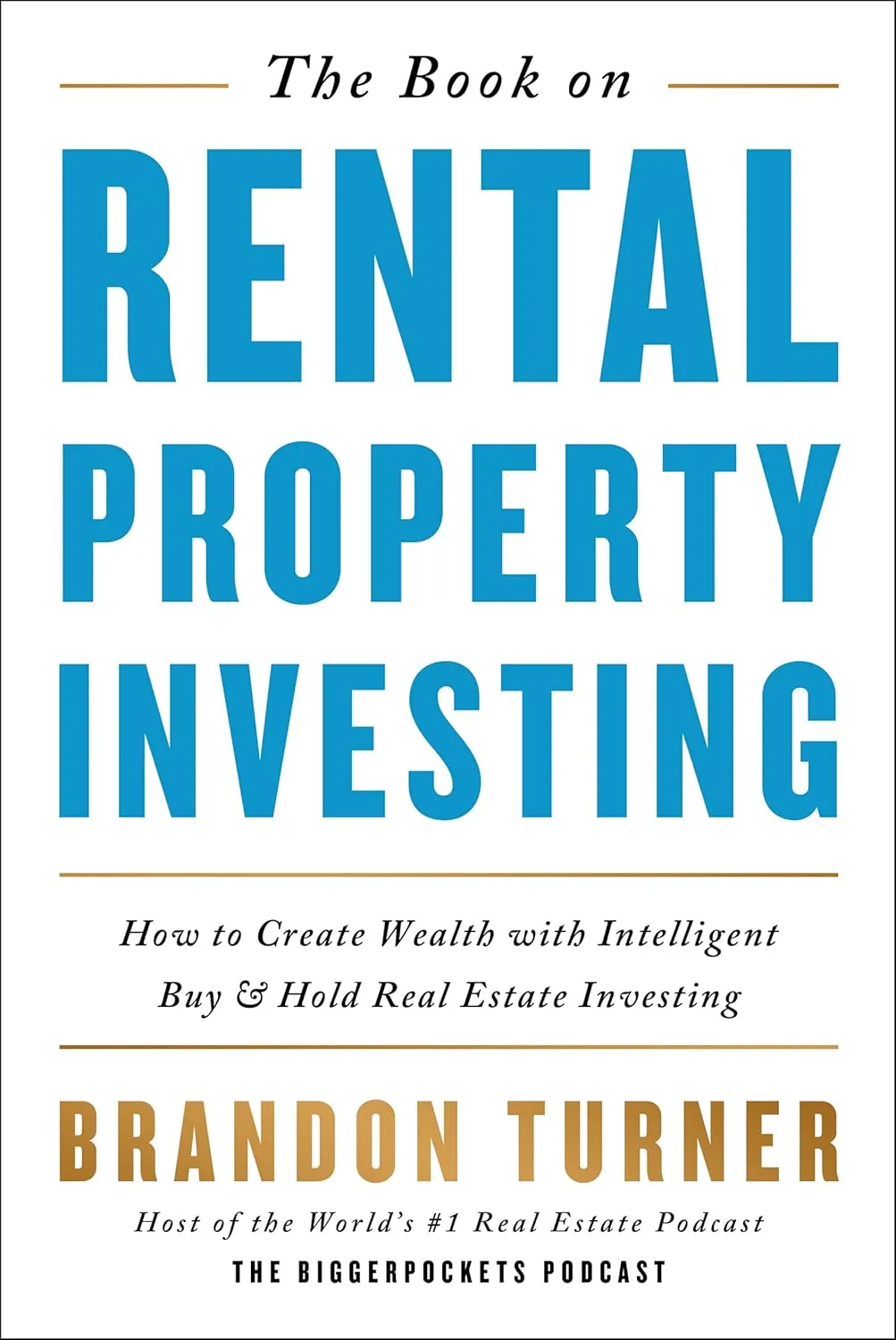
I bought my first rental property in 2019, and The Book on Rental Property Investing was the guide I kept dog-eared on my desk for months. Brandon Turner, co-founder of BiggerPockets, wrote the book that most real estate investors I know started with. It covers the full spectrum from deal analysis and financing through property management and scaling a portfolio. The book was published in 2015, and the market has shifted dramatically since then, but the analytical frameworks still hold up. I will note where 2026 conditions require updated thinking.
Book Details
| Attribute | Details |
|---|---|
| Title | The Book on Rental Property Investing |
| Author | Brandon Turner |
| Publisher | BiggerPockets Publishing |
| Published | 2015 |
| Pages | 370 |
| Reading Level | Beginner to Intermediate |
| Amazon Rating | 4.7/5 stars |
Get Your Copy
Paperback: Buy on Amazon
Kindle: Buy on Amazon
About the Author
Brandon Turner is a co-founder and former vice president of growth at BiggerPockets, the largest real estate investing community in the United States. He personally owns and manages hundreds of units of rental property, primarily in the Pacific Northwest. He hosted the BiggerPockets Podcast for years and has taught more people about rental property investing than any other contemporary author. He stepped back from day-to-day operations at BiggerPockets but remains one of the most influential voices in real estate investing education.
Why Rental Property Investing?
Turner makes the case for rental real estate as a wealth-building vehicle through five sources of return. If you are new to the concept, our rental property glossary entry breaks down the basics.
The Five Returns of Rental Property
1. Cash Flow
Monthly rent income minus all expenses (mortgage, taxes, insurance, maintenance, vacancy, management):
Monthly Cash Flow = Rent - Mortgage Payment - Taxes - Insurance
                    - Vacancy Reserve - Maintenance Reserve
                    - Capital Expenditure Reserve - Management Fees
Most beginner investors calculate cash flow incorrectly by omitting reserves for vacancy, maintenance, and capital expenditures. I made this mistake on my first property. The HVAC died in year two and I was scrambling.
The correct expense ratios:
| Expense | % of Gross Rent (typical range) |
|---|---|
| Mortgage (principal + interest) | Varies by financing |
| Property taxes | 1-2% of property value annually |
| Insurance | 0.5-1% of property value annually |
| Vacancy | 5-10% of gross rent |
| Maintenance | 5-10% of gross rent |
| Capital expenditures (roof, HVAC, etc.) | 5-10% of gross rent |
| Property management (if used) | 8-12% of gross rent |
The 50% Rule (quick estimate):
Turner introduces a rough screening heuristic: assume operating expenses (excluding mortgage) will equal approximately 50% of gross rent. If the remaining 50% minus the mortgage payment is positive, investigate further.
Example:
| Item | Amount |
|---|---|
| Monthly rent | $1,500 |
| Operating expenses (50% rule) | $750 |
| Net operating income | $750 |
| Mortgage payment (30yr, 6.5%, 20% down on $200K) | $1,011 |
| Monthly cash flow | -$261 (negative, do not buy) |
At these assumptions, the property cash-flows negative. Turner's guidance: in most markets, positive cash flow requires either a below-market purchase price, a significant down payment, or a price-to-rent ratio that favors renting.
2026 reality check: BiggerPockets published a Summer 2026 Rent-to-Payment Report that introduced a new metric: rent-to-payment ratio (monthly rent divided by monthly PITI). Across 54 major U.S. metros, the average ratio is roughly 0.80, meaning market rent covers only 76-80% of the full monthly cost of ownership. A ratio of 1.0 (rent covers all PITI) is now the "gold standard" rather than the norm. The Midwest is the only region where the average ratio exceeds 1.0. Coastal markets like San Jose (0.39), San Francisco (0.52), and Los Angeles (0.49) are brutally tough for cash flow. This data confirms what Turner teaches: market selection matters more than almost anything else.
2. Appreciation
Real estate values typically increase over time. Over the past 50 years, U.S. residential real estate has appreciated at approximately 3-5% annually nationally, though with enormous geographic variation.
Turner distinguishes:
| Type | Description | Reliability |
|---|---|---|
| Natural appreciation | Market-driven price increases | Unpredictable; not a business plan |
| Forced appreciation | Value-add through improvements | Controllable; can be planned |
Investors who rely on appreciation (buying cash-flow-negative properties hoping to sell at higher prices) are speculating. Those who buy for cash flow are building a business. Turner is blunt about this distinction, and he is right.
3. Loan Paydown
Each mortgage payment reduces the principal balance. The tenant's rent effectively pays down the mortgage over time, building equity without additional investment from the owner.
Amortization equity buildup:
| Year | Starting Balance | Principal Paid | Ending Balance | Equity Built |
|---|---|---|---|---|
| 1 | $160,000 | $2,600 | $157,400 | $2,600 |
| 5 | $148,600 | $2,900 | $145,700 | $14,300 |
| 10 | $134,500 | $3,600 | $130,900 | $29,100 |
| 30 | $0 | $160,000 (total) | $0 | $160,000 |
Assuming the property was purchased at $200,000 with 20% down ($40,000), after 30 years of loan paydown, the owner has built $160,000 in equity purely from the tenant paying down the mortgage.
4. Tax Benefits
Rental income is taxed at ordinary income rates, but several deductions reduce the taxable amount:
| Deduction | Description |
|---|---|
| Mortgage interest | Interest portion of mortgage payment |
| Depreciation | IRS allows depreciation of residential property over 27.5 years |
| Property taxes | Deductible as business expense |
| Insurance | Deductible as business expense |
| Repairs and maintenance | Deductible immediately |
| Professional services | Property management, legal, accounting |
The depreciation shield:
A $200,000 property (excluding land value, typically 20-30% of purchase price) depreciates at:
Annual depreciation = $160,000 / 27.5 years = $5,818/yearThis $5,818 annual deduction can offset rental income, or in some cases, other income (consult a tax professional; passive activity loss rules apply).
5. Inflation Hedge
Long-term leases typically allow annual rent increases; mortgage payments remain fixed. As inflation drives operating costs and rental rates higher, fixed-rate mortgage holders benefit because their debt service cost stays constant while revenues rise.
Analyzing Rental Property Deals
Turner's analytical framework is the core value of the book. For a deeper dive, check our blog post on how to analyze a rental property.
The Cap Rate
Cap Rate = Net Operating Income / Property ValueThe cap rate is the yield on a property if purchased with all cash (no mortgage). It allows comparison of properties regardless of financing:
Net Operating Income (NOI):
NOI = Gross Rental Income x (1 - Vacancy Rate) - Operating ExpensesCap rate benchmarks (vary significantly by market):
| Market Type | Typical Cap Rate |
|---|---|
| Expensive coastal cities (NYC, SF, LA) | 3-5% |
| Mid-size cities | 5-7% |
| Secondary markets | 6-9% |
| Small towns, rural areas | 8-12%+ |
Higher cap rates offer better cash-on-cash returns but typically come with higher risk (less liquid markets, more price volatility, potentially declining populations).
Cash-on-Cash Return
Cash-on-Cash Return = Annual Pre-Tax Cash Flow / Total Cash InvestedThis measures the return on actual cash invested (down payment plus closing costs):
Example:
| Item | Amount |
|---|---|
| Purchase price | $150,000 |
| Down payment (20%) | $30,000 |
| Closing costs | $3,000 |
| Repairs needed | $5,000 |
| Total cash invested | $38,000 |
| Monthly rent | $1,400 |
| Monthly operating expenses | $700 |
| Monthly mortgage (30yr, 6%) | $720 |
| Monthly cash flow | -$20 (barely negative) |
Cash-on-cash return: -$240 / $38,000 = -0.6% (very poor deal)
Turner's target: 8-12% cash-on-cash return minimum for a property to be worth investing in.
The Gross Rent Multiplier (GRM)
A quick screening tool:
GRM = Purchase Price / Annual Gross RentLower GRM is better (paying less per dollar of rent). GRM of 8-10x is attractive in most markets; above 15x often indicates cash-flow-negative investment.
Finding and Financing Deals
Finding Below-Market Deals
Turner's deal-finding strategies ranked by effort and reliability:
| Strategy | Description | Competition Level |
|---|---|---|
| MLS listings | Standard real estate listings | Very high |
| Direct mail to owners | Letters to absentee landlords, probate, etc. | Medium |
| Driving for dollars | Finding distressed properties by observation | Low |
| Networking with wholesalers | Buying contracts from wholesalers | Medium |
| Foreclosure auctions | Bidding at courthouse steps | High; specialized knowledge needed |
| Off-market through agents | Agents with motivated sellers | Medium |
The best deals are not on Zillow. Properties listed on the MLS are already priced to reflect what the market is willing to pay. Below-market deals typically come through relationships, direct outreach, or finding properties that need work others are not willing to provide.
2026 update: BiggerPockets' Q3 2026 Pulse survey found that "difficulty finding good deals" is now the single biggest challenge investors report, chosen by nearly 30% of respondents. Rising expenses (insurance and taxes) followed close behind at around 25%. High mortgage rates, once the defining complaint, have faded to 13% as investors have accepted the new rate environment. The point: finding deals has gotten harder since Turner wrote this book, and the strategies he outlines require more persistence than ever.
Financing Strategies
| Loan Type | Typical Terms | Best For |
|---|---|---|
| Conventional (20% down) | 30yr, 5.5-6.5%; PMI avoided | Primary strategy for most investors |
| FHA (3.5% down) | 30yr; owner-occupied only | House hacking (living in one unit) |
| Hard money | 6-18 months, 10-15%; points | Flips; BRRRR strategy |
| Portfolio lender | Flexible terms; relationship-based | 5+ properties when conventional limits apply |
| Seller financing | Negotiated; any terms agreed | Motivated sellers; creative deals |
| Private money | Negotiated; from private individuals | Flexible; relationship-dependent |
2026 financing landscape: Mortgage rates have come down from their 2024 peaks but remain in the 5.5-6.5% range for investment properties. BiggerPockets reported in 2026 that ARM loans are making a comeback for investors, with longer fixed-rate periods and lower starting rates than conventional loans. Seller concessions to buy down interest rates are also more common as the housing market has stalled. The 2026 environment is actually one of the better windows in recent years to get financing for rental properties, though it is still far from the 3% days of 2021.
The BRRRR Strategy
Turner popularized the BRRRR method (Buy, Rehab, Rent, Refinance, Repeat):
The steps:
The math:
| Step | Numbers |
|---|---|
| Purchase price (distressed) | $80,000 |
| Rehab cost | $20,000 |
| Total invested | $100,000 |
| After-repair value (ARV) | $150,000 |
| Refinance at 75% LTV | $112,500 |
| Cash returned | $112,500 - $100,000 = $12,500 cash-out |
If executed well, BRRRR allows investors to recycle capital, getting most or all of their cash back while retaining the asset and its cash flow. This dramatically accelerates portfolio growth compared to buying and holding with cash.
BRRRR risks:
I would add a 2026-specific risk: insurance costs have spiked in many markets, particularly in storm-prone areas like Florida, Texas, and Oklahoma. BiggerPockets noted that in Oklahoma City, homeowner's insurance alone accounts for roughly 40% of PITI. If your BRRRR refinance numbers do not account for current insurance rates, the deal can fall apart at the refinance stage.
Property Management
Turner advocates for professional property management for most investors (despite the 8-12% cost):
The case for professional management:
The case for self-management:
Turner's tenant screening criteria:
| Criterion | Standard |
|---|---|
| Income | 3x monthly rent minimum |
| Credit score | 650+ minimum (varies by market) |
| Rental history | No evictions in past 5 years |
| Criminal history | Depends on state law; material felonies |
| References | Verify with previous landlords directly |
Fair Housing laws prohibit discrimination based on race, color, religion, sex, national origin, disability, and familial status. Tenant screening criteria must be applied consistently to all applicants.
Building a Team
The essential real estate team:
| Team Member | Role |
|---|---|
| Real estate agent | Finding deals, market knowledge, comps |
| Property manager | Day-to-day management (if not self-managing) |
| Contractor | Reliable, priced right, quality work |
| Lender/broker | Multiple financing options |
| CPA specializing in real estate | Tax optimization |
| Real estate attorney | Contracts, evictions, LLC structure |
| Insurance agent | Landlord policies, umbrella coverage |
Building reliable relationships with each team member is often the most time-consuming part of building a rental portfolio, but it creates the infrastructure that makes scaling possible.
Where the Book Shows Its Age
The book was published in 2015, and the market has changed in ways Turner could not anticipate. Interest rates were near zero when he wrote this. The 50% rule and the cap rate benchmarks are still useful starting points, but 2026 requires adjustments:
Insurance and taxes have exploded. BiggerPockets' 2026 data shows that in some markets, insurance and property taxes now consume a far larger share of gross rent than the book assumes. Oklahoma City's insurance alone is 40% of PITI. Florida and Texas have seen similar spikes. The 50% rule may need to be a 55-60% rule in these markets.
Short-term rentals have disrupted the market. Turner mentions Airbnb briefly, but the short-term rental landscape of 2026 is completely different from 2015. BiggerPockets' Q3 2026 survey shows short-term rentals have fallen to just 3% of investor strategy preference, down from a peak several years ago. Long-term rentals remain the strategy investors trust most, chosen by 55% of respondents.
The Midwest is the new frontier. Turner's book does not emphasize geographic strategy enough for 2026 conditions. The BiggerPockets rent-to-payment data makes clear that the Midwest (Detroit, Cleveland, St. Louis, Cincinnati, Indianapolis, Columbus, Chicago, Kansas City) is where cash flow lives in 2026. Coastal markets are nearly impossible for new investors seeking positive cash flow.
Strengths & Weaknesses
What I Found Valuable
Where the Book Falls Short
Who Should Read This Book
Highly Recommended For
Probably Not For
Frequently Asked Questions
Q: Is rental property still viable with 2026 interest rates?
A: Yes, but you need to be more selective. Rates have come down to the 5.5-6.5% range from their 2024 peaks. BiggerPockets' 2026 data shows the Midwest is the primary region where cash flow still works at current rates. Strategies that help include larger down payments, house hacking with FHA loans, value-add deals via BRRRR, and targeting markets with rent-to-payment ratios above 0.75. Use our rent vs buy calculator to run the numbers for your market.
Q: Do I need an LLC?
A: Consult a real estate attorney in your state. LLCs provide liability protection but have costs (formation, annual fees) and may complicate financing (most conventional lenders will not lend to LLCs). Many beginning investors start personally and transition to LLCs as their portfolio grows. An umbrella insurance policy provides liability protection at lower cost and complexity for small portfolios.
Q: How does rental property compare to index fund investing?
A: Both have strong long-term track records. Index funds offer simplicity, liquidity, and diversification. Rental property offers leverage, monthly cash flow, and tax advantages. Many serious wealth builders use both. Read more in our blog post about real estate in your investment portfolio.
Final Verdict
Rating: 4.7/5
The Book on Rental Property Investing remains the most complete rental real estate guide available. Its deal analysis framework, BRRRR strategy, and team-building guidance are practical and immediately useful. The book needs updating for 2026 market conditions (insurance costs, rate environment, geographic strategy), but the core principles are sound. If you are considering building a rental portfolio, start here. Then supplement with current BiggerPockets market data to adjust for today's conditions.
Get Your Copy
Paperback: Buy on Amazon
Kindle: Buy on Amazon
Prices current as of publication date. Free shipping available with Prime.