This review is for informational purposes only and does not constitute financial advice.
The Final Year Before Retirement
Ryan Zacharczyk opens episode 56 with a sentence that frames the whole show: "The final year before retirement is one of the most important and often overlooked stages of the retirement planning process." He calls it the Retirement Red Zone, borrowing the football metaphor for the critical yards before the goal line. The decisions you make in those last 12 months, he says, can have a lasting impact on your financial security and peace of mind. That is the show's thesis in a single sentence. Most retirement content covers accumulation or decumulation. Retirement GPS covers the transition between them, which is where most mistakes happen.
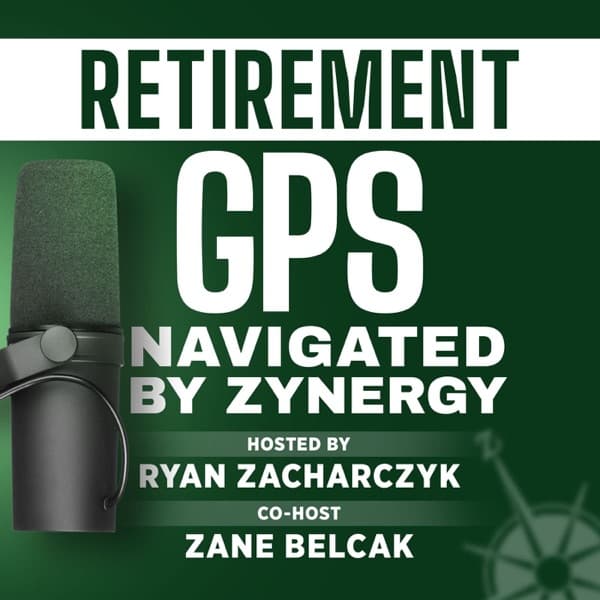
Zacharczyk is a CFP and president of Zynergy Retirement Planning. He co-hosts with Zane Belcak, an associate planner at the firm. The show has published 56 episodes, launching in August 2025 and running weekly since. The format is solo or co-hosted, running 20 to 40 minutes, which is shorter than most retirement shows. Each episode takes one retirement planning topic and breaks it down with the structure of a CFP walking a client through a decision.
If you want a show that focuses on the practical decisions of the final years before retirement, with a CFP's framework for sequencing those decisions, this is among the clearest in the category. If you want long-form interviews or broad lifestyle content, the format will feel too structured.
The Retirement Red Zone Framework
Episode 56 is the show's signature content. Zacharczyk walks through four key steps for the final year before retirement:
The fourth step is what separates this show from most retirement content. Zacharczyk recommends a practice retirement, living on your projected retirement budget for six months before you actually retire, to test whether the numbers work and whether the lifestyle fits. That kind of concrete advice is more useful than the generic "make sure you are ready" most shows offer. For the income side of the framework, our guide to how much you need to retire covers the baseline numbers.
The Safe Distribution Rate Content
The August 4, 2026 episode, "Safe Distribution Rates: How Much Can You Safely Spend in Retirement," is the episode most listeners should hear after the Red Zone episode. Zacharczyk breaks down why the 4% rule is a starting point, not a strategy, and how factors like inflation, market conditions, taxes, guaranteed income, and spending flexibility all play a role in determining how much you can safely spend.
The framing is honest. The 4% rule comes from the Trinity Study, which found that a 4% withdrawal rate over a 30-year retirement had roughly a 96% success rate across historical market conditions. But Zacharczyk makes the point that your retirement is not the historical average. Your sequence of returns, your spending flexibility, and your tax situation all shift the number. For listeners who want the underlying mechanics, our guide to the 4% safe withdrawal rate covers the research, and our safe withdrawal rate glossary entry defines the term.
The show's content on sequence of returns risk is the other pillar of the distribution content. Zacharczyk explains why the first decade of retirement defines outcomes, and why a market downturn in the early years of retirement is more dangerous than the same downturn a decade later. The strategies for managing that risk include cash buffers, bond tents, and dynamic withdrawal rates.
The Tax Trap Content
The July 14, 2026 episode, "Retirement Tax Traps That Could Cost You Thousands," is the show's most practical episode for listeners already in retirement. Zacharczyk breaks down five tax traps:
The value of the episode is in explaining how these traps interact. A large Roth conversion in one year can trigger IRMAA surcharges two years later. A missed RMD can trigger a 25% penalty. The strategies for avoiding each trap, including Roth conversions in low-income years and timing capital gains across tax years, are concrete and actionable. For the underlying tax mechanics, our tax-loss harvesting glossary entry covers one of the strategies.
The Regrets Content
The July 21, 2026 episode, "Retirement Regrets: What Retirees Wish They Had Done 10 Years Earlier," is the show's most reflective episode. Zacharczyk shares the regrets he hears most often from retirees: not planning for taxes earlier, claiming Social Security too early, underestimating healthcare costs, neglecting estate planning, and not enjoying retirement enough once they got there.
The last regret is the one most retirement shows skip. Retirees who spent decades optimizing their savings rate sometimes find they cannot turn it off, and that the frugality that built the portfolio becomes the constraint that prevents them from enjoying it. Zacharczyk's point is that the goal of retirement planning is not to die with the largest portfolio. It is to fund the life you actually want. For listeners navigating that transition, our guide to catch-up retirement savings in your 40s covers the accumulation side, and the show covers the distribution side.
Where the Show Has Limits
The show is built for listeners within five years of retirement or recently retired. Listeners in their 30s and 40s building wealth will find the content premature. The retirement planning framework assumes you have a portfolio to distribute from, not that you are building one.
The episodes are short, which is a strength for busy listeners and a limitation for anyone who wants depth on complex topics. The IRMAA episode explains the surcharge but does not walk through the appeal process. The Social Security timing episode explains the claiming strategies but does not model the breakeven analysis in detail. The show is a starting point, not a substitute for a comprehensive plan.
Zacharczyk runs Zynergy Retirement Planning, and the show functions partly as marketing for the firm. He discloses this, and the educational content stands on its own, but listeners should understand the commercial relationship. The GPS framework he references is the firm's branded planning process.
Who Should Listen
The show fits listeners in their 50s and 60s who are within five years of retirement or recently retired. It suits people who want a CFP's framework for sequencing the decisions of the final years, with concrete steps and a focus on the transition rather than the accumulation. A listener who finished the Red Zone episode would know what to do in the year before retirement, in what order, and why. That is a complete roadmap for the phase most retirement content skips.
It fits less well for younger listeners, anyone who wants long-form interviews, or listeners who want the deepest technical detail on Social Security rules. For the technical side, pair this with The Retirement and IRA Show. For the lifestyle side, pair with The Retirement Navigator.
Getting Started
Begin with the Retirement Red Zone episode, because it gives you the framework for the final year that the rest of the show builds on. Then move to the safe distribution rates episode if you are modeling your withdrawal strategy. Track your own retirement number and Social Security claiming strategy as you apply the advice, because the show's framework only works if you can see whether your plan holds up.
Retirement GPS will not give you the longest episodes or the deepest technical analysis. It will give you the clearest roadmap for the final years before retirement, and for listeners in that window, that clarity is the hardest thing to find.
This post is for informational purposes only and does not constitute financial advice.