
Started Late? Catch Up on Retirement Savings in Your 40s
Starting retirement savings in your 40s feels discouraging. But the math is more forgiving than you think if you know which levers to pull. Here is the real catch-up playbook.

If you are 43 and your retirement account balance starts with a number smaller than you would like, you are in better company than you might think. The Federal Reserve's most recent Survey of Consumer Finances shows the median retirement savings for Americans aged 45 to 54 is approximately $115,000 among those who even have accounts. Nearly 40% of households in that age range have zero retirement savings. You are not uniquely behind. You are typical.
That is not a comforting fact, but it is a useful one. The strategies for catching up are well-tested, the accounts are designed with your situation in mind, and the math, while less forgiving than at 25, still has real power across a 20-year runway to traditional retirement.
This guide covers exactly what to do, in order, when you are starting your serious retirement savings push in your 40s. All contribution limits reflect 2026 IRS figures.
Where You Actually Stand: An Honest Baseline
Before any strategy, you need a clear-eyed baseline. Pull together your current retirement account balances across every 401(k), IRA, and Roth IRA account. Check your estimated Social Security benefit at SSA.gov My Social Security. Identify your target retirement age and estimated annual spending in retirement.
Fidelity's age-based benchmarks suggest having 3 times your salary saved by age 40 and 6 times by age 50. The median full-time worker earned approximately $65,000 annually in early 2026, which puts the age-40 target near $195,000 and the age-50 target near $390,000. Fidelity's own plan data shows the average 401(k) balance for participants aged 40 to 44 is $120,100, and for ages 45 to 49 it is $163,200. The typical 40-something is sitting at roughly half of the recommended benchmark.
Use the 4% rule as a starting estimate: multiply your expected annual retirement spending by 25. If you plan to spend $60,000 per year in retirement, your target portfolio is $1,500,000. The retirement number calculator can help you run this for your own situation.
| Your Target | Current Balance | Gap to Fill |
|---|---|---|
| $1,500,000 | $115,000 | $1,385,000 |
| $1,200,000 | $80,000 | $1,120,000 |
| $1,000,000 | $200,000 | $800,000 |
This gap sounds enormous. Here is why it is not as bad as it looks: you have 20 or more years of compound growth working on what you already have, and 20 or more years of contributions still ahead.
The 2026 Contribution Limits Built for Catch-Up
The IRS sets contribution limits that increase periodically. For 2026, the numbers are higher than ever:
| Account | Standard Limit (2026) | Age 50+ Catch-Up | Total at 50+ |
|---|---|---|---|
| 401(k) / 403(b) | $24,500 | +$8,000 | $32,500 |
| Ages 60-63 Super Catch-Up (SECURE 2.0) | $24,500 | +$11,250 | $35,750 |
| Roth IRA / Traditional IRA | $7,500 | +$1,100 | $8,600 |
| SIMPLE IRA | $17,000 | +$3,500 | $20,500 |
| HSA (individual, age 55+) | $4,400 | +$1,000 | $5,400 |
If you are in your 40s now, you are not yet eligible for the age-50 catch-up limits. But you will be within a decade, and planning your income and spending around maximizing them from age 50 onward is a legitimate catch-up strategy. At 49, with standard limits, you can still shelter $32,000 per year ($24,500 in a 401(k) plus $7,500 in a Roth IRA).
One new rule to know: starting in 2026, workers age 50 and older who earned more than $150,000 in the prior year must route their catch-up contributions to a Roth 401(k) rather than a pretax 401(k). The pretax break disappears on those dollars, but the long-term tax treatment improves. Build the after-tax impact into your cash-flow plan before you turn 50.
What $30,000 Per Year Actually Builds From 45 to 65
Here is the math that most people in their 40s never see laid out clearly:
| Starting Age | Annual Contribution | Years | Total Contributed | Value at 65 (8% return) |
|---|---|---|---|---|
| 45 | $15,000/year | 20 | $300,000 | $741,000 |
| 45 | $25,000/year | 20 | $500,000 | $1,235,000 |
| 45 | $35,000/year | 20 | $700,000 | $1,729,000 |
| 40 | $20,000/year | 25 | $500,000 | $1,577,000 |
| 40 | $30,000/year | 25 | $750,000 | $2,365,000 |
Any existing balance you already have continues compounding in parallel. $115,000 at age 45 earning 8% grows to approximately $536,000 by age 65 without a single additional contribution.
Combined: $115,000 existing balance plus $25,000 per year in new contributions starting at 45 produces roughly $1,771,000 by age 65. That fully funds a $70,000 per year retirement at the 4% withdrawal rate.
The Priority Stack for Your 40s
Step 1: Eliminate High-Interest Debt
Any debt above 8% APR (credit cards, personal loans, high-rate private debt) costs you more than investing earns you on average. Clear this before increasing investment contributions beyond your employer match.
Step 2: Capture Every Dollar of Employer Match
A 401(k) match is the highest-returning use of any dollar in your financial life: a guaranteed 50 to 100% return before the money is even invested. If you are not capturing the full match, correct this immediately. No other move competes.
Step 3: Maximize Your 401(k)
In your 40s, the goal shifts from "contribute what you can" to "maximize or get close to maximizing." The $24,500 annual limit is your target. If you are not close to it, the question is what else you are spending on that could be redirected.
Step 4: Fund a Roth IRA or Traditional IRA
After the 401(k), contribute to an IRA. In your 40s, the Roth versus traditional decision depends on your current and expected future tax rates. The Roth versus traditional IRA calculator can help you compare.
If you are still in a relatively low bracket (under $153,000 single or $242,000 married filing jointly for 2026 Roth eligibility), a Roth IRA often makes more sense. You pay taxes now at a lower rate and never pay them on growth. If you are in a high bracket now and expect lower income in retirement, traditional IRA deductible contributions may be the better play.
Step 5: Maximize Your HSA
If you have a high-deductible health plan, an HSA is one of the most powerful accounts available for pre-retirees. Contributions are tax-deductible, growth is tax-free, and withdrawals for qualified medical expenses are tax-free. After age 65, withdrawals for any purpose are taxed like a traditional IRA, making it a supplemental retirement account in addition to a healthcare fund.
The 2026 contribution limit is $4,400 for individuals and $8,750 for families, with a $1,000 catch-up at age 55. Fidelity's 2026 Retiree Health Care Cost Estimate puts average healthcare spending in retirement at $185,500 per person. Having an HSA to cover those costs tax-free is enormously valuable.
Step 6: Taxable Brokerage Account
Once you have maxed tax-advantaged accounts, a regular taxable brokerage account lets you invest beyond those limits with no annual cap.
Income Growth: The Most Powerful Catch-Up Tool
Here is what most retirement catch-up guides do not say directly: income growth is more powerful than any investment optimization at this stage.
Every $10,000 increase in annual income that gets directed to retirement savings adds more to your final balance than any fund selection, tax efficiency, or rebalancing strategy. The math is straightforward.
In your 40s, income growth levers include negotiating your current salary (most workers significantly underestimate how often this is possible), pursuing a promotion or role change (a promotion at 44 is worth far more than one at 24 because the increase compounds through 20 or more working years), directing side income entirely to retirement, and delaying retirement by 2 to 3 years.
Delaying retirement by just two years is mathematically equivalent to roughly two additional years of full contributions plus two fewer years of withdrawals. For a typical scenario, that can add $200,000 to $400,000 to your final balance. It also increases your Social Security benefit: the average monthly benefit in 2026 is $2,071, but delaying from 62 to 70 increases your monthly check by approximately 77%.
Real-World Examples
Example: Sandra, 44, marketing director, $88,000 salary, $62,000 in 401(k)
Situation: Sandra had contributed inconsistently for years, always prioritizing other expenses. She wanted to retire at 65 with $70,000 per year in spending.
What she did: She increased her 401(k) contribution to the maximum ($24,500), stopped contributing to a taxable savings account, opened a Roth IRA ($7,500 per year), and set up an HSA through her employer HDHP plan ($4,400 per year). She also took on a small consulting project directing all income, $12,000 per year, to her taxable account.
Result: Sandra is now putting $48,400 per year toward retirement. Her existing $62,000, combined with these contributions at 8% average return, projects to approximately $2.0 million by age 65. Her target was $1,750,000.
Example: Robert, 47, warehouse supervisor, $54,000 salary, $23,000 in 401(k)
Situation: Robert had a lower income, significant past spending, and felt like his situation was hopeless. His target was a more modest $45,000 per year in retirement.
What he did: He captured his full employer match (4%, worth $2,160 per year), contributed an additional $8,000 per year to his 401(k) for a total of $10,160, and opened a Roth IRA at $200 per month ($2,400 per year). He committed to no lifestyle inflation from future raises, directing increases directly to retirement.
Result: Total retirement contributions: $12,560 per year. His $23,000 existing balance plus new contributions project to approximately $820,000 by age 65, fully funding his $45,000 per year target with room to spare.
Common Mistakes Late Starters Make
Choosing overly conservative investments. At 45 with a 20-year horizon, you still have substantial time for equity growth. Shifting to a mostly-bond portfolio in your 40s is often too early and meaningfully reduces long-term returns. A 70 to 80% stock allocation at 45 is still appropriate for most people.
Cashing out old 401(k)s from previous employers. This is devastatingly common. When you leave a job, rolling over your old 401(k) to an IRA preserves the tax advantage and keeps the money compounding. Cashing it out triggers ordinary income tax plus a 10% penalty, destroying 30 to 40% of the balance immediately.
Ignoring Social Security optimization. Claiming Social Security at 62 versus 70 can mean a 77% difference in your monthly benefit. This decision alone can add or subtract hundreds of thousands of dollars from your lifetime income. The 401(k) catch-up contributions guide covers how this fits into the broader picture.
Paralysis. The most expensive mistake of all. Every year spent not maximizing retirement contributions in your 40s is genuinely costly. Imperfect action, even a suboptimal fund choice or a partial contribution, beats inaction by an enormous margin.
Starting Late Is Not Starting Too Late
The math at 45 is harder than the math at 25. That is real. But "harder" and "impossible" are very different things.
You have 20 years of compound growth ahead of you. You have catch-up contribution limits designed for your situation. You have a Social Security benefit that can be strategically maximized. You have more income than you did at 25 and more capacity to direct it toward savings.
What you need is a clear plan and the discipline to execute it without interruption. The catch-up is achievable, and it starts with the next paycheck.
Bookmark this page and come back once you have set up your increased contributions.
This post is for informational purposes only and does not constitute financial advice. Contribution limits and tax rules change annually. Verify current figures at [IRS.gov](https://www.irs.gov). Consult a financial professional for personalized retirement planning.
Savvy Nickel Team
Financial education expert dedicated to making complex money topics simple and accessible for everyone.
Recommended Articles

The 10-Year Retirement Sprint: What to Do If You're Behind
Ten years is enough time to dramatically change your retirement picture, but only if you treat it like a sprint, not a stroll. Here's the exact playbook for the final decade before retirement.

Maxing Out a 401k in Your 50s: The Catch-Up Contribution Guide
Once you turn 50, the IRS lets you contribute significantly more to your retirement accounts. Here's exactly how catch-up contributions work in 2026, what they're worth, and how to use every dollar.

What Is a Roth Conversion and Should You Do One Before Retirement?
A Roth conversion moves money from a tax-deferred account into a Roth IRA, paying taxes now to avoid them later. Here is when it makes sense, how much to convert, and the mistakes that cost people thousands.
Run the Numbers
Free calculators related to this article.
401(k) Calculator
Project your 401(k) balance at retirement based on your salary, contribution rate, employer match, and expected returns. See how tax-deferred growth and free employer money add up over decades.
Open calculator →Roth IRA vs Traditional IRA Calculator
Find out which IRA leaves you with more money at retirement. Enter your age, income, current and expected future tax brackets to get a side-by-side comparison with a clear recommendation.
Open calculator →Coast FI Calculator
Find out how much you need invested right now so that compound growth alone reaches your retirement number by 65, without saving another dollar. The number is smaller than you think.
Open calculator →Recommended Books

The Four Pillars of Investing: Lessons for Building a Winning Portfolio
by William J. Bernstein
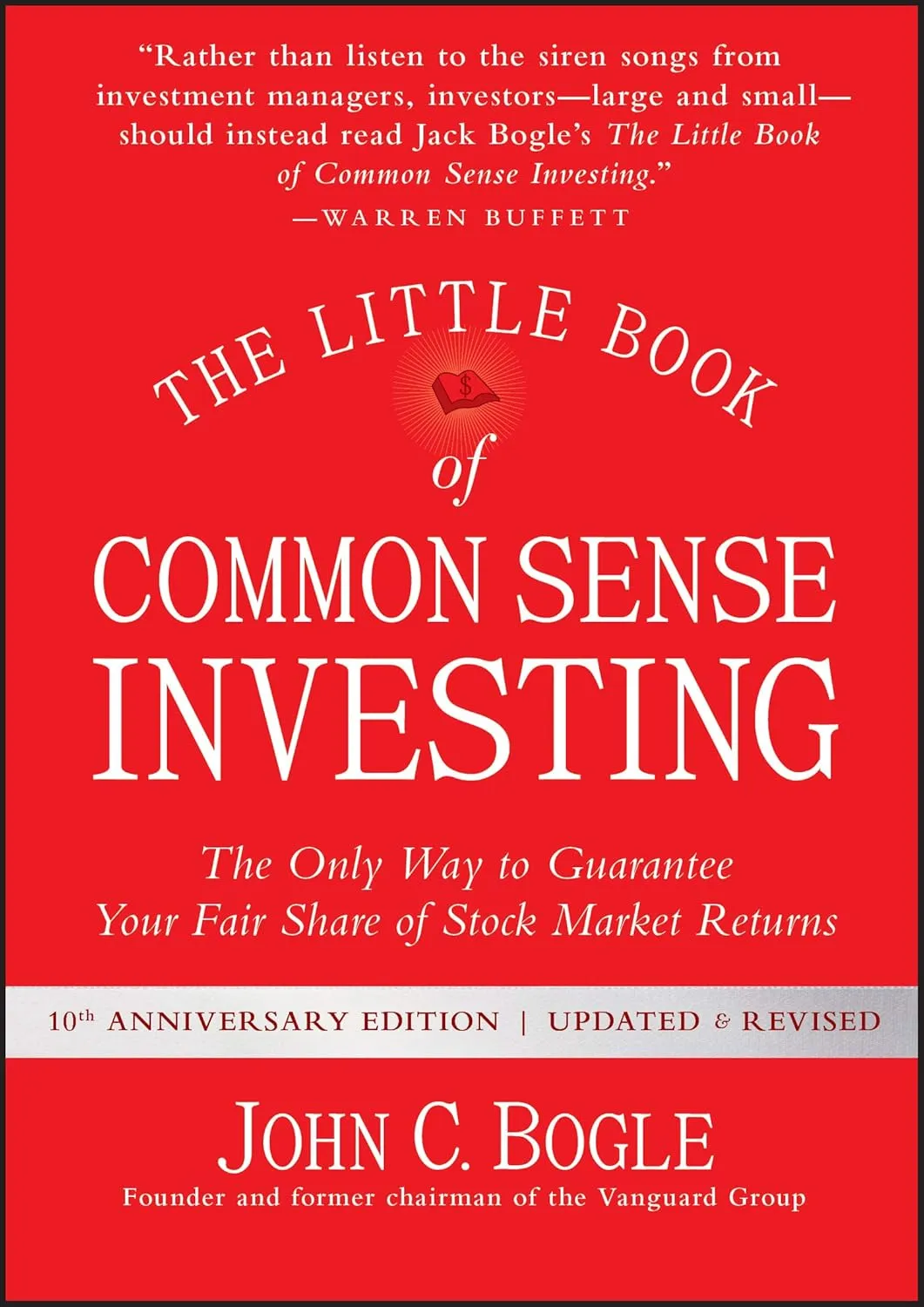
The Little Book of Common Sense Investing
by John C. Bogle
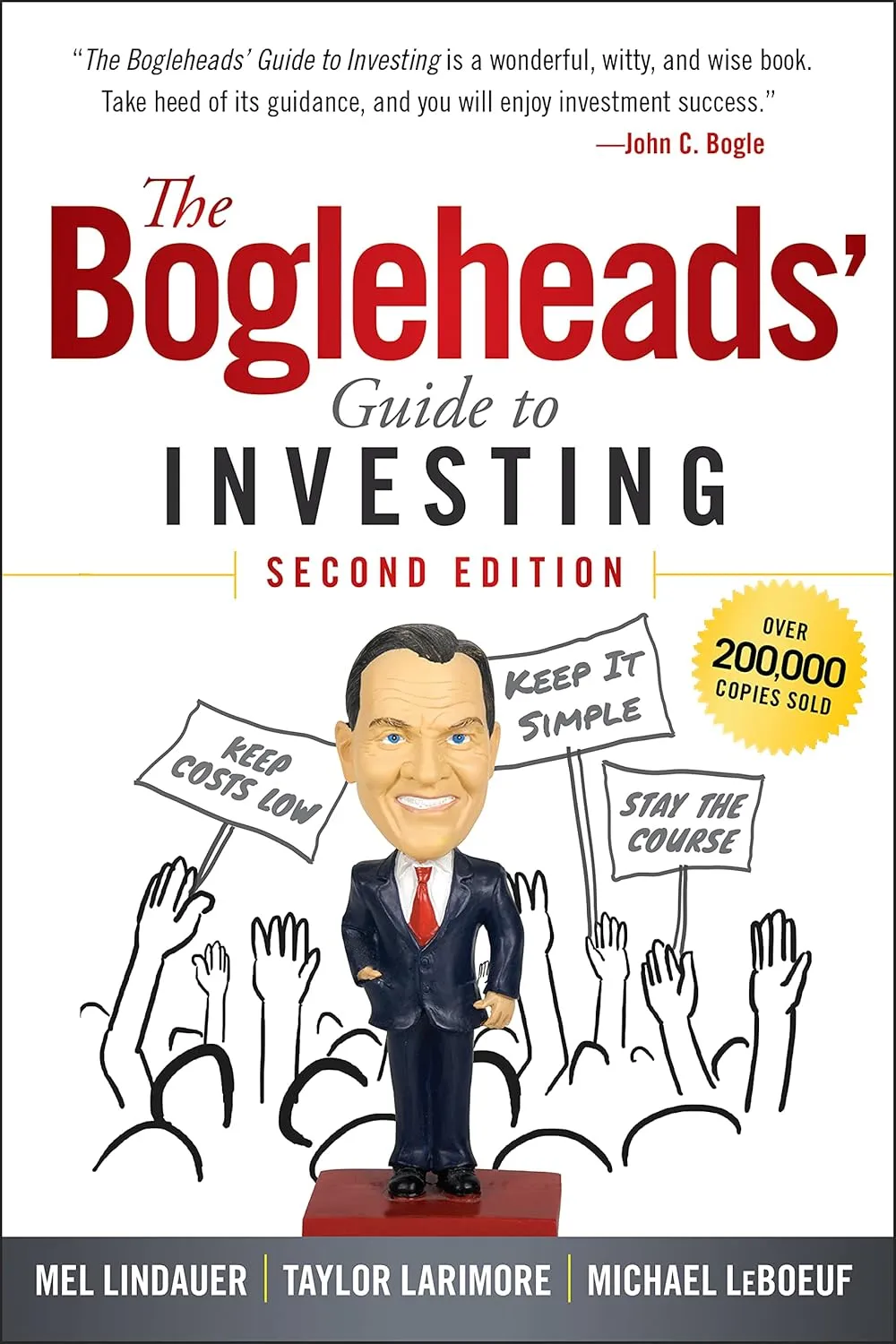
The Bogleheads' Guide to Investing
by Taylor Larimore, Mel Lindauer & Michael LeBoeuf
Related Glossary Terms
Retirement Planning
Retirement planning is the process of calculating how much money you need to stop working and building a strategy to get there. It covers saving rates, investment allocation, tax optimization, and withdrawal planning.
Retirement
Retirement is the phase of life when you stop working for income and live off savings, pensions, and Social Security. Most Americans retire around age 62, but planning should start decades earlier.
IRA
An IRA is a personal tax-advantaged retirement savings account that lets individuals invest independently of their employer, with traditional IRAs offering tax-deferred growth and Roth IRAs offering tax-free growth.
Roth IRA
A Roth IRA is a tax-advantaged retirement account where contributions are made with after-tax dollars, allowing all future growth and qualified withdrawals to be completely tax-free.
Required Minimum Distribution
A Required Minimum Distribution (RMD) is the minimum amount you must withdraw from tax-deferred retirement accounts each year starting at age 73, as mandated by the IRS under SECURE 2.0 Act rules.
RMD
An RMD (Required Minimum Distribution) is the mandatory annual withdrawal the IRS requires from tax-deferred retirement accounts starting at age 73, with a 25% penalty for missed withdrawals.
Recommended Podcasts

The Money Guy Show
by Brian Preston, CPA/CFP & Bo Hanson, CFA/CFP
Two fee-only financial advisors break down the Financial Order of Operations, a 9-step wealth-building framework. 617K YouTube followers and a 4.8 Apple rating.

The Long View
by Christine Benz, Amy Arnott & Ben Johnson
Morningstar's weekly deep-dive interview show on retirement, portfolio strategy, and fund analysis. 387 episodes, hosted by Christine Benz and the Morningstar research team.

Stacking Benjamins
by Joe Saul-Sehy & Josh 'OG' Bannerman, CFP
A former financial advisor and a CFP host a lighthearted show from Joe's mom's basement. Three episodes a week on investing, retirement, and behavioral finance.