*Disclosure: This article contains affiliate links. If you purchase through these links, we may earn a commission at no additional cost to you. We only recommend books we genuinely believe in.
Quick Overview
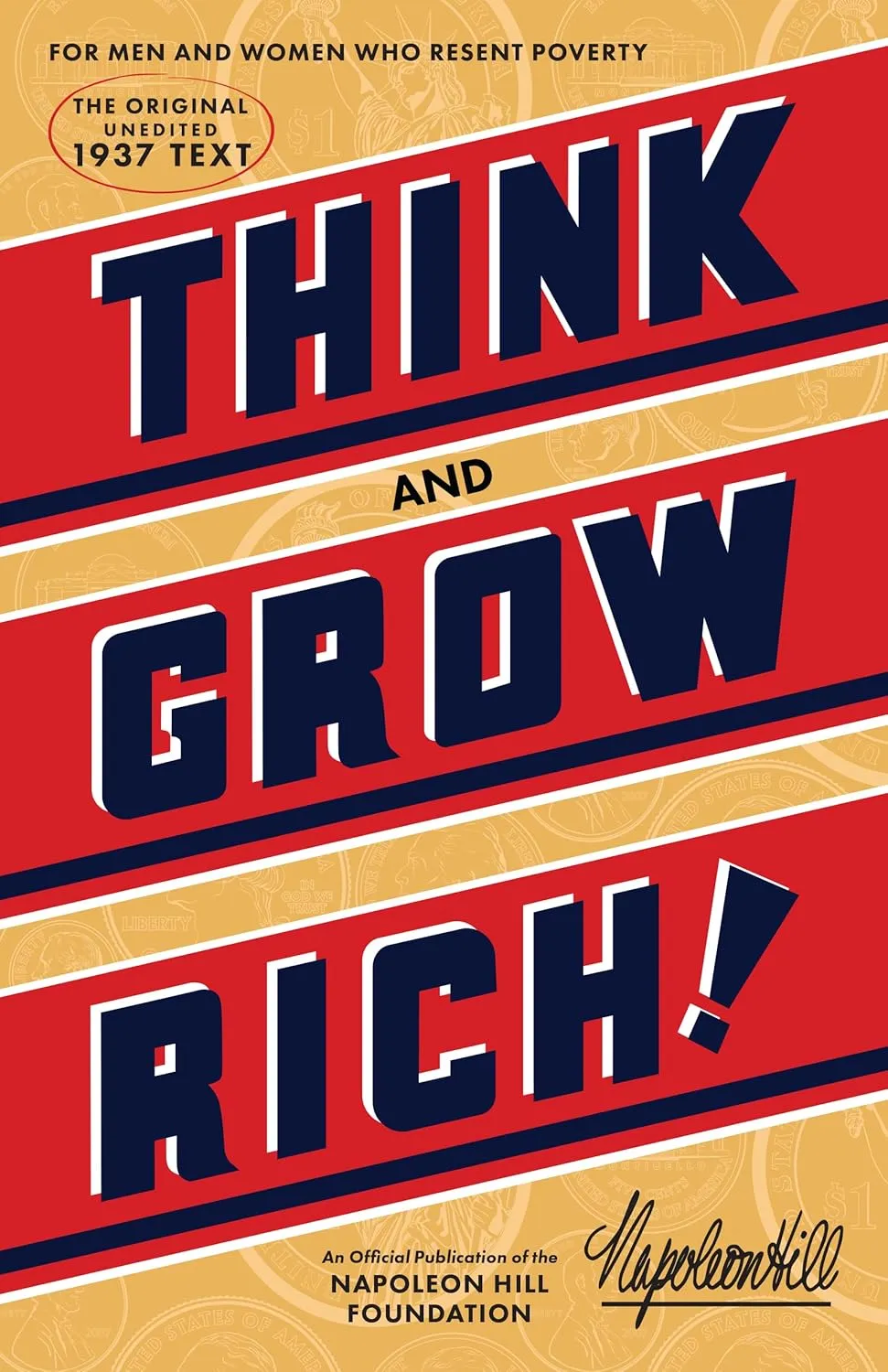
My grandfather gave me a copy of Think and Grow Rich when I was 16, along with a note that said "read this, but keep your head on straight." That advice turned out to be the perfect framing for the book. Napoleon Hill spent 20 years interviewing over 500 of America's most successful people at the request of Andrew Carnegie, who believed the principles of success could be identified and taught. Published in 1937 during the Great Depression, the book became one of the best-selling books of all time with over 100 million copies sold.
Its 13 principles focus on the psychology of achievement rather than financial mechanics, making it a mindset book that complements technical investment knowledge. The book remains a perennial bestseller on Amazon in 2026, nearly 90 years after publication, which is itself a testament to something real in its message.
Book Details
| Attribute | Details |
|---|---|
| Title | Think and Grow Rich |
| Author | Napoleon Hill |
| Publisher | The Ralston Society (1937); many modern editions |
| First Published | 1937 |
| Pages | ~320 |
| Reading Level | Beginner |
| Amazon Rating | 4.7/5 stars |
Get Your Copy
Paperback: Buy on Amazon
Kindle: Buy on Amazon
Audiobook: Buy on Amazon
About the Author
Napoleon Hill (1883-1970) was born in poverty in rural Virginia and became one of the most influential self-help writers in American history. Andrew Carnegie, whom Hill interviewed in 1908, reportedly challenged him to spend 20 years interviewing the most successful people in America and codifying their principles. Hill interviewed Thomas Edison, Henry Ford, Theodore Roosevelt, John D. Rockefeller, and hundreds of others. Think and Grow Rich was the culmination of that project.
Important caveat: Some of Hill's biographical claims, including specifics about his Carnegie relationship and exact nature of certain interviews, have been disputed by historians. A 2024 investigative biography by Jeff Mayhew, The Napoleon Hill Problem, examined Hill's personal papers, tax records, and correspondence and found that several key claims about his relationships with Carnegie and Ford were exaggerated or fabricated. Hill's multiple failed business ventures, including a college that closed amid financial irregularities, are well-documented.
The book's value lies in its synthesis of success psychology, not the verifiability of every biographical detail. But readers should approach the author's origin story with appropriate skepticism.
The Context: Why This Book Matters for Investors
Think and Grow Rich is not an investing book in the traditional sense. It contains no formulas for stock valuation or portfolio construction. Its relevance to investors comes from addressing the psychological prerequisites for financial success:
Many investors understand what to do but fail to do it consistently. This book addresses the gap between knowledge and execution.
The 13 Principles
Principle 1: Desire
Hill argues that behind every great achievement is a burning, obsessive desire. Not a wish. Not a preference. A specific, intense, definite desire for a particular outcome.
For financial independence: Hill's framework requires defining a specific dollar amount, a specific timeline, and a specific plan for achieving it. Vague goals produce vague results.
The definiteness exercise:
Whether or not you believe in the metaphysics Hill attaches to this process, the act of writing specific financial goals and reviewing them daily has documented effects on decision-making and follow-through.
Principle 2: Faith
Hill defines faith as a state of mind that can be induced through repeated autosuggestion. In modern terms: your beliefs about what is possible shape your behavior, and your behavior determines outcomes. If you believe building wealth is impossible for someone in your situation, you will not take the actions required.
The practical application: Surround yourself with evidence that people similar to you have achieved financial independence. The Bogleheads forum is full of teachers, nurses, and mid-income workers who reached financial independence through consistent index fund investing. Their stories are more useful for building belief than Hill's more metaphysical language.
Principle 3: Autosuggestion
Repeated affirmations and self-directed thought patterns shape behavior over time. Hill's version is more mystical than modern psychology requires, but the underlying mechanism is real: what you tell yourself consistently about money shapes your financial behavior.
Research-supported version: Implementation intentions (specific if-then statements like "If the market drops 20%, I will invest an additional $5,000") have been shown in behavioral finance research to significantly improve follow-through on financial goals. This connects directly to the work of Richard Thaler on hyperbolic discounting, which we cover in our review of The Winner's Curse.
Principle 4: Specialized Knowledge
Hill distinguishes between general knowledge and specialized knowledge. Universities provide general knowledge. Specialized knowledge, the deep expertise that produces value in a specific domain, is what generates income.
The financial implication: General financial literacy (saving, compounding, avoiding debt) is necessary but not sufficient for wealth building. Deep knowledge in one area, whether investing, a trade, a profession, or business operations, is what produces income sufficient to save and invest significantly.
| Knowledge Type | Example | Income Potential |
|---|---|---|
| General knowledge | College degree | Baseline |
| Specialized technical | Software engineering, medicine | High |
| Specialized business | Sales, negotiation, management | Medium-High |
| Specialized investing | Security analysis, real estate | Variable but potentially high |
Principle 5: Imagination
Hill distinguishes synthetic imagination (rearranging existing ideas in new combinations) from creative imagination (receiving entirely new ideas from "infinite intelligence"). The synthetic imagination concept is practically useful: most successful businesses and investment strategies recombine existing elements in new ways.
For investors: the ability to see connections between industries, recognize patterns from history, and apply principles from one domain to another is a genuine analytical advantage.
Principle 6: Organized Planning
Plans fail. The response to a failed plan is a new plan, not abandonment of the goal. Hill emphasizes that most people quit at the first failure and never discover that persistence through failure is the defining characteristic of high achievers.
For financial planning: Your first investment strategy will likely need adjustment. Your first business attempt may fail. The goal does not change; the plan adapts.
Elements of an organized financial plan:
Principle 7: Decision
Successful people make decisions quickly and change them slowly. Unsuccessful people make decisions slowly and change them quickly.
The investing application: Decide on your investment strategy, implement it, and commit to holding through volatility. The investor who reverses their strategy at every market downturn is exhibiting exactly the indecision Hill warns against.
Principle 8: Persistence
This is the chapter most relevant to long-term investing. Hill argues that persistence is a state of mind that can be cultivated through habit. Most people abandon their goals at the first serious obstacle.
Market crashes as persistence tests:
| Market Event | Typical Investor Response | Persistent Investor Response |
|---|---|---|
| -10% correction | Nervousness, portfolio checking | Continued automatic investing |
| -20% bear market | Selling some positions | Staying the course |
| -40%+ crash | Panic selling | Potentially increasing contributions |
The investors who built the most wealth through market crashes were those who maintained their investment programs despite severe short-term pain.
Principle 9: The Mastermind
Hill defines the mastermind as a group of individuals coordinating knowledge and effort toward a definite purpose in a spirit of harmony. The energy and intelligence of a coordinated group exceeds what any individual could achieve alone.
For investors: This translates to finding a community of like-minded investors (Bogleheads.org, local investment clubs), a fee-only financial advisor, or a trusted group of people who share your financial values and can provide accountability and perspective.
The worst financial decisions typically happen in isolation. The best ones happen with input from people who have relevant knowledge and aligned interests.
Principle 10: The Mystery of Sex Transmutation
Hill argues that sexual energy, when redirected toward creative and productive purposes, becomes a powerful force for achievement. This chapter is the most dated and most awkward in the book. Modern readers can interpret it as: intense emotion and energy, properly channeled toward financial goals, produces extraordinary motivation and persistence. In 2026, this chapter reads as a product of its era and most readers skip or skim it.
Principle 11: The Subconscious Mind
Hill argues the subconscious continuously processes information and works toward your dominant thoughts. In modern terms: what you focus on shapes what you notice, what opportunities you recognize, and what actions you take automatically.
For investors: People who think about financial independence daily notice relevant information (a good investment book, a course on tax efficiency, a valuable business opportunity) that people not focused on it miss.
Principle 12: The Brain
Hill's discussion of the brain as a transmitter and receiver is largely metaphysical and not scientifically supported. The practical translation: curiosity, learning, and intellectual engagement compound over time just as money does.
Principle 13: The Sixth Sense
Hill's most mystical chapter, describing intuition that comes after mastering the previous 12 principles. For practical purposes: deep experience in any domain produces pattern recognition that feels like intuition but is actually the accumulated processing of thousands of observations.
Experienced investors notice warning signs in financial statements that novices miss. This is not mystical. It is the sixth sense that comes from deep specialized knowledge applied over many years.
What Think and Grow Rich Gets Right
The psychological prerequisites for wealth are real. Desire, persistence, specialized knowledge, and decision-making discipline genuinely differentiate people who build wealth from those who do not. The book names these factors clearly at a time when most financial advice focused only on tactics.
Definiteness of purpose. The research on goal-setting (Locke and Latham, 1990s-2000s) validates Hill's intuitions. Specific, challenging, written goals with regular review produce significantly better outcomes than vague intentions.
The mastermind principle. Social influence on financial behavior is well-documented. Your peer group's spending and saving norms shape your own more powerfully than any financial education. For more on how social dynamics affect financial decisions, read our post on behavioral biases in investing.
What Think and Grow Rich Gets Wrong
The metaphysics are not supportable. Vibrations, infinite intelligence, and the ether-based transmission of thoughts are not real in the way Hill describes. The principles work through psychology and behavior, not cosmic law.
Survivorship bias is severe. Hill interviewed successful people and identified common traits. He did not interview equally hardworking, desiring, persistent people who failed anyway. The traits he identifies may correlate with success without causing it. This is the same survivorship bias problem that plagues much of the self-help genre.
The book has been used to sell get-rich-quick schemes. Its language about "thinking yourself rich" has been exploited by MLM companies, motivational seminar operators, and self-help charlatans. The book itself does not advocate shortcuts, but its derivatives often do. The 2024 Mayhew biography documents how Hill himself was involved in several questionable business ventures, which adds an uncomfortable irony to the book's warnings about get-rich-quick thinking.
Strengths & Weaknesses
What We Loved
Areas for Improvement
Who Should Read This Book
Recommended For
Approach With Caution
Frequently Asked Questions
Q: Is Think and Grow Rich a scam?
A: The book itself is not. It contains genuine psychological insights about persistence, goal-setting, and specialized knowledge. The problem is the industry of seminars, MLM schemes, and products that use its language while selling false promises. Read the original book critically and you will find real value alongside outdated mysticism.
Q: Which edition should I read?
A: The 1937 original is the purest version. Ross Cornwell's annotated edition (2004) updates language and provides historical context. Avoid heavily modernized versions that alter the core text. The 2024 Mayhew biography is worth reading alongside the book for historical context about Hill's actual life vs. his claimed biography.
Q: How does this book fit with technical investing books?
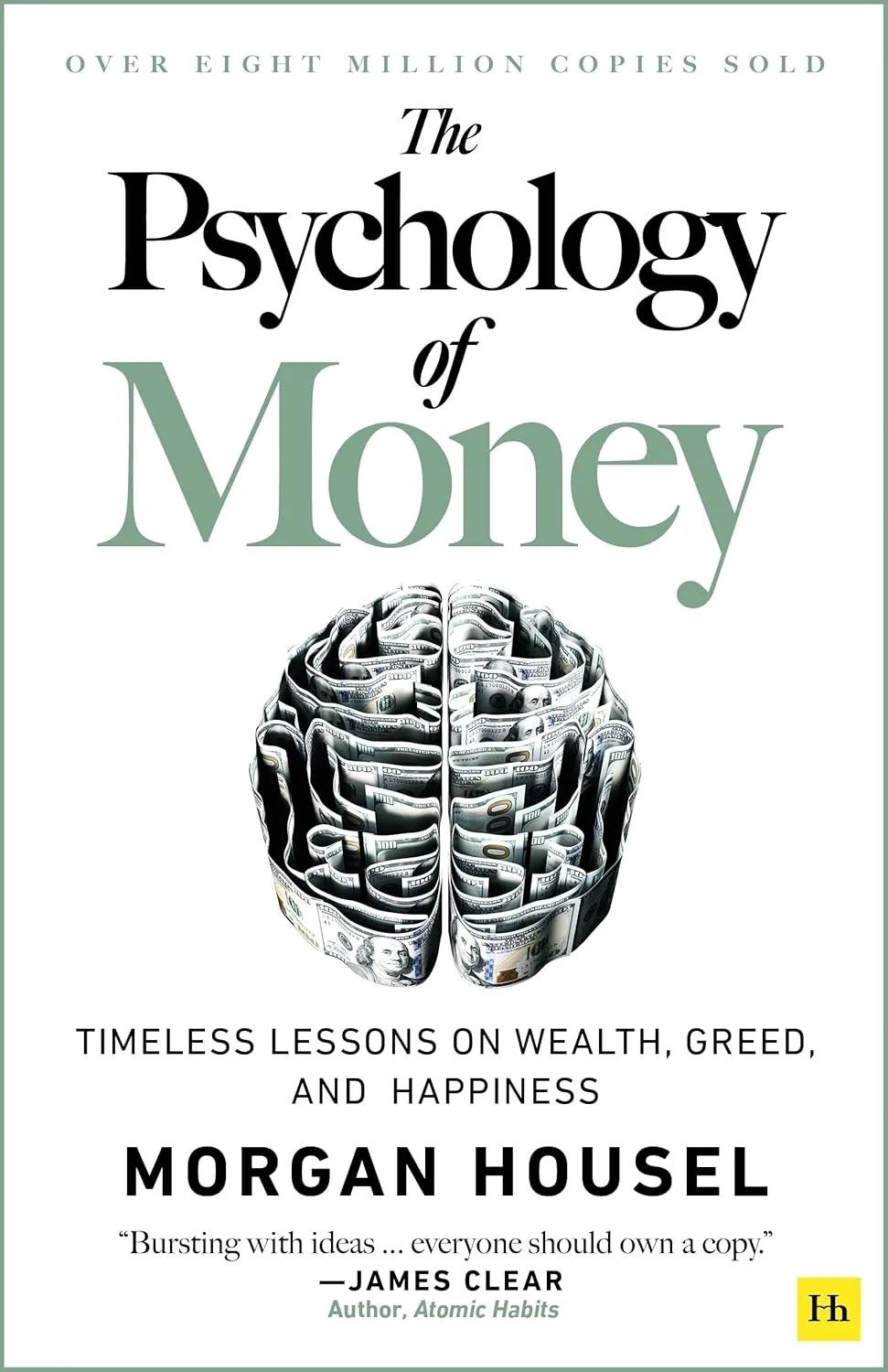
A: Think of it as the psychological prerequisite layer. It addresses why people fail to execute good plans. Bogle, Collins, and Graham address what the good plans are. You need both layers. For the behavioral finance perspective, read The Psychology of Money by Morgan Housel.
Q: Should I be concerned about the 2024 Mayhew biography's revelations?
A: The Mayhew biography raises legitimate questions about Hill's honesty and the verifiability of his claimed relationships with Carnegie and Ford. It does not invalidate the book's psychological insights, which stand on their own merits regardless of who Hill actually interviewed. But it does mean you should treat Hill's personal authority with skepticism and evaluate the principles on their own behavioral merits.
Final Verdict
Rating: 4.4/5
Think and Grow Rich is imperfect, dated, and occasionally mystical. It is also genuinely valuable for addressing the psychological prerequisites for wealth that technical books ignore. The 2024 Mayhew biography adds a layer of biographical skepticism that readers should acknowledge, but it does not diminish the book's core insights about persistence, goal-setting, and specialized knowledge. Read it critically, extract the persistence and definiteness principles, combine them with evidence-based investment strategy, and you will have a more complete foundation than either source alone provides.
Get Your Copy
Paperback: Buy on Amazon
Kindle: Buy on Amazon
Audiobook: Buy on Amazon
Prices current as of publication date. Free shipping available with Prime.