*Disclosure: This article contains affiliate links. If you purchase through these links, we may earn a commission at no additional cost to you. We only recommend books we genuinely believe in.
Quick Overview
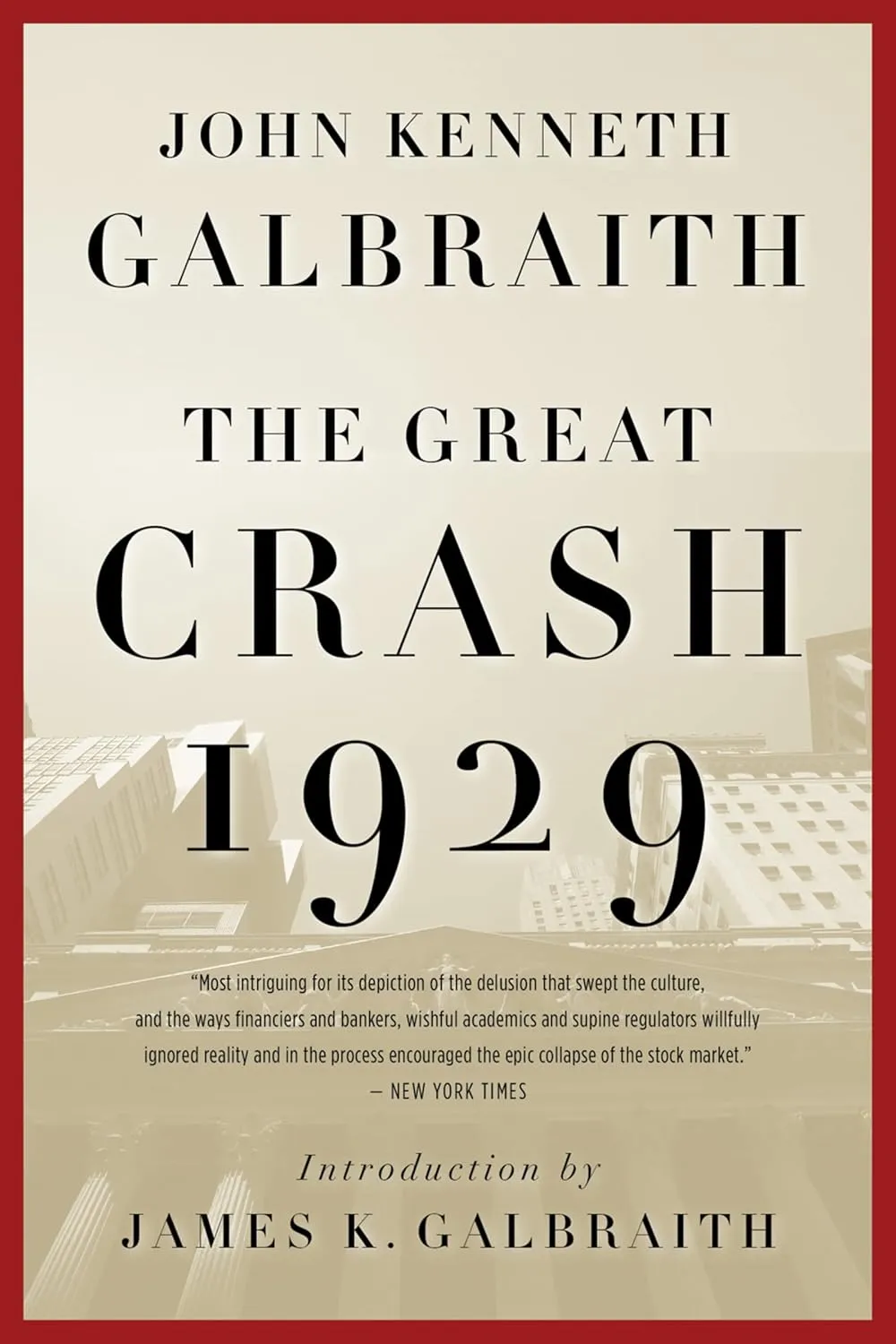
John Kenneth Galbraith wrote The Great Crash 1929 in 1954, just 25 years after the events described. He had lived through the crash as a young man and spent years studying it as an economist. The result is the clearest, most incisive account of how America built and then destroyed a speculative bubble in the 1920s, written with the sardonic wit that made Galbraith one of the most readable economists of the 20th century. At 212 pages it is the shortest path to understanding the event that most shaped American economic policy for the rest of the century. The book has never gone out of print because, as Galbraith himself noted, every few years another speculative episode stirs interest in the history of this, the great modern case of boom and collapse.
Book Details
| Attribute | Details |
|---|---|
| Title | The Great Crash 1929 |
| Author | John Kenneth Galbraith |
| Publisher | Houghton Mifflin / Mariner Books |
| First Published | 1954 |
| Pages | 212 |
| ISBN-13 | 978-0547524866 |
| Reading Level | Intermediate |
| Amazon Rating | 4.5/5 stars |
Get Your Copy
Paperback: Buy on Amazon
Kindle: Buy on Amazon
Audiobook: Buy on Amazon
About the Author
John Kenneth Galbraith (1908-2006) was the Paul M. Warburg Professor of Economics at Harvard University and one of the most influential and readable economists of the 20th century. He served as U.S. Ambassador to India under President Kennedy, advised multiple presidents, and wrote numerous bestselling books including The Affluent Society and The New Industrial State. His ability to write economics with literary quality and intellectual honesty was unmatched among academic economists.
Galbraith was a Keynesian who believed government intervention was necessary to manage market failures. This ideological framing colors his analysis, and monetarist readers will want Milton Friedman's A Monetary History of the United States as a complement. But Galbraith's account of the crash itself, the psychology of speculation, and the leverage mechanics is nonpartisan and remains the best narrative history of the event.
The Buildup: The Great Bull Market of the 1920s
The Conditions That Created the Bubble
Galbraith identifies several structural conditions that enabled the 1920s speculation:
Post-war prosperity: The 1920s were genuinely prosperous. Real wages rose, productivity improved, and American corporations were earning record profits. The optimism was not unfounded in its origins.
Easy credit and margin trading: Brokers routinely lent 80-90% of the purchase price of stocks to investors buying on margin. An investor with $1,000 could buy $10,000 in stocks. When prices rose 20%, the margined investor doubled their money. When prices fell 20%, they were wiped out.
The investment trust proliferation: New investment trusts (similar to closed-end mutual funds) issued shares to the public and invested in other investment trusts. This created a pyramid of leverage:
Retail investor buys shares of Trust A
Trust A buys shares of Trust B
Trust B buys shares of Trust C
Trust C buys individual stocks
When individual stock prices fell 20%, Trust C fell 30%, Trust B fell 50%, Trust A fell 70%, and the retail investor lost 90%. Leverage pyramids amplify losses geometrically.
The New Era Psychology
By 1928-1929, a specific ideological narrative had emerged that justified unlimited optimism about stock prices:
The "New Era" thesis:
Galbraith notes with characteristic wit: "The suggestion that the boom could end only in a crash was received with contempt." Academic economists, financial journalists, and prominent businessmen all endorsed the New Era thesis. The few who expressed caution were dismissed as reactionaries who did not understand the new economic reality.
The Specific Price Patterns
The 1920s bull market:
| Year | Dow Jones Industrial Average (year-end) | Change |
|---|---|---|
| 1921 | 81 | - |
| 1924 | 120 | +48% |
| 1926 | 158 | +32% |
| 1928 | 300 | +90% |
| Sep 3, 1929 (peak) | 381 | +27% |
The Dow nearly quintupled from 1921 to peak in 1929. This was not entirely irrational. Corporate earnings genuinely grew substantially during the 1920s. But prices grew faster than earnings, and by 1929 stocks were trading at unprecedented multiples.
Radio Corporation of America (RCA), the technology darling of the era, traded at $85 per share on earnings of $1.16. That is a P/E ratio of 73x. This for a young company in an industry that was genuinely transformative but hardly proven. The parallel to modern AI stocks trading at 100x revenue is not coincidental.
The Crash
October 1929: The Sequence of Events
Thursday, October 24 (Black Thursday):
A wave of selling began at the open. By noon, the ticker tape was running 90 minutes behind actual trading. Investors watching the tape saw prices that had already fallen further than they knew. This uncertainty triggered additional selling.
Richard Whitney, acting head of the New York Stock Exchange, walked dramatically to the U.S. Steel post and bid for 10,000 shares at above-market prices. Similar purchases by banking pools stabilized the market by afternoon.
Tuesday, October 29 (Black Tuesday):
The bankers' pool that had stabilized Thursday was unable to repeat the intervention. Selling was overwhelming. Margin calls forced liquidation of accounts that could not add funds. Each forced sale drove prices lower, triggering additional margin calls, driving more sales in a self-reinforcing liquidation spiral.
By day's end, the Dow had fallen 11.7%, the largest single-day percentage decline in history at that point.
The full crash (October 1929 to July 1932):
| Date | Dow Jones Level | Change from Peak |
|---|---|---|
| Sep 3, 1929 (peak) | 381 | - |
| Oct 29, 1929 | 230 | -40% |
| Nov 13, 1929 (trough #1) | 198 | -48% |
| Apr 1930 (recovery) | 294 | -23% from peak |
| Jul 8, 1932 (ultimate low) | 41 | -89% from peak |
The crash unfolded in stages. After the initial October collapse, there was a partial recovery. Then the Depression deepened, bank failures multiplied, and the Dow continued falling for almost three more years, ultimately losing 89% from its 1929 peak.
The Psychology of the Crash
Galbraith's most memorable passages describe the psychological collapse of the speculative era:
Within six weeks, the New Era narrative was replaced by complete pessimism. The same advisors who had been buying enthusiastically in September were now counseling cash. The same financial journalists who praised the market's wisdom in pricing stocks at high multiples now wrote about the market's madness.
The reassurance problem:
As prices fell, prominent businessmen and economists repeatedly issued reassurances:
Each reassurance was followed by another decline. The reassurances undermined themselves. If authoritative voices felt the need to reassure, conditions must be worrying. Markets fell further after each round of official optimism.
When Treasury Secretaries and central bank governors speak of "stability" and "fundamentals," the signal to investors is not reassurance but concern.
The Aftermath: From Crash to Depression
Galbraith's Five Causes
Galbraith is careful to distinguish between the crash (a financial event) and the Depression (an economic catastrophe that lasted a decade). He identifies five structural vulnerabilities that turned the crash into the Depression:
1. Bad distribution of income: In 1929, the top 5% received around 35% of all personal income. The economy was dependent on luxury spending and investment by the wealthy, both of which were susceptible to the crushing news from the stock market. A 2025 analysis in The Sense of Fairness blog noted that modern income inequality parallels this pattern, with the top 5% now receiving approximately 23% of total income.
2. Bad corporate structure: Holding companies and investment trusts created pyramids of leverage where an interruption in dividends at the bottom could threaten bankruptcy throughout the structure.
3. Bad banking structure: 9,000 American banks failed between 1930 and 1933. The Federal Reserve did not act as lender of last resort. Each bank failure wiped out depositors' savings, further destroying consumption.
4. Imbalanced trade positions: The Smoot-Hawley Tariff (1930) provoked retaliatory tariffs from trading partners, destroying international trade. International trade fell from $9.7 billion to $3.0 billion, a 69% decline.
5. Poor economic insight: Economic data was riddled with holes. Policymakers made decisions based on incomplete and misleading information.
The Scale of the Depression
U.S. economic indicators, 1929-1933:
| Indicator | 1929 | 1933 | Change |
|---|---|---|---|
| GNP (billions 1958 dollars) | $105B | $56B | -47% |
| Unemployment rate | 3.2% | 24.9% | +21.7pp |
| Industrial production index | 110 | 57 | -48% |
| Bank deposits (billions) | $49B | $30B | -39% |
| Farm income (billions) | $11.9B | $5.3B | -55% |
| International trade (billions) | $9.7B | $3.0B | -69% |
By any measure, the Great Depression was the worst economic catastrophe in modern American history.
Galbraith's Investment Lessons
Lesson 1: Speculation Is Self-Reinforcing Until It Isn't
The 1929 boom demonstrated that speculation can sustain itself for years on the basis of rising prices alone, independent of underlying fundamentals. Rising prices attract more buyers, which drives prices higher, which attracts more buyers. This feedback loop can continue far beyond any reasonable fundamental value, but it cannot continue forever.
Lesson 2: Leverage Is the Mechanism of Financial Catastrophe
The 1929 crash was a painful financial event. The subsequent banking collapse and depression were catastrophic. The difference: leverage.
Individual investors who were fully invested (no margin) lost 50-80% of their stock portfolios. Painful but survivable. Investors who used 90% margin lost 100% of their equity on a 10% stock decline. Wiped out.
No level of conviction about any investment justifies leverage sufficient to allow a small adverse move to eliminate all equity.
Lesson 3: The "New Era" Narrative Is Always Wrong in Its Specific Claims
Every speculative era has a "this time is different" narrative. Every such narrative is wrong in its specific claims about why old valuation methods no longer apply. The underlying technology or business innovation may be real. The stock prices at peak speculation are not justified.
| Era | New Era Narrative | What Was True | What Was Wrong |
|---|---|---|---|
| 1920s | Scientific management eliminates business cycles | Productivity improved | Business cycles were not eliminated |
| 2000 | Internet companies have no need for profits | Internet transformed commerce | Profits were still required |
| 2007 | Housing prices cannot decline nationally | Housing demand was real | Prices can always decline |
| 2021 | Zero rates justify any valuation | Low rates raise valuations | Rates were not zero forever |
| 2025 | AI will make every tech stock worth 100x revenue | AI is genuinely transformative | Not every AI company will win |
The January 2025 Nvidia selloff, triggered by the emergence of DeepSeek's cheaper AI model, prompted fresh comparisons to Galbraith's account. The stock dropped nearly 17% in a single day, wiping out roughly $600 billion in market cap. The event illustrated Galbraith's point about how quickly the narrative can shift when a speculative thesis is challenged.
Galbraith's Wit: Selected Quotations
Galbraith is unusually quotable for an economist:
"The singular feature of the great crash of 1929 was that the worst continued to worsen. What looked one day like the end proved on the next day to have been only the beginning."
"The selfish notion that there are opportunities for making money that are open only to the privileged few is one of the more pernicious of the blandishments of financial writing."
"The euphemisms we devise for speculation, investment opportunity, putting money to work, reflect a desire to make it respectable."
"During the next boom some newly rediscovered virtuosity of the free enterprise system will be cited. It will be pointed out that people are justified in paying the present prices, indeed, almost any price, to have an equity position in the system. Among the first to accept these rationalizations will be some of those responsible for invoking the controls."
Strengths & Weaknesses
What We Loved
Areas for Improvement
Who Should Read This Book
Highly Recommended For
Probably Not For
Comparison to Similar Books
| Book | Focus | Best For |
|---|---|---|
| The Great Crash 1929 (Galbraith) | The crash itself, narrative history | Understanding speculation and leverage |
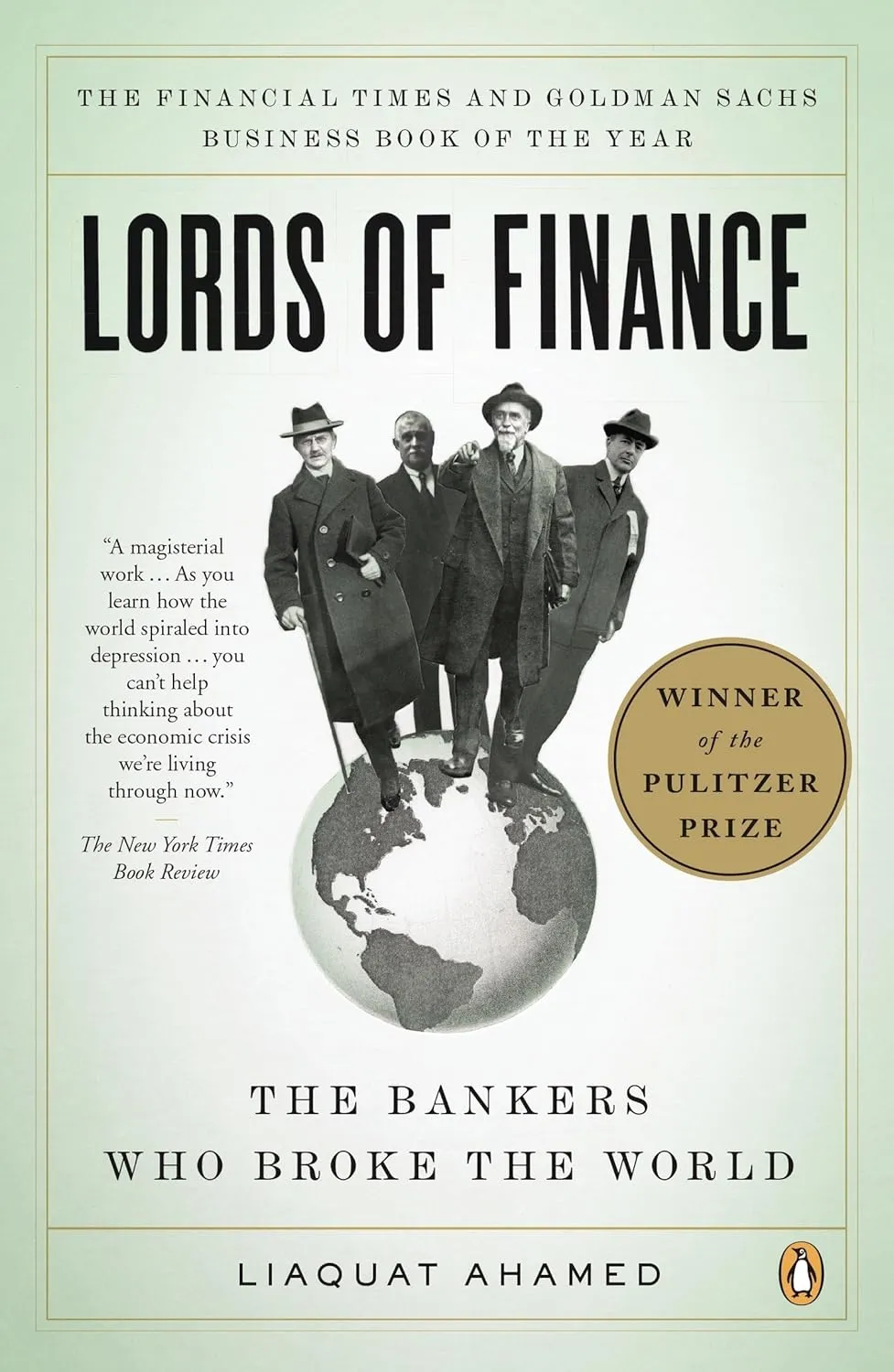
| Lords of Finance (Ahamed) | Central banking failures | Understanding the monetary policy side |
| Manias, Panics, and Crashes (Kindleberger) | Pattern of financial crises across centuries | Understanding the recurring cycle |
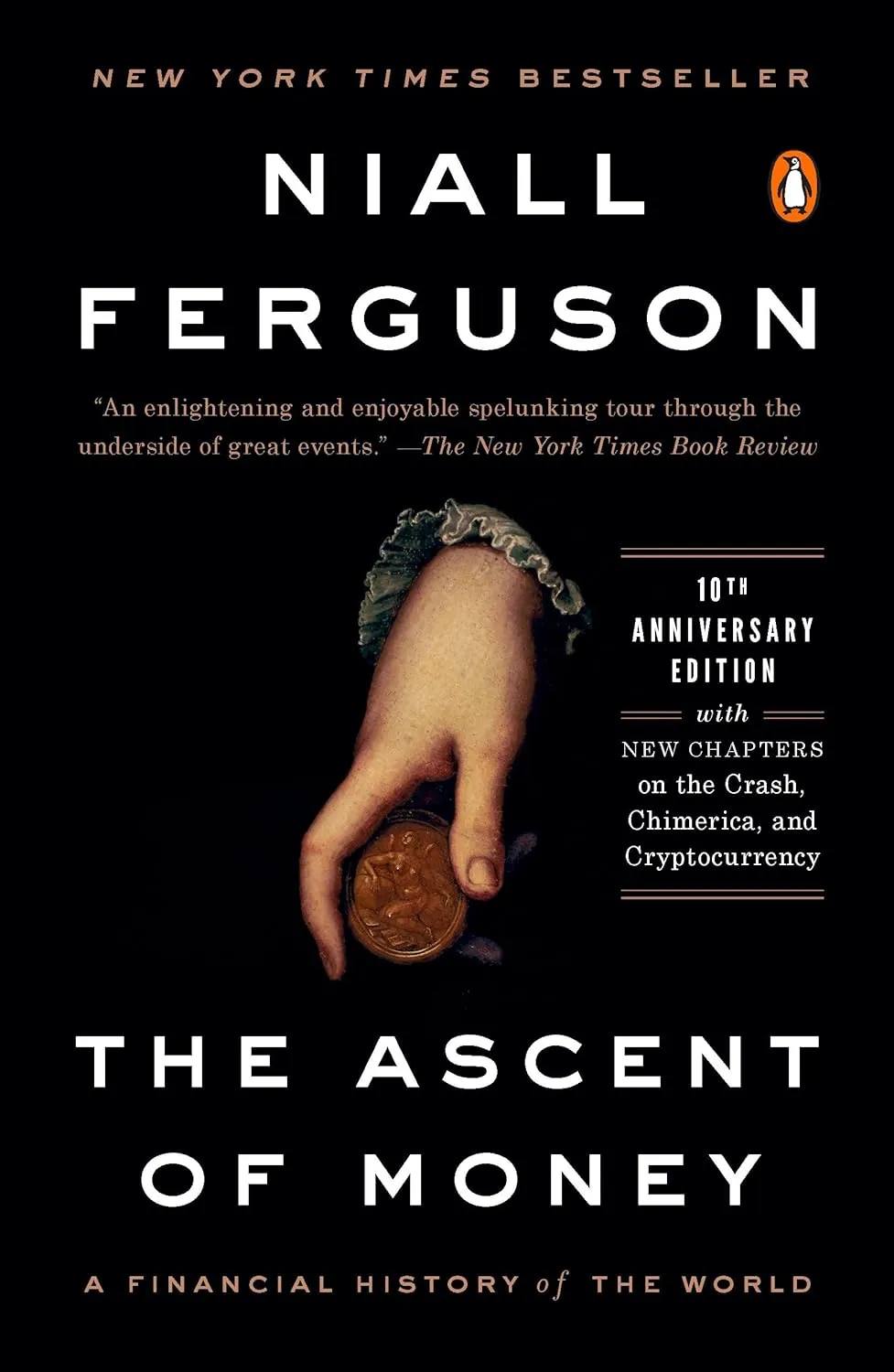
| The Ascent of Money (Ferguson) | Broad financial history | Understanding the evolution of finance |
| A Monetary History (Friedman/Schwartz) | Monetary policy and the Depression | The monetarist perspective |
Read Galbraith for the crash story, then Ahamed for the policy analysis, then Kindleberger for the broader pattern.
Implementation Guide
What to Do After Reading
Step 1: Check your leverage.
If you are using margin, stop. The single most important lesson from 1929 is that leverage turns a survivable loss into a total loss. Check whether your brokerage account has margin enabled and disable it if you do not actively use it.
Step 2: Evaluate your exposure to the current "New Era" narrative.
Are you overconcentrated in AI stocks or tech stocks because "this time is different"? Write down the thesis for each position. If the thesis depends on valuations that only make sense under a permanent "new era" assumption, consider reducing your position.
Step 3: Build a cash buffer.
During the 1929 crash, investors with cash were able to buy quality assets at fire-sale prices. Investors without cash were forced to sell at the worst possible time. Keep enough cash to take advantage of a major market decline.
Step 4: Read the balance sheets of companies you own.
Galbraith documented how investment trusts obscured their true leverage through complex holding company structures. Modern companies can obscure leverage through off-balance-sheet entities, operating leases, and complex derivatives. Read the 10-K, not just the press releases.
Step 5: Use the investment return calculator to model crash scenarios.
Model what happens to your portfolio in a 50% decline. Can you hold through it? If not, reduce your equity allocation now, before the crash, not during it.
Frequently Asked Questions
Q: Is this book still relevant in 2026?
A: More relevant than ever. The AI stock boom of 2023-2025 followed the exact pattern Galbraith describes: a genuine technological transformation, a "new era" narrative justifying any valuation, heavy retail participation, and concentrated positions in a few high-flying stocks. The January 2025 Nvidia crash, when the stock lost $600 billion in market cap in one day after DeepSeek's cheaper AI model emerged, was a direct echo of the 1929 dynamic.
Q: Is this better than Lords of Finance for understanding 1929?
A: Different. Galbraith focuses on the crash itself with vivid narrative detail. Ahamed's Lords of Finance provides deeper analysis of the monetary and central banking failures that turned the crash into the Depression. Read Galbraith for the crash story. Read Ahamed for the policy analysis.
Q: Why has this book never gone out of print?
A: Because every few years, another speculative bubble bursts and people reach for it. Galbraith himself wrote in a later foreword that each time the book was about to pass from bookstores, another speculative episode stirred interest in the history of boom and collapse.
Q: Was the crash caused by the crash itself, or by underlying economic weakness?
A: Galbraith argues it was a combination. The crash alone did not cause the Depression. Five structural vulnerabilities (bad income distribution, bad corporate structure, bad banking, trade imbalances, poor economic data) made the economy susceptible to the crash's effects. Without those vulnerabilities, the crash might have been a severe market correction rather than a decade-long depression.
Q: Could it happen again?
A: A crash of similar magnitude is less likely because of modern safeguards: FDIC insurance prevents bank runs, the Federal Reserve acts as lender of last resort, margin requirements are far stricter (50% versus 10% in 1929), and circuit breakers halt trading during panics. But speculative bubbles driven by leverage and "new era" narratives will continue to occur. The safeguards reduce the probability of another Depression. They do not eliminate the probability of another crash.
Final Verdict
Rating: 4.6/5
The Great Crash 1929 is the best single-volume account of America's most consequential financial event. Galbraith's combination of rigorous economic analysis and literary quality makes it uniquely readable. Essential for any investor who wants to understand where modern financial regulation came from, why leveraged speculation always ends badly, and how to recognize the "new era" narratives that precede every speculative bubble.
If you are investing in 2026, with AI stocks at nosebleed valuations and "this time is different" arguments everywhere, this 72-year-old book is more useful than most analysis written this year.
Get Your Copy
Paperback: Buy on Amazon
Kindle: Buy on Amazon
Audiobook: Buy on Amazon
Prices current as of publication date. Free shipping available with Prime.