*Disclosure: This article contains affiliate links. If you purchase through these links, we may earn a commission at no additional cost to you. We only recommend books we genuinely believe in.
Quick Overview
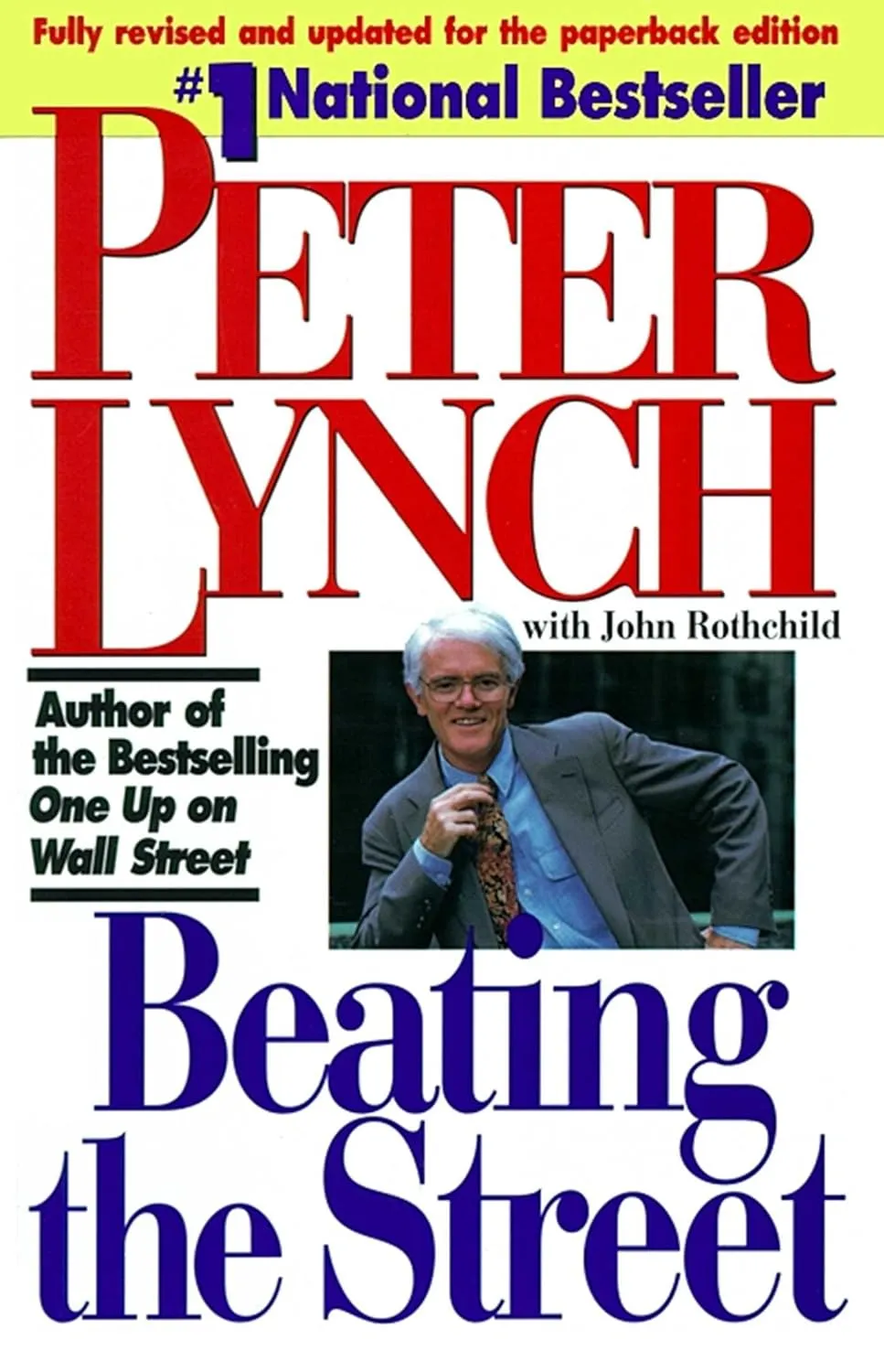
Peter Lynch ran the Fidelity Magellan Fund from 1977 to 1990 and compounded it at 29.2% annually. That is the best documented long-term track record of any mutual fund manager in history. Beating the Street, published in 1993 after his retirement, is his field manual. It walks through actual Magellan holdings, explains the reasoning behind each pick, and shows the research process in action. If you want to understand how a legendary stock picker actually made decisions, this is the closest you will get to sitting in his office.
Book Details
| Attribute | Details |
|---|---|
| Title | Beating the Street |
| Author | Peter Lynch with John Rothchild |
| Publisher | Simon & Schuster |
| Published | 1993 |
| Pages | 318 |
| Reading Level | Intermediate |
| Amazon Rating | 4.6/5 stars |
Get Your Copy
Paperback: Buy on Amazon
Kindle: Buy on Amazon
About the Author
Peter Lynch managed the Fidelity Magellan Fund from 1977 to 1990, delivering 29.2% annualized returns over 13 years. He retired at 46. In January 2025, Lynch spoke publicly about the current market landscape, reiterating his belief that "if you invest only in an index, you'll never beat it" and that brushing up on stock-picking skills is wise if you expect lower market returns going forward. He acknowledged that the rise of passive funds and over 5,000 stock indexes has changed the game, but maintained that individual investors who do their homework can still find an edge in less-followed companies.
Beating the Street is written from the perspective of someone who has already won and can now explain exactly how he did it without the pressure of managing $14 billion.
What Makes This Book Different from One Up On Wall Street
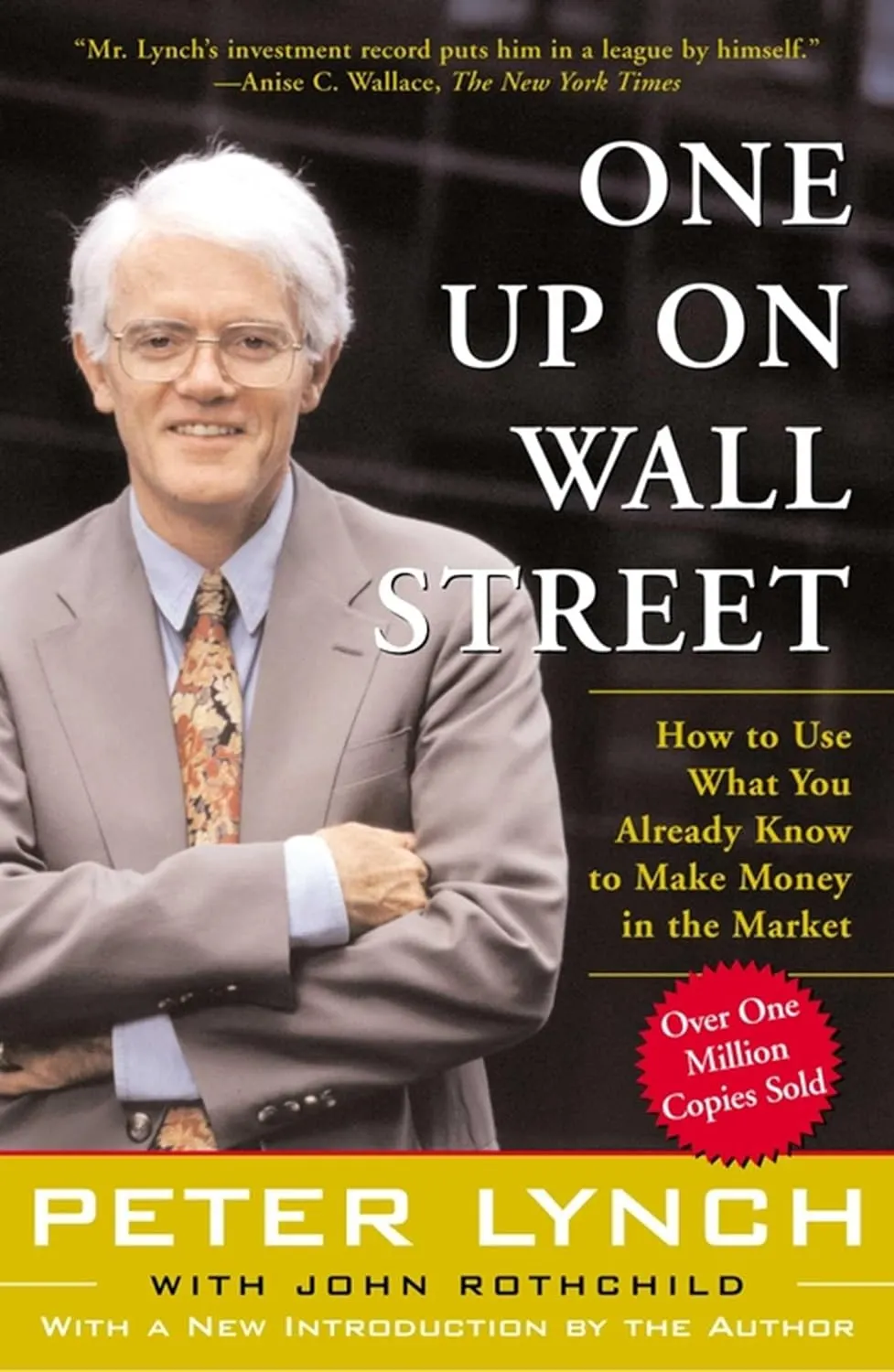
One Up On Wall Street is the philosophy book. Beating the Street is the case study book.
| Feature | One Up On Wall Street | Beating the Street |
|---|---|---|
| Focus | Framework and categories | Actual stock analysis |
| Examples | General consumer observations | Specific Magellan holdings |
| Audience | Anyone starting out | Investors ready to pick stocks |
| Tone | Introductory | More advanced practitioner |
Read One Up first, then Beating the Street for the implementation.
The Magellan Fund's Actual Stock Selection Process
Lynch reveals his actual research process in detail. His approach was not intuition or gut feeling. It was plain, uncomfortable work: reading, visiting companies, verifying financials, and sticking with positions when the market disagreed.
How He Screened Stocks
Lynch's practical filters when considering any new position:
His Category-Based Return Expectations
| Category | Target Return Before Selling | Typical Hold Period |
|---|---|---|
| Slow grower | Dividend yield + 5-10% | Indefinite if dividend stable |
| Stalwart | 30-50% gain | 2-4 years |
| Fast grower | 3-10x (multibagger) | Until story changes |
| Cyclical | 50-100% from trough | Full cycle (3-7 years) |
| Turnaround | 2-5x if turnaround succeeds | Until recovery complete |
| Asset play | 50-200% above book value | Until market recognizes value |
Case Studies: Lynch's Best Picks Analyzed
Fannie Mae (Federal National Mortgage Association)
Lynch's largest position at one point. His reasoning:
Result: Fannie Mae was one of the largest contributors to Magellan's returns in the late 1980s.
The most profitable stocks often look unexciting or complicated at first glance. Lynch's willingness to research a mortgage securitization company when most investors found it boring produced enormous returns. The lesson transfers directly to 2026: the best opportunities are frequently in companies the consensus finds dull.
Ford Motor Company
A classic Lynch cyclical play:
The cyclical investing rule Lynch emphasizes: for cyclicals, low P/E is often a sell signal (near the top of the cycle when earnings are peak) and high P/E is often a buy signal (near the bottom when earnings are depressed). This is counterintuitive and is the reason most investors lose money in cyclicals.
Savings and Loan Stocks (1990-1991)
After the S&L crisis, hundreds of savings institutions were trading below book value. Lynch bought a basket of the healthiest ones. Most recovered significantly as the industry stabilized.
The turnaround framework:
The Peter Lynch Investment Quiz
One of the most memorable sections. Lynch tests readers on whether they understand the companies they own or want to own:
Questions to answer before buying any stock:
| Question | Why It Matters |
|---|---|
| What does this company do? | Cannot evaluate what you do not understand |
| What has to happen for this stock to go up? | Defines the investment thesis |
| What are the obstacles? | Identifies what could go wrong |
| What is the P/E ratio? | Is it expensive relative to growth? |
| What is the long-term debt as a % of capital? | Balance sheet risk |
| Have earnings grown every year for 5 years? | Is this a real grower? |
| Are there any debt covenants that could threaten the company? | Hidden risks |
| Are insiders buying? | Alignment of interests |
If you cannot answer these questions, Lynch's advice is to not buy the stock and instead put the money in an index fund.
Lynch on Market Timing
Lynch's most important lesson for individual investors: do not try to time the market.
He presents data on what happens if you try to time the Dow Jones Industrial Average using various signals:
Hypothetical $1,000 investment in S&P 500 (1965-1990):
| Strategy | Ending Value |
|---|---|
| Fully invested always | $28,506 |
| Missed the 10 best months | $18,094 |
| Missed the 20 best months | $11,832 |
| Moved to T-bills each December | $9,497 |
The best market months are unpredictable and concentrated. Missing even 10 of them over 25 years cuts your return by more than a third. Market timers who move to cash "when the market looks scary" almost always miss these critical recovery months.
Lynch's rule: if you are not prepared to see your portfolio decline 25% without selling, you should not own stocks. This aligns with the dollar-cost averaging approach most passive investors follow today.
The School of Business Approach
One of the book's most celebrated sections. Lynch describes how a group of 7th-grade students from a Massachusetts school beat the S&P 500 for several years running by applying his framework.
Their process:
Their best picks included:
The research process is learnable. Children with no financial background, applying a simple framework to companies they knew from daily life, beat professional money managers. The advantage of the ordinary investor is real if they do the homework.
How to Apply Lynch's Method in 2026
Lynch's framework translates to modern investing with a few adjustments. In his January 2025 comments, Lynch acknowledged that markets have changed. Over 5,000 stock indexes and thousands of passive funds now exist, making it harder for stock pickers to find unique insights on large corporations. But the core principle holds: if you can articulate why a specific company's earnings will grow and the market is underestimating that growth, you have an edge.
Adjusting the PEG Ratio for Modern Companies
Lynch's PEG calculation assumed P/E was the right valuation metric. For software companies with R&D-heavy income statements and stock-based compensation, P/E understates real earnings power. Modern practitioners adjust by using operating EPS that adds back amortization of intangibles and recognizes stock-based compensation. This brings the PEG into a more meaningful range for companies like Visa, Microsoft, or Adobe.
For AI-driven companies like NVIDIA, the PEG looks reasonable on trailing EPS growth (180%+) but the capex cycle creates a different risk profile than the consumer-products growth Lynch knew. The framework flags these as partial fits rather than strong fits, reflecting the cyclical risk.
Screening for Lynch-Style Stocks in 2026
Free tools available:
Lynch-style screen parameters:
| Metric | Filter |
|---|---|
| P/E ratio | Under 20 |
| Earnings growth (5-year) | Above 15% |
| PEG ratio | Below 1.5 |
| Debt/equity | Below 50% |
| Insider buying (12 months) | Yes |
| Analyst coverage | Low (under 5 analysts) |
| Market cap | Under $5 billion (less efficient) |
This screen will typically return 20-50 candidates requiring deeper research. A 2026 analysis by invest-like.com found that stocks passing Lynch's framework with a strong fit currently include Visa, Microsoft, Mastercard, Adobe, and ASML. These are large-cap quality compounders where growth has matured but remains above 12%, with clean balance sheets and PEG ratios between 1.0 and 1.5.
Building a Lynch-Style Portfolio
Lynch never owned fewer than 100 stocks in Magellan. Individual investors cannot replicate that breadth. A practical approach:
| Portfolio Component | Allocation | Rationale |
|---|---|---|
| Index fund core | 60-70% | Market return guaranteed; behavioral anchor |
| Lynch-style individual stocks | 20-30% | Consumer-edge picks with homework |
| Cash for opportunities | 5-10% | Available to buy during corrections |
This hybrid approach captures the index's reliability while allowing application of Lynch's consumer edge in a portion of the portfolio. If you want to see how the passive core works in practice, read our guide to the three-fund portfolio.
Strengths & Weaknesses
What We Loved
Areas for Improvement
Who Should Read This Book
Highly Recommended For
Probably Not For
Frequently Asked Questions
Q: Should I read this before or after One Up On Wall Street?
A: After. One Up provides the framework. Beating the Street provides the application. Reading Beating the Street without the framework context reduces its value significantly.
Q: Is Lynch's approach still viable given information efficiency improvements?
A: For large-cap stocks, information is priced in quickly. For smaller, less-followed companies, the Lynch consumer-edge approach still produces an information advantage. Lynch himself said in January 2025 that stock-picking skills remain wise if you expect lower index returns. Focus on companies with under 10 analyst estimates on consensus platforms.
Q: What are Lynch's views on diversification?
A: He owned hundreds of stocks in Magellan because he could not always be certain which would be the biggest winners. For individual investors with less research capacity, he suggests 5-15 carefully researched positions plus an index fund core.
Q: How does the PEG ratio work for tech companies in 2026?
A: The traditional PEG ratio understates earnings power for software companies with heavy R&D and stock-based compensation. Modern practitioners use adjusted operating EPS to get a more accurate PEG. This is an adaptation Lynch did not need in 1993 but is standard practice today.
Final Verdict
Rating: 4.5/5
Beating the Street is the best available window into how Peter Lynch actually operated as a stock picker. The case studies, cyclical analysis, and school project chapter make it more practically instructive than most investing books. Lynch himself confirmed in 2025 that his framework still applies, with adjustments for modern market structure. Read it after One Up On Wall Street as the natural implementation companion.
If you want to start applying these ideas, pick up your copy and pair it with our investment return calculator to model what disciplined stock research could mean for your portfolio over time.
Get Your Copy
Paperback: Buy on Amazon
Kindle: Buy on Amazon
Prices current as of publication date. Free shipping available with Prime.