*Disclosure: This article contains affiliate links. If you purchase through these links, we may earn a commission at no additional cost to you. We only recommend books we genuinely believe in.
Quick Overview
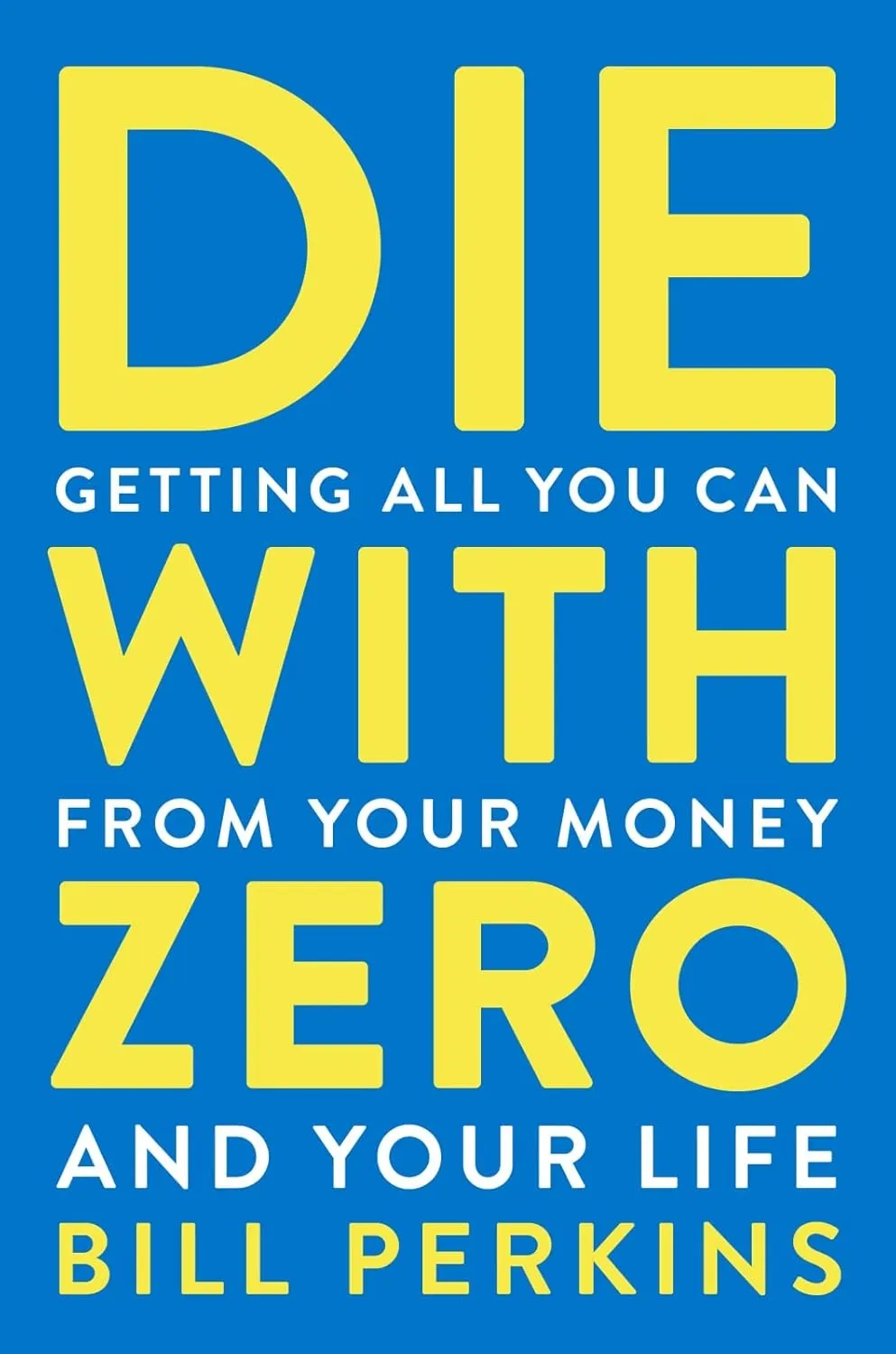
One-third of Americans increase their net worth after retirement. They save for decades, defer the trips and experiences they dreamed about, and then die with more money than they ever had while working. Bill Perkins wrote Die With Zero to attack that pattern. His argument: money has no value if you never convert it into experiences. Every dollar you die with is a dollar you traded irreplaceable time and health for, then never used. The book has sparked more debate in the personal finance community than anything published in the last decade, and the pushback from financial advisors is worth examining before you adopt the philosophy.
Book Details
| Attribute | Details |
|---|---|
| Title | Die With Zero |
| Author | Bill Perkins (with Marina Krakovsky and economist Kay-Yut Chen) |
| Publisher | Houghton Mifflin Harcourt |
| Published | 2020 |
| Pages | 243 |
| Reading Level | Beginner |
| Amazon Rating | 4.4/5 stars |
Get Your Copy
Hardcover: Buy on Amazon
Kindle: Buy on Amazon
Audiobook: Buy on Amazon
About the Author
Bill Perkins is a hedge fund manager specializing in energy commodities through his firm Skylar Capital. He has played high-stakes poker professionally at the World Series of Poker. His lifestyle philosophy of maximizing experiences over accumulation is well documented: he has spent millions on concerts, adventures, and experiences. His personal net worth is estimated between $110 million and $500 million as of 2025, which creates an interesting tension with his advice that we will address in the critiques section. The book was co-written with Marina Krakovsky, with economic modeling by Kay-Yut Chen, though only Perkins appears on the cover.
Key Concepts & Frameworks
The Memory Dividend
Perkins's central concept: experiences produce memories that keep yielding positive returns long after the experience ends. A $10,000 trip taken at 35 gives you the trip itself, plus decades of memories that resurface through photos, conversations, and associations.
The memory dividend has a yield curve. Entertainment peaks immediately and fades. Formative experiences, relationships, and skills yield returns for decades. This is why Perkins argues that spending $5,000 on a backpacking trip at 30 produces more lifetime value than spending $10,000 on the same trip at 70, when health limitations reduce what you can actually do.
Research in behavioral finance supports this. Studies on experiential vs. material purchases consistently find that experiences produce more lasting happiness than possessions. Experiences are less subject to hedonic adaptation (you stop noticing a new car within months). Experiences strengthen social bonds through shared memories. Negative aspects of experiences fade in memory while positive aspects strengthen.
The Health-Wealth-Time Triangle
Perkins frames the core problem as a resource mismatch across life stages:
| Life Stage | Health | Wealth | Time |
|---|---|---|---|
| Young (20s-30s) | High | Low | High |
| Middle (40s-50s) | Medium-High | Medium-High | Medium |
| Pre-retirement (60s) | Medium | High | Medium |
| Retirement (70s+) | Low-Medium | High | High |
In youth, you have health and time but no money. In middle age, you have money and health but little time. In old age, you have money and time but declining health. Most financial advice optimizes for accumulating money for retirement, when health is the scarcest resource and limits what money can buy. Perkins argues for front-loading experience spending into the high-health years rather than deferring everything to retirement.
The Nine Rules
Perkins structures the book around nine rules:
The gift-timing argument in Rule 5 is one of the most practical. If you plan to leave $500,000 to each child, giving them $100,000 at 30 (for a down payment) and $100,000 at 40 (for a career pivot) produces far more lifetime value than $500,000 at your death when they are 60 and already established.
Practical Applications
Calculating Your Financial Floor
Before applying any spending philosophy, you need to know your floor. Perkins is explicit that the Die With Zero approach only works once your foundation is secure.
Use our retirement number calculator to estimate your minimum adequate income target. Before spending liberally on experiences, ensure:
The Life Experience Bucket Exercise
Perkins recommends writing down 25 things you want to experience in your lifetime. For each, note the optimal age window, the cost, and the barriers. This exercise often reveals that many desired experiences require action in the next 5 to 10 years, not in some distant retirement.
Spend-Down Planning in Retirement
If you are already retired or near retirement, the Die With Zero philosophy means creating an actual spend-down plan rather than preserving capital indefinitely. Tools include:
Research from the Employee Benefit Research Institute shows retirees typically spend 20% less in their first 5 years of retirement than in their final 5 working years, 40% less by their mid-70s, and over 50% less by their 80s. Most financial plans project flat or rising spending. The real pattern is spending that peaks early and declines as health limits activity.
Strengths & Weaknesses
What We Loved
Areas for Improvement
Who Should Read This Book
Highly Recommended For
Probably Not For
Comparison to Similar Books
vs. The Psychology of Money by Morgan Housel
| Aspect | Perkins | Housel |
|---|---|---|
| Focus | Spending optimization | Behavioral psychology of money |
| Core thesis | Die with zero | Behavior matters more than knowledge |
| Tone | Provocative, prescriptive | Reflective, observational |
| Best for | Over-savers who need permission to spend | Anyone trying to understand money behavior |
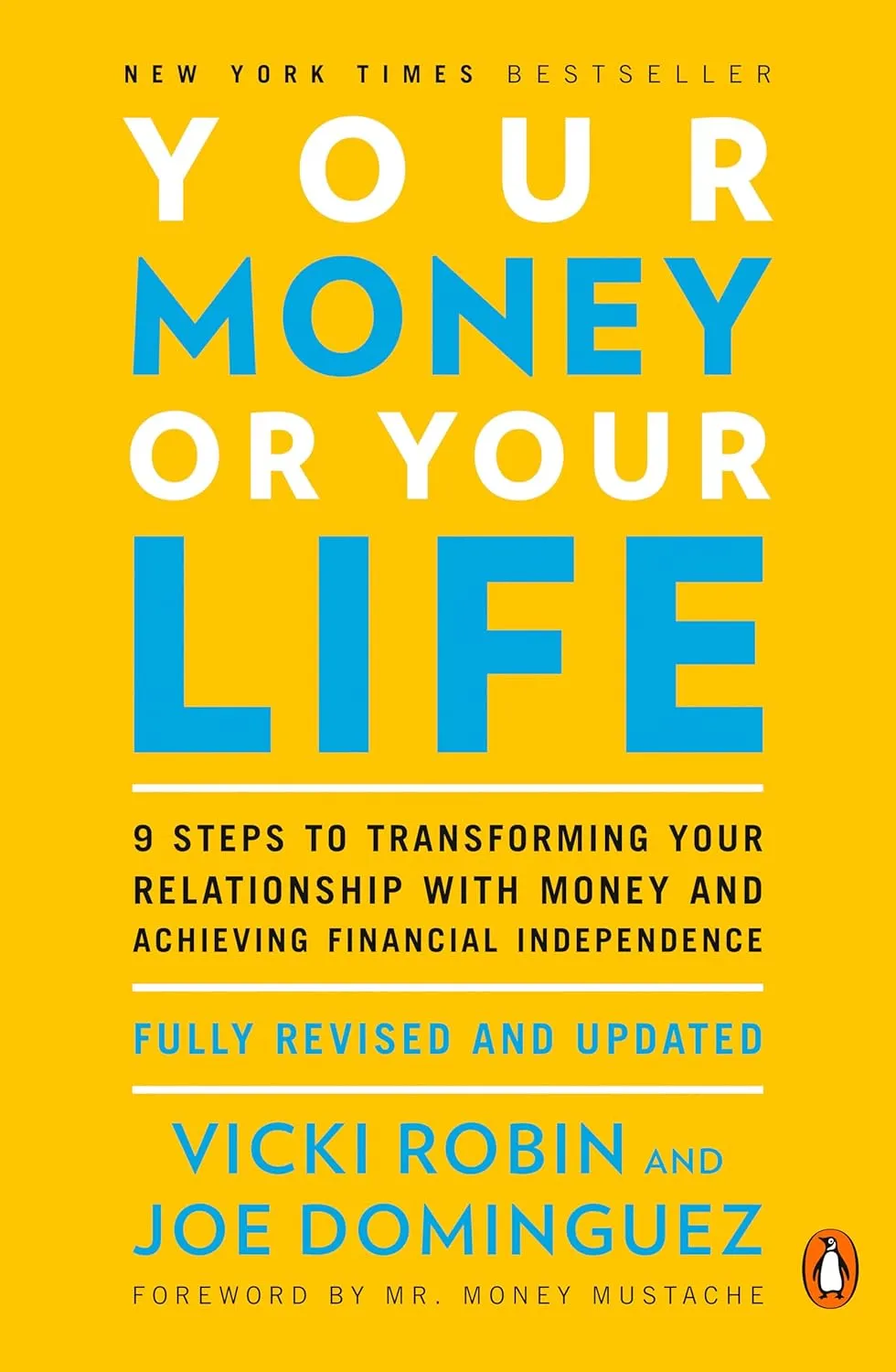
vs. Your Money or Your Life by Vicki Robin
| Aspect | Perkins | Robin |
|---|---|---|
| Approach | Spend down aggressively | Track life energy, spend consciously |
| Spending philosophy | Maximize experiences by age | Align spending with values |
| Income focus | Minimal | Central (true hourly wage) |
| Best for | Those who already have enough | Those building awareness of spending |
Implementation Guide
90-Day Die With Zero Action Plan
Month 1: Foundation Check
Month 2: Experience Audit
Month 3: Spend-Down Planning
Frequently Asked Questions
Q: Does Perkins actually mean literally die with zero?
A: No. He means optimize your financial plan toward spending down wealth during high-health years rather than accumulating indefinitely. A small buffer for uncertainty is rational. A $2 million estate when you spent your 30s and 40s working instead of traveling is what he critiques.
Q: Is this book appropriate for people who are not yet financially independent?
A: No. The book explicitly assumes readers have covered their financial foundation. For those still building savings and paying off debt, the spending philosophy should be deferred until the foundation is secure.
Q: How does this reconcile with the standard FIRE advice?
A: FIRE is about achieving financial independence and removing the requirement to work. Die With Zero adds: once you achieve it, optimize for experiences rather than continued accumulation. The two are complementary.
Q: What about the criticism that Perkins himself is worth hundreds of millions?
A: This is a fair critique. When you have that level of wealth, depleting 80% of assets still leaves you living luxuriously. For mid-to-high net worth retirees, following the advice literally could mean poverty in old age. The philosophy is sound; the execution requires honest assessment of your own circumstances.
Final Verdict
Rating: 4.4/5
Die With Zero is the most important counterbalance to the frugality-first personal finance canon. The memory dividend concept and health-wealth-time triangle are genuinely valuable regardless of whether you accept the extreme conclusion. For financially secure individuals who have been defaulting to accumulation without examining the purpose, this book can change how you think about money and time. The critiques from financial advisors about asymmetric risk and the author's own wealth disconnect are real and worth heeding. Read it, absorb the framework, then adjust the dial to your own circumstances rather than taking it to zero.
Get Your Copy
Hardcover: Buy on Amazon
Kindle: Buy on Amazon
Audiobook: Buy on Amazon
Prices current as of publication date. Free shipping available with Prime.