This review is for informational purposes only and does not constitute financial advice.
A CFP Candidate Who Talks Like Your Money Buddy
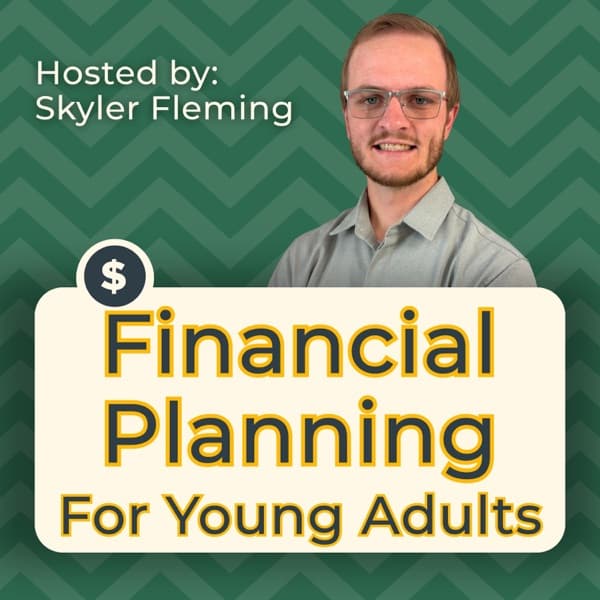
Most financial planning content for young adults is either too basic or too advanced. It either explains what a savings account is, which a 25-year-old already knows, or it dives into tax-loss harvesting and backdoor Roth conversions, which a 25-year-old does not need yet. Financial Planning for Young Adults sits in the middle. The host, Skyler Fleming, is a CFP candidate who breaks down the seven core areas of financial planning into steps a young adult can actually follow, and he does it without jargon or guilt.
The show launched in October 2025 and publishes weekly. Fleming describes himself as your money buddy, and the tone matches. He is a financial planner who started a new full-time role at Abundo Wealth in 2026, and he brings that real-world practice into the episodes. The show is currently on a summer hiatus as of mid-2026, which Fleming announced transparently, explaining that stepping back from something you love for a season is not failure but good bandwidth management.
If you are in your 20s and making real money for the first time, this show covers the decisions you are facing right now. If you want a get-rich-quick pitch, you will not find it here.
What the Show Does Well
The case study format is the strongest part of the show. The market downturn episode introduced two coworkers, Dani and Brett, who started investing at the same time with the same amount of money and made two very different decisions when the 2025 tariff turmoil hit. One stayed consistent. One tried to time the market. The case study showed exactly how staying the course beats market timing every time, with real numbers. That kind of specific, story-driven explanation is more useful than a generic "do not time the market" instruction.
The "Definitive Guide to Getting Started with Financial Planning" episode walked through all seven core CFP areas in a way that makes sense for someone in their 20s. Fleming covered risk management and insurance, including why disability coverage matters more than most young adults realize, how to think about term life insurance, and how to prioritize debt by interest rate. He also introduced Lisa, a 26-year-old accountant who spent a year and a half thinking a 401k and a Roth IRA were the same thing, and walked through how she got both accounts working for her.
For the retirement account basics Fleming covers, our guide to whether a 22-year-old should choose a 401k or Roth IRA breaks down the same decision in a format you can follow with your own numbers.
The Action-Item Structure
Each episode ends with a specific action item. The investing plan episode asked listeners to write their investing plan that week, including what they are investing for, where they are investing, how much they are contributing, and when those contributions happen. That kind of concrete homework is what separates a show that informs from a show that changes behavior. Most financial podcasts tell you what to think. This one tells you what to do next.
This approach aligns with research on financial behavior. The Financial Industry Regulatory Authority's National Financial Capability Study found that young adults who take specific financial actions, like writing down a plan or automating contributions, are more likely to build wealth than those who only consume financial content. Fleming's action-item format targets that gap directly.
For the Coast FI concept Fleming covers in his YouTube content, our Coast FI calculator lets you calculate the number where your investments grow on their own and you can stop contributing, which is the milestone he references most often.
Where the Show Has Limits
The show is on summer hiatus as of mid-2026. Fleming announced the break in a transparent episode explaining that he started a new job, his wife also started a new job, they moved to a new state, and a packed summer of travel made it impossible to keep the weekly cadence. He said the podcast is not disappearing and he plans to return. New listeners will find the existing catalog useful, but subscribers caught up on the archive are waiting for new episodes.
The show is solo-hosted, which means it lacks the back-and-forth that a panel or co-hosted show provides. Fleming is clear about his viewpoint and the show reflects it consistently, but there is no one to push back or offer a competing take. The episodes are short, usually 10 to 20 minutes, which is efficient but means some topics get less depth than they deserve.
The show does not have an Apple Podcasts rating yet, which reflects its small audience. The production is professional but simple, without the editing or sound design of larger shows.
Who Should Listen
The show fits young adults in their 20s who are making real money for the first time and need to figure out taxes, investing, debt, and retirement without jargon. It suits listeners who want a CFP-level education delivered in plain English, and who respond to action items rather than passive listening. A listener on the market downturn episode would hear two coworkers make opposite decisions and see the math behind why one won, which is more instructive than being told to stay the course.
It fits less well for teens (start with Main Character Money or Teen Money Matters), anyone who wants a multi-host panel format, or listeners who need advanced tax or estate planning content. For a similar show backed by a major institution, In My Finance Era from Vanguard covers comparable ground for early-career investors.
Getting Started
Begin with the "Definitive Guide to Getting Started with Financial Planning" episode for the seven-area framework, then the market downturn episode for the case study on why staying consistent beats timing the market. If you are deciding between retirement accounts, use our Roth vs Traditional IRA calculator to see which one wins for your income and timeline, because the show's guidance only pays off when you run your own numbers.
Financial Planning for Young Adults will not make you a CFP. It will give you the framework and the action items to handle the decade where most financial mistakes get made, which is the decade that matters most.
This post is for informational purposes only and does not constitute financial advice.