*Disclosure: This article contains affiliate links. If you purchase through these links, we may earn a commission at no additional cost to you. We only recommend books we have personally read and genuinely believe in.
Quick Overview
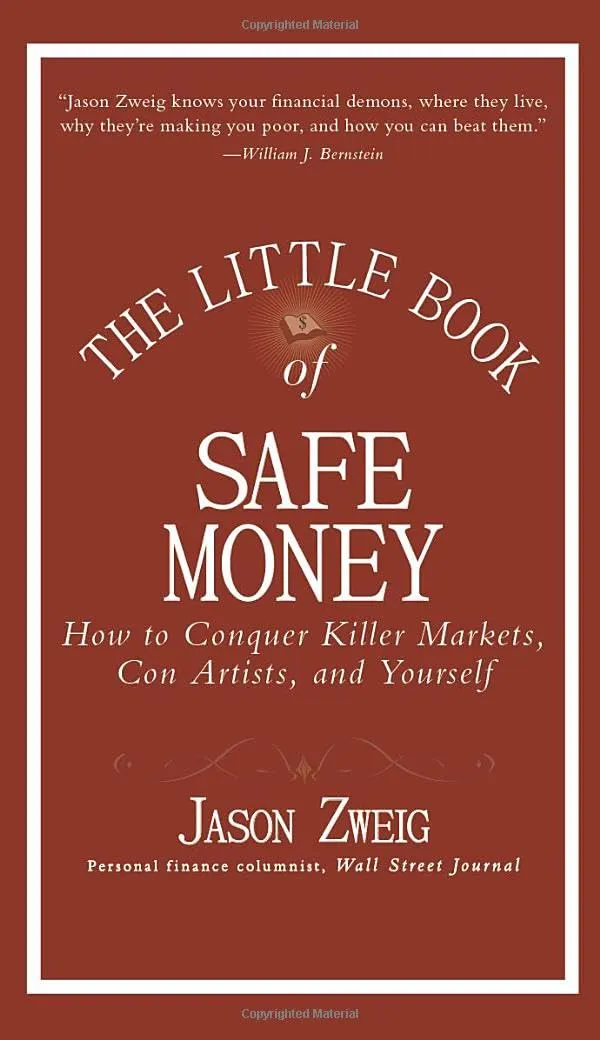
Jason Zweig wrote The Little Book of Safe Money in the aftermath of the 2008 financial crisis, when Madoff's Ponzi scheme was still unfolding and the S&P 500 had fallen 57% from peak to trough. The book addresses three threats every investor faces: volatile markets, financial fraud, and their own psychology. I read it during a period of portfolio stress, and Zweig's calm, practical tone helped me reframe risk management as a process rather than a reaction. The 2025 investment landscape, with TIPS real yields near 2%, evolving crypto fraud schemes, and persistent behavioral biases, tests whether the book's frameworks still apply. Most do. Some need updating for a world Zweig did not anticipate.
Book Details
| Attribute | Details |
|---|---|
| Title | The Little Book of Safe Money |
| Author | Jason Zweig |
| Publisher | Wiley |
| Published | 2009 |
| Pages | 224 |
| Reading Level | Beginner to Intermediate |
| Amazon Rating | 4.3/5 stars |
Get Your Copy
Hardcover: Buy on Amazon
Kindle: Buy on Amazon
About the Author
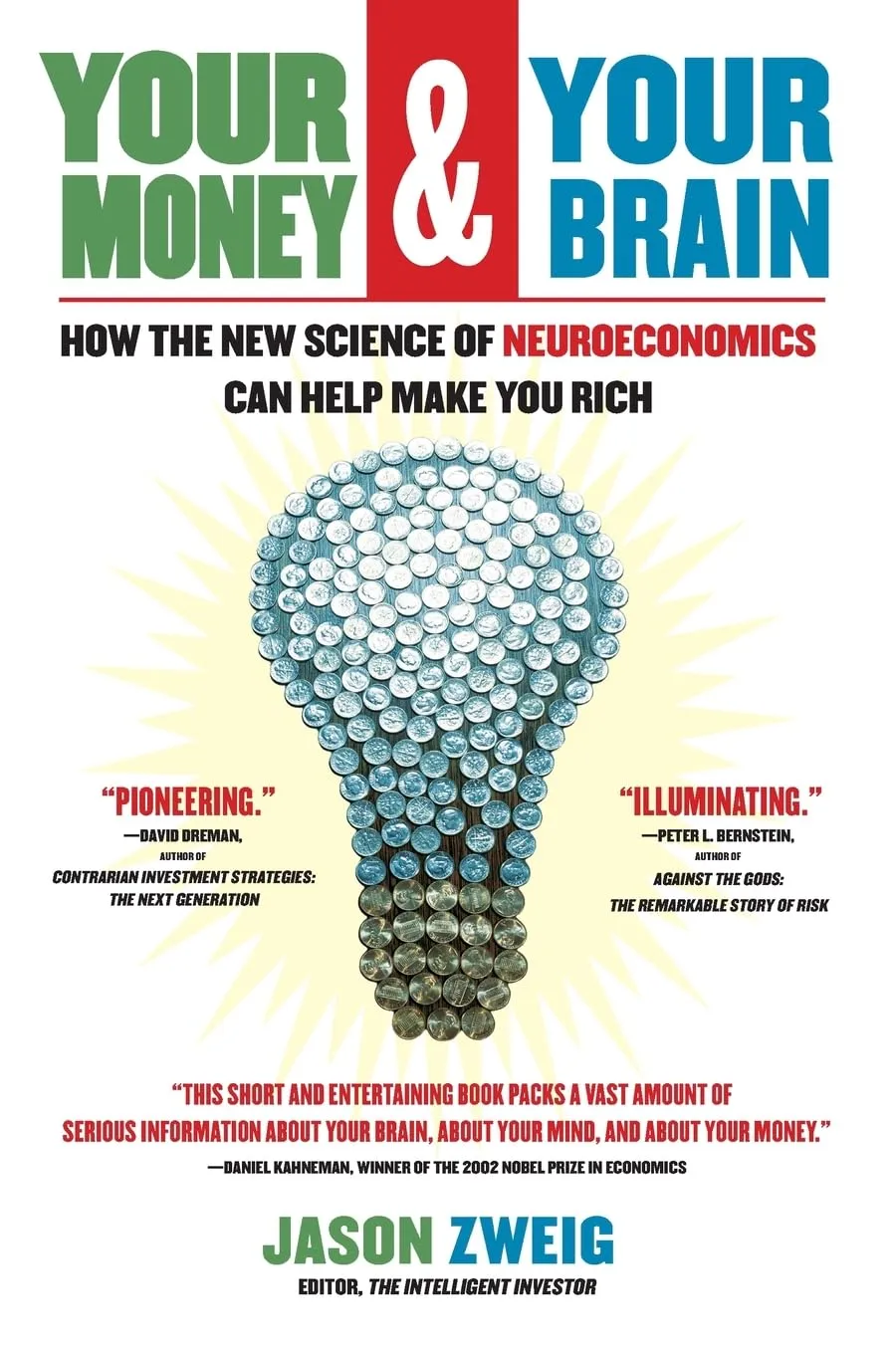
Jason Zweig is the personal finance columnist for The Wall Street Journal and the editor of the revised edition of Benjamin Graham's The Intelligent Investor (2003). He wrote Your Money and Your Brain (2007), which applies neuroscience to investing decisions. He has covered investing for Time, Money, and Forbes. His credentials matter because the book draws on all three areas: Graham's value investing framework, behavioral neuroscience, and decades of financial journalism.
Zweig is not a theorist. He is a working journalist who has talked to thousands of investors, advisors, and fraudsters. The book reflects that practical experience. The examples are real, the advice is specific, and the tone is direct.
Enemy 1: The Markets
Zweig's first principle: match your assets to your liabilities. Money needed in the next 1-3 years should never be in stocks. Money needed in 3-7 years should be in bonds. Only money with a 7+ year horizon can safely bear equity risk.
| Time Horizon | Appropriate Asset | Why |
|---|---|---|
| 0-1 year | Cash, money market | Cannot risk any loss |
| 1-3 years | Short-term bonds, CDs | Small loss acceptable; needs stability |
| 3-7 years | Intermediate bonds, balanced funds | Recovers from moderate losses |
| 7-15 years | Diversified stocks + bonds | Can recover from major crashes |
| 15+ years | Majority equities | Full market exposure appropriate |
This framework is timeless. The 2025 environment reinforces it. The S&P 500 returned over 17% for the year, but Q4 saw a sharp slowdown with GDP growing at only 0.7% annualized. Investors who needed money in Q4 and had it in stocks faced potential losses at exactly the wrong time. Investors who followed Zweig's asset-liability matching framework had their short-term needs covered by cash and bonds.
The Sequence of Returns Risk
The order of investment returns matters enormously for investors drawing down their portfolio. Two investors with identical average returns but different sequences can have dramatically different outcomes:
| Year | Investor A Returns | Investor B Returns |
|---|---|---|
| 1 | +25% | -25% |
| 2 | +20% | -20% |
| 3 | +15% | +15% |
| 4 | -20% | +20% |
| 5 | -25% | +25% |
| Average return | +3% | +3% |
| Final portfolio (withdrawing $5,000/year) | Higher | Lower |
Investor B, who experienced bad returns early in retirement, is far worse off despite identical average returns. This sequence of returns risk is why defensive positioning near and during retirement matters.
The Safe Withdrawal Rate
The 4% rule assumes a 30-year retirement. Zweig adds caveats: in years when the market is down 20%+, consider reducing withdrawals to 3-3.5%. Maintain a 2-year cash buffer so you never have to sell stocks during a crash. Build in flexibility to reduce spending by 15-20% if needed.
Enemy 2: Financial Fraud and Con Artists
Written as Madoff's $65 billion Ponzi scheme was being revealed, Zweig provides the most practical fraud-detection guide in any personal finance book I have read.
The Madoff Lessons
Every feature that attracted investors to Madoff was a red flag:
| Madoff "Feature" | Why It Was a Red Flag |
|---|---|
| Consistent 10-12% annual returns | No legitimate strategy produces consistent returns regardless of market conditions |
| Almost no losing months | Markets always have losing months; consistent gains signal manipulation |
| Exclusive, not open to everyone | Created artificial scarcity to reduce scrutiny |
| Secretive about strategy | Legitimate managers explain their approach |
| Used own affiliated custodian | No independent verification of assets |
| Used tiny, obscure auditor | Serious funds use major accounting firms |
| Refused third-party audits | Nothing legitimate to hide |
The Seven Warning Signs Today
The fraud landscape has evolved since 2009. Crypto scams, social media pump-and-dump schemes, and fake AI trading bots now dominate SEC enforcement actions. But Zweig's seven warning signs still apply:
| Warning Sign | 2009 Example | 2025 Example |
|---|---|---|
| 1. Guaranteed returns | "Never had a losing year" | "AI trading bot guarantees 15% monthly" |
| 2. Exclusive access | "Only for select clients" | "Limited spots in our crypto presale" |
| 3. Pressure to act quickly | "Window closes Friday" | "Token launch in 24 hours" |
| 4. Secrecy about strategy | "Proprietary methodology" | "Algorithm is confidential" |
| 5. Unregistered investments | Not registered with SEC | Unregistered crypto offerings |
| 6. Unverified custodian | Manager's own affiliated entity | "Self-custody" with no third-party verification |
| 7. Too consistent | Returns uncorrelated with market | Stablecoin yields uncorrelated with any risk |
The principles are identical. The delivery mechanism has changed.
The Due Diligence Checklist
Before investing with any advisor or fund:
| Check | How to Verify |
|---|---|
| Registration | SEC's Investment Adviser Public Disclosure (IAPD) database |
| Disciplinary history | FINRA BrokerCheck |
| Audited statements | Require audited financials from a recognized firm |
| Third-party custody | Assets held at recognized independent custodian (Fidelity, Schwab, etc.) |
| Strategy makes sense | Can the manager explain exactly how returns are generated? |
| References | Talk to clients who have been with them 5+ years |
Enemy 3: Yourself
Zweig draws on his expertise in behavioral finance to identify the psychological errors that destroy otherwise sound investment plans.
Recency Bias
Investors overweight recent experience. After a crash, they assume it will continue. After a bull market, they assume it will continue. Both assumptions are wrong. Mutual fund flow data consistently shows investors pouring money into equities near peaks and pulling money out near troughs. The average investor earns approximately 1.5-2% less annually than the funds they own, purely from this timing behavior.
Overconfidence in Predictions
Studies show professional forecasters predict market direction correctly only slightly more than 50% of the time, barely better than a coin flip. Zweig's prescription: never make a portfolio decision based on a prediction about market direction. Position based on your time horizon and risk tolerance.
The Endowment Effect
People value things more highly simply because they own them. The test: "Would I buy this position today at today's price?" If the answer is no, sell regardless of the purchase price. The purchase price is a sunk cost and should not influence the decision.
Social Proof
When everyone around you is investing in a particular asset, the social pressure to participate is enormous. Zweig's rule: "When everyone is confident, be cautious. When everyone is fearful, be opportunistic." This is psychologically nearly impossible to execute during actual market extremes, which is precisely why it works.
Loss Aversion and Under-Diversification
Investors hold concentrated positions in employer stock, familiar companies, or recently successful investments because selling something that has worked feels risky and selling something that has lost feels devastating. No single stock should exceed 5% of a portfolio. No single sector should exceed 25%.
The Safe Portfolio Construction
Zweig's portfolio guidance is straightforward:
| Asset Class | Recommended Range | Vehicle |
|---|---|---|
| U.S. equities | 30-60% | Total market index fund |
| International equities | 15-25% | Total international index fund |
| U.S. bonds | 15-40% | Total bond market index fund |
| TIPS | 5-15% | Inflation-protected bonds |
| Cash | 3-10% | Money market / short-term Treasuries |
TIPS: The 2025 Update
Zweig recommends TIPS for the safe portion of every portfolio. The 2025 data validates this recommendation. According to tipswatch.com, the 10-year TIPS real yield ended 2025 at approximately 1.90%, down from 2.23% at the start of the year but still attractive by historical standards. A new 10-year TIPS auctioned in July 2025 got a real yield of 1.985% with solid investor demand.
For all of 2025, TIPS delivered a total return of 5.8%, outperforming the 5.3% return on comparable maturity straight Treasurys, according to Lark Research. With PCE inflation running at 2.9% year-over-year in December 2025, the inflation protection was valuable.
The breakeven inflation rate (the rate at which TIPS and nominal Treasurys deliver the same return) was approximately 2.41% for the 10-year maturity. With actual inflation above that level, TIPS outperformed.
The Emergency Fund First
Before any portfolio construction, Zweig insists on the emergency fund: 6-12 months of living expenses in FDIC-insured savings, accessible within 24-48 hours, separate from investment accounts. Without this foundation, a job loss or medical emergency forces portfolio liquidation at potentially the worst possible time. Read our guide on emergency funds for specific guidance on how much to save.
How to Find a Trustworthy Advisor
The Fiduciary Standard
| Standard | Obligation | Who Is Covered |
|---|---|---|
| Fiduciary | Must act in client's best interest at all times | Registered Investment Advisors (RIAs) |
| Suitability | Must make "suitable" recommendations | Broker-dealers, insurance agents |
Always ask: "Are you a fiduciary, and will you sign a written statement confirming you will act as my fiduciary at all times?" Any hesitation is disqualifying.
The Compensation Question
| Compensation Model | Incentive |
|---|---|
| Fee-only (hourly or flat fee) | No product incentive; pure advice |
| AUM fee (% of assets managed) | Incentive to grow assets |
| Commission-based | Incentive to sell products that generate commissions |
| Fee-based (both) | Mixed incentives; less transparent |
Zweig strongly prefers fee-only advisors.
Zweig's Rules for Safe Investing
| Rule | Application |
|---|---|
| Match assets to time horizons | Never have in stocks what you will need in 3 years |
| Maintain a 2-year cash buffer in retirement | Avoid forced selling during crashes |
| Maximum 5% in any single stock | Concentration is the #1 risk for individual investors |
| Never invest in anything you cannot explain clearly | If you cannot explain it, you do not understand the risk |
| Require independent custody | Assets must be verifiable by a third party |
| Verify before trusting | Use IAPD, BrokerCheck, and audited statements |
| Beware consistent returns | No legitimate strategy is this smooth |
| Fight recency bias | Make decisions based on time horizon, not recent performance |
| Automate your savings | Remove emotional decisions from the process |
| Keep costs below 0.5% annually | Fees compound as surely as returns |
Strengths & Weaknesses
What We Loved
Areas for Improvement
Who Should Read This Book
Highly Recommended For
Probably Not For
Comparison to Similar Books
| Book | Focus | Best For |
|---|---|---|
| The Little Book of Safe Money | Fraud, behavior, defensive investing | Wealth protection |
| The Intelligent Investor (Graham) | Value investing philosophy | Foundational investing framework |
| Your Money and Your Brain (Zweig) | Neuroscience of investing | Understanding behavioral biases |
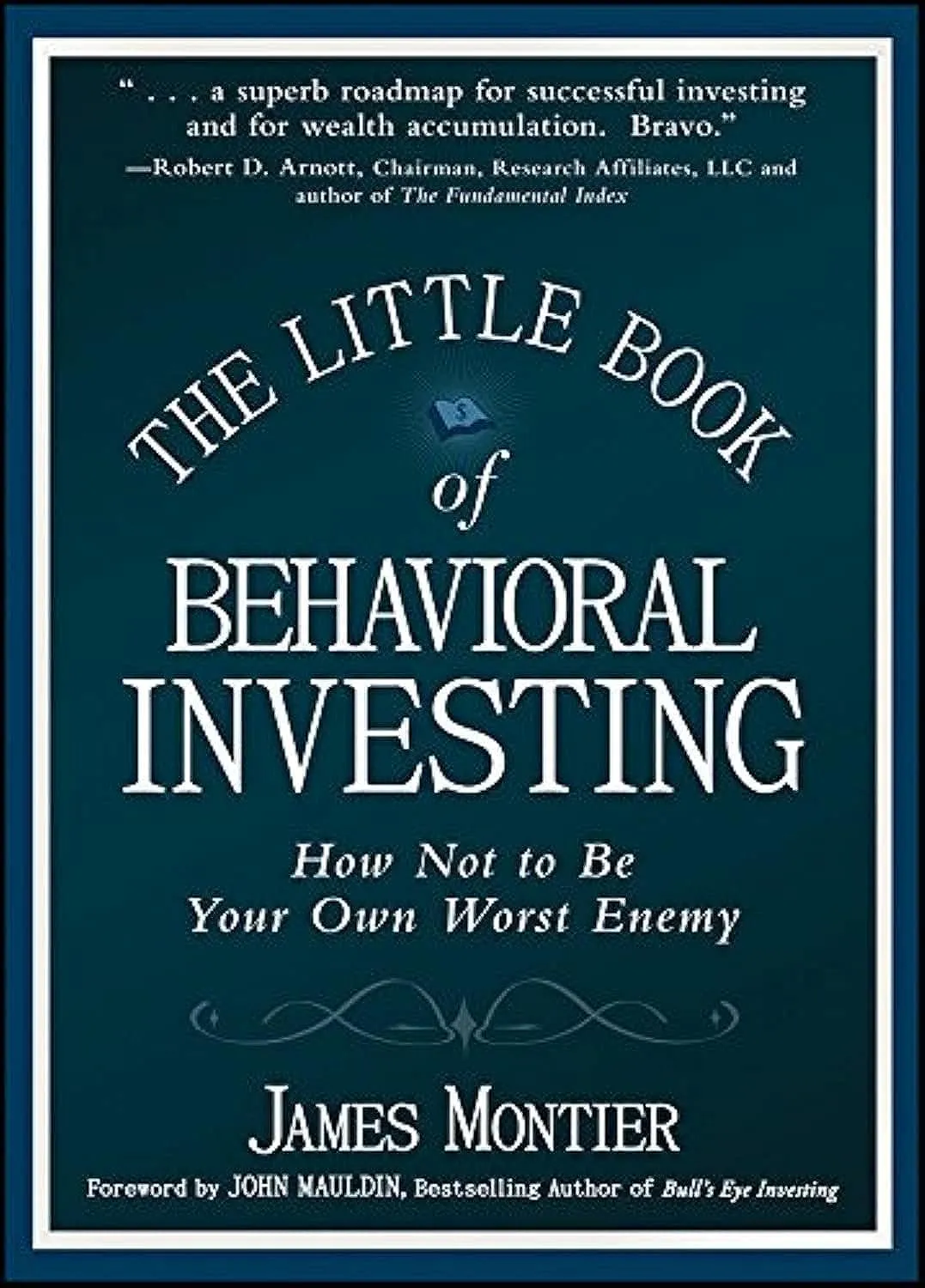
| The Little Book of Behavioral Investing (Montier) | Behavioral biases in investing | Systematic bias correction |
Read The Little Book of Safe Money for wealth protection. Read The Intelligent Investor for the value investing foundation. Read Your Money and Your Brain for the neuroscience behind investor behavior.
Implementation Guide
Building a Safe Money Framework
Step 1: Establish your emergency fund
Step 2: Match assets to time horizons
Step 3: Add TIPS for inflation protection
Step 4: Run fraud checks on any advisor
Step 5: Diversify and automate
Frequently Asked Questions
Q: Are TIPS still a good investment in 2025?
A: Yes. The 10-year TIPS real yield ended 2025 at approximately 1.90%. With PCE inflation at 2.9%, TIPS delivered 5.8% total return for the year, outperforming comparable nominal Treasurys. The breakeven inflation rate of 2.41% means TIPS outperform if inflation averages above that level over the holding period.
Q: Has the fraud landscape changed since the book was written?
A: The delivery mechanism has changed (crypto scams, social media, AI trading bots) but the warning signs are identical. Guaranteed returns, exclusive access, pressure to act quickly, secrecy about strategy, unregistered investments, unverified custody, and too-consistent returns are still the red flags. Apply Zweig's framework to any new investment opportunity regardless of the technology involved.
Q: Does the book cover crypto custody risks?
A: No. The book predates crypto. The principles (independent custody, third-party verification, beware of unregistered offerings) apply directly to crypto, but readers need current sources for specifics on self-custody vs. exchange custody risks.
Q: Is the fiduciary vs. suitability distinction still relevant?
A: Yes, though the regulatory landscape has shifted. Reg BI (effective June 2020) raised the standard for brokers, but the fiduciary standard remains higher. Always ask any advisor to confirm fiduciary status in writing.
Final Verdict
Rating: 4.3/5
The Little Book of Safe Money remains the most practical guide to protecting wealth from the three greatest investor threats. Its fraud detection framework alone is worth the price. The 2025 TIPS yield data validates the inflation protection recommendation. The behavioral finance sections are timeless because human psychology does not change. The book needs supplementing for crypto fraud, passive index fund market structure risks, and the post-Reg BI regulatory landscape, but the core principles hold.
Get Your Copy
Hardcover: Buy on Amazon
Kindle: Buy on Amazon
Prices current as of publication date. Free shipping available with Prime.