*Disclosure: This article contains affiliate links. If you purchase through these links, we may earn a commission at no additional cost to you. We only recommend books we genuinely believe in.
Quick Overview
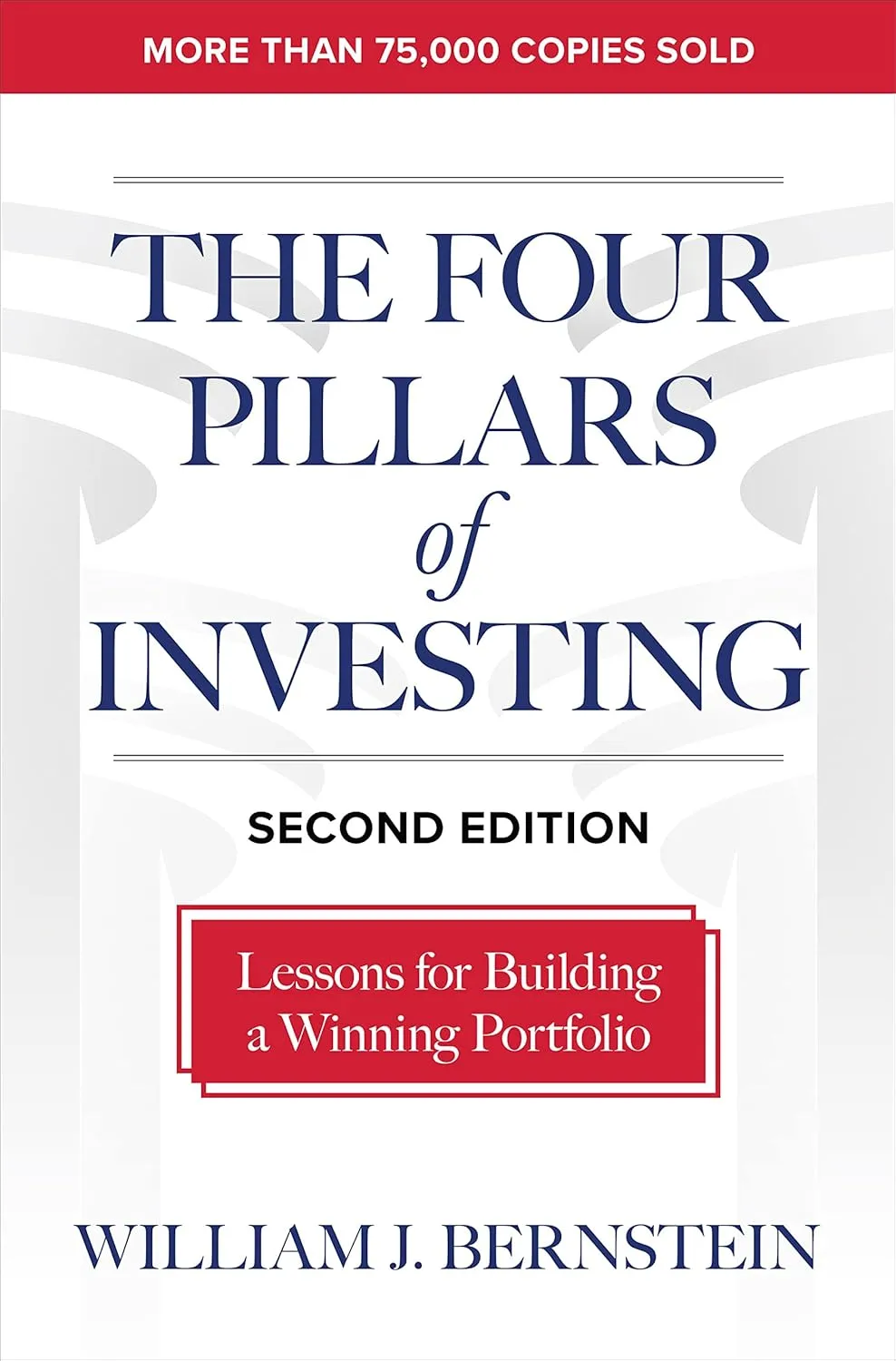
A neurologist who taught himself finance wrote one of the most respected investing books of the last 25 years. The Four Pillars of Investing organizes everything an intelligent individual investor needs to know into four domains: the theory of how markets work, the history of markets across centuries, the psychology that causes investors to defeat themselves, and the business interests of Wall Street that work against you. The second edition, published in 2023, is a near-complete rewrite that updates the data, adds a critical new framework on shallow versus deep risk, and revises retirement guidance to recommend 10 to 25 years of safe assets. If you read one book on portfolio construction, this should be it.
Book Details
| Attribute | Details |
|---|---|
| Title | The Four Pillars of Investing: Lessons for Building a Winning Portfolio |
| Author | William J. Bernstein |
| Publisher | McGraw-Hill |
| Published | 2002 (2nd edition July 2023) |
| Pages | 336 (2nd edition) |
| ISBN-13 | 978-1264660030 |
| Reading Level | Intermediate |
| Amazon Rating | 4.7/5 stars |
Get Your Copy
Hardcover: Buy on Amazon
Paperback: Buy on Amazon
Kindle: Buy on Amazon
About the Author
William Bernstein started as a neurologist, not a financial professional. He began studying investing in the 1990s, grew frustrated with the poor quality of available literature, and decided to write the books he wished existed. His medical training gave him an unusual asset: comfort with statistical data and a healthy skepticism toward anyone selling certainty.
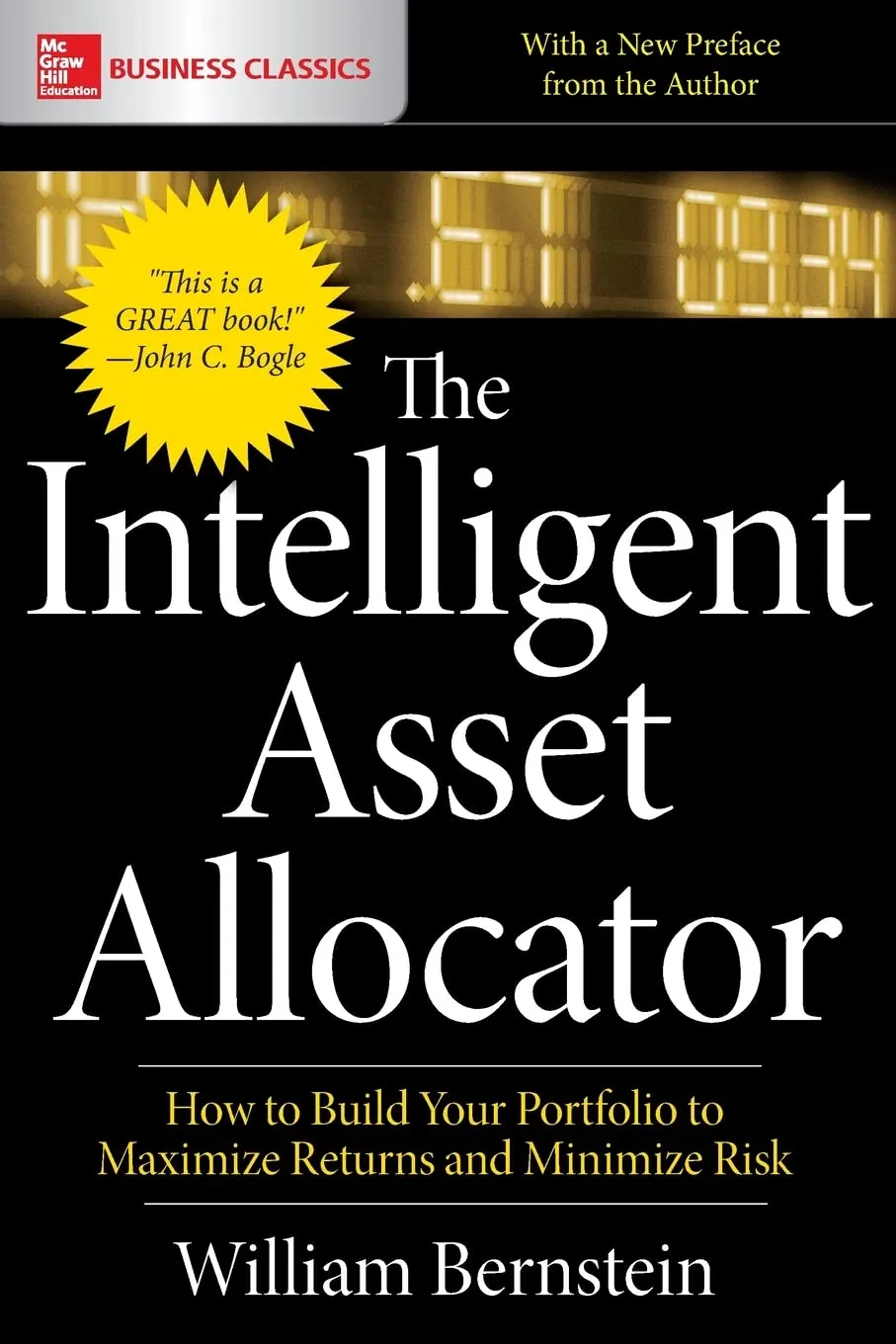
He runs Efficient Frontier Advisors, a fee-only registered investment advisor in Oregon. He has stated publicly that his primary motivation for writing is education, not business development. His other books include The Intelligent Asset Allocator (2000), A Splendid Exchange (2008), and The Ages of the Investor (2012). The CFA Institute reviewed the second edition favorably in February 2024, noting that it remains a foundational text for both professionals and individual investors.
The Four Pillars Explained
Pillar 1: The Theory of Investing
Bernstein opens with the foundational question: where do investment returns come from?
All assets are worth the present value of their future cash flows, discounted by a rate that reflects risk. When you buy a stock, you are buying a stream of future earnings. The price you pay determines your return. Higher returns always come with higher volatility. Anyone promising high returns with low risk is either wrong or lying.
Risk and return relationship (updated for 2nd edition):
| Asset Class | Historical Real Return (approx.) | Risk Level |
|---|---|---|
| Short-term Treasuries | 0-1% | Very Low |
| Long-term government bonds | 1-2% | Low-Medium |
| Large cap stocks | 5-7% | Medium-High |
| Small cap stocks | 6-8% | High |
| Emerging market stocks | 5-7% | Very High |
Bernstein explains that markets are largely efficient, meaning most public information is quickly priced in. This explains why most active managers underperform their benchmarks after fees. But markets are not perfectly efficient, especially in less-covered segments like small caps and emerging markets.
Pillar 2: The History of Markets
This is Bernstein's most distinctive contribution. He surveys investment returns across centuries and geographies, drawing lessons that shorter historical samples miss.
Key historical lessons:
U.S. stock market severe drawdowns (updated through 2025):
| Period | Peak to Trough Decline | Recovery Time |
|---|---|---|
| 1929-1932 | -89% | 25 years |
| 1973-1974 | -48% | 7 years |
| 2000-2002 | -49% | 7 years |
| 2007-2009 | -57% | 5 years |
| 2020 (COVID) | -34% | 5 months |
| 2022 | -25% | ~2 years |
Bernstein uses these numbers not to frighten but to calibrate. If you cannot stomach a 50% portfolio loss without selling, you are holding too many stocks.
Pillar 3: The Psychology of Investing
Bernstein covers behavioral finance concisely and practically. The central message: your brain will destroy your returns if you let it.
The four most dangerous cognitive errors:
The second edition adds a powerful new concept: financial amnesia. Writer James Grant observed that in most areas of human achievement, progress is cumulative. Each generation adds knowledge to the foundation inherited from earlier generations. Only in finance is knowledge cyclical. Each generation must relearn the investing principles that earlier generations figured out. Bernstein points out that many financial bubbles are inflated primarily by younger people who have no memory of the previous crash. The meme stock craze of 2021 and the growth of options trading among young adults are recent examples.
The practical implication:
Design a portfolio you can hold through a 50% crash without selling. Then hold it. Bernstein argues this is more important than finding the optimal asset allocation.
Pillar 4: The Business of Investing
This pillar is the most cynical and the most useful for protecting your money. Bernstein documents how the financial services industry profits from your ignorance and activity.
The cost structure of investing (updated for 2025):
| Investment Vehicle | Typical Annual Cost |
|---|---|
| Actively managed mutual fund | 0.5-1.2% |
| Low-cost index fund | 0.03-0.10% |
| ETF (broad market) | 0.03-0.20% |
| Robo-advisor (Betterment, Wealthfront) | 0.25-0.40% |
| Fee-only financial advisor | 0.50-1.00% |
The math of costs over time:
Starting with $100,000, earning 7% gross return over 30 years:
| Cost Level | Ending Value |
|---|---|
| 0.03% (index fund) | $754,000 |
| 0.25% (robo-advisor) | $712,000 |
| 1.00% (active fund) | $574,000 |
| 2.00% (expensive fund + advisor) | $432,000 |
The 2% cost structure costs you $322,000 relative to the index fund over 30 years on an initial $100,000 investment. Compounding works against you when applied to fees.
New in the Second Edition: Shallow Risk vs. Deep Risk
The most important addition in the 2023 edition is Bernstein's distinction between shallow risk and deep risk.
Shallow risk is the occasional bear market that eventually reverses itself. Stocks drop 30%, you wait two years, they recover. Painful but temporary.
Deep risk is permanent loss of capital from inflation, confiscation by government, devastation from war or revolution, or deflation associated with economic decline. Deep risk cannot be recovered from.
| Risk Type | Cause | Duration | Protection |
|---|---|---|---|
| Shallow | Bear market, recession | Months to years | Hold through it |
| Deep (inflation) | Currency devaluation | Permanent | Short bonds, TIPS, I-bonds, stocks |
| Deep (confiscation) | Government seizure | Permanent | International diversification |
| Deep (war/revolution) | Physical destruction | Permanent | Geographic diversification |
Bernstein argues that inflation is the most common source of deep risk in America. To combat it, he recommends owning short maturities (less than five years) for nominal fixed-income investments, plus TIPS and Series I savings bonds. Stocks, representing a claim on real assets, tend to keep up with inflation in the long run.
New in the Second Edition: Retirement Safety Guidance
Bernstein revised his retirement guidance significantly in the second edition. The key changes:
1. Ten to twenty-five years of safe assets for retirees
Bernstein now recommends that retirees maintain at least 10 years' worth of fixed living expenses in safe assets. If you can afford it, 20 or 25 years is even better. He defines fixed expenses as those residual expenses beyond what retirees can cover with Social Security and any pension.
2. Safe assets mean Treasuries only
Bernstein is strict about what counts as safe. Safe assets are backed by the full faith and credit of the U.S. Treasury: Treasury bills, CDs in amounts below the FDIC limit, and a U.S. Treasury fund with a duration of less than two to three years. He does not consider corporate bonds, municipal bonds, or short-term investment-grade bond funds to be safe assets because they involve credit risk and can fail during a "flight to safety."
3. Three percent is the new four percent
Bernstein notes that William Bengen's 4% rule was developed using returns from 1926 to the 1990s. If future market returns are not as generous, a 4% withdrawal rate may be too optimistic. He believes that a withdrawal rate of 2% to 3.5% is safer. Beyond that, you are in the "red zone."
Use our investment return calculator to model how different withdrawal rates affect your portfolio's longevity.
Building the Portfolio: Bernstein's Recommendations
The Basic Three-Fund Portfolio
Bernstein recommends simplicity for most investors:
| Fund | Allocation | Example |
|---|---|---|
| U.S. total market | 40% | VTI |
| International total market | 20% | VXUS |
| U.S. bond market | 40% | BND |
Adjust the bond percentage based on risk tolerance and time horizon. A common rule: hold your age in bonds (age 40 = 40% bonds), though Bernstein notes this is a rough guide, not a law.
Factor Tilts for Enterprising Investors
Bernstein discusses adding small-cap value exposure, which has historically produced premium returns. He cautions that these premiums are not guaranteed, are inconsistent over any decade-length period, and require discipline to hold through prolonged underperformance.
The 2025 factor investing revival validated Bernstein's patience requirement. International value funds outperformed the S&P 500 by over 18 percentage points in the first five months of 2025 alone, after years of underperformance. Investors who abandoned factor tilts during the 2014-2024 growth dominance period missed this dramatic reversal.
Strengths & Weaknesses
What We Loved
Areas for Improvement
Who Should Read This Book
Highly Recommended For
Probably Not For
Comparison to Similar Books
| Book | Strength | Who It Is Best For |
|---|---|---|
| The Four Pillars of Investing | Comprehensive framework + retirement guidance | Serious self-directed investors |
| The Intelligent Asset Allocator | Deeper quantitative theory | Analytical investors |
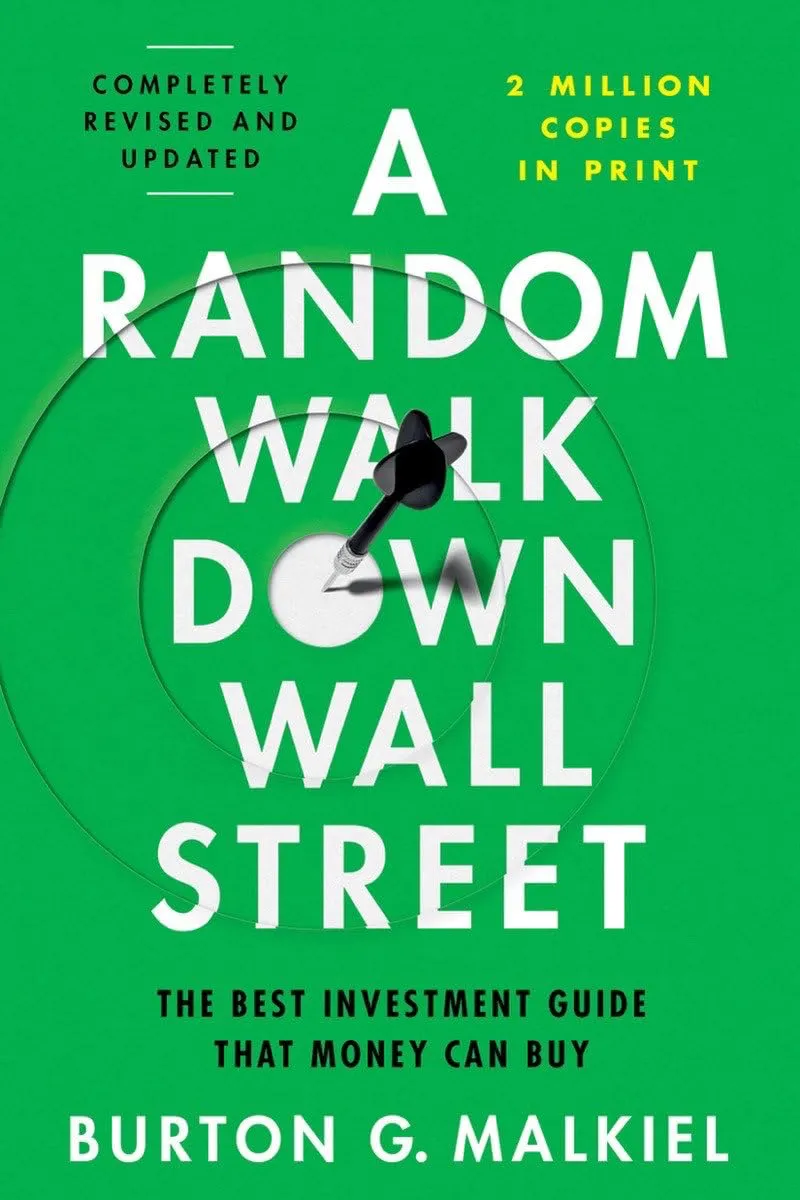
| A Random Walk Down Wall Street | Academic rigor, accessible | Educated general investors |
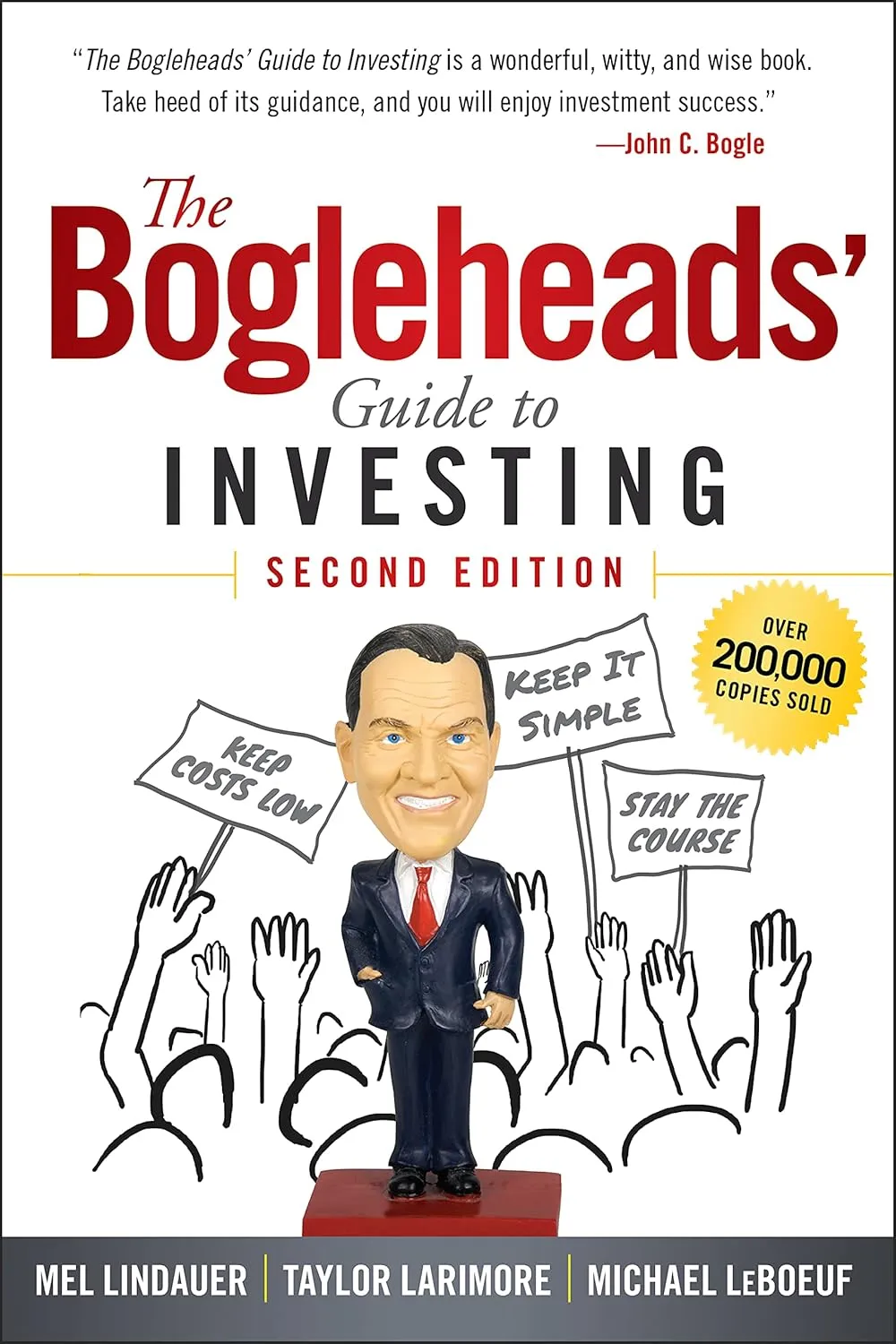
| The Bogleheads' Guide to Investing | More practical and simpler | Beginners and intermediates |
| The Little Book of Common Sense Investing | Shortest path to index investing | Complete beginners |
Read The Little Book of Common Sense Investing first, then The Four Pillars, then The Intelligent Asset Allocator if you want the math.
Implementation Guide
30-Day Reading and Application Plan
Week 1: Read and absorb
Week 2: Assess your risk capacity
Week 3: Audit your costs
Week 4: Build your deep risk defense
Frequently Asked Questions
Q: Is the second edition (2023) worth buying if I read the first?
A: Yes. Bernstein rewrote nearly the entire book. The new framework on shallow versus deep risk, the updated retirement guidance (10-25 years of safe assets, 3% withdrawal rate), and the revised fee landscape make it worth re-reading. HumbleDollar's review noted that even readers of the first edition will find significant new insights.
Q: Do I need to understand statistics to read this?
A: Basic comfort with percentages and compound growth is sufficient. Bernstein explains statistical concepts clearly as they arise. The second edition is more accessible than the first.
Q: What portfolio does Bernstein personally recommend?
A: For most investors, a simple three-fund portfolio of U.S. stocks, international stocks, and bonds, rebalanced annually. For retirees, he now emphasizes holding 10-25 years of expenses in safe assets (short-term Treasuries) before investing the remainder in stocks.
Q: Is Bernstein too conservative with his 3% withdrawal rate?
A: It depends on your circumstances. If you have a generous pension or Social Security covering most of your expenses, a higher rate may work. If you are relying entirely on your portfolio, 3% is prudent. The cost of running out of money in retirement is far worse than leaving money on the table.
Q: How does this compare to The Intelligent Asset Allocator?
A: The Four Pillars is broader and more accessible. The Intelligent Asset Allocator is more quantitative and technical. Read Four Pillars first. If you want the math behind the portfolio recommendations, read The Intelligent Asset Allocator second.
Final Verdict
Rating: 4.7/5
The Four Pillars of Investing is one of a handful of books that can genuinely change how you invest. The second edition's additions on shallow versus deep risk, financial amnesia, and retirement safety guidance make it more valuable than the already excellent original. Its combination of theory, history, psychology, and industry critique makes it the most complete single-volume education available for the individual investor. If you read only five investing books in your life, this should be one of them.
Get Your Copy
Hardcover: Buy on Amazon
Paperback: Buy on Amazon
Kindle: Buy on Amazon
Prices current as of publication date. Free shipping available with Prime.