Hostile Takeover
Quick Definition
A hostile takeover is an acquisition attempt in which a company tries to take control of another company without the approval of the target's board of directors. Rather than negotiating with management, the acquirer goes around the board and directly approaches shareholders through a tender offer, a proxy fight, or both.
What It Means
Most corporate acquisitions are friendly. The two boards negotiate, agree on price and terms, and recommend the deal to shareholders. A hostile takeover breaks this pattern. The acquiring company has decided the target's board is either blocking a deal that shareholders would want, or is not interested in selling at any price.
Hostile takeovers are adversarial and legally complex. They make headlines, create boardroom battles, and sometimes produce landmark legal precedents. They also deliver real value or destruction depending on the outcome.
The mechanics are alive and well in 2026. In July 2026, Stripe and private equity firm Advent International submitted a $53 billion bid for PayPal, which PayPal's board initially rejected as inadequate. That same month, Apollo Global Management outbid Castlelake with a GBP 5.7 billion offer for easyJet, and Penske Corporation and Mitsui made an unsolicited $210-per-share take-private proposal for Penske Automotive Group. These deals show that hostile and unsolicited acquisition tactics remain active even in a higher-rate environment.
How a Hostile Takeover Works
Acquirers use two primary weapons:
Weapon 1: The Tender Offer
The acquirer bypasses management and makes an offer directly to shareholders:
- Announce the offer: Publicly announce willingness to buy shares at a specific price (typically a 20-40% premium to market)
- File with the SEC: Required disclosures under the Williams Act, documented in SEC filings
- Shareholders tender their shares: Individual shareholders decide whether to accept
- Acquire majority: If enough shareholders tender, acquirer gains control
- Board replaced: New majority ownership replaces the board
The premium is the key incentive. If your stock trades at $40 and the acquirer offers $55, the question becomes: do you trust your current board to deliver that value eventually, or take the certain $55 now?
Weapon 2: The Proxy Fight
The acquirer nominates its own slate of directors and asks shareholders to vote them onto the board:
- File a proxy statement with the SEC nominating alternative directors
- Campaign to shareholders: Contact institutional investors, make the case for change
- Shareholder vote at annual meeting (or special meeting): New directors elected
- New board approves the acquisition or negotiates better terms
Proxy fights are used when a tender offer alone would not succeed, or when the goal is management change rather than full acquisition.
Famous Hostile Takeovers
| Year | Acquirer | Target | Outcome | Notable |
|---|---|---|---|---|
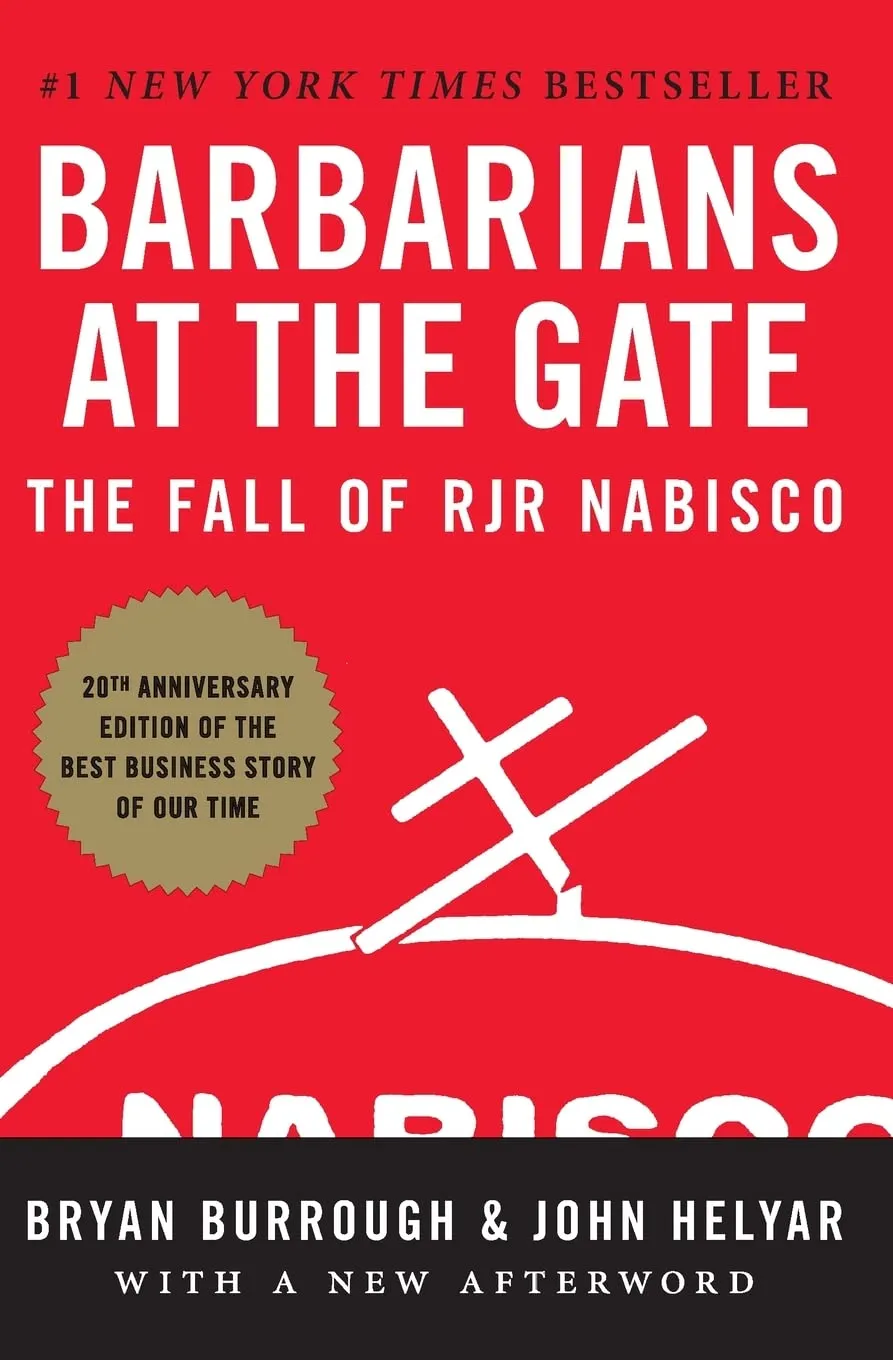
| 1988 | KKR | RJR Nabisco | Succeeded | Largest LBO at the time; immortalized in "Barbarians at the Gate" |
| 2006 | Mittal Steel | Arcelor | Succeeded | Created ArcelorMittal, world's largest steel company |
| 2008 | InBev | Anheuser-Busch | Succeeded | Created AB InBev, world's largest brewer |
| 2022 | Elon Musk | Succeeded | Leveraged buyout; eventually renamed X | |
| 2026 | Stripe/Advent | PayPal | Pending (board rejected initial bid) | $53B bid; regulatory and financing hurdles |
| 2026 | Apollo | easyJet | Pending | GBP 5.7B bid; EU ownership rules complicate deal |
Defensive Strategies (Takeover Defenses)
Target companies use a variety of tactics to resist hostile acquirers:
Poison Pill (Shareholder Rights Plan)
The most common defense. If any party acquires more than a threshold stake (typically 15-20%), existing shareholders get the right to buy new shares at a steep discount. This dilutes the acquirer's position and makes the takeover prohibitively expensive.
Example:
- Acquirer reaches 15% ownership threshold
- Poison pill triggers: existing shareholders (excluding acquirer) can buy new shares at 50% discount
- Acquirer's stake is immediately diluted from 15% to about 8%
- Cost of maintaining stake doubles
Poison pills do not permanently block acquisitions but force the acquirer to negotiate with the board rather than going directly to shareholders.
Staggered Board (Classified Board)
Directors serve multi-year terms in staggered classes (e.g., three classes serving 3-year terms). Only one-third of the board faces election each year. A hostile acquirer cannot replace the entire board at once. It would take two annual meetings to gain majority control.
This gives the incumbent board 2-3 years of protection, during which they can pursue alternatives, negotiate, or implement value-creation strategies.
White Knight
The target finds a friendlier acquirer and negotiates a merger on preferred terms. The original hostile bidder is outmaneuvered.
Examples:
- Time Inc. used Time Warner as a white knight against Paramount's hostile bid (1989)
- Sotheby's used Patrick Drahi as a white knight against activist investor Daniel Loeb (2019)
Crown Jewel Defense
The target sells or spins off its most valuable asset (the "crown jewel") to make itself less attractive to the acquirer. If the acquirer only wants you for one specific business, sell it before they can get it.
Pac-Man Defense
The target turns around and makes a hostile bid for the acquirer. Rare, but has happened.
Golden Parachutes
Senior executives receive massive severance packages if terminated after a change of control. This increases the cost of a takeover and aligns management's interests with resisting.
The Delaware Influence
Most large U.S. companies are incorporated in Delaware. Delaware corporate law shapes hostile takeover dynamics:
- Delaware courts have validated poison pills as legitimate defenses
- The Revlon rule: When a sale of the company becomes inevitable, the board's duty shifts to maximizing shareholder value (cannot just protect incumbents)
- Unocal test: Board defensive measures must be proportionate to the threat
- Martin Marietta v. Vulcan (2012): Delaware court blocked acquirer from proceeding with proxy fight under contractual confidentiality obligations
Activist Investors: Friendly-Hostile Hybrid
Many modern takeover battles involve activist hedge funds that accumulate a significant stake (5-15%) and publicly pressure management to change strategy, sell the company, return cash, or replace management:
- Carl Icahn: Motorola, Apple, Dell, Netflix, eBay
- Bill Ackman (Pershing Square): JC Penney, Target, Chipotle
- Nelson Peltz (Trian): P&G, Disney, Unilever
These activist campaigns stop short of a full takeover but use the same tools (proxy fights, public pressure, tender offers) to force change. In 2026, activist fund Align Partners pressured the board of GABIA Inc. in Korea over a Macquarie-led tender offer, demanding independent procedural review to protect minority shareholders.
Impact on Shareholders
| Stakeholder | Short-Term | Long-Term |
|---|---|---|
| Target shareholders | Premium paid; immediate gain | Depends on integration quality |
| Acquirer shareholders | Often negative (overpayment risk) | Depends on deal execution |
| Target employees | Uncertainty; potential layoffs | Cultural integration, restructuring |
| Management | Job risk; golden parachutes | Replacement likely |
Research consistently shows that target shareholders win in hostile takeovers because they receive premiums. Acquirer shareholders often lose: premiums are frequently overestimated, and integration costs are underestimated.
Common Mistakes to Avoid
- Tendering shares without reading the offer documents: The tender offer document filed with the SEC contains the terms, conditions, and expiration date. Shareholders who tender without understanding these details may lock themselves into a deal that falls through or takes months to close.
- Assuming the first offer is the final offer: Initial hostile bids are often below what the target is worth. Boards frequently negotiate higher prices or solicit competing bids. If you tender immediately at the first offer, you may leave money on the table.
- Ignoring tax consequences: In a cash tender offer, shareholders who tender owe capital gains tax on the difference between the offer price and their cost basis. In a stock-for-stock deal, the tax treatment differs. Consult a tax advisor before tendering.
- Confusing activist campaigns with full takeovers: Activist investors pushing for board seats or strategy changes are not buying the company. Their campaigns can drive the stock up or down depending on whether the market views their proposals as value-accretive. Do not assume an activist involvement means a buyout is coming.
- Overlooking antitrust risk: Large hostile deals can be blocked by regulators. The Stripe-PayPal bid in 2026 faces antitrust scrutiny because combining the two largest online payment platforms would create a dominant market position. If regulators block the deal, shares may fall back to pre-bid levels.
Key Points to Remember
- A hostile takeover bypasses the target's board and goes directly to shareholders through a tender offer, proxy fight, or both
- Tender offers buy shares directly from shareholders at a premium; proxy fights replace the board through shareholder votes
- Common defenses include poison pills (dilute acquirer's stake), staggered boards (slow down board replacement), and white knights (friendlier acquirer)
- Delaware corporate law governs most large U.S. company takeover battles; the Revlon and Unocal doctrines are key legal frameworks
- Target company shareholders typically gain value from hostile takeovers (via premium); acquirer shareholders often lose due to overpayment
- Recent 2026 examples include Stripe/Advent's $53B bid for PayPal and Apollo's GBP 5.7B bid for easyJet
Frequently Asked Questions
Q: Are hostile takeovers legal? A: Yes. Hostile takeovers are legal in the U.S. and most developed markets. They are governed by securities laws (Williams Act, requiring disclosure of tender offers), state corporate law (primarily Delaware), and antitrust regulations (Hart-Scott-Rodino Act requires pre-merger notification for large deals).
Q: Can a company be taken over without shareholder approval? A: Not fully. For a complete acquisition, acquirers need either shareholder approval of a merger or acquisition of enough shares through a tender offer to take the company private or control its board. Hostile takeovers must ultimately win shareholder support, whether in a tender or a proxy vote.
Q: What happens to existing shareholders in a hostile takeover? A: In a cash tender offer, shareholders who tender receive the offer price in cash. Shareholders who do not tender often face a "squeeze-out merger" where remaining shares are bought at the same price. In stock-for-stock deals, shareholders receive acquirer stock instead of cash.
Q: Why do companies use poison pills if they can be overcome? A: Poison pills are not meant to permanently prevent takeovers. They are meant to force negotiation. A poison pill buys the board time to evaluate offers, seek alternatives, and negotiate better terms. Courts have upheld pills as legitimate tactical tools, but Delaware courts have also required boards to redeem pills when shareholders clearly want the deal.