*Disclosure: This article contains affiliate links. If you purchase through these links, we may earn a commission at no additional cost to you. We only recommend books we genuinely believe in.
Quick Overview
When a brick smashes a baker's window, the crowd sees economic stimulus: the glazier gets work, buys materials, pays employees. Henry Hazlitt asks what the baker would have bought with that money instead. The shoes that go unpurchased, the dinner that never happens, the book that stays on the shelf. The broken window created nothing. Society has a window where it had one before. That gap between what is seen and what is not seen is the entire book, and 80 years after publication, the Mises Institute notes it remains as relevant as ever, especially as tariff debates dominate headlines in 2026.
Book Details
| Attribute | Details |
|---|---|
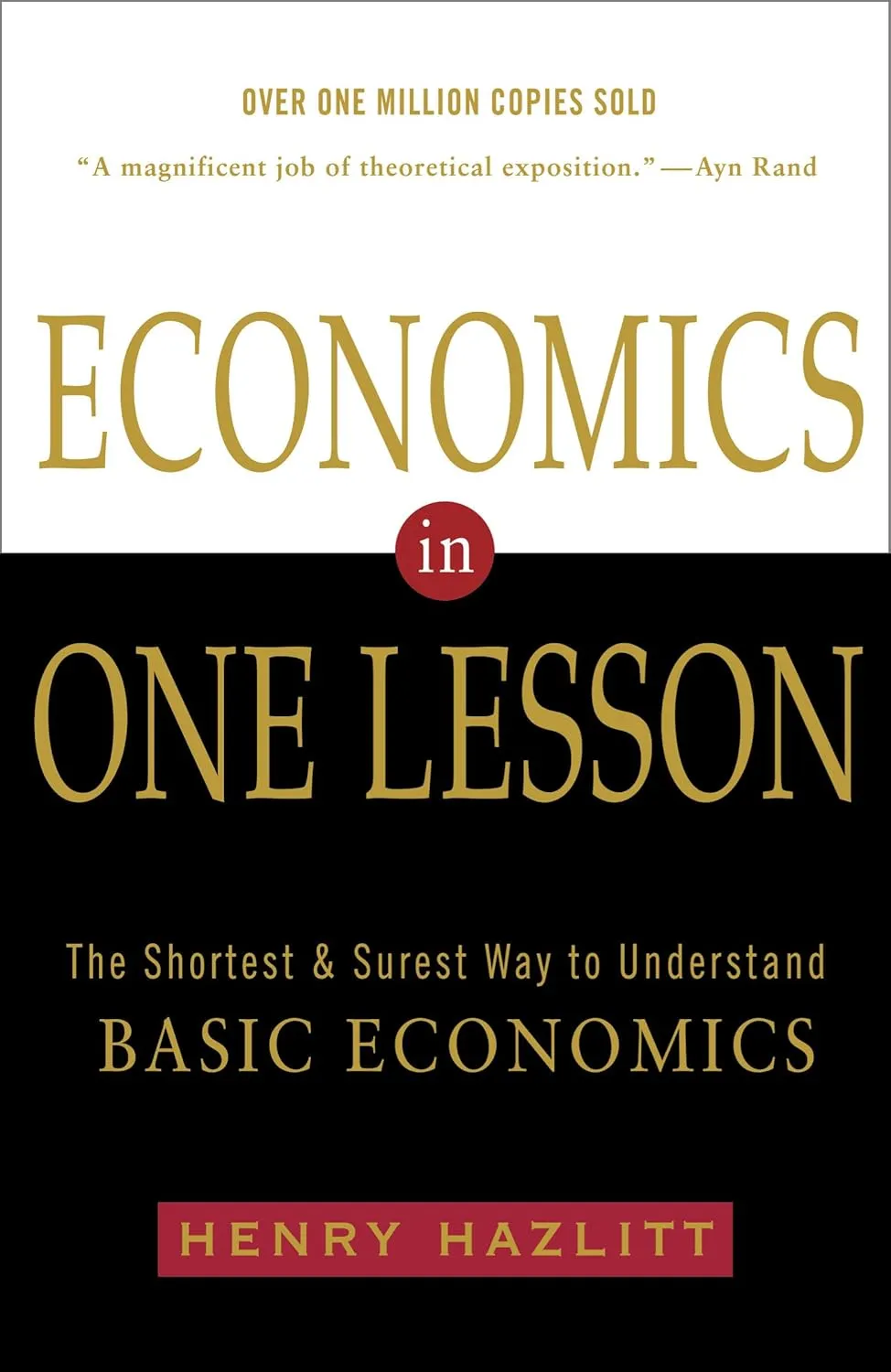
| Title | Economics in One Lesson |
| Author | Henry Hazlitt |
| Publisher | Crown Publishers / Laissez Faire Books |
| First Published | 1946 |
| Pages | 218 |
| Reading Level | Beginner |
| Amazon Rating | 4.7/5 stars |
Get Your Copy
Paperback: Buy on Amazon
Kindle: Buy on Amazon
About the Author
Henry Hazlitt (1894-1993) was a journalist and literary critic who became one of the most important popularizers of free-market economics in the 20th century. He wrote for The Wall Street Journal, The New York Times, and Newsweek. He was a founding trustee of the Foundation for Economic Education and a longtime friend and collaborator of Ludwig von Mises, who refereed the manuscript. His career in financial journalism spanned six decades. As the Cobden Centre observed in November 2025, marking the book's 80th anniversary, Hazlitt "wrote as the common people speak, but thought as wise men do."
Key Concepts & Frameworks
The One Lesson
"The art of economics consists in looking not merely at the immediate but at the longer effects of any act or policy; it looks not merely at the primary but at the secondary consequences; not merely at the effects of any act or policy on one special group but at its effects on all groups."
This is the entire book in one sentence. Everything else is application.
The universal economic fallacy, Hazlitt argues, is considering only the immediate visible consequences of a policy on the group it directly affects, while ignoring the delayed consequences on everyone else. He applies this to over two dozen fallacies, from public works to rent control to tariffs.
The Broken Window Fallacy
Drawn from Frederic Bastiat's 1850 essay "That Which Is Seen and That Which Is Not Seen":
A hoodlum throws a brick through a baker's window. The glazier gets paid to replace it. The crowd sees economic activity: the glazier has work, buys materials, pays employees. What they do not see: the baker would have spent that $250 on new shoes, a book, or a dinner. Those purchases never happen. The glazier's gain is exactly offset by the shoemaker's or bookseller's or restaurant's loss. Society has a window where it had a window before. Nothing was created.
This fallacy appears constantly in investment reasoning:
| Fallacious Argument | What Is Not Seen |
|---|---|
| "War is good for the economy" | Resources spent on weapons cannot build hospitals or schools |
| "Natural disasters stimulate growth" | Rebuilding replaces what was lost; there is no net gain |
| "Government stimulus creates jobs" | The taxes funding stimulus reduce private spending elsewhere |
| "Trade protection saves jobs" | Higher prices for protected goods reduce consumer spending elsewhere |
Tariffs and Protectionism: The 2026 Relevance
The tariff chapter reads like it was written for the current administration's trade policy. Hazlitt's analysis: a tariff on imported steel protects steelworkers' jobs (the seen), but American industries that use steel (automobiles, appliances, construction) pay higher prices, employ fewer workers, and consumers pay more for all steel-using products (the not seen).
Studies of U.S. steel tariffs consistently find that saved jobs in steel number in the thousands, while jobs destroyed in steel-using industries number in the tens of thousands. Consumer costs run into billions annually. As the Cobden Centre noted, "The relevance and cogency of Hazlitt's argument on protectionism and tariffs could not be more timely under the current Trump administration, with its misguided and economically wrongheaded analysis of international trade."
Rent Control
Hazlitt's rent control chapter predicts what happened in New York and San Francisco. The seen: rent control limits increases, protecting current tenants. The not seen: landlords have less incentive to maintain or build rental housing, supply falls, and over time rent-controlled cities develop severe housing shortages. New residents cannot find housing. The city's housing stock deteriorates.
Cities with strict, long-standing rent control consistently rank among the most expensive rental markets in America. The controls protect long-term tenants while pricing out new residents entirely. Investors who own real estate in rent-controlled jurisdictions face regulatory risk that conventional discounted cash flow models may not fully capture.
Minimum Wages
The seen: workers who receive a minimum wage increase are better paid. The not seen: employers may hire fewer workers, automate more, or reduce hours for workers whose productivity does not justify the higher wage.
This is one of economics' most contested empirical questions. The evidence is genuinely mixed:
| Finding | Evidence |
|---|---|
| Minimum wage increases reduce employment | Some studies, particularly for teens and low-skill workers |
| Minimum wage increases have minimal employment effects | Other studies, particularly at moderate levels |
| Optimal minimum wage exists above zero | Monopsony power by large employers justifies some floor |
Hazlitt's point is not that minimum wages are necessarily harmful but that only looking at the benefit to workers who keep their jobs misses potential costs to workers who lose jobs or cannot find them.
Practical Applications
Policy Analysis for Investors
Hazlitt's framework gives you a systematic approach for evaluating how policy changes affect investments. Before acting on any economic policy expectation, ask:
Applied to tariff policy:
| Effect | Who It Affects | Direction |
|---|---|---|
| Immediate: protected industry profits higher | Steel companies | Positive |
| Immediate: steel buyers pay more | Auto, appliance companies | Negative |
| Long-run: less competitive domestic industry | Steel companies | Negative |
| Long-run: retaliatory tariffs by trading partners | Export industries | Negative |
| Net on economy | All consumers | Negative |
The investor who buys steel stocks on tariff news is seeing the immediate positive. The investor who considers all effects sells when the announcement creates the visible benefit, before the longer-run negatives materialize.
The Broken Window in Corporate Capital Allocation
| Corporate Action | Seen | Not Seen |
|---|---|---|
| Share buyback boosts EPS | EPS rises, stock price often rises | Capital not deployed for organic investment or debt reduction |
| Acquisition "creates synergies" | Revenue combination looks good | Acquisition price premium, integration costs, distraction from core business |
| "Cost-cutting improves margins" | Short-term margin improvement | Long-term capability destruction, talent loss |
| Dividend increase signals confidence | Stock price rises on announcement | Capital unavailable for future reinvestment |
None of these actions is necessarily bad. The point is that evaluating only the visible, immediate effect produces incomplete analysis.
Strengths & Weaknesses
What We Loved
Areas for Improvement
Who Should Read This Book
Highly Recommended For
Probably Not For
Comparison to Similar Books
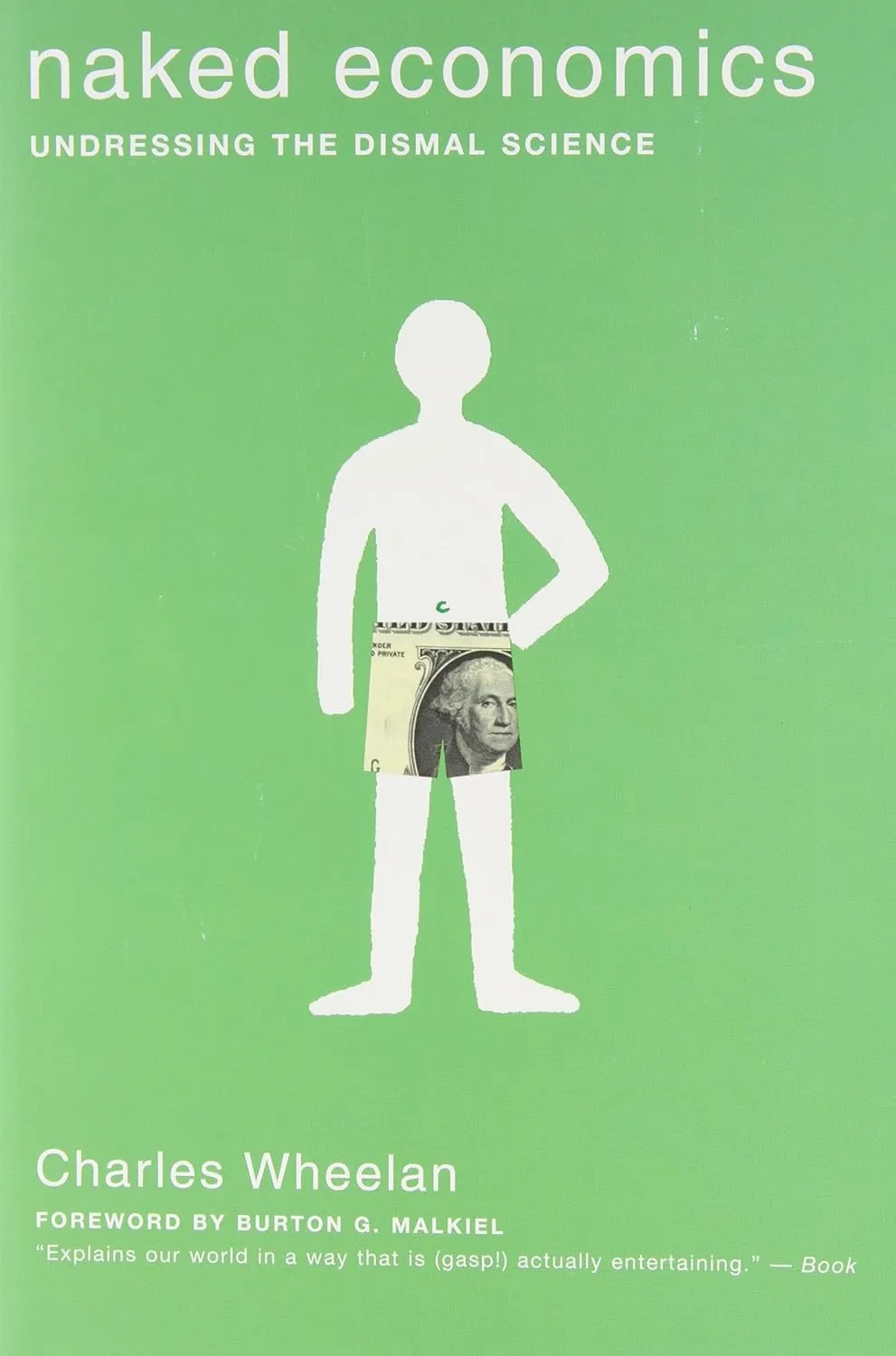
vs. Naked Economics by Charles Wheelan
| Aspect | Hazlitt | Wheelan |
|---|---|---|
| Approach | One lesson applied to fallacies | Broad survey of economics |
| Ideological lens | Classical liberal | Centrist, balanced |
| Complexity | Low | Low to medium |
| Best for | Learning the core analytical framework | Getting a full economics overview |
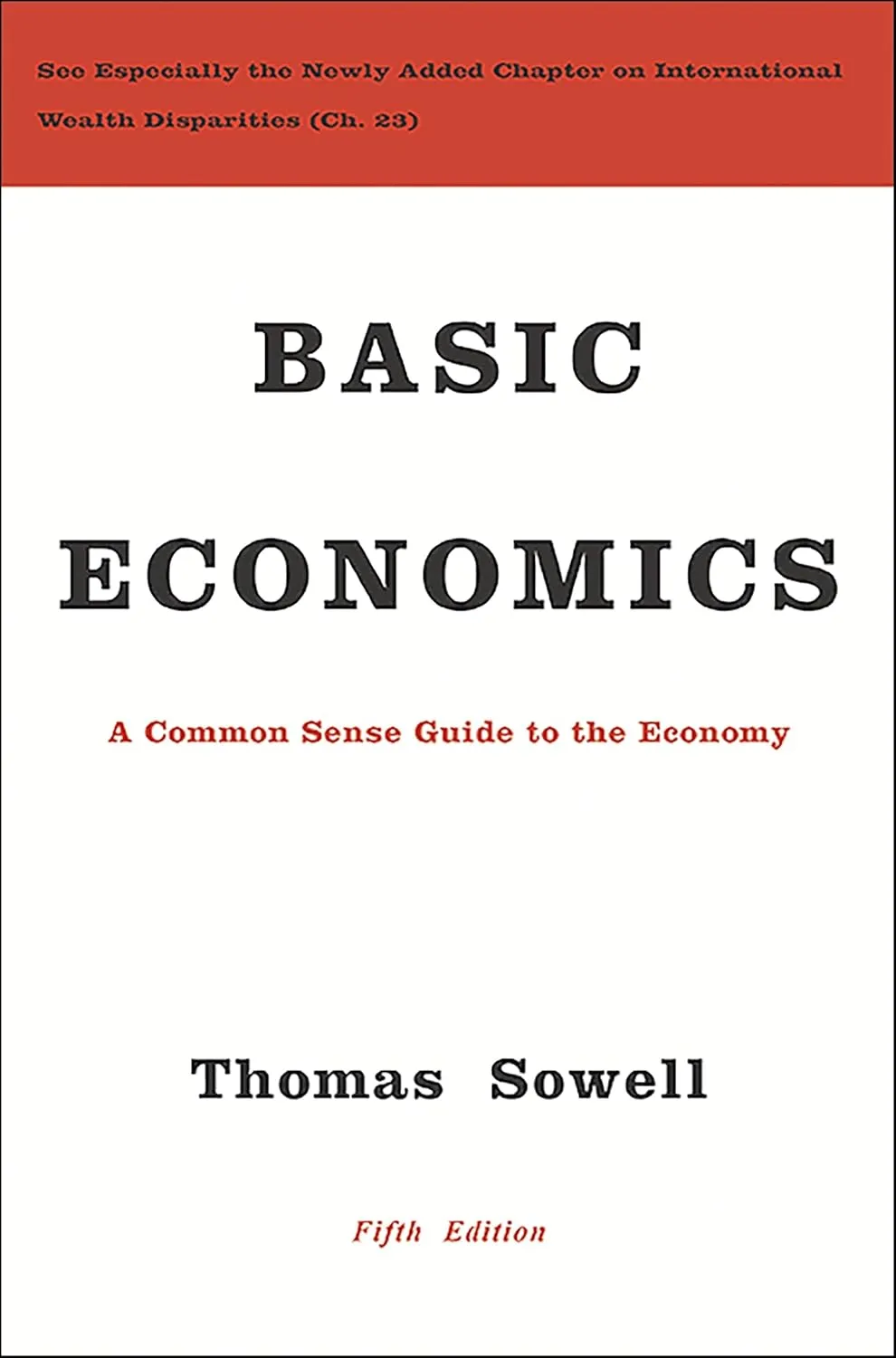
vs. Basic Economics by Thomas Sowell
| Aspect | Hazlitt | Sowell |
|---|---|---|
| Length | 218 pages | 800+ pages |
| Focus | One lesson, many applications | Comprehensive economic literacy |
| Style | Essay-based, conversational | Textbook-like, data-rich |
| Best for | Quick, transformative read | Deep reference for ongoing use |
Implementation Guide
Applying the One Lesson to Investment Decisions
Step 1: Identify the catalyst. What policy change, corporate action, or market event are you reacting to?
Step 2: Map the seen. Who benefits immediately? What is the visible, measurable effect?
Step 3: Map the not seen. Who pays? What does not happen because resources were redirected?
Step 4: Project the long run. Does the policy remain helpful to the beneficiary over time? What are the second-order effects?
Step 5: Decide. Does the investment thesis rely on the seen alone, or does it account for the not seen? If it only accounts for the seen, you are probably buying at the top of the visible effect.
Frequently Asked Questions
Q: Is this book biased toward free-market ideology?
A: Yes, clearly. Hazlitt's examples consistently support market-oriented conclusions. The core lesson (consider full effects) is ideologically neutral and valuable regardless of your economic views. Apply the lesson consistently, including to situations where markets fail, and you will arrive at more nuanced conclusions than Hazlitt does.
Q: Is this still relevant 80 years after publication?
A: The core lesson and the broken window fallacy are timeless. The tariff chapter reads like it was written for 2026. Read it for the framework, not the specific 1946 policy debates. As FEE noted, "no update needs to be written, it is just as timely and just as applicable in the 21st century as it was in the last."
Q: Do I need an economics background to understand this?
A: No. That is the book's greatest strength. Hazlitt wrote for the general public, not academics. If you can follow a newspaper editorial, you can follow this book.
Final Verdict
Rating: 4.7/5
Economics in One Lesson delivers exactly what it promises: one essential lesson, illustrated thoroughly. The broken window fallacy and the full-effects analytical framework are immediately applicable to investment decisions, policy analysis, and everyday economic reasoning. At 218 pages, it is one of the most efficient economics educations available per page. The 2026 tariff debates make the protectionism chapter required reading. The book's weakness is its one-sidedness, but the framework itself is ideologically neutral. Apply it consistently and it will make you a better investor and citizen.
Get Your Copy
Paperback: Buy on Amazon
Kindle: Buy on Amazon
Prices current as of publication date. Free shipping available with Prime.