*Disclosure: This article contains affiliate links. If you purchase through these links, we may earn a commission at no additional cost to you. We only recommend books we have personally read and genuinely believe in.
Quick Overview
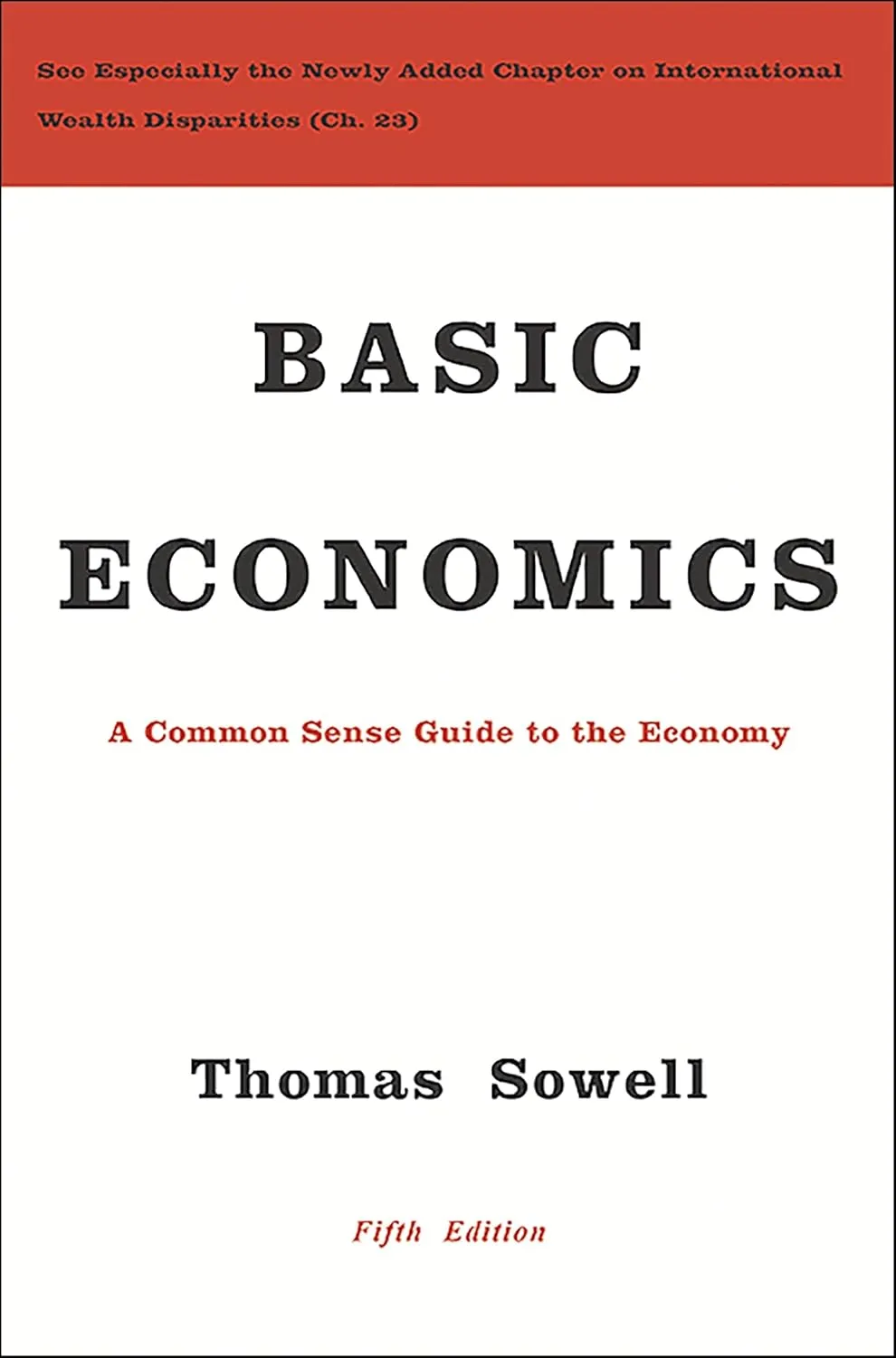
Thomas Sowell spent decades at the Hoover Institution and wrote over 40 books. Basic Economics, now in its fifth edition, is his masterwork for general readers: 700+ pages of economic reasoning with no equations, no graphs, and no jargon. It covers prices and markets, labor, business, international trade, money, and economic policy. For the investor who wants the most complete economic education available in a single readable volume, this is the book. The 2025 tariff debates have made its trade chapters more relevant than they have been in decades.
Book Details
| Attribute | Details |
|---|---|
| Title | Basic Economics (Fifth Edition) |
| Author | Thomas Sowell |
| Publisher | Basic Books |
| First Published | 2000; Fifth Edition 2014 |
| Pages | 704 |
| Reading Level | Beginner to Intermediate |
| Amazon Rating | 4.8/5 stars |
Get Your Copy
Hardcover: Buy on Amazon
Kindle: Buy on Amazon
Audiobook: Buy on Amazon
About the Author
Thomas Sowell holds a Ph.D. in economics from the University of Chicago, where he studied under Milton Friedman and George Stigler. He held faculty positions at Cornell, UCLA, and Amherst before spending most of his career at the Hoover Institution at Stanford University. He writes from a free-market perspective informed by decades of empirical research on economic outcomes across different countries and historical periods.
His background matters for evaluating this book. The Chicago School tradition emphasizes empirical evidence over theoretical elegance, price theory as the core of economics, and skepticism toward government intervention. Sowell applies this framework consistently across 700 pages. If you agree with the framework, the book is a masterclass. If you disagree, the book is the strongest possible statement of the case you need to answer.
The Central Principle
Sowell's single organizing principle, stated in the first pages:
"The first lesson of economics is scarcity: there is never enough of anything to fully satisfy all those who want it. The first lesson of politics is to disregard the first lesson of economics."
Every economic question is a question about how to allocate scarce resources. Any policy that appears to give people "more" without making trade-offs explicit is either transferring costs to others or is creating costs that will become visible later.
This principle, that trade-offs are unavoidable and costs that are not visible are not absent, is the analytical framework Sowell applies consistently throughout 700 pages. It is also the principle most often ignored in political discourse about economic policy.
Part I: Prices and Markets
What Prices Do
Sowell dedicates the first section to the most fundamental economic institution: prices. His treatment is the clearest available in any popular economics book.
A price is not a number the seller picks arbitrarily. It is information about the relative scarcity of a good or service relative to demand for it.
When the price of lumber rose dramatically in 2020-2021 due to pandemic demand, it signaled:
This information is transmitted simultaneously to millions of people worldwide, coordinating their decisions without any central authority directing them. No single planner could possibly have the information required to coordinate all these decisions. The price system processes it automatically.
What happens when prices are prevented from adjusting:
| Price Control | Intent | Actual Effect |
|---|---|---|
| Rent control (price ceiling) | Make housing affordable | Reduces supply; creates shortages; benefits current tenants, harms future ones |
| Minimum wage (price floor) | Increase worker incomes | Reduces employment of least-productive workers; benefits employed workers, harms unemployed |
| Gas price caps | Protect consumers from high prices | Creates gasoline lines; reduces supply; encourages black markets |
| Agricultural price supports (price floor) | Support farmers' incomes | Creates surplus production; government must buy excess; costs borne by taxpayers |
In every case, preventing prices from clearing the market creates predictable, avoidable problems that are more harmful than the problem the policy intended to solve. For a deeper dive, see our guide on supply and demand.
Drawing on Friedrich Hayek, Sowell explains why central planning fails regardless of the intelligence of the planners. The knowledge required to allocate resources efficiently is dispersed among millions of individuals. It is tacit, local, and constantly changing. No central authority can aggregate it. The price system aggregates it automatically through the actions of market participants.
Part II: The Role of Profits and Losses
Profits as Signals, Not Rewards
Sowell challenges the common moral intuition that profits are simply rewards for the wealthy that should be redistributed.
High profits signal that:
Losses signal:
When profits are taxed away or distributed before they can be reinvested, the signal function is disrupted. Less investment flows to high-profit activities, and the reallocation that improves overall welfare does not occur as efficiently.
Sowell clarifies a common confusion: absolute profits are often large for large companies, but profit rates (return on investment) tend to equalize across industries through competition. A $1 billion profit for a company with $20 billion in assets is a 5% return, below what many small businesses earn. Judging economic merit by absolute profit size is misleading.
Of the many businesses that attempt to profit in any market:
The survivors in any competitive industry have demonstrated genuine value creation. The failures have been removed. This selection process improves the efficiency of resource allocation continuously, something no central authority can replicate.
Part III: Wages and Discrimination
Sowell devotes extensive coverage to labor markets: how wages are determined and why earnings differ.
What Determines Wages
Wages are prices. Specifically, the price of labor. They are determined by supply and demand:
Workers are paid approximately the value they add to the product or service being sold. A worker whose effort adds $60,000 of value annually will receive approximately $60,000 in wages in a competitive labor market. A worker who adds $30,000 in value will receive approximately $30,000, not because of discrimination or oppression, but because the employer cannot profitably pay more than the value received.
If a worker's value-added is $10/hour and the minimum wage is set at $15/hour, the employer loses $5/hour by employing them. The rational response: automate, hire fewer workers, or exit the business. The worker is not helped by a minimum wage that prices them out of employment.
Sowell acknowledges that when a single employer dominates a labor market (monopsony), wages may be below competitive levels. Minimum wages above the competitive equilibrium may increase employment in monopsony markets. His analysis of this is fair. The policy debate is genuine.
Discrimination and Economics
Sowell's most provocative analysis: racial and gender wage gaps reflect multiple factors, and attributing them entirely to discrimination ignores important economic evidence.
His analysis:
What Sowell is NOT saying: he is not saying discrimination does not exist or does not affect outcomes. He is saying that attributing all gaps to discrimination ignores the economic forces that reduce discrimination in competitive markets and misidentifies the causes of remaining gaps.
This analysis is empirically rigorous but politically controversial. Read it alongside critics of his framework for a complete picture.
Part IV: Industry and Commerce
Economies of Scale and Big Business
Large businesses are often assumed to have unfair advantages over small ones. Sowell examines when this is true and when it is not.
Manufacturing with high fixed costs (automobile plants, semiconductor fabrication, commercial aircraft) benefits enormously from scale. The fixed cost is spread across more units, reducing per-unit cost.
Very large organizations face:
The optimal firm size varies by industry. Steel production benefits from very large scale. Consulting, software development, and creative businesses often do not.
Anti-Trust and Market Power
Sowell examines anti-trust policy with characteristic contrarianism.
True monopolies restrict output and raise prices, harming consumers. Anti-trust law legitimately prevents this. But many anti-trust cases target large companies that have achieved their position through genuine efficiency and consumer value creation, not through anti-competitive behavior. Breaking up efficient companies reduces economic efficiency even while reducing concentration.
High market shares are often transient in dynamic industries. Microsoft's Windows monopoly felt permanent in 1998. Then the internet, smartphones, and cloud computing transformed the competitive landscape. IBM's computer monopoly seemed unassailable in 1970. Then minicomputers, PCs, and networks transformed it.
For investors: genuinely durable monopolies (those based on true barriers to entry rather than temporary technological leadership) deserve a premium in valuation. Monopolies that appear durable but rest on technological leadership are more vulnerable than they appear.
Part V: International Trade
Sowell's treatment of trade is aligned with mainstream economics but unusually clear. The 2025 tariff debates have made this section unexpectedly relevant.
The Logic of Trade
Any time two parties voluntarily trade, both benefit, or they would not trade. This applies equally to international trade.
When the U.S. trades manufactured goods for Chinese manufactured goods, both countries receive something they value more than what they give up. Otherwise the trade would not occur.
The Fallacy of the Trade Deficit
A trade deficit means a country imports more than it exports. This is widely treated as a problem. Sowell explains why it is not:
The 2025 Tariff Debate: What Sowell Would Say
The 2025 round of U.S. tariffs on imports from China, Mexico, Canada, and other trading partners brought trade policy back to the center of economic debate. The Brookings Institution's 2025 analysis estimated that the tariffs would raise consumer costs by roughly $1,200 per household annually, with the burden falling most heavily on lower-income households who spend a larger share of income on traded goods.
Sowell's framework predicts exactly this outcome. Tariffs are taxes on imports paid by consumers, not by foreign governments. The political appeal comes from the asymmetry he identifies: the jobs protected by tariffs are visible and concentrated (steel workers in Pennsylvania), while the consumer costs are diffuse and invisible ($50 more per smartphone, $200 more per washing machine, spread across millions of households).
The Peterson Institute for International Economics estimated that the 2025 tariffs would add 0.5 to 1.0 percentage points to core inflation, complicating the Federal Reserve's monetary policy path. This is the classic trade-off Sowell describes: protecting visible jobs at the cost of invisible consumer welfare.
Whether you agree with Sowell's free-trade conclusion or not, his analytical framework helps you see the trade-offs that political rhetoric obscures.
The Jobs Argument
Imports do displace jobs in import-competing industries. But imports also:
The adjustment costs are real and concentrated. The benefits are diffuse and invisible. This political asymmetry drives protectionist policies that make the aggregate worse while protecting the visible few.
Part VI: Money and the Banking System
How Money Works
Sowell explains money creation clearly. When you deposit $1,000 in a bank:
The total money created from a $1,000 deposit = $1,000 x (1 / reserve ratio) = $1,000 x 10 = $10,000.
When the money supply grows faster than the supply of goods and services, prices rise. Each dollar buys less because there are more dollars chasing the same amount of goods. This is inflation.
Only the government (through the central bank) can create money from nothing. When governments run deficits, they can finance them by:
Inflation is effectively a tax on savings and a transfer to debtors (including the government). Sowell documents historical cases where inflation became the primary mechanism for financing government spending, with catastrophic results. For a practical application, use our inflation impact calculator to see how inflation erodes purchasing power over time.
The Policy Implications
The Knowledge Problem in Policy
Every policy claim requires two things:
Most policy debates focus entirely on the first (will it work?) and ignore the second (what are the costs?). Sowell consistently asks both.
| Policy | Intent | Who Benefits | Who Bears Costs |
|---|---|---|---|
| Rent control | Affordable housing for current tenants | Current renters | Future renters (less supply); landlords; taxpayers (less tax revenue) |
| Zoning restrictions | Neighborhood quality; community character | Current homeowners (protected property values) | Future residents (cannot move in); workers (cannot access jobs nearby) |
| Rent subsidies | Affordable housing without supply distortion | Lower-income renters | Taxpayers |
| Zoning reform | More housing supply | Future renters; workers | Current homeowners (reduced property value premium) |
None of these is free. The question is always which group bears the cost, and whether that is the right trade-off.
Strengths & Weaknesses
What We Loved
Areas for Improvement
Who Should Read This Book
Highly Recommended For
Probably Not For
Comparison to Similar Books
| Book | Focus | Length | Perspective |
|---|---|---|---|
| Basic Economics | Full economics primer | 704 pages | Free-market |
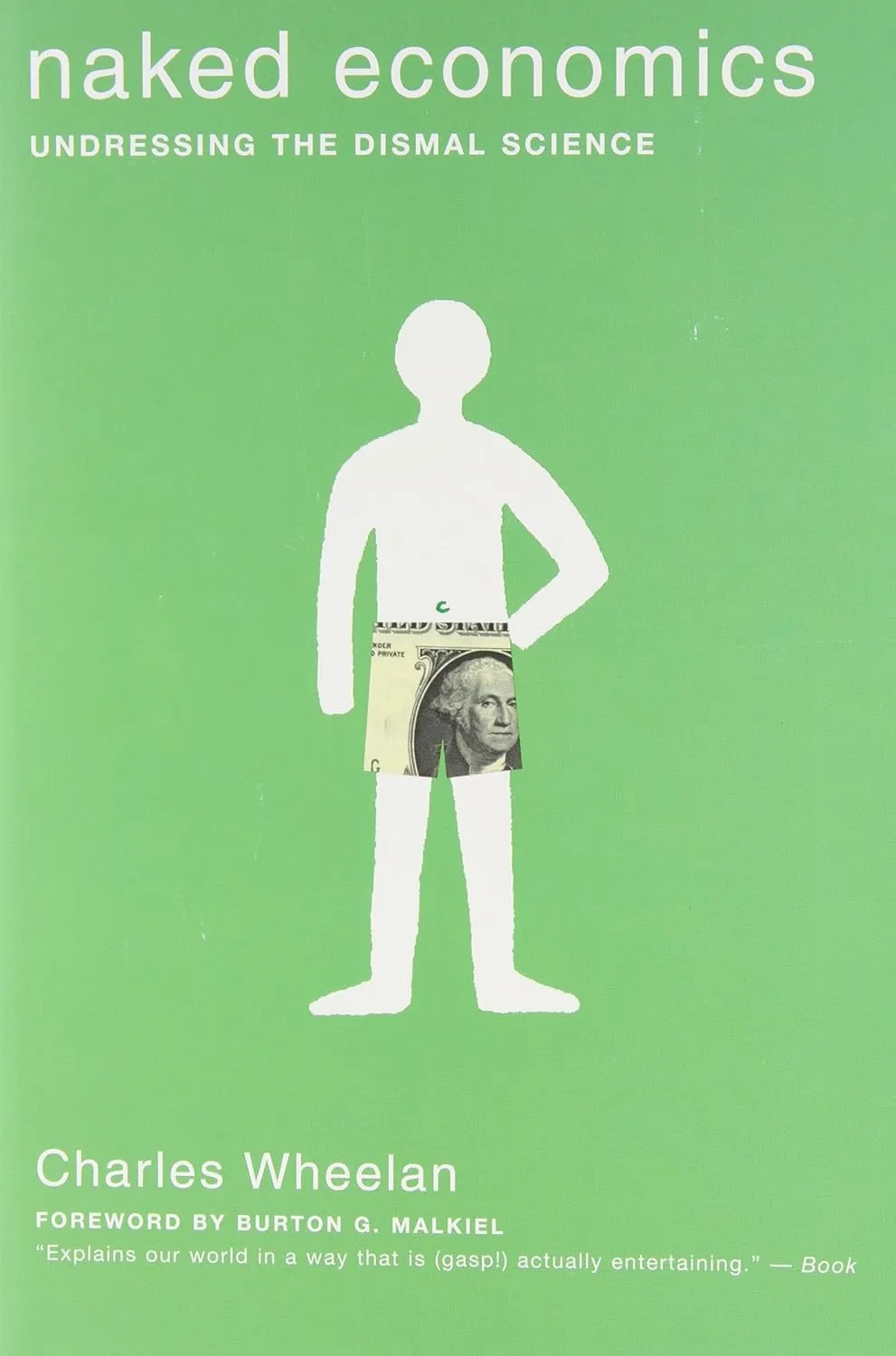
| Naked Economics (Wheelan) | Key economic concepts | 380 pages | Mainstream |
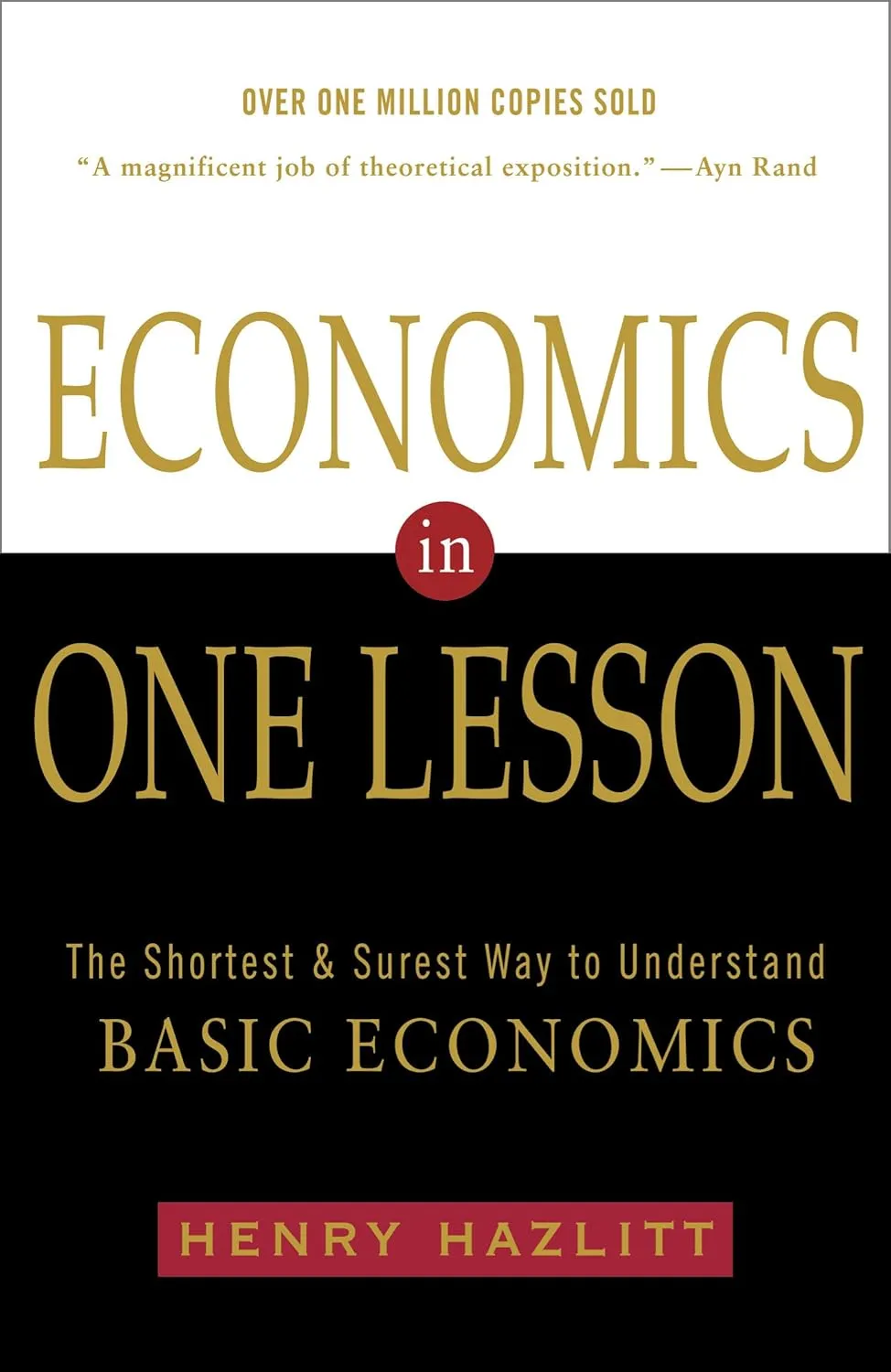
| Economics in One Lesson (Hazlitt) | Seen vs. unseen costs | 218 pages | Austrian |
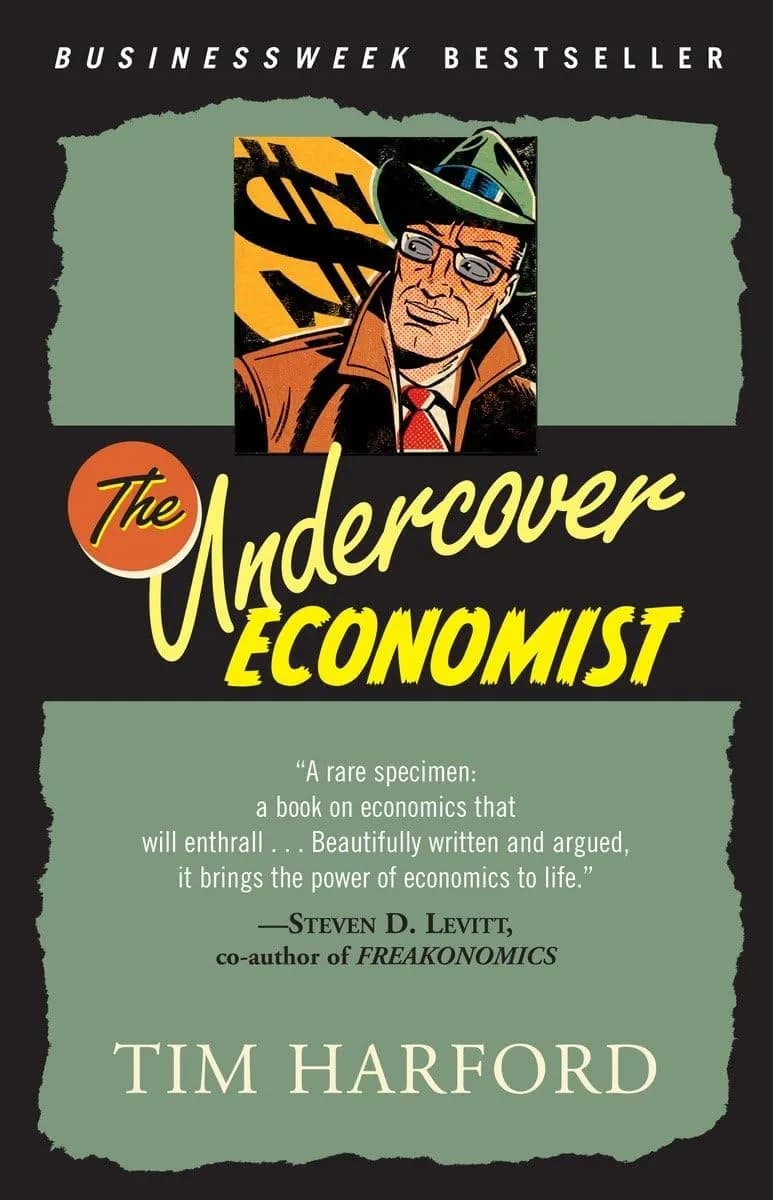
| The Undercover Economist (Harford) | Economic reasoning in daily life | 320 pages | Mainstream |
Read Basic Economics for the comprehensive treatment. Read Naked Economics for the accessible overview. Read Economics in One Lesson for the single principle (seen vs. unseen). Read The Undercover Economist for the everyday applications.
Implementation Guide
How to Apply Sowell's Framework to Investment Decisions
Step 1: Identify the trade-offs in any policy affecting your portfolio
Step 2: Watch price signals, not narratives
Step 3: Understand the inflation tax
Step 4: Evaluate competitive dynamics through Sowell's lens
Frequently Asked Questions
Q: Is Basic Economics politically biased?
A: Sowell writes from a classical liberal (free-market) perspective that consistently highlights the costs of government intervention. He is intellectually honest and rigorous, but his examples are not balanced. They more often illustrate the failures of intervention than the failures of markets. Read alongside more Keynesian-leaning economists (Krugman, Stiglitz) for complete coverage.
Q: Is this better than Naked Economics?
A: Different scale. Naked Economics is 380 pages and covers the key ideas accessibly. Basic Economics is 700+ pages and covers the full scope of economics with more depth. Start with Naked Economics. Graduate to Basic Economics if you want more.
Q: Does the book address the 2025 tariff debates?
A: No. The fifth edition was published in 2014. But Sowell's trade chapters provide the analytical framework to evaluate the 2025 tariffs. His prediction that tariffs raise consumer costs more than they protect jobs is exactly what the Brookings and PIIE analyses found in 2025.
Q: Does Sowell address behavioral economics?
A: No. The book assumes rational actors throughout. This is a significant limitation given the behavioral economics revolution (Kahneman, Thaler, Shiller). For the behavioral perspective, read our review of Animal Spirits and Thinking, Fast and Slow.
Final Verdict
Rating: 4.8/5
Basic Economics is the most comprehensive plain-language economics education available. Its treatment of prices, trade-offs, labor markets, international trade, and monetary policy is thorough, clear, and consistently analytical. The 2025 tariff debates have made the trade chapters more relevant than they have been in decades: Sowell's framework predicts exactly the consumer cost increases and inflation pressure that Brookings and PIIE documented. The book's main limitation is its asymmetric treatment of market failures versus government failures, and its complete omission of behavioral economics. Read it for the framework. Read critics for the gaps.
Get Your Copy
Hardcover: Buy on Amazon
Kindle: Buy on Amazon
Audiobook: Buy on Amazon
Prices current as of publication date. Free shipping available with Prime.