
The Difference Between Needs and Wants (And Why It's Harder Than It Sounds)
Everyone learns 'needs vs. wants' in elementary school. Almost nobody actually applies it. Here's why the line is genuinely blurry, how marketers exploit that blur, and a practical way to use the distinction in real life.

You probably learned the needs-versus-wants framework in third grade. Food is a need. A new video game is a want. Simple.
Then you got older and the lines got complicated. Is a car a need or a want? Is a smartphone a need or a want in 2026? Is a $14 lunch a need or a want if you are hungry and your options are limited? Is the slightly nicer apartment a want, or is your mental health genuinely better in a comfortable living space?
The reason needs-versus-wants fails as a practical financial tool is that most people apply it only at the extremes, luxury goods clearly being wants, basic survival clearly being needs, and never wrestle with the 80% of spending that lives in the middle.
This post gives you a more useful framework for the real decisions.
Why the Simple Version Fails
The classic definition: a need is something required for basic survival or functioning. A want is anything beyond that.
Applied strictly, your needs are: cheap food, basic shelter, basic clothing, transportation to work or school, and healthcare. Everything else is a want.
Taken to its logical end, this framework says that a $12 lunch when a $3 option exists is a want. That a comfortable mattress is a want. That a reliable car is a want because technically you could take the bus.
This is technically accurate and practically useless. People who try to live on pure-needs logic either burn out and overcorrect, spending everything after weeks of extreme restriction, or they feel perpetual guilt about anything beyond subsistence, which is not a healthy relationship with money.
The framework needs updating.
A Better Three-Category Model
Instead of two categories, try three:
True needs: things you genuinely cannot function without. Rent, utilities, basic food, transportation to work or school, minimum clothing for the weather and your job, essential medications. These are non-negotiable.
Value-aligned wants: spending that is not strictly necessary for survival but genuinely improves your quality of life in ways that align with your actual priorities. A slightly nicer apartment that meaningfully reduces your commute. Gym membership if exercise is central to your mental health. A good pair of shoes that you will wear for three years. These are worth spending on, within limits.
Unexamined wants: spending driven by habit, social pressure, boredom, or impulse rather than actual preference. Subscriptions you never use. The premium version of something when the free version would work. Eating out five times a week not because you love food but because cooking feels like effort. This is the category to reduce.
The goal of this framework is not to eliminate all wants. It is to spend intentionally on the ones that actually matter to you and stop subsidizing the ones that do not.
Why The Line Keeps Moving
The most interesting reason needs-versus-wants is difficult is that human beings adapt to their current standard of living and reclassify wants as needs over time.
At 14, a smartphone with basic texting and data is a genuine functional tool. At 17, after three years of social media, Snapchat streaks, and group chats, the iPhone 16 Pro that everyone in your friend group has starts to feel less like a want and more like a social necessity.
This is not weakness. It is how human brains work. We benchmark against our reference group and our own history. But it means the wants-becoming-needs creep is constant. It requires periodic re-examination, not a one-time decision.
The question worth asking regularly: "Would I have considered this a need three years ago?" If the answer is no, it has crept from want to perceived need through habituation, not through any genuine increase in its functional value to your life.
How Marketers Deliberately Blur the Line
Understanding this distinction is commercially valuable to companies because people spend more freely on perceived needs than on acknowledged wants. This is why advertising consistently works to move products from the "want" category to the "need" category in consumers' minds.
Status anxiety marketing: "You need the right shoes to be taken seriously." "You need this skincare routine to look professional." The product is positioned as necessary for social functioning.
Fear-based marketing: "You need the extended warranty." "You need the premium subscription to protect your data." The product is positioned as protection against negative consequences.
Identity marketing: "Real athletes use this." "Real creatives use this." Buying the product is positioned as expressing a genuine identity rather than an optional purchase.
None of these are dishonest per se. But they are designed to short-circuit the want/need distinction. When you feel yourself thinking "I need this to function in a particular social context," it is worth pausing to ask whether that need is real or manufactured.
Social Media Makes the Blur Worse Than Ever
The 2026 data on how teenagers discover and buy products makes this framework more urgent than it was even three years ago.
According to Hootsuite's 2026 Gen Z statistics, 72% of Gen Z have bought a product directly through a social media app. Instagram and TikTok have overtaken Google as the top product-discovery platforms for this generation. 63% of Gen Z say social ads and reviews influence their purchases more than any other factor.
A Bank of America Institute analysis found that Gen Z spending power is projected to grow from $2.7 trillion in 2024 to $12.6 trillion by 2030. The same report found that 54% of Gen Z used buy now, pay later services over the holidays, compared to 50% who used a credit card. BNPL has overtaken credit cards for this generation, and no other generation shows this pattern.
The implication for needs-versus-wants is significant. When product discovery happens inside a social feed where influencers you trust are showing how a product fits into their lifestyle, the line between "I want this" and "I need this to participate in my social world" gets blurry fast. TikTok Shop converts at 4.7%, nearly double the traditional e-commerce average of 2.5%, because the algorithm primes you with content before you ever see the checkout button.
There is a useful counterpoint in the data: 79% of Gen Z wait for products to go on sale before buying, and 82% actively buy dupes, cheaper alternatives to name brands. Half of Gen Z shoppers sit on a purchase for two or more days before buying, more than double the share of Boomers who do. The deliberation instinct is there. The framework in this post is about strengthening it.
A Practical Tool: The 24-Hour Category Test
When you are about to make a non-essential purchase, run this three-question test:
Question 1: If this did not exist or was unavailable, how would my life actually be affected?
- Significantly worse in a real, functional way = likely a genuine need or high-value want
- Mildly inconvenienced but fine = want
- Probably fine, maybe I would not even notice = unexamined want
Question 2: Am I buying this for myself or for how it will look to others?
This is the social pressure detector. Honest answers here reveal a lot about what is driving the purchase.
Question 3: Would I still want this tomorrow if nobody would ever see or know I had it?
Products that survive this question have genuine personal value. Products that fail it are largely social signals.
This is not about judging yourself for caring about social belonging. That is human and normal. It is about being explicit about the real reason for a purchase so you can decide whether it is worth it to you rather than just reacting.
Needs vs. Wants for Teenagers Specifically
Teenagers operate in an environment that makes this distinction particularly hard, for three reasons:
Heavy peer reference: what your friend group buys shapes what feels like a need. If everyone in your circle has AirPods and you have basic earbuds, the AirPods feel like a need even though earbuds work. This is social pressure operating invisibly.
Limited income means every dollar competes: a $150 pair of shoes as a percentage of a teenager's income is very different from the same purchase as an adult. The opportunity cost is real.
Underdeveloped future self connection: teenagers tend to strongly discount future outcomes relative to present ones. This is developmental, not a character flaw. But it means the "I could save this instead" calculation does not feel as compelling as it will at 30.
Knowing these dynamics exist does not eliminate them. It just makes the decision-making more conscious.
Using the Framework to Actually Budget
Here is how to apply this in practice.
Step 1: List your monthly spending categories. Everything. Food, phone, clothing, entertainment, subscriptions, transportation, personal care, everything.
Step 2: Label each category as True Need, Value-Aligned Want, or Unexamined Want.
Step 3: Within each want category, decide on a comfortable limit. Not "zero spending" on wants. That is the path to burnout. A specific number that feels sustainable.
Step 4: Identify your top one or two Unexamined Want categories. These are where reduction has the most impact with the least actual sacrifice.
Most people who do this exercise find one or two categories where they have been spending significantly on things they do not actually value much. Common discoveries: takeout food eaten alone (not the social experience, just convenience), streaming services watched rarely, fashion purchases driven by peer trends rather than personal taste.
Reducing those specific categories, not imposing general austerity, frees up money for things you actually care about.
Real-World Examples
Example: Kenji, 16, works part-time
Situation: Kenji earned $320 per month and felt like he had nothing left by the end of the month. He tracked his spending and found $140 per month going to food, mostly convenience store purchases between school and work.
The category analysis: Basic food was a need. But the specific form, $4 to $6 convenience items four or five times a week, was an unexamined want driven entirely by not packing food. The actual food cost could be covered for $20 per week in groceries if he planned.
Result: He started packing food for his afternoon shift. His food spending dropped to $60 per month. He freed up $80 that went directly to his savings goal.
Example: Aaliyah, 15, gets $100 per month from family
Situation: Aaliyah consistently ran out of her monthly money by week three. When she tracked spending, she found $45 per month going to makeup, mostly small items influenced by TikTok recommendations.
The category analysis: She already had functioning makeup. The new purchases were unexamined wants driven by social media exposure rather than genuine preferences.
What she did: She set a $15 per month beauty products limit and kept a list of things she wanted to buy. After one month, she bought one item from the list and realized she had not missed the others.
Result: She saved $30 per month and found that her beauty routine actually did not change.
Example: Marcus, 17, evaluating a car
Situation: Marcus was considering buying a $7,000 car. His family asked him to think through whether it was a need or a want before committing.
The analysis: He lived in a suburban area with no useful public transit. His job was 6 miles away and his parents could not reliably give him rides. A car was a genuine functional need. The $7,000 used car was a reasonable option. A $14,000 newer car with a loan would be an unexamined want layered on top of a legitimate need.
Result: He bought the $7,000 car in cash, which he had saved for over 18 months. No loan, no interest, and the need was genuinely met.
The Bigger Picture
The point of understanding needs versus wants is not to live on as little as possible. It is to spend money in ways that actually reflect what you value, rather than what habit, social pressure, or clever marketing has told you that you value.
People who develop this clarity early spend money more happily and save more consistently, not because they deprive themselves, but because their spending matches their actual preferences rather than defaulting to whatever happens to be in front of them.
That clarity is a skill. It gets sharper the more you practice applying it to real decisions.
For more on the psychology that makes spending decisions hard, see Why You Keep Spending Money You Don't Have. For a practical system to put this insight to work, see How to Budget Your First Paycheck Step by Step.
This post is for informational purposes only and does not constitute financial advice. Examples are hypothetical and for illustration purposes.
Tags
Savvy Nickel Team
Financial education expert dedicated to making complex money topics simple and accessible for everyone.
Recommended Articles

Teaching Yourself About Money When Nobody Taught You
Most schools do not teach personal finance. Most parents did not learn it either. Here is how to build real financial knowledge from scratch: free resources, what to learn first, and in what order.

How to Budget Your First Paycheck Step by Step
Getting your first paycheck is exciting. Blowing it in a week is easy. Here's a simple, step-by-step system for making your first paycheck actually work for you.

How to Make Money as a Teenager Without a Traditional Job
Teen summer hiring just hit its lowest level since 1948. Here are the most realistic ways teenagers make real money today, from service businesses to online freelancing to reselling.
Run the Numbers
Free calculators related to this article.
Budget Calculator / 50-30-20 Analyzer
Enter your take-home pay and instantly see how to split it across needs, wants, and savings using the 50-30-20 rule. Adjust the percentages to fit your situation and see exactly how much goes where.
Open calculator →Latte Factor / Small Expense Calculator
How much is your daily coffee, streaming subscription, or lunch habit actually costing you over 10, 20, or 30 years if that money were invested instead? The compound math on small habits is more surprising than most people expect.
Open calculator →Net Worth Calculator
Calculate your true financial picture by adding up everything you own and subtracting everything you owe. Track your progress month over month as your net worth grows.
Open calculator →Recommended Books

Related Glossary Terms
Budget
A budget is a plan for how to spend and save your income. It assigns every dollar a purpose before the month begins, turning vague financial intentions into specific, trackable decisions.
Finance
Finance is the system of allocating money across time and risk. It encompasses borrowing, lending, investing, budgeting, and the institutions that make all of those activities possible.
Fungibility
Fungibility means individual units of an asset are interchangeable and indistinguishable from one another. One dollar is worth the same as any other dollar, which makes money work as a medium of exchange.
Cash Flow
Cash flow measures whether money accumulates or drains away in your financial life. It is the difference between income and expenses over a period of time, and it determines financial resilience more than income or net worth.
Mental Accounting
Mental accounting is the habit of sorting money into mental buckets based on its source or intended use, then treating the dollars differently even though money is fungible. It can help with self-control but often leads to costly inefficiencies like carrying debt while holding cash.
10-K
A 10-K is the annual report publicly traded companies must file with the SEC, containing audited financials, risk factors, and management's full analysis of business performance over the fiscal year.
Recommended Podcasts

Teen Money Matters
by Sanika Kothari, Jayaditya Kothari & Eliza Moore
A monthly NPR-distributed podcast made by teens, for teens. Real high school students talk saving, budgeting, college, and first jobs. Produced at WDIY 88.1 FM.
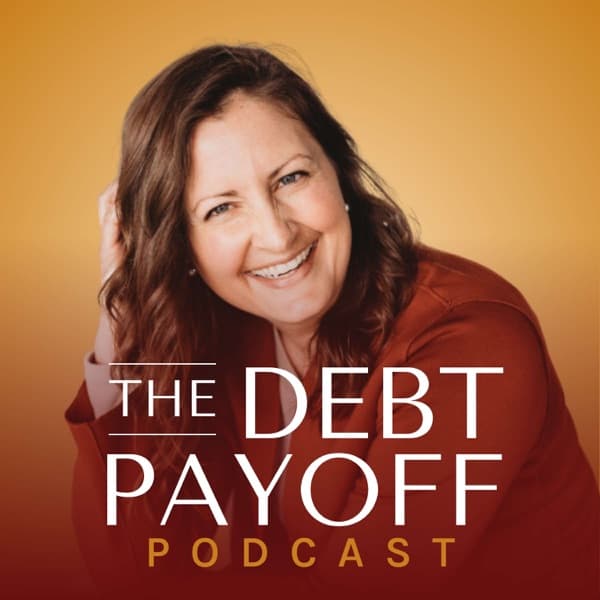
The Debt Pay Off Podcast for Women
by Katy Almstrom
Katy Almstrom, a former teacher turned money coach, helps professional women pay off debt without shame or restriction. A biweekly show on money mindset, credit cards, and financial confidence.

The Personal Finance Podcast
by Andrew Giancola
Andrew Giancola's Master Money show covers budgeting, investing, and side income with a systems-first approach. 350K monthly downloads and a 4.7 Apple rating.