*Disclosure: This article contains affiliate links. If you purchase through these links, we may earn a commission at no additional cost to you. We only recommend books we genuinely believe in.
Quick Overview
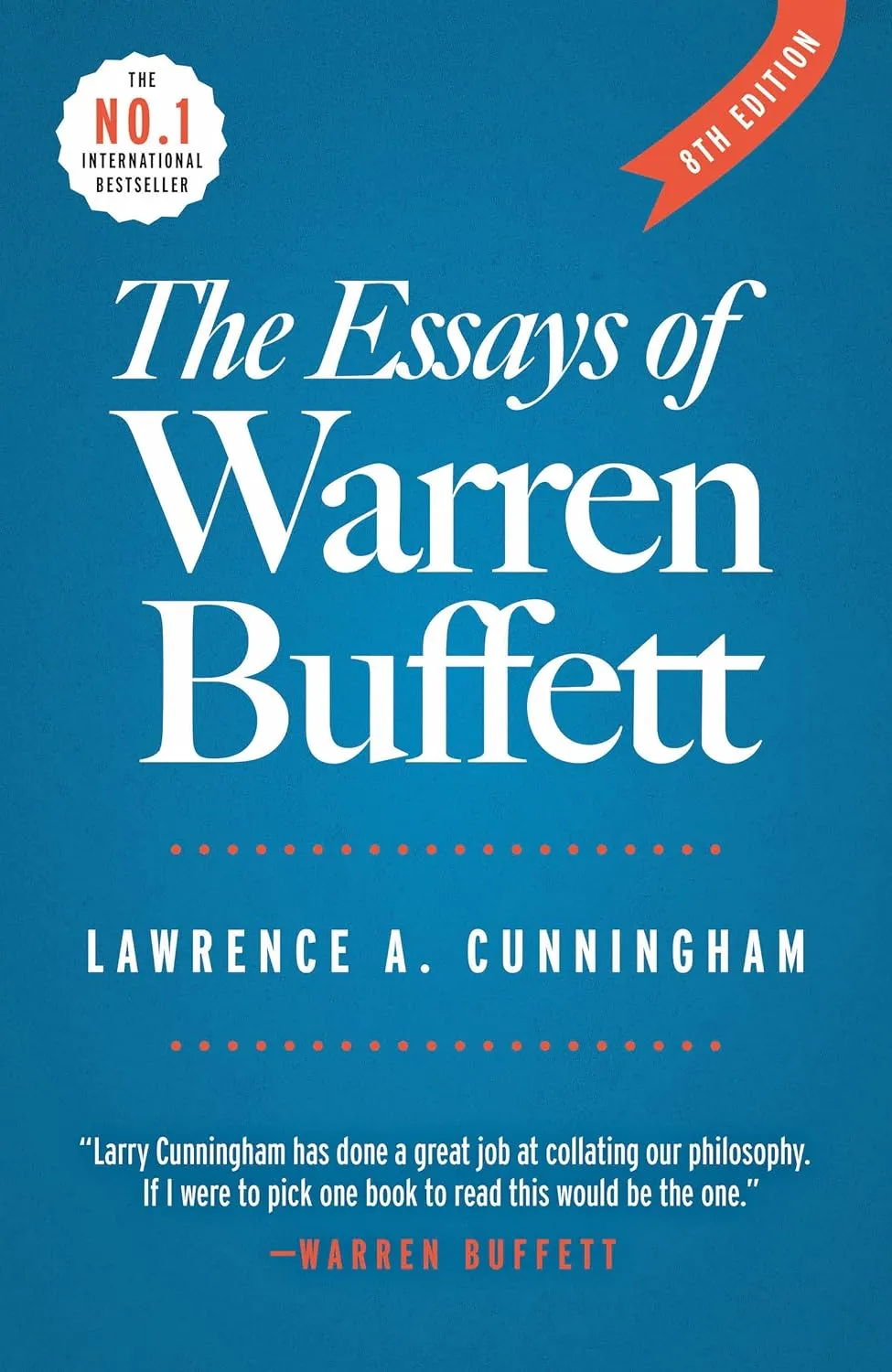
I first read The Essays of Warren Buffett in 2020, and it completely changed how I read annual reports. Warren Buffett has written annual letters to Berkshire Hathaway shareholders since 1965. Lawrence Cunningham, a corporate law professor at George Washington University, recognized that these letters contained the most honest and detailed explanation of Buffett's investment philosophy ever assembled. He organized the letters thematically into a coherent book that reads as a complete investment and business education. For anyone serious about value investing, this is required reading.
Book Details
| Attribute | Details |
|---|---|
| Title | The Essays of Warren Buffett: Lessons for Corporate America |
| Author | Warren Buffett, compiled and edited by Lawrence A. Cunningham |
| Publisher | Carolina Academic Press |
| First Published | 1997 (updated through 5th edition, 2019) |
| Pages | 384 |
| Reading Level | Intermediate |
| Amazon Rating | 4.8/5 stars |
Get Your Copy
Paperback: Buy on Amazon
Kindle: Buy on Amazon
About Warren Buffett
Warren Buffett was born in Omaha, Nebraska in 1930. He bought his first stock at age 11, filed his first tax return at 13 (deducting his bicycle as a business expense), and took Benjamin Graham's investment course at Columbia Business School. He ran a partnership that compounded at 29.5% annually from 1957 to 1969, then took control of a failing textile company called Berkshire Hathaway and transformed it into the most successful holding company in history.
2026 update: Buffett officially retired as CEO of Berkshire Hathaway at the start of 2026. Greg Abel, formerly vice chairman of non-insurance operations, took over as CEO. Buffett remains Chairman of the Board. This transition, anticipated for years, marks the end of an era. Abel's first annual letter (covering 2025) emphasized continuity, disciplined investing, and maintaining Berkshire's financial strength. He views Berkshire's massive cash pile, which exceeded $300 billion in late 2025, as "dry powder" for future opportunities. Marc Hamburg, Berkshire's long-time CFO, is set to retire in 2027, with Chuck Chang already succeeding him in 2026. Despite stepping back from the CEO role, Buffett reportedly still plays an active role in capital allocation, including initiating a major investment in Google (Alphabet) in 2025.
Berkshire Hathaway's market capitalization exceeds $900 billion as of mid-2026. Buffett has donated the majority of his fortune to the Bill and Melinda Gates Foundation and related charities. His estimated net worth exceeds $100 billion despite decades of giving.
The shareholder letters are free at berkshirehathaway.com. This book's value is Cunningham's organization, which transforms a scattered archive into a coherent curriculum.
The Book's Organization
Cunningham organizes the letters into eight thematic sections:
| Section | Topics |
|---|---|
| Corporate Governance | Board responsibilities, owner-oriented management |
| Finance and Investing | Asset allocation, intrinsic value, portfolio management |
| Alternatives to Common Stock | Bonds, convertibles, preferred stock |
| Common Stock | Stock splits, repurchases, dividends |
| Mergers and Acquisitions | How Buffett evaluates acquisitions |
| Accounting and Valuation | Earnings quality, GAAP limitations, intrinsic value |
| Accounting Shenanigans | How companies manipulate reported results |
| Tax Matters | Tax efficiency in portfolio management |
Key Themes and Lessons
On Corporate Governance: The Owner-Oriented Approach
Buffett's most consistent theme across 60 years of letters: managers should treat shareholders as partners, not as a source of capital to be managed.
The owner-oriented principles:
This philosophy feels even more relevant in 2026. The rise of AI-driven companies with massive stock-based compensation, founder-controlled voting structures, and limited-profit business models makes Buffett's insistence on owner-orientation look like a relic from a more principled era. But that is exactly why it matters. When Meta platforms and Tesla operate with dual-class share structures that give founders voting control regardless of performance, Buffett's governance principles are not outdated. They are a standard against which modern corporate governance can be measured and frequently found wanting.
The GAAP vs. owner earnings distinction:
Buffett popularized "owner earnings" as a superior measure of business value:
Owner Earnings = Net Income
               + Depreciation and Amortization
               - Capital Expenditures Required to Maintain Competitive Position
               +/- Other Non-Cash Adjustments
GAAP earnings can be manipulated through accounting choices. Owner earnings represent the cash a business actually generates for owners after maintaining its competitive position. For more on this concept, see our glossary entry on free cash flow.
On Business Quality: The Economic Moat
Buffett is more explicit in the letters than almost anywhere else about what he looks for in a business:
The ideal business (Buffett's description):
"The ideal business is one that earns very high returns on capital and can keep deploying additional capital at those high rates. That becomes a compounding machine."
The four sources of competitive advantage (moat):
| Moat Type | Example | Durability |
|---|---|---|
| Network effects | Visa/Mastercard, American Express | Very high |
| Switching costs | Enterprise software, banks | High |
| Cost advantage | GEICO (insurance), BYD (manufacturing) | Medium-High |
| Intangible assets | Coca-Cola brand, patent-protected drugs | Variable |
Buffett explicitly warns against businesses without moats, regardless of how good their current financials look:
"A business that must deal with fast-moving technology is not the type for us... The key is to invest in businesses that have strong competitive positions and where the pace of change is slow."
This quote has haunted Buffett's legacy in one specific way: he avoided technology for decades, and his Apple investment (initiated in 2016) became one of his most profitable positions ever. The man who said he avoids fast-moving technology ended up making over $100 billion on a consumer electronics company. The lesson is not that Buffett was wrong about moats. It is that Apple's ecosystem lock-in (switching costs and network effects) created a moat that looked like a consumer products moat, not a technology moat. Buffett was right about the principle. He was wrong about how to categorize the business.
On Valuation: Intrinsic Value
Buffett's approach to valuing businesses is directly descended from Graham but more focused on qualitative factors:
The two-step process:
Step 1: Estimate future owner earnings as accurately as possible. This requires understanding the business's competitive position, industry dynamics, and management quality.
Step 2: Discount those earnings at an appropriate rate (Buffett typically uses the long-term Treasury rate as a floor, then adds a judgment-based premium for business risk).
Intrinsic Value = Sum of all future owner earnings, discounted to present valueBuffett acknowledges this is imprecise: "Fuzzy but approximately right is far better than precisely wrong."
The margin of safety application:
Even after calculating intrinsic value, Buffett insists on buying at a significant discount. His most famous quote on this:
"Price is what you pay. Value is what you get."
When the gap between price and value is wide enough, the investment is safe regardless of estimation error. When the gap is narrow, even a slightly wrong estimate produces a bad outcome.
On Market Behavior: Mr. Market Revisited
Buffett's most famous elaboration on Graham's Mr. Market metaphor:
"In the short run, the market is a voting machine but in the long run it is a weighing machine."
The voting machine reflects popularity, sentiment, and momentum. The weighing machine reflects genuine business value as expressed through earnings, cash flow, and assets. Over months and years, the voting machine dominates. Over decades, the weighing machine always wins.
The practical implication: Portfolio results measured over any period shorter than five years are dominated by sentiment change. Intrinsic value creation is only reliably measured over longer periods. This is why Buffett's holding period is "forever" for great businesses. For more on market psychology, read our blog post on behavioral biases in investing.
On Capital Allocation: The Most Important CEO Skill
Buffett devotes significant space to capital allocation because he believes most CEOs are poor at it:
The capital allocation hierarchy (Buffett's preference):
| Use of Capital | Return Potential | Buffett's Preference |
|---|---|---|
| Reinvestment in existing business at high returns | Highest | Strongly preferred |
| Acquisitions at reasonable prices | High | Preferred |
| Debt repayment | Risk reduction | Contextual |
| Share repurchases (when below intrinsic value) | High if priced right | Strongly preferred |
| Share repurchases (when above intrinsic value) | Value destructive | Strongly opposed |
| Dividends | Returns cash to shareholders | Last resort |
The most common mistake CEOs make: reinvesting capital in mediocre-return businesses when share repurchases at discounts to intrinsic value would create far more shareholder value.
2026 context: Berkshire's $300+ billion cash pile is the ultimate expression of Buffett's capital allocation discipline. He would rather hold cash earning 5% than deploy it into overpriced acquisitions. Greg Abel has signaled he will maintain this approach. In a market where AI stocks trade at 50-100x earnings, this patience is either wise or overly conservative. History suggests it is wise.
On Accounting: What the Numbers Really Mean
Buffett's accounting sections are among the most practically valuable in any investing book. Key insights:
Goodwill amortization: GAAP required goodwill amortization for decades. Buffett argued this was economically meaningless for businesses that maintained their acquired value, and economically wrong for businesses that actually improved them. His advocacy helped change GAAP treatment of goodwill.
Stock options as expenses: Long before FASB required option expensing, Buffett argued that options were clearly compensation and clearly should be expensed. Companies that granted options and did not expense them were misleading shareholders.
The "earnings management" problem: Buffett identifies the specific techniques companies use to smooth or inflate reported earnings:
| Technique | How It Works | Warning Sign |
|---|---|---|
| Reserve manipulation | Build reserves in good years; release in bad years | Suspiciously smooth earnings |
| Revenue recognition timing | Pull future revenue into current period | Receivables growing faster than revenue |
| Acquisition accounting | Allocate value to write-off-able assets | Frequent acquisitions with "one-time" charges |
| Pension assumptions | Inflate expected return assumption | Check footnotes for pension discount rate |
| Cookie jar reserves | Excessive reserves released to meet targets | Earnings that consistently hit analyst estimates exactly |
For a deeper dive into detecting accounting problems, check our review of Financial Shenanigans.
On Acquisitions: Why Most Destroy Value
Buffett's record on acquisitions is exceptional because he breaks every rule corporate America follows:
Why most acquisitions destroy shareholder value:
Buffett's acquisition criteria (stated directly in the letters):
The Letters as a Management Education
Beyond investing, the letters constitute the best available free MBA on business management. Topics covered in depth:
Practical Investor Takeaways
Checklist for Evaluating a Business (derived from the letters)
| Question | Acceptable Answer |
|---|---|
| Does the business have a durable competitive moat? | Clear moat source identified |
| Are returns on equity high without excessive leverage? | ROE above 15% consistently |
| Does management treat shareholders as partners? | Transparent, honest communication |
| Is capital allocated wisely? | Buybacks at discounts, acquisitions at reasonable prices |
| Can I predict earnings 10 years out with confidence? | Business change is slow and manageable |
| Is the price below my estimate of intrinsic value? | Significant margin of safety present |
Reading the Annual Report Like Buffett
Buffett reads annual reports cover to cover, including footnotes. His specific focus areas:
Where Buffett's Letters Show Their Age
The Technology Blind Spot
For most of his career, Buffett avoided technology companies. The letters repeatedly warn against investing in businesses with rapid change. This was the right call for decades. Then Apple happened. Buffett initiated a position in 2016, and it became Berkshire's largest holding, generating over $100 billion in gains. The Apple investment proved that Buffett's framework could apply to technology, but only when the technology company behaves like a consumer products company (sticky ecosystem, recurring revenue, brand loyalty). The letters do not address this nuance because the Apple investment came after the 5th edition was published.
In 2025, Buffett reportedly initiated a position in Google (Alphabet), another technology investment that would have been unthinkable based on the letters alone. The lesson: Buffett's principles are timeless, but his specific application of them has evolved in ways the book does not capture.
The Modern Corporate Governance Gap
The letters were written in an era when most public companies had straightforward share structures and boards that at least nominally represented shareholders. The 2026 landscape is different. Dual-class share structures (Meta, Alphabet), founder-controlled trusts (Snap), and SPAC-derived companies with minimal governance create situations Buffett's framework does not address. His principle that boards should represent shareholders is sound, but the mechanics of enforcing it in a dual-class structure are fundamentally different from what he describes.
The Cash Pile Question
Berkshire's $300+ billion cash position raises a question the letters do not fully answer: at what point does patience become a drag on returns? Buffett's letters argue that holding cash during overpriced markets is disciplined. But from 2010 to 2024, Berkshire's stock underperformed the S&P 500 in several years, partly because of its large cash position earning minimal returns while equities surged. Greg Abel's challenge is determining when "dry powder" becomes "excessive caution." The letters provide the philosophy but not the specific calibration.
Strengths & Weaknesses
What I Found Valuable
Where the Book Falls Short
Who Should Read This Book
Highly Recommended For
Probably Not For
Comparison to Similar Books
| Book | Buffett Content | Depth | Accessibility |
|---|---|---|---|
| The Essays of Warren Buffett | Primary source | Very High | Medium |
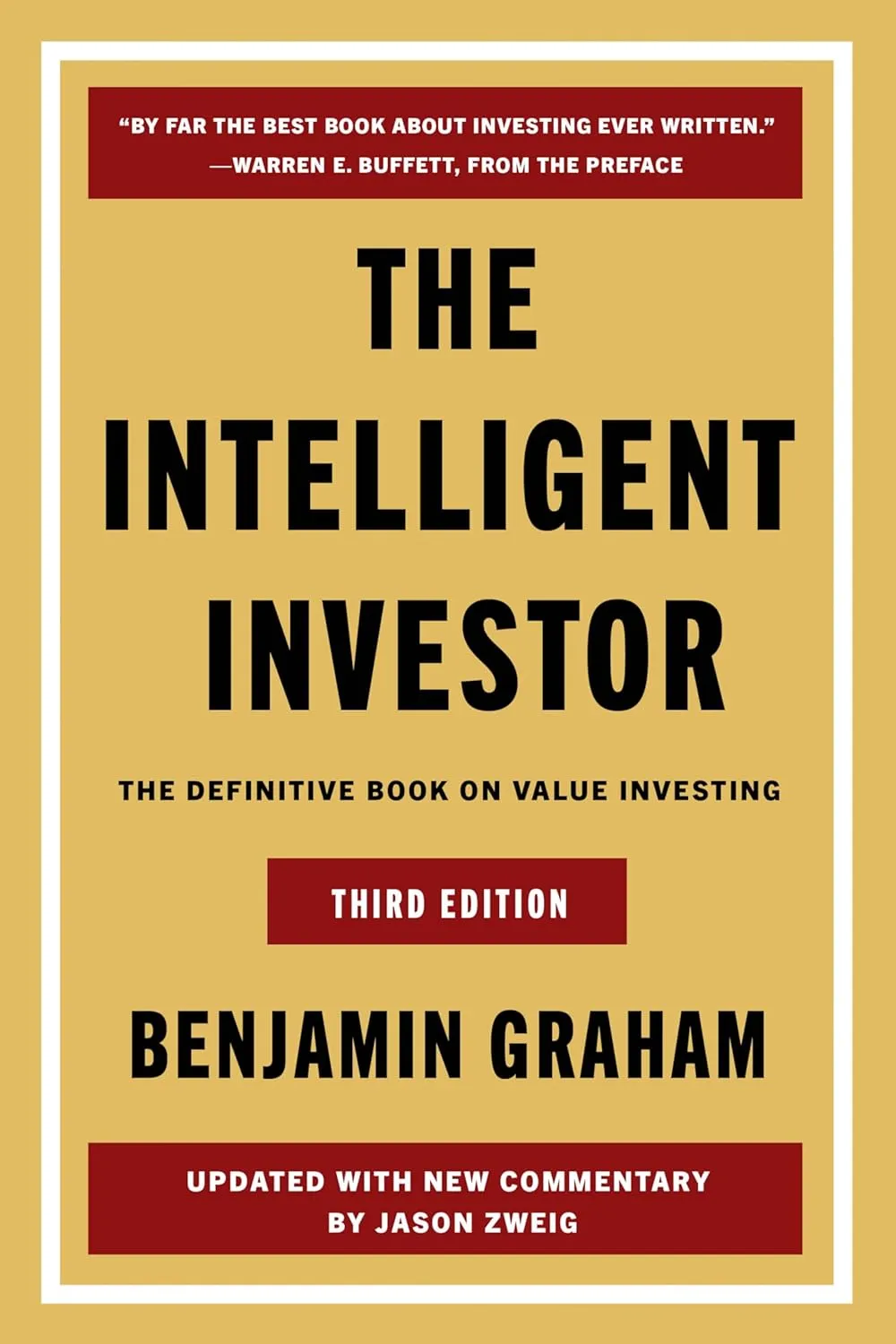
| The Intelligent Investor | Foundational framework Buffett built on | High | Medium |
| The Snowball (biography) | Life story and decision context | High | High |
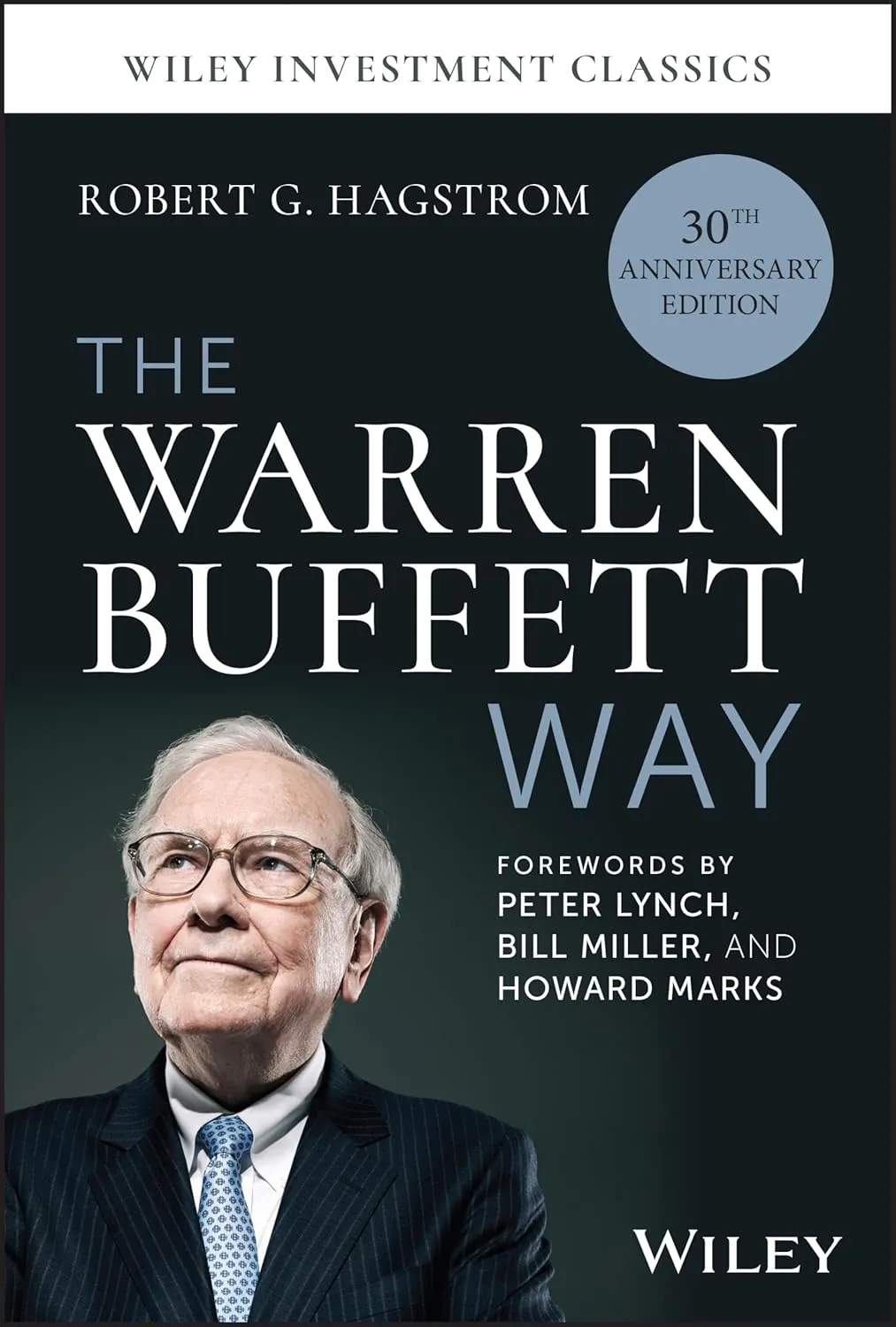
| Buffettology | Interpretation of his methods | Medium | High |
Frequently Asked Questions
Q: Are the actual Berkshire shareholder letters worth reading instead?
A: Yes, and they are free at berkshirehathaway.com. This book's value is Cunningham's thematic organization, which makes the letters more coherent as a learning resource. Read both: use this book as the curriculum, then explore specific years of letters for context. Greg Abel's 2025 letter, his first as CEO, is worth reading for the transition perspective alone.
Q: Which edition should I buy?
A: The 5th edition (2019) is the most current and includes letters through 2018. Subsequent letters continue to be published annually on Berkshire's website. Letters from 2019-2025 cover the Apple investment, the COVID response, and the transition to Greg Abel, all of which add important context.
Q: Can I apply Buffett's approach as an individual investor?
A: His framework for evaluating business quality, management, and valuation is fully applicable. His specific investment universe (needing $75M+ in earnings for Berkshire to care) is not. Look at smaller companies where his methods work equally well with less competition. For a simpler approach, see our guide on index fund investing.
Q: What happens to Berkshire now that Buffett is not CEO?
A: Greg Abel took over as CEO in 2026 with Buffett remaining as Chairman. Abel has emphasized continuity and disciplined capital allocation. The real test will be whether Abel can deploy the $300+ billion cash pile as effectively as Buffett would have, or whether he will be more conservative. Either way, the principles in this book remain the operating manual for Berkshire.
Final Verdict
Rating: 4.8/5
The Essays of Warren Buffett is the closest thing to a Buffett investing textbook that exists. His own writing, organized by Cunningham's editorial intelligence, covers every dimension of investment thinking from valuation to corporate governance to accounting integrity. The book does not cover his later technology investments (Apple, Google) or the Greg Abel transition, but the principles are timeless. It belongs on the shelf next to The Intelligent Investor as essential reading for anyone serious about investing.
Get Your Copy
Paperback: Buy on Amazon
Kindle: Buy on Amazon
Prices current as of publication date. Free shipping available with Prime.